
🕑 11 min read
Table of Contents
- Why Ductwork Testing Protects Your Home Investment
- Common Problems We Find Without Proper Testing
- Industry Standards We Follow for Every Project
- Our Testing Process: What Happens After Installation
- Detecting Leaks and Airflow Issues Early
- How Proper Testing Improves Energy Efficiency
- Mold and Contamination Screening After Replacement
- Documentation and Compliance for Your Records
- Real Results from Our San Antonio Projects
- The Cost of Skipping Post-Replacement Testing
- Our Commitment to Testing Excellence
- Schedule Your Professional Ductwork Inspection Today
- Frequently Asked Questions (FAQ)





Why Ductwork Testing Protects Your Home Investment
When we replace ductwork in San Antonio homes, the work doesn’t end once the new ducts are installed. We know that proper testing after installation is what separates a complete job from one that creates problems down the road. Many homeowners don’t realize that ductwork can look pristine on the outside while failing to perform efficiently or safely inside. That’s exactly why we follow rigorous testing standards on every project.
New ductwork represents a significant investment, often ranging from $3,000 to $8,000 depending on your home’s size and complexity. Without proper testing, you could be paying for a system that wastes energy, circulates contaminants, or fails prematurely. Testing ensures that your new ducts actually deliver the performance you paid for.
We treat post-installation testing as insurance for your investment. When ducts are sealed improperly, have leaks in joints, or contain debris from installation, your HVAC system works harder than it should. Your energy bills climb. Your air quality suffers. Testing catches these issues before they become expensive problems. A well-tested duct system also maintains its efficiency for years longer, protecting the money you’ve spent on replacement.
Beyond performance, testing verifies safety. Improperly sealed ducts can allow unconditioned air from attics or crawlspaces to enter your living areas. In older San Antonio homes, this means potential exposure to dust, pests, or worse. Testing identifies these risks before they affect your family’s health or comfort.
Common Problems We Find Without Proper Testing
We’ve encountered countless situations where homeowners discovered problems months after ductwork replacement because no one tested the system thoroughly. The most frequent issue is duct leakage at seams and joints. Even small gaps that seem negligible during installation compound over time, and you won’t notice until your energy bills spike or certain rooms feel stuffy.
Debris trapped inside new ducts is another common discovery. During installation, dust, fiberglass particles, and construction materials can enter the ductwork if the system isn’t properly protected and cleaned afterward. Without testing, this contamination circulates through your home every time the HVAC system runs.
Improper airflow balance is equally problematic. One room stays uncomfortably cold while another stays warm because dampers weren’t adjusted correctly or ductwork sizing doesn’t match the HVAC unit’s capacity. Testing reveals these imbalances immediately, allowing us to adjust before they become chronic complaints.
We’ve also found situations where new ducts connect poorly to existing components, creating air leaks or pressure imbalances that strain the HVAC system. Mold growth can even begin in improperly sealed ducts where moisture accumulates. Learn more about the signs of mold in your ducts and why early detection matters.
Industry Standards We Follow for Every Project
We follow ASHRAE 62.2 standards, EPA guidelines, and the International Energy Conservation Code (IECC) for all ductwork testing. These frameworks ensure that ducts are tested for airtightness, airflow, and contamination using consistent, reliable methods. In Texas, local building codes also require post-replacement inspection documentation for many commercial and higher-value residential installations.
Our testing protocol includes ductwork pressure testing, visual inspection, and air quality sampling when appropriate. We document every result and provide you with a detailed report showing exactly how your new system performs. This isn’t just about compliance; it’s about giving you confidence that your ducts were installed correctly and will function as designed.
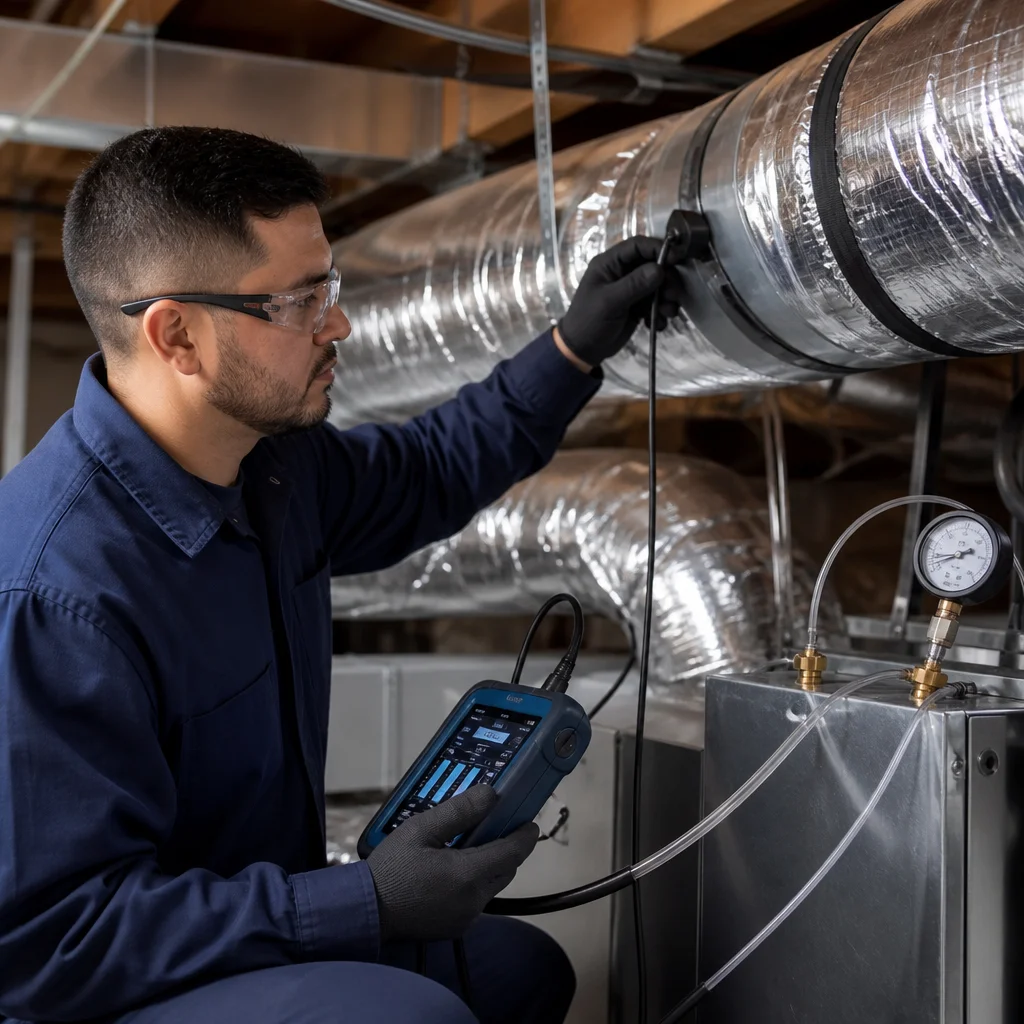
San Antonio’s climate adds another layer of importance. Our hot, humid summers create conditions where improperly sealed ducts allow heat and moisture to infiltrate, forcing your air conditioning to work overtime. Testing ensures your ducts are sealed tight enough to withstand our demanding seasonal demands.
Our Testing Process: What Happens After Installation
After your new ductwork is installed, we perform a comprehensive testing sequence over one to two business days. First, we conduct a visual inspection of all accessible ductwork, checking for obvious gaps, improper sealing, debris, or installation defects. We examine joints, transitions, and connections where leaks most often occur.
Next, we perform ductwork pressure testing using a blower door and duct leakage measurement equipment. This quantifies exactly how much air escapes from your ducts under normal operating conditions. We measure pressure differentials and airflow rates to ensure they meet or exceed industry standards. The goal is total duct leakage of no more than 15 percent of your system’s airflow, though we typically achieve much tighter results.
We also balance the airflow across different zones and rooms, measuring static pressure and velocity at key points. This ensures your HVAC system can deliver the intended amount of conditioned air where it’s needed. If we find imbalances, we adjust dampers or reposition ductwork before finalizing the installation.
Finally, we clean any debris from inside the ducts using specialized equipment and provide you with photographic documentation showing a clean, properly sealed system. Our complete air duct inspection services include all these steps.
Detecting Leaks and Airflow Issues Early
Leaks in ductwork are often invisible, but their effects accumulate quickly. A single unsealed joint might lose only 2-3 percent of airflow, but multiple leaks throughout your system can add up to 20-30 percent loss. Testing catches these before they waste your money.
We use thermal imaging cameras and pressure measurement tools to locate leaks precisely. When we find them, we seal them immediately using approved duct sealant or mastic, then retest to verify the repair. This prevents you from discovering a 20 percent efficiency loss on your next energy bill.
Airflow issues show up differently. Testing might reveal that one bedroom receives 40 percent less air than the others, leaving it uncomfortable year-round. By identifying this during testing, we can adjust duct sizing, damper positions, or register placement before it becomes a chronic problem that frustrates you every day.
Our testing equipment also captures data that predicts long-term system performance. If we identify a marginal issue now, we can recommend preventive adjustments that will extend your ducts’ lifespan and maintain efficiency for years ahead.
How Proper Testing Improves Energy Efficiency
Duct leakage is one of the largest sources of energy waste in Texas homes. When your HVAC system works to cool or heat air, and then 20-30 percent of that conditioned air escapes through leaky ducts, you’re paying to condition your attic instead of your living spaces. This directly shows up as higher utility bills.
Testing quantifies your baseline efficiency and identifies exactly where efficiency improvements matter most. A properly tested and sealed duct system uses 15-30 percent less energy compared to untested systems with typical leakage. For San Antonio homeowners, that often means $300-$600 in annual savings.
We can show you specific numbers after testing. If we find 20 percent leakage and seal it to 5 percent, we can calculate how many kWh that saves you each summer and winter. Over a decade, those numbers compound significantly. Discover how duct replacement specifically cuts energy bills in San Antonio.
Testing also helps your HVAC equipment last longer. When ducts are sealed properly, your equipment operates at lower stress levels, cycling less frequently and experiencing less wear. This extends equipment lifespan by years and reduces maintenance costs.
Mold and Contamination Screening After Replacement
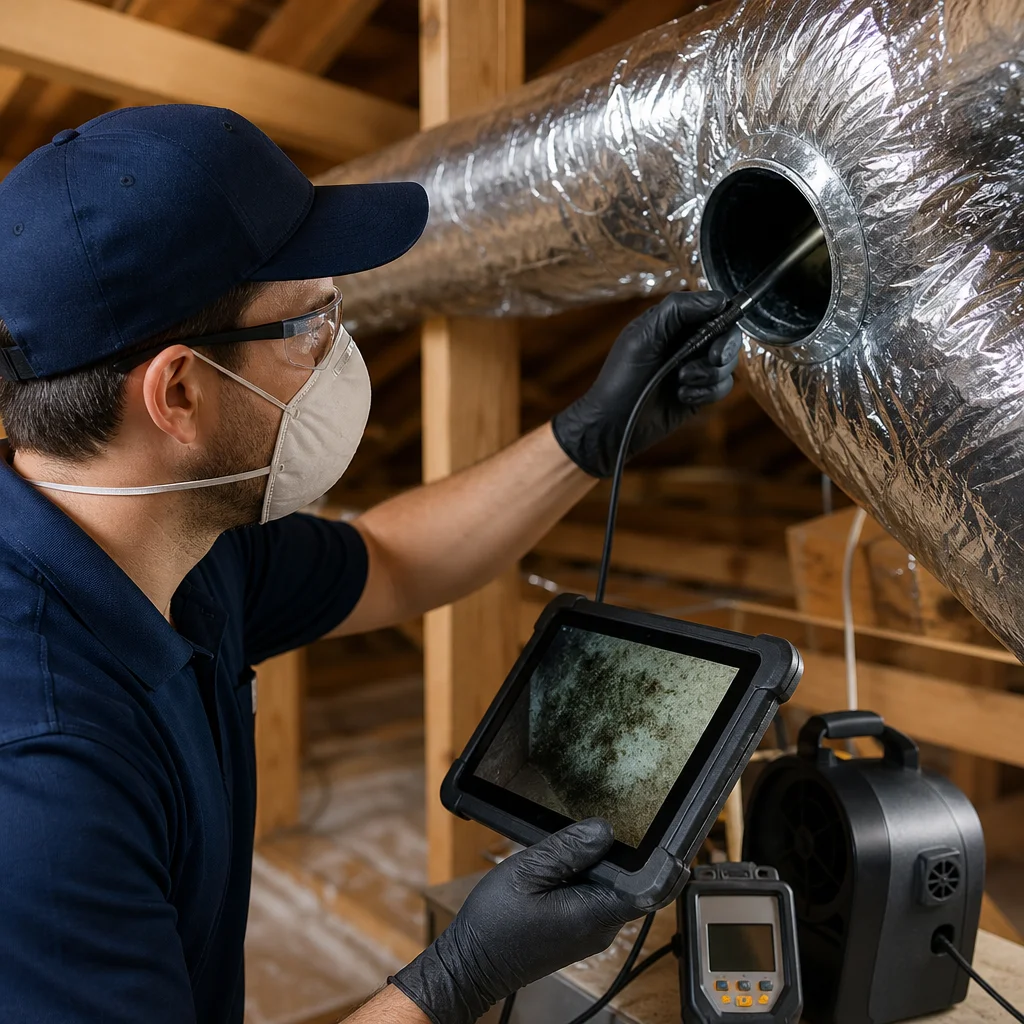
Post-installation testing includes contamination screening, which is especially important in San Antonio’s humid climate. We inspect for any signs of mold growth, debris accumulation, or pest entry during the installation phase. Early detection prevents contamination from spreading through your home.
If testing reveals potential mold risk factors such as moisture accumulation or improper duct sealing that could trap humidity, we implement preventive measures immediately. This might include adding insulation, improving drainage, or adjusting seal specifications. Catching these risks before mold develops is far more cost-effective than mold remediation later.
We also verify that all ductwork was properly protected during installation so that construction debris didn’t enter the system. If we find dust or particles, we clean the ducts thoroughly and retest to confirm they’re clean before we consider the job complete.
Documentation and Compliance for Your Records
We provide comprehensive documentation for every ductwork installation and testing project. Your report includes pressure test results, airflow measurements, thermal images showing sealed joints, and photographic evidence of a clean, properly installed system. This documentation protects your investment and provides a baseline for future maintenance.
If you ever sell your San Antonio home, this documentation proves that your HVAC system was professionally installed and meets current standards. Real estate buyers and their inspectors increasingly request this type of documentation, and having it strengthens your home’s value and marketability.
We also maintain detailed records for warranty purposes. If any component fails or underperforms within the warranty period, our comprehensive documentation makes it easy to address the issue quickly and fairly. This creates accountability and ensures you’re covered.
Real Results from Our San Antonio Projects
Last year, we completed a ductwork replacement in a 1970s-era North Star home where the original ducts had significant leakage and insulation degradation. Post-replacement testing revealed we had reduced duct leakage from 32 percent to 6 percent. The homeowner’s cooling costs dropped by $480 per year, and they reported that previously uncomfortable bedrooms finally maintained consistent temperatures.
Another project involved a newer Alamo Heights home where initial inspection showed debris inside newly installed ducts. Our post-installation testing and cleaning prevented that debris from circulating. The homeowner later told us they noticed significantly better air quality and fewer dust settling on furniture.
A third case involved an older South Side property where testing revealed improper duct connections creating negative pressure in the attic. We sealed those connections, tested again to verify the fix, and the homeowner reported immediate improvement in their energy bills and indoor comfort.
The Cost of Skipping Post-Replacement Testing
Homeowners who skip testing often pay the price within months. Without verification, you might not realize your ducts are leaking until your energy bills spike. By then, the leak has persisted for weeks or months, and you’ve already lost hundreds of dollars in wasted energy.
Missing contamination issues means mold or dust circulates through your home indefinitely, affecting air quality and potentially your family’s health. Some homeowners don’t discover these problems until they develop unexplained respiratory issues or allergies.
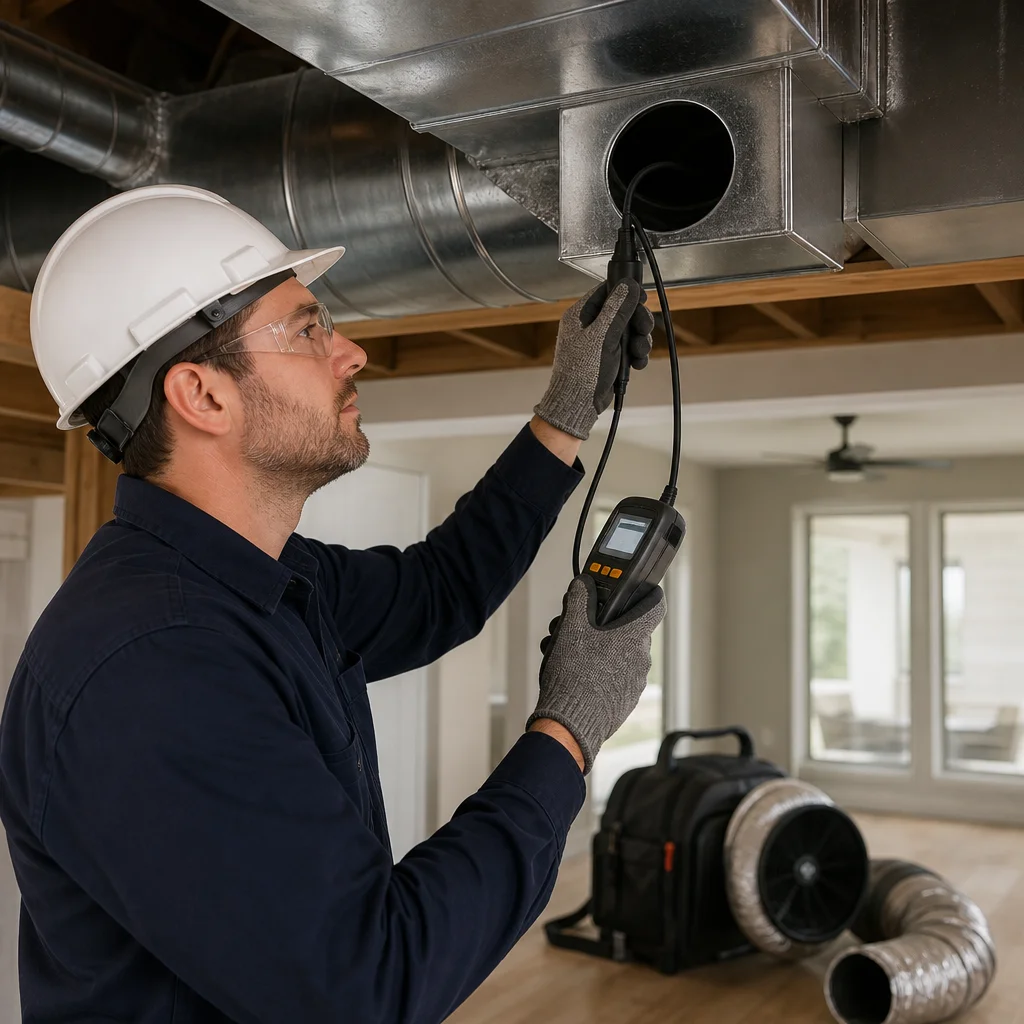
Undetected airflow imbalances force your HVAC equipment to work harder and cycle more frequently, accelerating wear. A system that could have lasted 15-20 years might need replacement at 10-12 years because the stress of balancing poor ductwork wore it out prematurely.
Testing costs $400-$800 but saves thousands over the system’s lifespan. When you consider that a new HVAC system costs $5,000-$10,000 to replace, and that proper testing can extend equipment life by years, skipping this step simply doesn’t make financial sense.
Our Commitment to Testing Excellence
We believe every San Antonio homeowner deserves to know exactly how their ductwork performs. That’s why testing is never optional on our jobs; it’s a standard part of our process. We invest in premium testing equipment, train our technicians in the latest procedures, and stand behind our results with detailed documentation.
Our commitment extends beyond the initial testing. We’re available to answer questions about your test results, explain what the data means for your specific situation, and recommend any follow-up maintenance or adjustments that could improve performance further.
Schedule Your Professional Ductwork Inspection Today
If you’re planning ductwork replacement in San Antonio, or if you want to verify that your existing ducts are performing as intended, we’re ready to help. We offer free estimates and can schedule testing at a time that works for your schedule.
Contact us today to learn more about our ductwork testing standards and how proper post-replacement inspection protects your investment. Let us show you exactly how your new ducts will perform and give you the confidence that your HVAC system is working efficiently and safely for your family.
If you’re dealing with dust, poor airflow, mold in your ducts, or a clogged dryer vent — don’t wait. These issues can affect your health and safety. Go Air Ducts Group are the local experts in air duct cleaning, mold removal, dryer vent cleaning, and attic insulation. Call now for a free inspection and same-day service in Austin and San Antonio.
Frequently Asked Questions (FAQ)
Why do we recommend ductwork testing after replacement in San Antonio?
We recommend post-replacement testing because it verifies your new ductwork is installed correctly and operating at peak efficiency. Our testing catches leaks, airflow problems, and installation defects that could waste energy and compromise your indoor air quality. Without this inspection, you might not discover costly issues until they affect your comfort and utility bills.
What testing standards do we follow for duct replacement projects?
We adhere to industry standards including ASHRAE and EPA guidelines that ensure our ductwork meets performance and safety requirements. Our certified technicians perform pressure tests, airflow measurements, and visual inspections on every installation we complete. This thorough approach gives you documentation proving your system meets all compliance and quality benchmarks.
Can we detect mold or contamination in newly replaced ducts?
Yes, we screen for mold and contaminants as part of our post-replacement inspection process. Even though new ducts should be clean, we verify there’s no moisture accumulation or debris in the system before you start using it. This screening step protects your family’s health and ensures your investment performs as intended from day one.