
Table of Contents
- Why Mold in Your HVAC System Is a Real Problem
- Common Signs of Mold Growth in Air Ducts
- How Mold Develops Inside Your Ductwork and Why It Spreads
- Health Risks of HVAC Mold for Your Family
- Our San Antonio HVAC Mold Inspection Process
- Professional Remediation: How We Eliminate Mold from Your System
- Preventing Future Mold Growth in Your Ducts
- Why Air Quality Matters for San Antonio Homes
- Our Certified Technicians and Service Standards
- Getting Your Free Mold Remediation Estimate Today
- Frequently Asked Questions (FAQ)
Why Mold in Your HVAC System Is a Real Problem
Mold in your HVAC ducts isn’t just an aesthetic issue or something you can ignore. It’s a genuine threat to your home’s comfort, your family’s health, and your system’s longevity. When mold colonizes inside your ductwork, it spreads contaminated air throughout your entire home every time your system runs. The problem gets worse because your ducts are out of sight, making it easy to miss until the damage becomes significant.
San Antonio’s warm, humid climate creates ideal conditions for mold growth. We’ve encountered countless homes where mold has been silently circulating through the HVAC system for months or even years before the homeowner noticed symptoms. Unlike surface mold you can see and clean, duct mold is harder to reach and requires professional-grade remediation to eliminate completely.
The real danger is that mold spores travel through your home’s air supply. Every breath your family takes pulls air through those contaminated ducts. Left untreated, this exposure compounds over time, affecting indoor air quality and potentially triggering or worsening respiratory issues.
Common Signs of Mold Growth in Air Ducts
You may not see mold inside your ducts directly, but several warning signs indicate it’s likely present. A musty or earthy odor coming from your vents is one of the most telling clues. If you notice this smell intensifying when your system kicks on, mold is probably growing in your ductwork.
Watch for these additional indicators:
- Visible black, green, or white discoloration around vent grilles and register openings
- Increased allergy symptoms or respiratory irritation when indoors, especially after the HVAC system runs
- Dust accumulation that seems excessive or has a damp smell
- Family members experiencing new or worsening asthma symptoms
- Recent water damage, flooding, or significant moisture events in your attic or crawl space
- Noticeably higher humidity levels inside your home despite running the AC
If you’ve had any water leaks near your air handler, in your attic, or around your ductwork, suspect mold until proven otherwise. Standing water or persistent dampness creates the perfect breeding ground, and mold can establish itself remarkably fast in San Antonio’s climate.
How Mold Develops Inside Your Ductwork and Why It Spreads
Mold needs three things to thrive: moisture, organic material (like dust and skin cells), and the right temperature. Your HVAC system provides all three. Dust accumulation inside ducts serves as mold’s food source. Your Texas humidity, combined with temperature fluctuations and condensation in poorly insulated ducts, creates persistent moisture.
The spread happens quickly because your ductwork forms a connected highway throughout your home. When mold establishes itself in one section, the HVAC system’s airflow carries spores to distant areas. A small colony in your attic ductwork can contaminate your bedroom, living room, and kitchen ducts within weeks.
Understanding how Texas humidity affects your ductwork and HVAC efficiency is critical for prevention. Air handler units are particularly vulnerable because they sit in attics or basements where moisture can accumulate. If your air handler’s condensation drain becomes blocked or your attic lacks proper ventilation, moisture builds up inside the unit and spreads throughout the duct system.
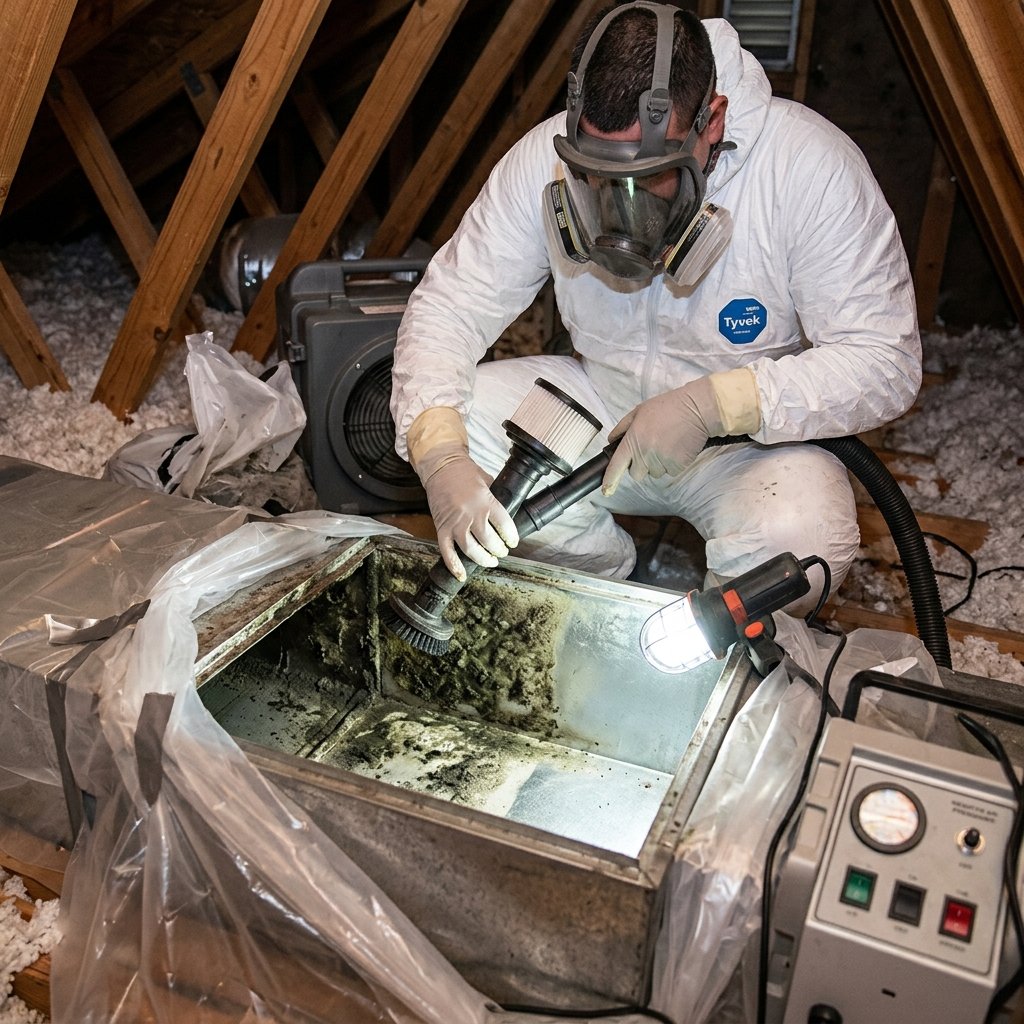
We’ve found that homes with poor attic insulation or inadequate ventilation experience mold growth far more frequently. The temperature difference between your cool ducts and hot attic air creates condensation, which mold loves.
Health Risks of HVAC Mold for Your Family
Mold spores are microscopic particles that become airborne and enter your lungs with every breath. For healthy adults, occasional exposure may cause minor symptoms. But for children, elderly family members, and anyone with asthma, allergies, or compromised immunity, mold exposure can trigger serious reactions.
Common health effects from HVAC mold exposure include:
- Persistent coughing, especially at night or early morning
- Wheezing and shortness of breath
- Nasal congestion and sinus issues
- Watery or itchy eyes
- Skin irritation in some cases
- Aggravated asthma and allergy symptoms
- Chronic sinus infections
- Fatigue and headaches
Certain mold species, like Stachybotrys and Aspergillus, produce mycotoxins that can trigger more severe reactions. Young children are particularly vulnerable because their immune systems are still developing. We’ve worked with families who noticed their child’s chronic cough disappeared after we removed mold from their HVAC system.
The challenge is that these symptoms often get mistaken for seasonal allergies or minor illness. Many San Antonio homeowners struggle for months with unexplained respiratory issues before realizing their HVAC system is the culprit. This is why professional inspection matters: it identifies the source rather than just treating the symptoms.
Our San Antonio HVAC Mold Inspection Process
We begin every mold assessment with a thorough visual inspection of your air handler, accessible ductwork, and vents. Our certified technicians use specialized equipment to detect moisture levels and check for active mold growth. We examine your attic, crawl space, and basement to understand moisture sources and ductwork condition.
If we suspect mold but need confirmation, we collect air samples and send them to an independent lab for testing. This identifies the specific mold species and concentration level, giving us crucial information for remediation planning. Lab results also provide documentation for your records and insurance if needed.
We’ll assess your entire system for vulnerabilities: Is your condensation drain working? Are your ducts properly sealed? Is your attic adequately ventilated? These details determine whether mold will return after remediation. A thorough inspection takes 1-2 hours but prevents costly mistakes and ensures we address root causes, not just symptoms.
Our team provides a detailed written report with clear photos, lab results if applicable, and a remediation plan tailored to your situation. You’ll understand exactly what we found, where it is, and what needs to happen next.
Professional Remediation: How We Eliminate Mold from Your System
Cleaning surface mold with household bleach won’t solve duct mold. You need professional-grade remediation that reaches every contaminated area and prevents regrowth. We use a multi-step approach that’s proven effective across San Antonio.
First, we isolate affected areas and use HEPA-filtered negative pressure equipment to contain spores during cleaning. This prevents mold from spreading to other parts of your home or becoming airborne in dangerous concentrations.
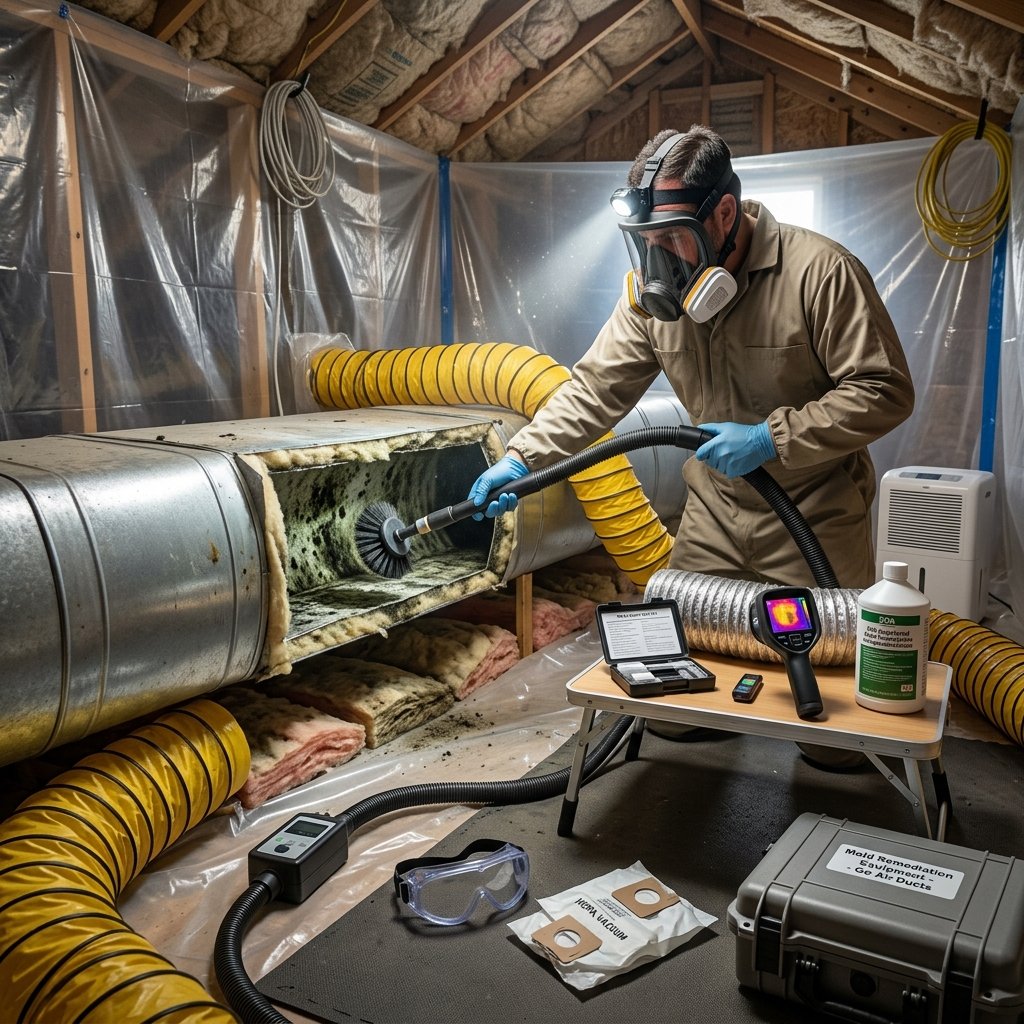
Next, we physically remove contaminated duct sections when necessary, apply antimicrobial treatments to affected areas, and thoroughly clean your air handler. For extensive mold, duct replacement is sometimes the safest option. We rebuild sections using mold-resistant materials and proper insulation.
Finally, we address moisture sources. This might include repairing condensation drains, improving attic ventilation, installing dehumidifiers, or sealing ductwork to prevent condensation. Stopping the moisture is how we prevent mold from returning.
The entire process typically takes 1-3 days depending on contamination severity and how much ductwork needs attention. We schedule remediation at your convenience and work efficiently to minimize disruption to your daily life.
Preventing Future Mold Growth in Your Ducts
The key to long-term mold prevention is controlling moisture. Start by ensuring your air handler’s condensation drain is clear and draining properly. We recommend checking it monthly, especially before cooling season. A simple blockage can trap water inside your system.
Maintain proper humidity levels in your home. Ideally, indoor humidity should stay between 30-50%. During San Antonio’s humid summers, run your AC consistently and consider adding a whole-home dehumidifier if humidity creeps above 55% even with AC running.
Improve your attic ventilation. Proper soffit and ridge vents allow hot, moist attic air to escape, reducing condensation on cool ducts. If your attic lacks ventilation or stays extremely hot, additional vents or a ventilation fan can make a significant difference.
Have your ducts professionally cleaned every 3-5 years. Dust buildup feeds mold growth, so routine cleaning removes the organic material mold needs to establish itself. Schedule cleaning after any water intrusion or if you notice dust accumulation around vents.
Finally, insulate your ductwork properly. Bare ducts in hot attics sweat condensation in summer. Adding or replacing duct insulation prevents this condensation and keeps temperatures stable throughout your system.
Why Air Quality Matters for San Antonio Homes
Your HVAC system is the primary path for air circulation in your home. Clean, properly maintained ducts mean the air your family breathes is genuinely filtered and healthy. Poor air quality accumulates gradually and often goes unnoticed until health symptoms appear.
San Antonio’s seasonal allergies, dust-heavy environment, and high humidity make air quality management essential. When your ducts are clean and mold-free, your system works more efficiently, your energy bills drop, and your family stays healthier. Understanding how clean air ducts help reduce allergies and asthma symptoms reveals why this investment matters for families dealing with respiratory issues.
We’ve helped homeowners see measurable improvements in allergy symptoms, sleep quality, and overall wellness after removing mold and cleaning their HVAC systems. One family in Austin reported their daughter’s persistent cough disappeared within weeks of mold remediation. These results happen because we’re addressing the actual source of contamination, not just masking symptoms.
Our Certified Technicians and Service Standards
Every technician on our team is certified and trained specifically in HVAC mold detection and remediation. We don’t rely on general contractors or unlicensed workers. Our people understand the intricacies of air handler design, duct construction, and moisture control in Texas homes.
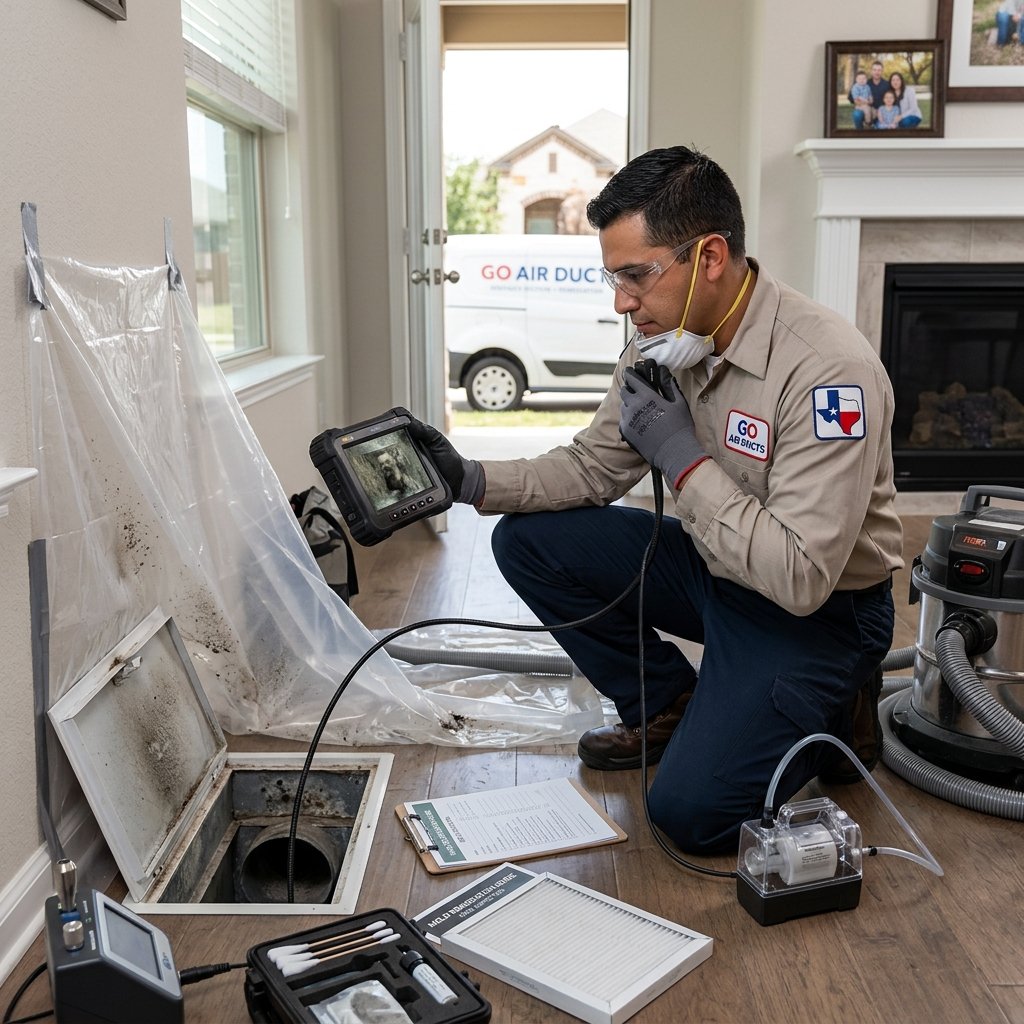
We stay current with EPA guidelines, industry best practices, and the latest mold remediation techniques. Our equipment includes HEPA filtration systems, moisture meters, thermal imaging cameras, and lab-grade testing kits. We don’t cut corners because we know the health implications.
All work comes with a service guarantee. If mold returns within one year due to our workmanship, we’ll remediate it again at no cost. We stand behind every job because we’re confident in our process and committed to your family’s safety.
We’re also fully licensed and insured. Your home and family are protected under our liability coverage, and all work meets San Antonio building codes and health department standards.
Getting Your Free Mold Remediation Estimate Today
If you’ve noticed musty odors, suspect mold in your ducts, or simply want peace of mind, reach out for a free inspection. We’ll come to your San Antonio or Austin home, examine your HVAC system thoroughly, and provide a clear, honest assessment.
There’s no obligation and no hidden fees. You’ll know exactly what we find, what it means for your health and home, and what solutions cost. Many homeowners are surprised by how affordable professional remediation is compared to the ongoing health and energy costs of ignoring the problem.
Call us today or schedule your free estimate online. We offer same-day service availability for urgent situations and work around your schedule. Your family’s health and indoor air quality are too important to delay.
For further reading: Mold in your air ducts.
If you’re dealing with dust, poor airflow, mold in your ducts, or a clogged dryer vent — don’t wait. These issues can affect your health and safety. Go Air Ducts Group are the local experts in air duct cleaning, mold removal, dryer vent cleaning, and attic insulation. Call now for a free inspection and same-day service in Austin and San Antonio.
Frequently Asked Questions (FAQ)
How do we detect mold in air ducts if I can’t see it?
We use advanced inspection equipment including camera systems and moisture detection tools to identify mold growth hidden deep within your ductwork. Our certified technicians can spot early-stage mold colonies that would be invisible to the naked eye, allowing us to address the problem before it spreads throughout your system. We’ll provide you with visual documentation so you can see exactly what we found.
What’s our process for removing mold from HVAC systems?
We start by isolating affected areas, then use specialized equipment to safely extract mold colonies from your ducts without spreading contamination. After removal, we apply EPA-approved treatments and sanitize the entire system to prevent regrowth. We’ll also identify and fix the moisture sources that allowed mold to develop in the first place, since treating the symptom alone won’t solve your problem.
How long does mold remediation typically take?
Most residential mold remediation projects take between one and three days depending on the extent of contamination and your system’s size. We’ll give you an accurate timeline during your free estimate after we’ve thoroughly inspected your ducts. Our goal is to get your indoor air quality restored quickly while ensuring we don’t rush the remediation process.