
🕑 11 min read
Table of Contents
- Why Moldy Air Ducts Are a Serious Problem in San Antonio
- Health Risks of Mold in Your HVAC System
- Signs Your Air Ducts Need Professional Inspection and Cleaning
- How We Assess Mold and Contamination During Free Estimates
- The True Cost of Professional Duct Mold Removal
- Our San Antonio Duct Cleaning and Remediation Process
- Why You Should Address Moldy Ducts Immediately
- How Our Estimates Help You Make the Right Decision
- Preventing Future Mold Growth in Your Air Ducts
- Get Your Free Professional Duct Inspection Today
- Frequently Asked Questions (FAQ)
Why Moldy Air Ducts Are a Serious Problem in San Antonio
San Antonio’s humidity and temperature swings create ideal conditions for mold growth in air ducts. If you’ve noticed musty odors, visible dust around vents, or unexplained respiratory issues in your home, moldy ducts could be the culprit. We’ve inspected thousands of homes across the San Antonio area, and mold contamination is one of the most common problems we find during free estimates.
This guide walks you through what causes moldy ducts, how to spot the warning signs, what a professional inspection costs, and why addressing this issue quickly protects both your health and your HVAC investment.
San Antonio sits in a subtropical climate with high humidity levels, especially during summer months. When moisture enters your ductwork through leaks, inadequate insulation, or condensation buildup, it creates the perfect breeding ground for mold. Unlike northern climates where humidity naturally drops in winter, our homes stay warm and damp year-round.
Moldy ducts don’t just smell bad. They actively pump contaminated air through every room in your home multiple times per day. The spores circulate continuously, settling on furniture, bedding, and your family’s respiratory systems. Once mold establishes itself in a duct system, it spreads rapidly because air movement helps distribute spores throughout the network.
We’ve seen cases where homeowners spend months dealing with allergy symptoms, only to discover the source was hidden mold deep inside their ductwork. The ducting in most San Antonio homes runs through attics and crawl spaces where moisture control is naturally challenging. Without professional cleaning and remediation, the problem doesn’t resolve itself.
Health Risks of Mold in Your HVAC System
Mold exposure triggers different responses in different people, depending on sensitivity and the amount of exposure. Common symptoms include persistent coughing, sneezing, watery eyes, and throat irritation that seems to worsen when your HVAC system runs.
People with asthma or mold allergies experience the most serious effects. We’ve had customers report that their children’s asthma improved dramatically after we cleaned moldy ducts. Elderly residents and those with compromised immune systems face heightened risk of respiratory infections from mold exposure.
Beyond immediate symptoms, chronic mold exposure can lead to more serious health complications. Certain mold species produce mycotoxins that cause neurological symptoms and persistent inflammation. Children in moldy homes sometimes show developmental delays in concentration and sleep quality that improve once the contamination is removed.
The real concern isn’t a single mold spore but the cumulative daily exposure happening inside your home. Your HVAC system cycles 8-10 times per day or more, meaning moldy ductwork exposes your family to spore-laden air constantly. Professional remediation stops this exposure at the source rather than just treating symptoms.
Signs Your Air Ducts Need Professional Inspection and Cleaning
Several warning signs indicate moldy ductwork that deserve immediate attention. A musty, earthy smell near vents or throughout your home is the most obvious red flag. This smell intensifies when your system kicks on and dissipates when it shuts off, telling you the odor source is in the ducts themselves.
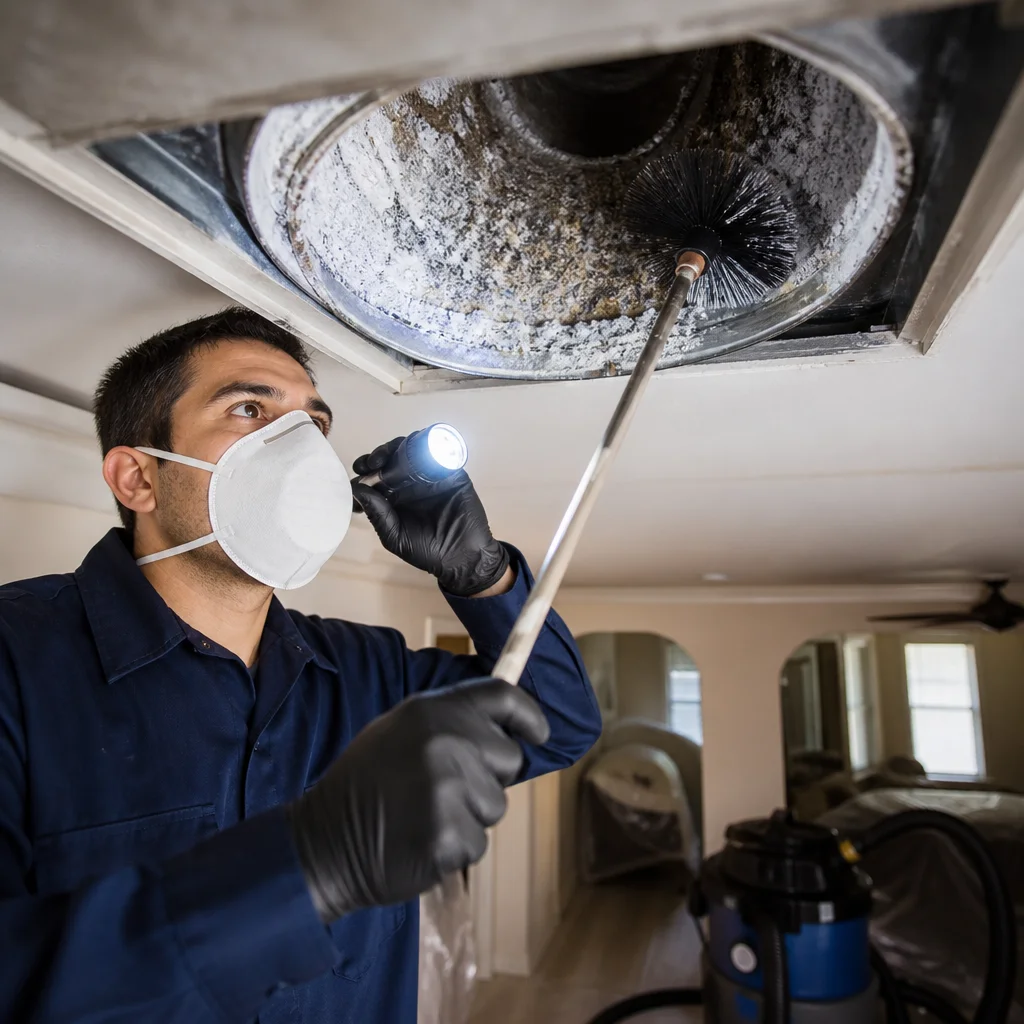
Look for visible mold growth around vent registers, especially in bathrooms and basements where humidity naturally concentrates. Black or greenish discoloration on ductwork visible in attics or crawl spaces means active contamination. Some homeowners spot fuzzy growth inside return air vents, which indicates serious mold colonization.
Performance issues also signal duct problems. Unexplained increases in energy bills suggest airflow obstruction from mold buildup and debris. Rooms that feel stuffy or don’t cool properly despite the AC running indicate blockages or leaks in the duct system. Excessive dust on furniture just days after cleaning points to contamination being circulated rather than filtered.
We often find common air duct problems during inspections including mold, loose insulation, and separated connections. If you’re noticing any combination of these signs, a professional inspection reveals exactly what you’re dealing with and what needs fixing.
How We Assess Mold and Contamination During Free Estimates
Our inspection process combines visual assessment, air quality testing, and moisture measurement to give you a complete picture of your duct system’s condition. We don’t charge for this evaluation because we believe homeowners deserve to understand the problem before making treatment decisions.
During the initial walkthrough, our certified technicians check visible ductwork in attics, crawl spaces, and basements. We photograph problem areas and explain what we’re seeing in straightforward terms. We assess airflow at each register, check for air leaks around connections, and look for moisture accumulation or insulation damage.
For suspected mold, we use moisture meters and infrared cameras to locate hidden problems within duct walls. Air quality sampling tells us whether mold spores are actively circulating or localized to specific areas. This data guides the scope and cost of remediation, ensuring you’re not paying for unnecessary treatment.
We also evaluate your system’s overall condition. Sometimes mold indicates broader issues like inadequate duct sealing, missing insulation, or undersized return air pathways. Our estimate includes recommendations for preventing future problems, not just treating current damage.
The True Cost of Professional Duct Mold Removal
Moldy duct cleaning and remediation costs depend on several factors: duct system size, contamination severity, whether the system needs repair beyond cleaning, and your home’s accessibility. San Antonio homes typically range from 1,200 to 3,500 square feet, translating to 300-500 linear feet of ductwork.
A basic mold remediation job for a small to medium home starts around $1,200-$1,800. This includes professional cleaning of the entire system, mold treatment with EPA-approved disinfectants, and sealing obvious leaks. Larger systems or heavily contaminated ductwork runs $2,000-$3,500. Severe cases involving duct replacement can exceed $5,000.
What makes professional removal worth the investment compared to DIY attempts? Professional crews have access to commercial-grade equipment that reaches every corner of your ductwork. They use HEPA filtration systems that capture mold spores rather than spreading them through your home. Chemical treatments require proper application knowledge and safety precautions that prevent re-contamination.
Many homeowners find they recover the investment through lower energy bills within 12-18 months. Moldy, blocked ductwork forces your system to work harder, driving up cooling costs significantly. Once we remove the obstruction and improve airflow, your AC operates more efficiently. Plus, you avoid medical expenses related to prolonged mold exposure.
We provide free estimates so you know the exact cost before approving any work. This transparency helps you budget appropriately and understand what’s included in the remediation.
Our San Antonio Duct Cleaning and Remediation Process
Our team starts with complete system access. We locate all ductwork sections, identify isolated vs. circulating contamination, and develop a targeted cleaning plan. For accessible ducts in attics or crawl spaces, we inspect every connection and seal point.
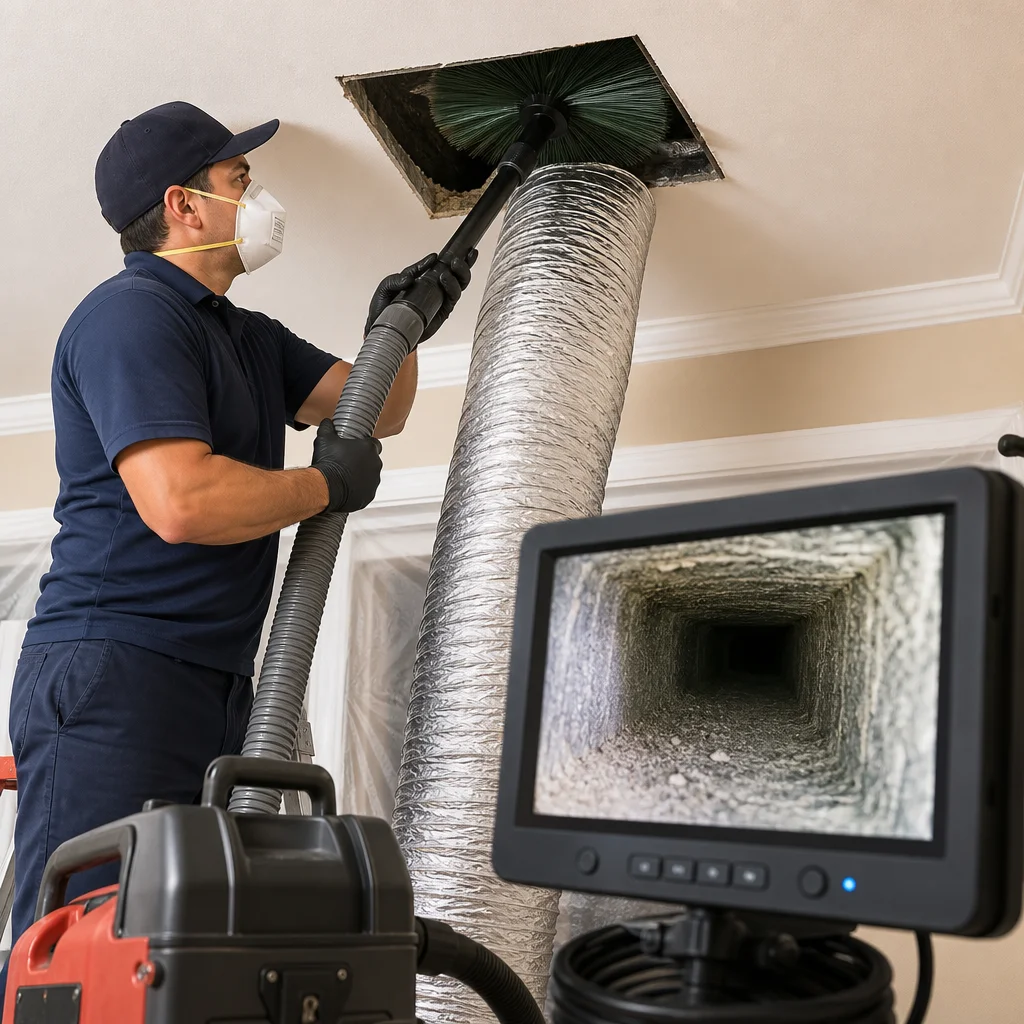
The cleaning phase uses negative air pressure equipment that pulls debris out of ducts without releasing contamination into your home. Rotating brushes loosen stubborn buildup while powerful vacuums remove it. We clean every branch, including hard-to-reach sections behind insulation. Return air paths get special attention since they’re contamination highways connecting problem areas to your furnace.
After mechanical cleaning, we apply EPA-approved mold inhibitors and disinfectants throughout the system. These products prevent re-growth for 12-24 months while being safe for residential use once dried. We pay special attention to low-temperature zones where moisture tends to collect.
The final step involves sealing leaks and checking airflow balance. Leaky ductwork lets untreated air bypass your filter, reintroducing contamination. We seal connections with mastic sealant and wrap insulation, creating an airtight system. This immediately improves efficiency and prevents future moisture intrusion.
Following our duct cleaning best practices, we verify results with post-cleaning air quality testing. You receive documentation showing before and after contamination levels, giving you peace of mind that the work is complete.
Why You Should Address Moldy Ducts Immediately
Waiting to address mold contamination costs more money and health consequences down the road. Mold spreads aggressively in ductwork because your HVAC system provides constant air circulation and humidity. A small problem today becomes a major infestation in weeks or months.
As mold spreads deeper into ductwork and insulation, removal becomes more complicated and expensive. You may eventually need duct replacement rather than just cleaning. Early intervention stops the progression and keeps costs manageable.
Your family’s health depends on indoor air quality. Every day you delay treatment, family members continue inhaling mold spores. Respiratory issues worsen, allergies intensify, and vulnerable household members face serious health risks. Children’s academic performance sometimes improves once we eliminate the constant exposure affecting their concentration and sleep.
Property value also takes a hit. When you eventually sell, home inspectors discover mold contamination. This creates negotiation complications and potentially reduces your home’s value or kills the sale entirely. Addressing it now protects your investment.
How Our Estimates Help You Make the Right Decision
A professional estimate does far more than quote a price. It documents the problem with photos and measurements, creates accountability for the work, and identifies related issues you might not have considered. You can reference this documentation when working with other contractors or your insurance company.
Our estimates break down the scope clearly: what gets cleaned, what gets sealed, what gets treated, and what ongoing maintenance prevents future problems. You understand exactly what you’re paying for and why. This clarity prevents surprises during the job and misunderstandings about completion.
The estimate also becomes a guide for prevention. We identify what contributed to mold growth in your specific situation. Maybe it’s inadequate attic ventilation, a leaking HVAC condensation line, or missing insulation creating cold surfaces where moisture condenses. Understanding these factors helps you make permanent improvements.
Armed with our professional assessment, you make informed decisions from a position of knowledge rather than fear. You know the real risk level, realistic treatment costs, and expected timeline. You can prioritize this project confidently within your home maintenance budget.
Preventing Future Mold Growth in Your Air Ducts
Prevention starts with moisture control. Your HVAC system includes a condensation drain that removes water generated during cooling. If this drain line gets clogged, water backs up into ducts creating mold conditions. We inspect and clean these lines during every service call.
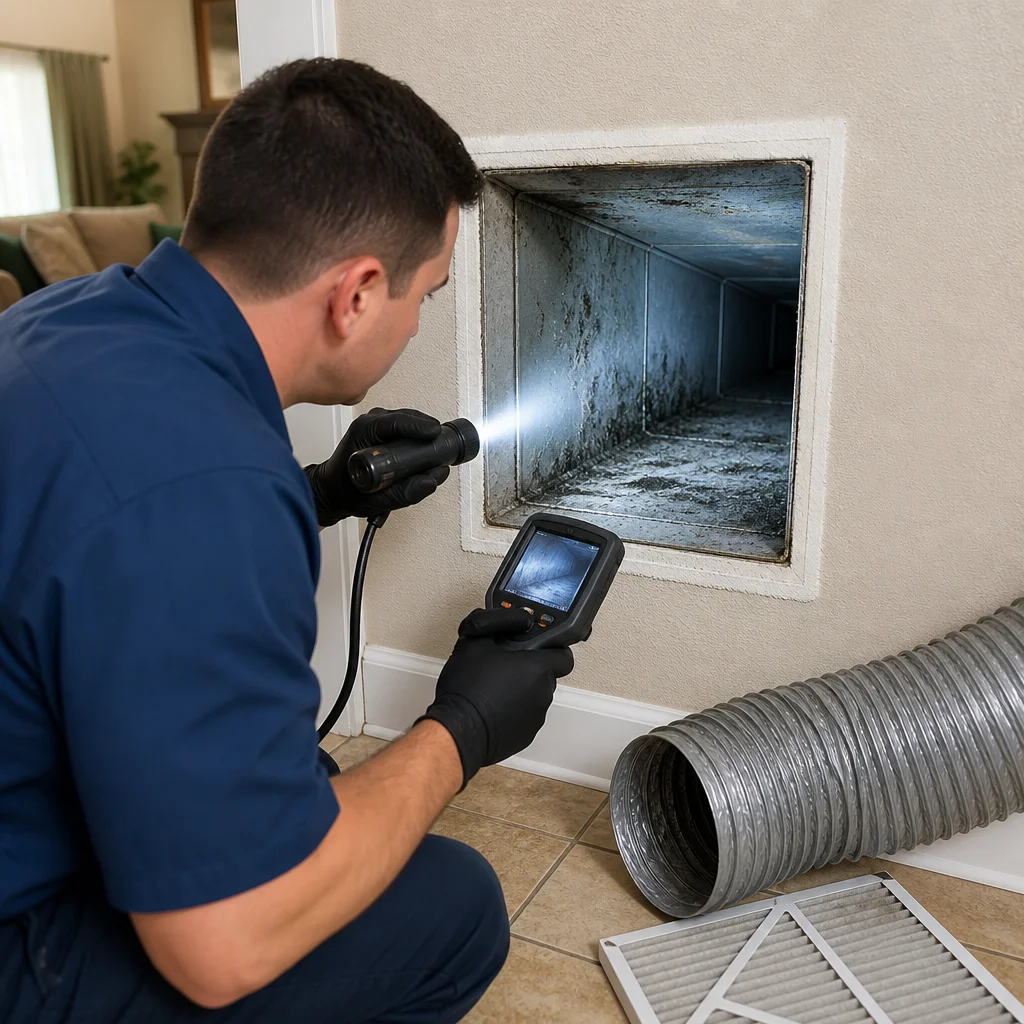
Proper insulation on ductwork prevents condensation from forming on cold metal surfaces. Ducts running through unconditioned spaces like attics need adequate wrapping to maintain interior temperatures above the dew point. We assess insulation condition during inspections and upgrade when needed.
Ventilation matters significantly. Bathrooms, kitchens, and laundry rooms need exhaust vents that direct moisture outside rather than into attic spaces where ductwork sits. Many San Antonio homes have improper venting or disconnected exhaust lines. Correcting these issues eliminates the moisture source entirely.
Regular maintenance with our HVAC disinfecting solutions keeps your system healthy between deep cleanings. Annual filter changes and system inspections catch problems early before they develop into expensive contamination. We recommend inspection every 12-18 months for homes in our humid climate.
Finally, maintaining healthy humidity levels inside your home reduces duct surface condensation. Using a dehumidifier in particularly damp areas and ensuring adequate air conditioning during hot months both help. Your thermostat’s setting affects humidity more than you’d think, so we sometimes adjust recommendations based on your specific situation.
Get Your Free Professional Duct Inspection Today
Don’t let moldy ducts compromise your family’s health or drain your wallet through wasted energy. We’re ready to provide a honest assessment of your air duct system with zero cost or obligation. Our inspection reveals exactly what you’re dealing with and what options make sense for your situation.
Call us today for same-day scheduling in San Antonio, or request your free duct inspection online. Our certified technicians arrive ready to answer all your questions and provide a detailed written estimate. We’ve helped thousands of San Antonio homeowners breathe easier and reduce their energy bills.
The sooner you address moldy ducts, the sooner you protect your family and preserve your HVAC investment. Contact Go Air Ducts Group now.
If you’re dealing with dust, poor airflow, mold in your ducts, or a clogged dryer vent — don’t wait. These issues can affect your health and safety. Go Air Ducts Group are the local experts in air duct cleaning, mold removal, dryer vent cleaning, and attic insulation. Call now for a free inspection and same-day service in Austin and San Antonio.
Frequently Asked Questions (FAQ)
How much does a moldy duct estimate cost?
Our estimates are completely free. We charge nothing for our professional inspection, mold assessment, and written estimate for remediation work. During this visit, our certified technicians will identify the extent of contamination and provide you with an upfront quote for cleaning and treatment options specific to your San Antonio home.
What health problems can moldy air ducts cause?
Mold in your ducts circulates spores throughout your home every time your HVAC system runs, which can trigger allergies, asthma attacks, respiratory infections, and other serious health issues. We’ve found that homeowners in San Antonio’s humid climate are especially vulnerable, which is why we recommend professional inspection if you notice persistent allergies or unexplained breathing problems.
How quickly can we schedule an inspection?
We prioritize fast response times for San Antonio homeowners concerned about mold contamination. Contact us through our website or phone to book your free estimate, and we’ll work to get you scheduled within days rather than weeks so you can address the problem before it worsens.