
🕑 13 min read
Does HVAC disinfecting really stop musty odors?
Persistent musty smells usually come from mold, mildew, or bacteria living on coils and inside ductwork. Professional HVAC disinfecting applies an EPA-registered antimicrobial treatment to the coils, drain pan, and air handler to kill those organisms at the source. Go Air Ducts disinfects HVAC systems across Texas so homes smell fresh and indoor air stays cleaner and healthier.
Table of Contents
- Why Musty Odors in Your HVAC System Indicate a Real Problem
- How Mold and Bacteria Grow Inside Your Air Ducts
- The Health Impact of Breathing Contaminated Air
- Our Professional HVAC Disinfecting Process Explained
- Why Standard Cleaning Isn’t Enough for Stubborn Odors
- Signs Your Air Ducts Need Professional Disinfection
- The Connection Between Humidity, Moisture, and Duct Odors
- Our Certified Technicians Use EPA-Approved Disinfection Methods
- How Dryer Vents and Return Air Systems Contribute to Musty Smells
- What to Expect After Our Disinfection Service
- Preventing Future Odors with Maintenance Plans We Recommend
- Schedule Your Free HVAC Disinfection Estimate Today
- Frequently Asked Questions (FAQ)
Why Musty Odors in Your HVAC System Indicate a Real Problem
That stale, earthy smell creeping through your vents isn’t just unpleasant. It’s a sign that something living and growing inside your ductwork needs professional attention. Here in Texas, where humidity levels fluctuate and temperatures swing dramatically, HVAC systems become breeding grounds for mold and bacteria far more often than homeowners realize.
At Go Air Ducts, we’ve spent years helping Austin and San Antonio homeowners eliminate odors that standard cleaning can’t touch. The solution requires more than a basic air duct cleaning. It demands targeted disinfection using EPA-approved methods designed to kill the root cause, not mask the symptom.
A musty smell in your air ducts is never normal, and it’s never harmless. That odor comes from microbial growth. When you detect it, your HVAC system is actively circulating contaminated air throughout your home every single day.
Most homeowners assume the smell will fade on its own or that opening a window will solve it. Neither is true. Musty odors persist because the environment inside your ducts is perfect for continued growth. Without intervention, the problem gets worse, not better.
The financial impact matters too. A contaminated HVAC system works harder, runs longer, and uses more energy to maintain your desired temperature. We’ve measured energy usage increases of 15 to 25 percent in homes with significant mold or bacterial buildup inside their ductwork.
Action step: If you notice a persistent musty smell, don’t wait. Schedule a professional inspection to identify whether mold, bacteria, or other contaminants are the culprit.
How Mold and Bacteria Grow Inside Your Air Ducts
Your air ducts are dark, enclosed, and often difficult to access. They collect dust, pet dander, and debris naturally. When moisture enters the picture, these materials become food for mold and bacteria.
Here’s how the cycle typically starts in Texas homes:
- Condensation forms inside ducts during air conditioning cycles
- Dust and organic material accumulate from normal household activity
- Temperature and humidity create an ideal growth environment
- Mold spores settle and germinate within 24 to 48 hours
- Bacterial colonies establish themselves as mold spreads
We’ve pulled samples from Austin-area homes and found multiple species of mold growing simultaneously within the same duct section. The most common culprits are Aspergillus, Penicillium, and Alternaria varieties.
Return air ducts are particularly vulnerable because they pull air and particulates back into the system from living spaces. A bedroom with high humidity or a bathroom with poor ventilation sends moisture directly into your return system.
Action step: Have your return air ducts professionally inspected if anyone in your home has unexplained allergy symptoms or respiratory issues that worsen when the HVAC system runs.
The Health Impact of Breathing Contaminated Air
The air you breathe indoors spends 90 percent of its time circulating through your HVAC system. When that system contains active mold or bacterial growth, you’re essentially inhaling microorganisms and their spores every single day.
This doesn’t automatically cause illness in every person, but it significantly increases risk, especially for vulnerable groups. Children, elderly family members, and anyone with asthma, allergies, or compromised immunity face the highest danger.
Common symptoms we hear from homeowners include:
- Persistent coughing that worsens indoors
- Unexplained congestion that clears when away from home
- Allergy-like symptoms year-round, even in winter
- Skin irritation or itching without clear cause
- Headaches that develop indoors and fade outdoors
Dirty air ducts can harbor serious health risks. Long-term exposure to mold spores has been linked to respiratory infections, asthma exacerbation, and chronic bronchitis in medical literature.
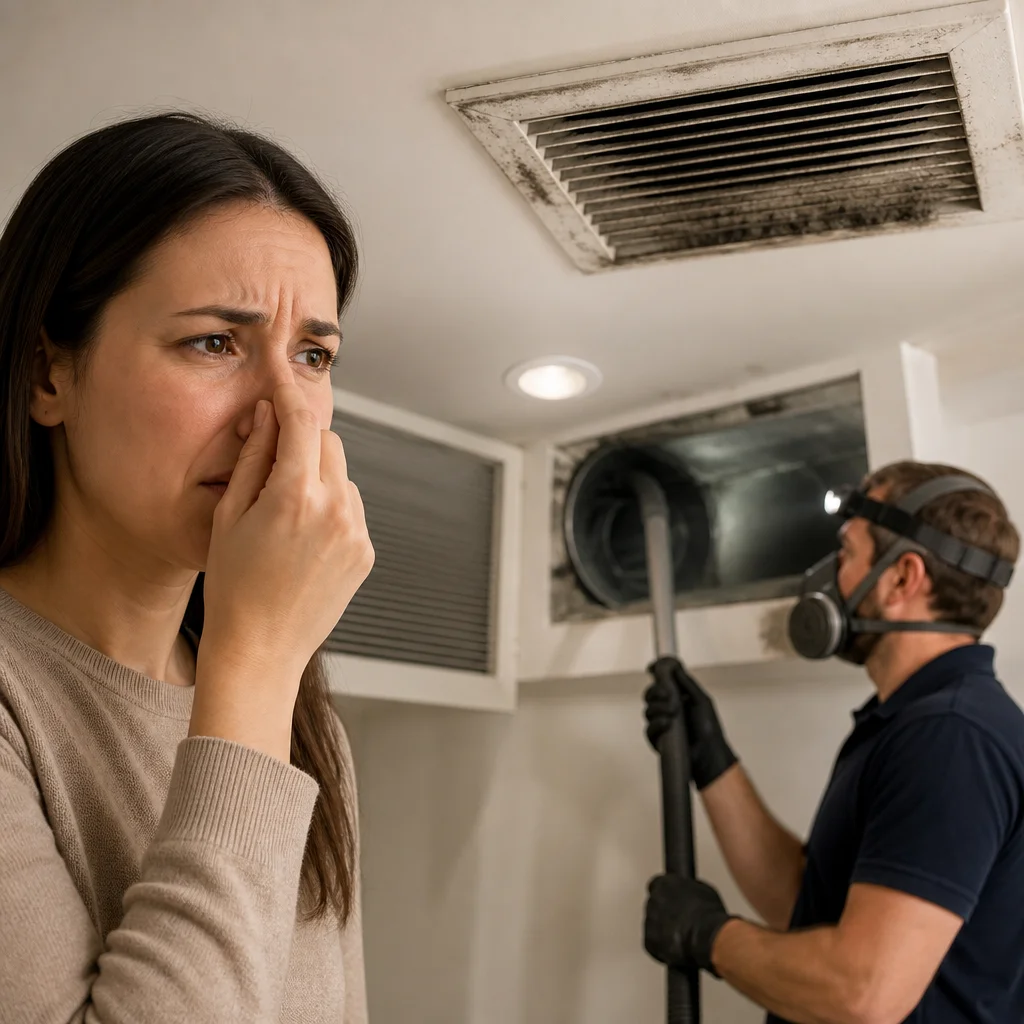
Action step: If family members experience indoor symptoms that improve when away from home, consider a professional air quality assessment as part of your disinfection evaluation.
Our Professional HVAC Disinfecting Process Explained
Our disinfection approach differs fundamentally from standard duct cleaning. We combine mechanical removal with targeted antimicrobial treatment to eliminate both visible contamination and living microorganisms.
Here’s what our certified technicians execute during a complete disinfection service:
- Initial inspection and sampling – We identify the extent of contamination and confirm the specific organisms present
- Mechanical cleaning – Using HEPA-equipped equipment, we remove dust, debris, and mold buildup from main trunk lines and branch ducts
- Disinfection application – We apply EPA-approved disinfectants specifically formulated for HVAC systems, ensuring complete coverage
- Mold inhibitor treatment – We apply a residual treatment that discourages regrowth for several months
- System verification – We retest airflow and confirm odor elimination before we consider the job complete
The entire process typically takes 4 to 6 hours, depending on your system’s size and complexity. Our technicians don’t just spray chemicals and leave. We document everything, provide photographic evidence, and give you a detailed report explaining what we found and what we treated.
Action step: Request a detailed quote that breaks down each phase of disinfection so you understand exactly what your investment covers.
Why Standard Cleaning Isn’t Enough for Stubborn Odors
Basic air duct cleaning removes visible dust and debris. It’s a maintenance task that improves airflow and reduces particulate circulation. But standard cleaning has a critical limitation: it doesn’t kill the organisms causing the smell.
Think of it this way. If mold is actively growing inside your ducts, sweeping out the debris is like cleaning the kitchen floor while ignoring the water leak behind the wall. The problem persists because you haven’t addressed the root cause.
Additionally, standard cleaning equipment often stirs up dormant spores without actually removing them. We’ve measured cases where homeowners reported worse odors immediately after standard cleaning, then gradual improvement over days as the stirred spores settled. That’s not a solution. That’s temporary displacement.
Our disinfection process kills mold and bacteria at the cellular level, prevents regrowth, and eliminates the source of odor. Professional HVAC cleaning with disinfection provides lasting results that homeowners can feel and measure.
Action step: Ask any cleaning company whether their service includes disinfection or only mechanical removal. If they can’t clearly explain their antimicrobial methods, keep looking.
Signs Your Air Ducts Need Professional Disinfection
Beyond musty smells, several warning signs indicate your ducts need disinfection rather than standard cleaning alone.
Visible black or greenish deposits around vent registers suggest active mold growth. These deposits are colonies, not just dust. If you see them, mold is established throughout your system, not just at the register.
Increased allergy symptoms during heating or cooling seasons point to airborne microorganisms. If symptoms appear when your HVAC runs and disappear when it’s off, the system itself is the source.
High humidity levels despite running your air conditioning suggest condensation buildup inside ducts. Excess moisture creates the ideal environment for microbial growth and typically requires both disinfection and addressed moisture management.
A sudden return of musty odor after standard cleaning indicates that cleaning alone didn’t kill the root problem. The organisms remained dormant or continued reproducing, and the smell returned as growth resumed.
Action step: Document any of these signs with photos and note when symptoms appear. This information helps our technicians diagnose the exact problem during your free inspection.
The Connection Between Humidity, Moisture, and Duct Odors
Texas humidity is relentless, and it directly contributes to musty odors in HVAC systems. When outdoor air enters through intake vents or when your AC runs at partial capacity during mild weather, moisture enters the system.
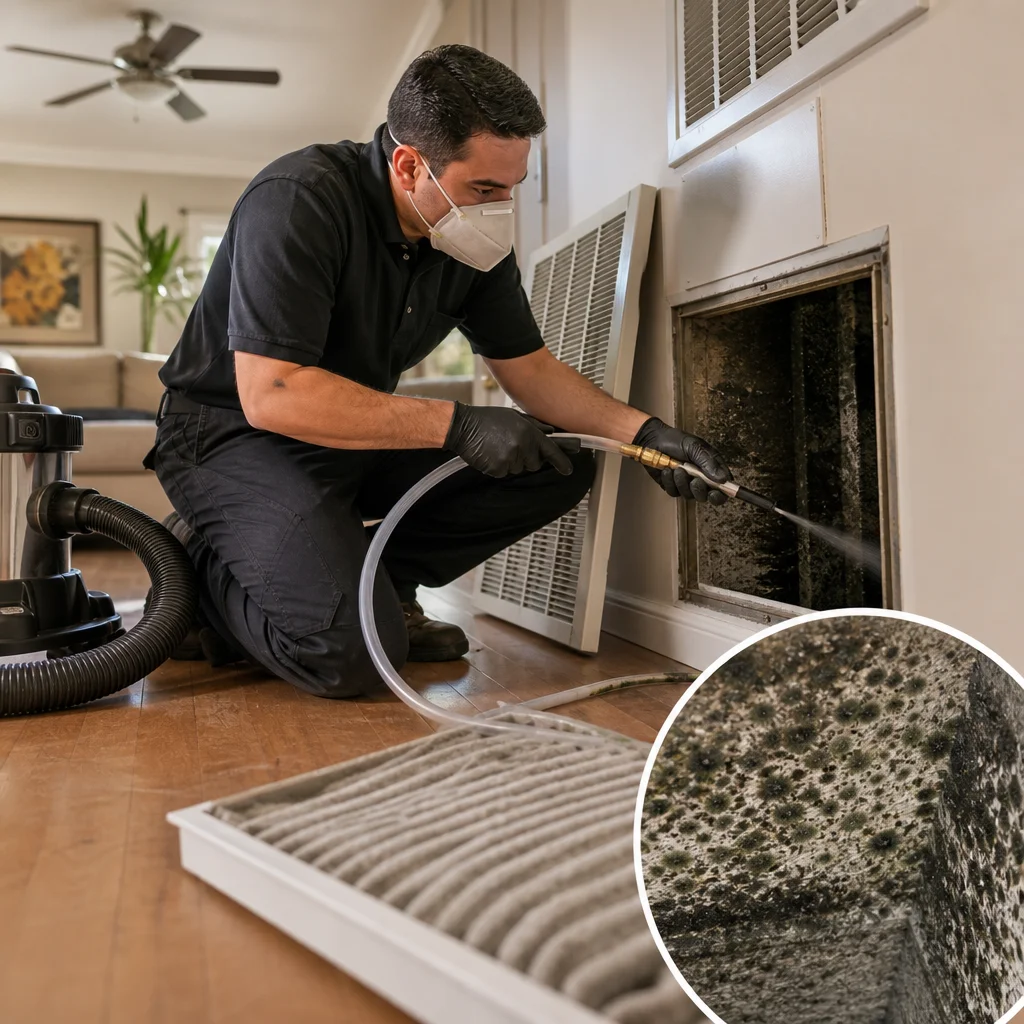
Here’s the critical point: air conditioning removes moisture indoors, but it also creates condensation inside your ducts. That condensation pools in low spots, creates wet surfaces, and provides the moisture mold and bacteria need to thrive.
We’ve measured humidity levels inside ductwork that exceed 80 percent during summer months. At that level, mold germination is nearly inevitable within days if spores are present.
Improperly sealed return air systems amplify the problem. If your return air pulls from an attic, basement, or crawl space, you’re sucking humid air directly into your system. Homes with poor duct sealing see moisture problems in weeks rather than months.
Our disinfection service includes assessment of your system’s moisture management. If we identify condensation or excess humidity as the driver, we recommend follow-up sealing and may suggest additional humidity control measures.
Action step: Have your HVAC contractor check duct sealing and return air path integrity. Poor sealing is often the underlying cause that disinfection alone cannot solve permanently.
Our Certified Technicians Use EPA-Approved Disinfection Methods
We don’t improvise with cleaning chemicals. Every product we use for HVAC disinfection carries EPA approval and registration for use inside residential air systems. Our technicians maintain current certifications in HVAC service and air quality protocols.
The specific disinfectants we deploy are chosen based on what we find during inspection. Some situations require biocides effective against specific mold species. Others benefit from broad-spectrum antimicrobial treatments. One-size-fits-all approaches simply don’t work in real-world remediation.
Our team completes ongoing training on the latest disinfection technologies and methods. We understand the difference between temporary odor suppression and permanent contamination elimination. We know which products leave residual protection and which simply kill on contact.
All our work comes backed by our service guarantee. If musty odors return within 90 days, we return at no additional charge and address the issue. That confidence comes from proper technique and appropriate product selection.
Action step: Ask prospective disinfection services to name the specific EPA-approved products they use and explain why those products suit your specific situation.
How Dryer Vents and Return Air Systems Contribute to Musty Smells
Most homeowners focus on their main HVAC ducts, but dryer vents and return air systems are equally important to addressing odor problems.
Dryer vents accumulate lint, moisture, and organic debris over time. This buildup traps humidity and creates a breeding ground for mold. Lint contains laundry detergent residue and skin cells that microorganisms consume readily. We’ve pulled lint traps from Austin-area homes where the accumulated material was so dense it blocked 70 percent of airflow.
When dryer vents aren’t properly sealed or maintained, they can leak warm, humid air directly into your home. That moisture migrates toward cooler return air ducts, creating condensation and humidity problems throughout your HVAC system.
Return air systems pull air from your living spaces back to your furnace or air handler. If those return pathways are contaminated, you’re circulating problems, not solutions. Return plenums (the main collection areas) accumulate dust and debris efficiently and are perfect habitats for mold colonies.
We address dryer vents as part of our comprehensive service. Cleaning and sealing these vents prevents moisture from entering your main HVAC system and significantly reduces odor problems.
Action step: Schedule dryer vent cleaning along with your HVAC disinfection. These services work together to eliminate both immediate and underlying causes of musty smells.
What to Expect After Our Disinfection Service
Odor elimination is typically immediate. The moment our technicians complete disinfection and your system cycles air through the treated ducts, the smell should be noticeably reduced or completely gone. Most homeowners report full odor elimination within 24 hours as treated surfaces continue to inhibit microbial activity.
Improved air quality is often subtle. You might notice that family members with allergy symptoms experience fewer respiratory issues. Bedding might not smell stale. Rooms feel fresher without the underlying earthy tone.
Your HVAC system should run more efficiently. Disinfected, clean ducts allow air to flow freely without the resistance caused by mold buildup. This translates to slightly lower energy bills and faster temperature response.
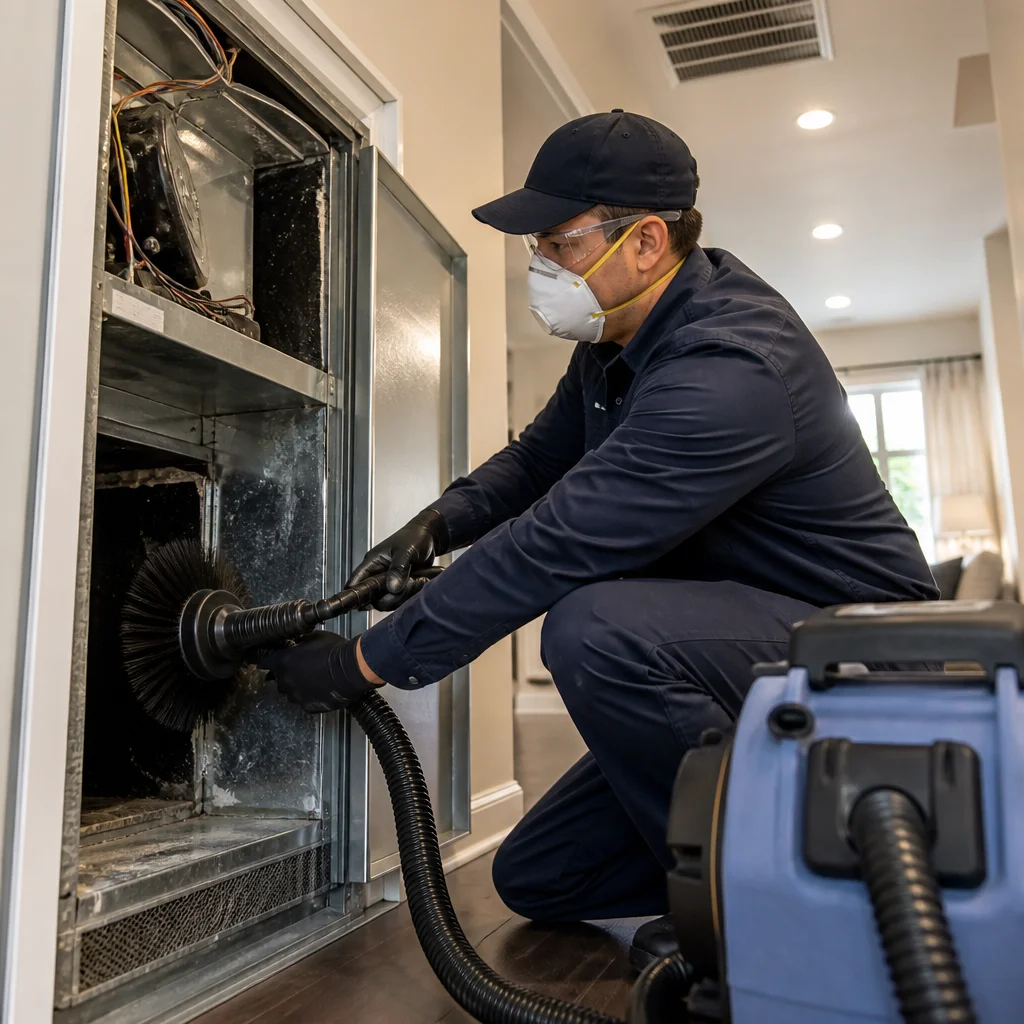
We provide you with a detailed post-service report and recommendations for ongoing maintenance. This report documents what we found, what we treated, and the antimicrobial protection we applied. It serves as valuable documentation if you ever need to reference the service for insurance, warranty, or resale purposes.
Action step: Ask for a post-service report that includes before-and-after air quality measurements if available. Some advanced testing can document microbial reduction objectively.
Preventing Future Odors with Maintenance Plans We Recommend
One disinfection service solves the immediate problem, but preventing recurrence requires ongoing attention. We recommend annual HVAC maintenance plans tailored to your specific situation.
Standard annual maintenance includes:
- Professional filter changes using high-efficiency MERV 11 or better filters
- System inspection for condensation or moisture issues
- Ductwork visual inspection at accessible points
- Return air cleaning to prevent dust and debris reaccumulation
- Dryer vent inspection and cleaning
For homes in high-humidity areas or with a history of mold problems, we suggest semi-annual inspections during spring and late summer. These seasonal check-ins catch moisture problems early before mold has opportunity to establish.
We also recommend upgrading your air filter to MERV 13 or higher if your HVAC system can accommodate it. Better filtration reduces dust and organic material that feed microbial growth.
If moisture is a chronic issue in your system, we may recommend a whole-home dehumidification system or targeted moisture management solutions. Prevention is significantly less expensive than repeated remediation.
Action step: Talk with our team about which maintenance plan matches your home’s specific needs. Customized prevention is more cost-effective than repeated emergency disinfection services.
Schedule Your Free HVAC Disinfection Estimate Today
Musty odors don’t disappear on their own, and they indicate a real problem with your indoor air quality. The longer you wait, the more pervasive the contamination becomes and the more difficult the remediation.
We offer free HVAC disinfection estimates for Austin and San Antonio homeowners. During your estimate, our certified technicians inspect your system, explain what we find, and recommend the specific disinfection approach that addresses your situation.
Request your free estimate today or call our team directly. We typically provide same-day or next-day inspection appointments and can often schedule disinfection service within a few days.
Don’t settle for fragrant sprays or temporary solutions. Choose professional HVAC disinfection that actually eliminates the organisms causing your odor problem. Your family’s indoor air quality depends on it.
If you’re dealing with dust, poor airflow, mold in your ducts, or a clogged dryer vent — don’t wait. These issues can affect your health and safety. Go Air Ducts Group are the local experts in air duct cleaning, mold removal, dryer vent cleaning, and attic insulation. Call now for a free inspection and same-day service in Austin and San Antonio.
Frequently Asked Questions (FAQ)
What causes musty odors in my air ducts, and why does cleaning alone sometimes not work?
Musty odors typically develop when mold, bacteria, and moisture accumulate inside your ductwork, especially in our humid Texas climate. We’ve found that standard cleaning can remove visible debris, but it doesn’t eliminate the microbial growth or disinfect the surfaces where odors originate. Our professional disinfection process uses EPA-approved solutions to kill the source of the smell at the microscopic level, which is why we get results that regular cleaning cannot achieve.
How do I know if my home needs professional HVAC disinfection versus just a standard air duct cleaning?
If you notice a persistent musty smell when your system runs, see visible mold in your vents, experience allergies that worsen indoors, or notice the odor returns quickly after cleaning, we recommend professional disinfection. We also check your humidity levels and inspect your dryer vents and return air systems, since these areas often harbor the bacteria and mold causing the problem. A free inspection from our certified technicians will tell you exactly what your home needs.
What can I expect after your disinfection service, and how long will the results last?
After we complete our disinfection process, you should notice the musty smell disappear within a day or two as your system cycles fresh, treated air through your home. We’ve designed our service to provide long-lasting results, though the outcome depends on controlling moisture levels in your home. We recommend addressing any humidity issues and scheduling regular dryer vent cleaning to prevent odors from returning.