
🕑 5 min read
Why do air ducts sweat?
Air ducts sweat when cold supply ducts or registers are exposed to hot, humid air, usually because insulation is missing or damaged, boots are unsealed, or leaks let humid air reach cold surfaces. The fix is to find the cause, seal leaks, insulate accessible ducts, and replace wet insulation, which the EPA says cannot be cleaned effectively.
Table of Contents
- Why Air Ducts Sweat
- Signs Your Ducts May Be Sweating
- Why It Matters
- What Causes the Problem Most Often
- How to Stop Duct Condensation
- When to Call a Professional
- Why Central Texas Homes See This Often
- Frequently Asked Questions
- Stop the Drips Before They Spread





Water stains on a ceiling, drips from a register, or damp insulation in the attic can all point to the same cause: sweating air ducts. Condensation on ductwork is common in hot, humid climates, and it is easy to mistake for a roof or plumbing leak.
Left alone, it can soak insulation, stain drywall, and create the damp conditions mold needs. This guide explains why ducts sweat, how to recognize it, and what actually stops it.
Why Air Ducts Sweat
Condensation forms when warm, humid air touches a surface that is colder than the air’s dew point. In cooling season, the air inside your supply ducts is cold. If the outside of a duct or register is exposed to hot, humid attic air, moisture collects on it the same way it does on a cold glass of water.
Several conditions make this more likely:
- Missing or damaged insulation on supply ducts in the attic, crawlspace, or garage
- Torn or loose duct jackets that expose the cold inner liner
- Air leaks that let humid air reach cold surfaces or let cold air escape onto warm ones
- Registers and boots that are not sealed to the ceiling or wall
- High indoor or attic humidity
- Very cold supply air, which can result from restricted airflow caused by a dirty filter or coil
Signs Your Ducts May Be Sweating
- Water stains, bubbling paint, or sagging drywall near ceiling registers
- Drips or beads of water at supply registers
- Damp or compressed insulation around ducts in the attic
- Visible moisture on duct surfaces or metal boots
- Rust on registers, boots, or duct fittings
- A musty odor when the air conditioner runs
- Higher humidity in rooms served by the affected duct
Condensation tends to appear in summer, during the hottest and most humid weather, when the temperature difference is greatest.
Why It Matters
Sweating ducts do more than leave stains:
- Wet insulation loses its effectiveness. Insulated ducts that stay wet do not perform as intended, and the EPA notes that wet or moldy duct insulation cannot be cleaned effectively and should be removed and replaced.
- Moisture can support mold growth. Damp insulation, drywall, and wood framing can hold moisture long enough for mold to develop.
- Materials can deteriorate. Metal can rust, and drywall and framing can be damaged by repeated wetting.
- Comfort and efficiency can suffer. Damaged insulation lets cooled air gain heat before it reaches the room.
What Causes the Problem Most Often
| Cause | What Happens | Typical Fix |
|---|---|---|
| Missing duct insulation | Cold duct surface meets hot attic air | Insulate the ducts |
| Torn or loose jacket | Cold liner is exposed | Repair or replace the damaged section |
| Leaky joints and seams | Humid air reaches cold surfaces | Seal with mastic or metal-backed tape |
| Unsealed register boots | Warm air touches the cold boot | Seal the boot to the ceiling or wall |
| Dirty filter or coil | Airflow drops and supply air gets colder | Replace the filter and service the system |
| High humidity | More moisture in the air | Address the moisture source |
How to Stop Duct Condensation
The right fix depends on the cause, but most solutions follow the same order:
- Find the source. Look for missing insulation, damaged jackets, gaps at boots, and leaks.
- Seal leaks. ENERGY STAR recommends mastic sealant or metal tape for duct leaks and advises against standard duct tape.
- Insulate accessible ducts. ENERGY STAR advises insulating all the ducts you can reach, such as those in attics, crawlspaces, and garages. Insulation levels required for your area depend on local code and the type of duct, so check with a professional.
- Repair damaged sections. Torn jackets and crushed flex duct should be repaired or replaced.
- Replace wet insulation. Insulation that has been soaked should be replaced instead of dried in place.
- Seal registers and boots. Gaps around boots let warm, humid air reach cold metal.
- Maintain the system. Replace filters on schedule and keep the coil and blower clean so airflow stays strong.
When to Call a Professional
Call for help if you see:
- Repeated stains or drips in the same spot
- Wet or sagging insulation
- Signs of mold, such as dark spotting or a persistent musty smell
- Damaged or collapsed duct sections
- Condensation on many ducts rather than one spot
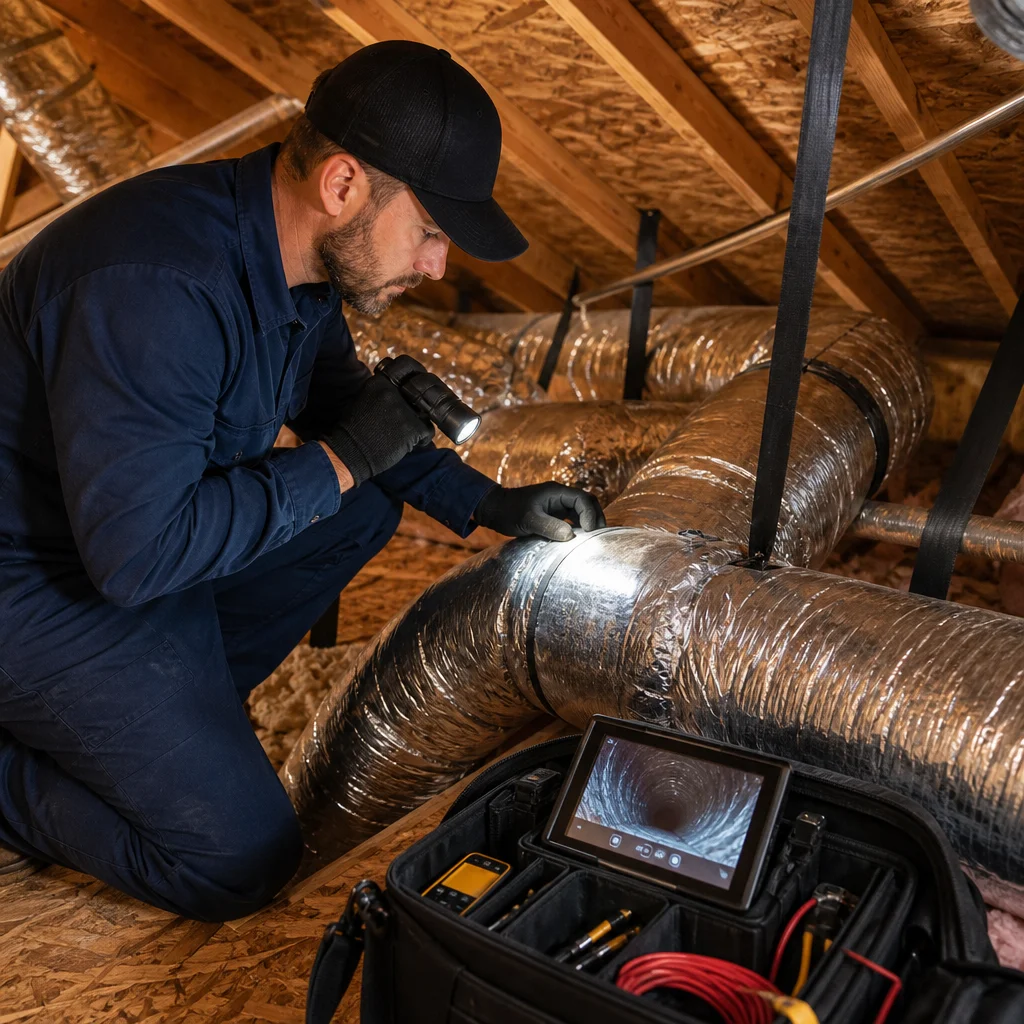
A technician can inspect the attic, check the ducts and insulation, and tell you whether the problem is insulation, leaks, airflow, or humidity.
Why Central Texas Homes See This Often
Many homes in Austin and San Antonio run ductwork through attics that get very hot and humid in summer. That is the setting where cold supply ducts are most likely to sweat if insulation is thin, torn, or missing. If you notice stains in warm months, it is worth checking before the damage spreads. Our guide on how indoor humidity in Texas affects your ductwork explains how humidity affects your system.
Frequently Asked Questions
Is condensation on ducts normal?
Some moisture can appear on cold surfaces in humid weather, but regular dripping, stains, or wet insulation mean something needs to be corrected.
Can sweating ducts cause mold?
They can create the damp conditions mold needs. If you see dark growth or smell a persistent musty odor, have the system inspected.
Will insulation alone fix the problem?
Often it helps, but leaks, unsealed boots, and airflow problems may also need attention.
Can I dry wet duct insulation and reuse it?
The EPA advises that wet or moldy duct insulation cannot be cleaned effectively and should be replaced.
Stop the Drips Before They Spread
Go Air Ducts can inspect your system and help with the fix, from duct insulation and duct sealing to air duct repair. If you suspect mold, we also offer air duct mold remediation. Start with an air duct inspection, or contact us to schedule service in Austin, San Antonio, and nearby Texas communities.