
Table of Contents
- Why Texas Homeowners Are Missing Out on Free Insulation Rebates
- How Attic Insulation Rebates Work in 2026
- Federal Tax Credits vs State Rebate Programs in Texas
- Energy Savings You'll See After Upgrading Your Attic Insulation
- How We Help You Maximize Your Rebate Benefits
- The Professional Installation Process That Qualifies for Rebates
- Common Mistakes That Cost You Rebate Money
- Getting Your Free Estimate and Rebate Assessment
- Next Steps to Lock in Your Insulation Upgrade Today
- Frequently Asked Questions (FAQ)
Why Texas Homeowners Are Missing Out on Free Insulation Rebates
Most homeowners we work with in Austin and San Antonio have no idea that free money exists to offset attic insulation costs. Every year, thousands of Texas residents leave thousands of dollars on the table simply because they don’t know where to look or how the rebate process works.
Right now, multiple funding streams are available to help you upgrade your attic insulation. The federal government is actively incentivizing energy-efficient home improvements through tax credits. Texas utilities offer rebate programs. Even some local municipalities have direct incentive programs designed to reduce energy consumption across the region.
The real problem isn’t availability. It’s awareness and complexity. Most homeowners assume rebates require jumping through endless hoops or that they’ve already missed the deadline. In reality, 2026 presents some of the most accessible rebate opportunities we’ve seen, with programs designed specifically for residential attic upgrades.
When we conduct free insulation assessments, we identify which rebates you actually qualify for and how much money you can realistically recover. This upfront clarity eliminates guesswork and makes the investment decision much simpler. Many of our clients are genuinely shocked to discover their out-of-pocket cost drops by 30 to 50 percent after applying available rebates.
Action item: Before purchasing any insulation materials, schedule a free rebate assessment to identify your specific eligibility and potential savings.
How Attic Insulation Rebates Work in 2026
Attic insulation rebates in 2026 typically operate through one of three models: instant rebates at point of purchase, mail-in rebate programs, or direct tax credits claimed during tax filing.
Instant rebates are the simplest. When you purchase qualifying insulation products or services from participating contractors, the rebate applies immediately at checkout. Your final invoice reflects the discounted price, so you receive savings upfront without paperwork delays.
Mail-in rebates require more effort on your part. You purchase materials, complete the installation, then submit documentation including receipts, proof of purchase, and sometimes photos of the completed work. The utility company or program administrator reviews your submission and mails a check within 4 to 8 weeks. This method works but involves tracking paperwork and managing timelines.
Federal tax credits work differently. You claim energy-efficient home improvement credits when filing your 2026 tax return. You need to keep all documentation related to your insulation purchase and installation, then report the eligible expenses to claim a percentage back as a tax credit. These credits typically range from 30 percent of qualifying expenses, up to specific annual caps.
The timeline matters. Some rebate programs have funding caps and close once allocations are exhausted. Others have annual deadlines. That’s why moving before mid-2026 is strategically smart if you want maximum options and guaranteed program availability.
We help clients navigate all three models. When we provide your free estimate, we’ll specify which rebates apply to your project, which method requires less hassle, and what documentation we’ll handle for you versus what you’ll need to manage.
Federal Tax Credits vs State Rebate Programs in Texas
Understanding the difference between federal tax credits and state rebate programs ensures you don’t accidentally double-claim benefits or miss available money.
Federal tax credits are administered by the IRS and claimed on your annual tax return. The Residential Clean Energy Credit (formerly the Residential Energy Efficient Property Credit) allows homeowners to claim up to 30 percent of qualifying insulation and HVAC costs. For a $5,000 attic insulation project, you could claim $1,500 back as a tax credit. There are no annual caps, so the credit rolls forward to future tax years if you exceed your tax liability in the current year.
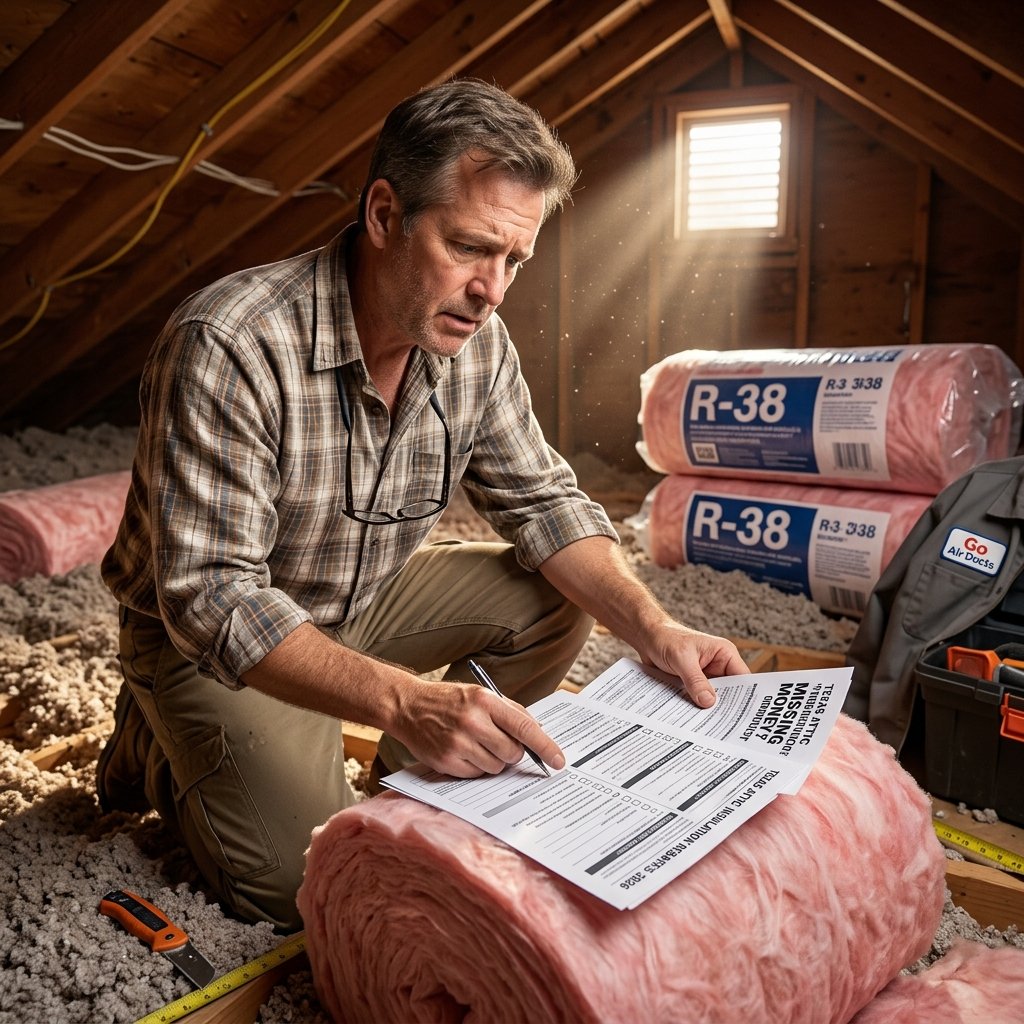
Texas state rebate programs vary by utility provider. Austin Energy, for example, offers direct rebates for insulation upgrades that meet their specifications. San Antonio’s utility company has similar programs. These are separate from federal credits. You can claim both the federal tax credit and state rebate on the same project without duplication issues, as long as you follow each program’s specific rules.
The key distinction: federal credits reduce your tax bill; state rebates put cash in your pocket immediately (or within weeks). Layering them together dramatically reduces your true out-of-pocket cost.
Some programs have restrictions. For instance, the insulation must meet minimum R-value requirements, be installed by certified contractors, and sometimes use energy-efficient HVAC systems in conjunction with the insulation upgrade. That’s where we add real value. We know exactly which products and installation methods satisfy every requirement so you qualify for maximum rebates.
In our experience, homeowners who combine federal tax credits with state rebates typically see their net insulation cost drop to 40 to 50 percent of the original price. That’s meaningful savings that make the upgrade financially attractive within months, not years.
Energy Savings You’ll See After Upgrading Your Attic Insulation
Improved insulation directly reduces your heating and cooling costs because less conditioned air escapes through the roof and walls. In Texas, where air conditioning runs six to nine months per year, this savings compounds quickly.
A properly insulated attic with R-38 to R-49 rating (appropriate for most of Texas) typically reduces cooling costs by 15 to 25 percent, depending on your home’s current insulation condition and your HVAC system’s efficiency. If your current electric bill averages $150 monthly during cooling season, upgrading insulation could save you $22 to $37 per month.
Over a full year in Texas, that’s $264 to $444 in energy savings. Over ten years, you’re looking at $2,640 to $4,440 in reduced utility costs. After accounting for rebates that cover 40 to 50 percent of installation costs, most homeowners reach cost recovery within five to seven years.
The secondary benefit is comfort and system longevity. When your HVAC system doesn’t have to work as hard to maintain temperature, the equipment experiences less strain. Components last longer. You delay expensive repairs. This compounds the financial benefit beyond direct energy savings.
Mold and moisture problems also improve with proper attic insulation and ventilation. In Austin and San Antonio, humidity creates ideal conditions for attic mold growth. Better insulation reduces temperature fluctuations that cause condensation. Proper ventilation that accompanies professional installation prevents moisture accumulation. You’re essentially protecting your home’s structural integrity while lowering energy bills.
If you already have concerns about ductwork efficiency or indoor humidity, combining insulation upgrades with duct sealing further amplifies your energy savings. Many of our clients address both improvements together, maximizing their utility cost reductions.
How We Help You Maximize Your Rebate Benefits
Our process begins with a detailed, no-obligation home assessment. We evaluate your current insulation levels, identify air leakage points, and review your utility bills to establish a baseline for potential savings. This information directly determines which rebate programs you qualify for and how much incentive funding applies to your situation.
We maintain current knowledge of all active federal, state, and local rebate programs serving Dallas, Houston, Austin, and San Antonio. That means we know which programs are actively funded, which have upcoming deadlines, and which offer the highest dollar amounts. We present you with options ranked by ease of application and maximum benefit.
Most importantly, we handle the administrative burden. You don’t file complex paperwork with utilities or the IRS alone. We compile the documentation, ensure your installation meets every specification required by each program, and coordinate with rebate administrators on your behalf. This dramatically increases approval rates and reduces the timeline for receiving your money.
Our team also specifies insulation products and installation methods that satisfy the most demanding rebate requirements. Some contractors cut corners with lower-quality materials to reduce costs. We invest in products that exceed requirements because that position ensures you’re eligible for every available rebate without risk of claim denial.
We’ve successfully helped hundreds of Texas homeowners in Austin and San Antonio recover $1,200 to $3,500 in rebate funds on their insulation projects. That real-world experience means we anticipate complications before they occur and structure your project to avoid common pitfalls.
The Professional Installation Process That Qualifies for Rebates
Rebate programs aren’t arbitrary about how insulation gets installed. They have specific requirements, and the installation process itself is crucial to maintaining your rebate eligibility.
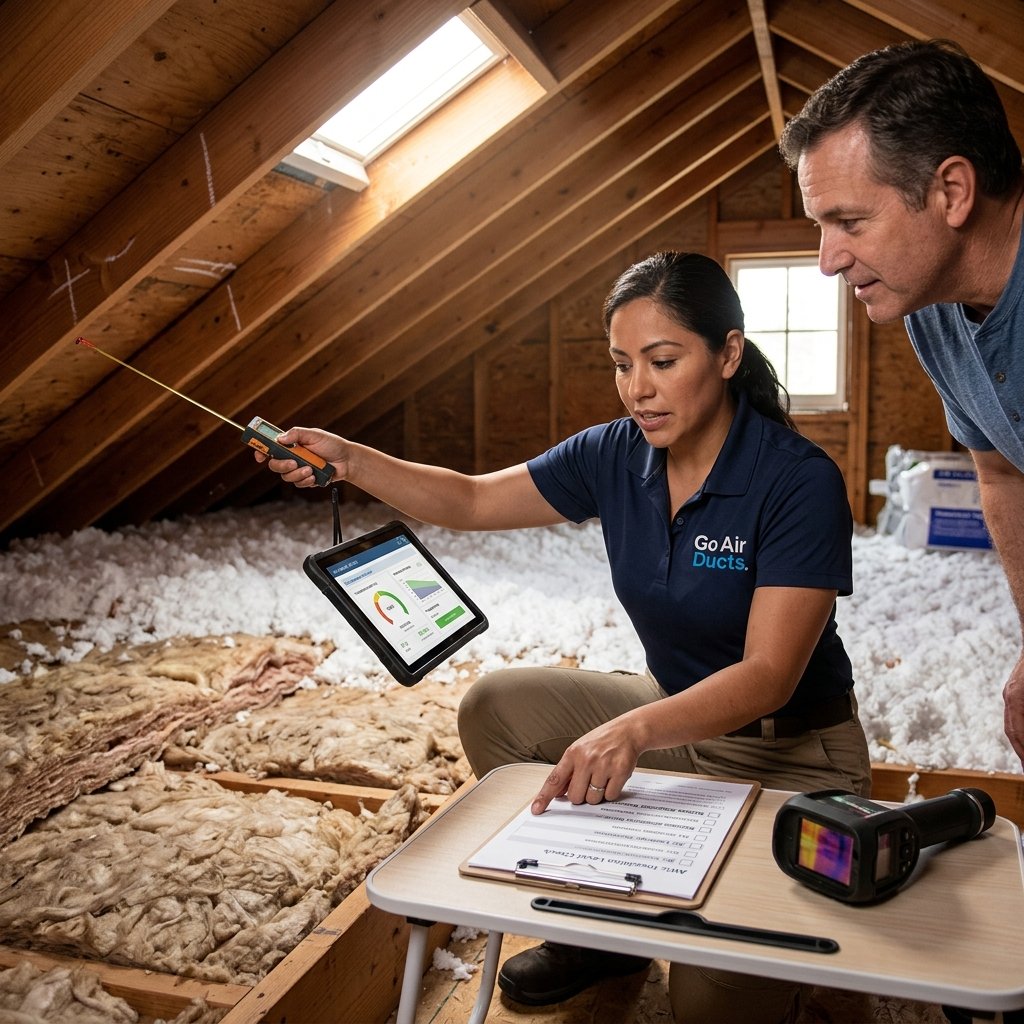
Our certified HVAC technicians follow protocols that exceed rebate program standards. We start by sealing any air leaks in the attic using high-quality caulk and spray foam. Unsealed gaps waste energy and compromise the insulation’s effectiveness. Rebate programs recognize this, so their specifications require air sealing as part of comprehensive attic upgrades.
Next, we assess your current ventilation. Proper attic ventilation is non-negotiable in Texas. Without it, moisture accumulates, insulation loses effectiveness, and mold develops. We verify soffit, ridge, and gable vents function correctly. If upgrades are needed, we address them before installing new insulation.
Then comes insulation installation. We use blown-in fiberglass or cellulose, depending on your home’s structure and your preferences. We measure and monitor density to ensure we achieve the R-value required by rebate programs. Every square foot gets proper coverage. We don’t skimp around HVAC ducts, electrical boxes, or roof penetrations. Proper installation takes time, but it’s what qualifies you for rebates and delivers long-term performance.
Finally, we document everything. We photograph the completed work, retain product receipts and specifications, and provide you with detailed installation reports. This documentation package is exactly what rebate administrators request. It accelerates approval and prevents eligibility questions.
Many contractors skip these steps to speed up work. We don’t. That’s specifically why our clients successfully claim rebates and why they see measurable energy savings immediately after completion.
Common Mistakes That Cost You Rebate Money
We’ve seen homeowners lose thousands in rebate eligibility due to avoidable errors. Knowing these pitfalls protects you.
Hiring uncertified contractors. Many rebate programs require installation by certified HVAC technicians or contractors. If you hire a general handyman, you’re ineligible, period. Your entire rebate claim gets denied. We’re certified across all service areas, so your eligibility is automatically protected.
Purchasing before rebate approval. Some homeowners buy insulation materials, then apply for rebates. The problem: certain programs require pre-approval before purchase. Buying materials without that approval disqualifies you from some rebates. We guide you through pre-approval steps before any purchase or installation begins.
Choosing non-qualifying products. Not all insulation products satisfy rebate specifications. Some programs require specific R-values, materials, or certifications. Buying the cheapest option at a big-box store often means it doesn’t qualify. We source products that explicitly satisfy every rebate program’s material requirements.
Missing documentation deadlines. Mail-in rebates and federal tax credits require documentation submitted within specific timeframes. If you miss the deadline, your claim is rejected. We ensure all paperwork goes in on time, every time.
Attempting to claim the same expense twice. Federal tax credits and state rebates sometimes have overlapping rules. If you claim the same expense as both a federal credit and a state rebate, the IRS or state auditors will catch it, and you’ll owe back the improperly claimed amount plus penalties. We structure your claims to avoid this completely.
Not keeping receipts and proof. Years later, if you’re audited or a rebate is questioned, you need documentation. We help you organize and retain everything.
The single biggest mistake we see: waiting too long. Rebate programs operate on limited budgets. When they’re fully allocated, they close. By mid-2026, some programs will be partially or fully exhausted. Starting now protects your eligibility while funds remain available.
Getting Your Free Estimate and Rebate Assessment
Scheduling a free estimate is straightforward. Call us at your convenience, and we’ll arrange a time that works for you. Our technician will spend 45 to 60 minutes at your home, evaluating your current insulation, identifying air leakage, checking ventilation, and assessing your HVAC system.
During this visit, we’ll ask about your utility bills from the past 12 months. This data helps us calculate realistic energy savings and identify which rebate programs offer the highest incentives for your specific situation.
We’ll also ask about your timeline. If you want the work completed by a specific date, that influences which rebates we prioritize and how quickly we schedule installation.
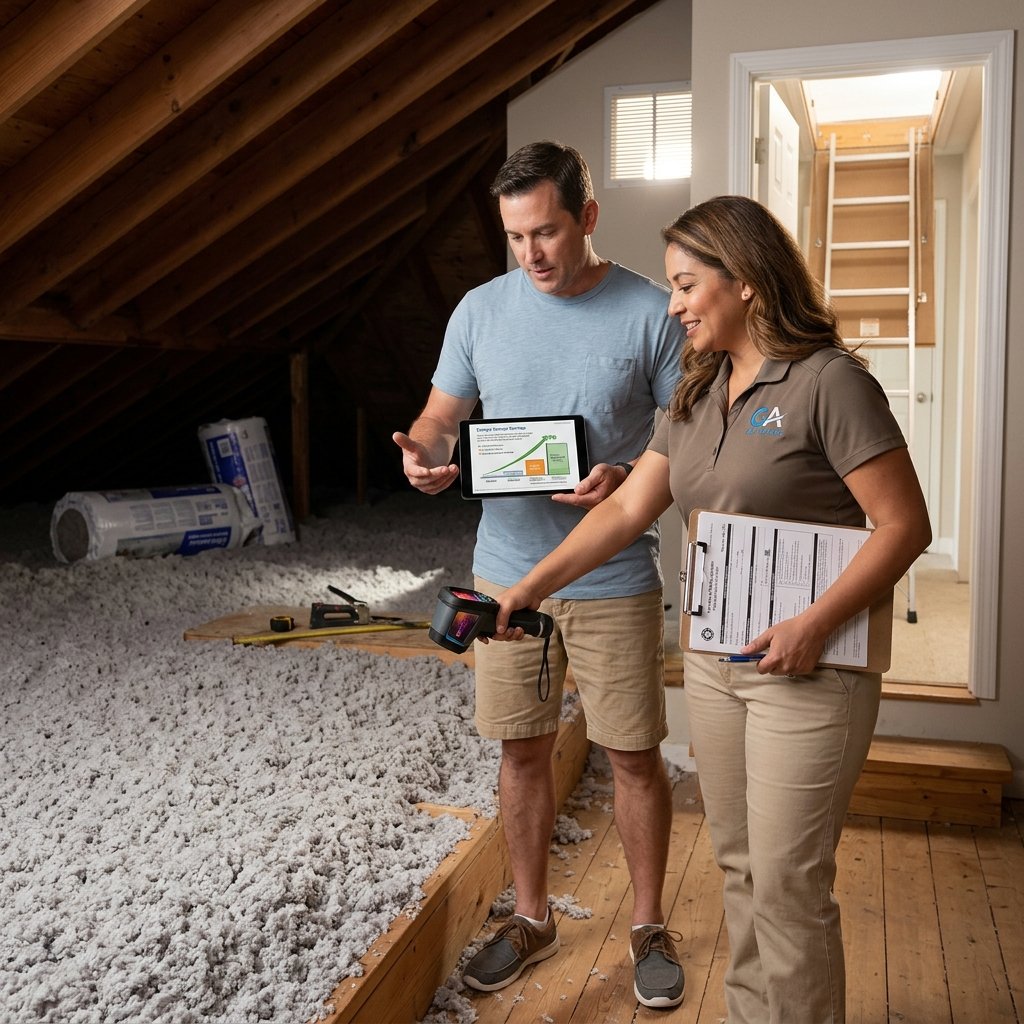
Our estimate will detail:
- Current insulation R-value and areas needing upgrading
- Recommended insulation level for optimal Texas performance
- Identified air leaks and ventilation improvements
- Estimated energy savings (first-year and multi-year projections)
- All rebates you qualify for, with dollar amounts
- Our guaranteed installation price
- Your out-of-pocket cost after rebates
- Timeline for completion and rebate processing
This information is completely free and comes with no obligation. Many homeowners use our assessment to compare against other quotes. That’s fine. We’re confident our combination of expertise, certified installation, and rebate maximization speaks for itself.
You can schedule online at goairducts.com or call for immediate availability. We serve Austin, San Antonio, Dallas, Houston, and surrounding areas.
Next Steps to Lock in Your Insulation Upgrade Today
The window for 2026 rebates is open now, but it’s closing. Federal tax credit programs remain stable, but state rebates and utility incentives operate on annual funding. Once allocated, they’re gone.
Start by scheduling your free estimate and rebate assessment. This costs nothing and takes less than an hour. You’ll walk away knowing exactly what you qualify for and what your true out-of-pocket cost will be after rebates.
If the financial picture is attractive (and for most homeowners, it is), we’ll guide you through the next steps. We’ll handle pre-approvals with rebate programs. We’ll source the right materials. We’ll coordinate the installation around your schedule. We’ll manage all documentation and rebate submissions. You simply enjoy lower energy bills and a more comfortable home.
Texas homeowners who invest in professional attic insulation upgrades see returns begin within months. The combination of federal tax credits, state rebates, and immediate energy savings makes this one of the smartest home improvements you can make in 2026.
Your action: Call us today or visit our website to schedule your free estimate. Mention this article, and we’ll ensure we explore every available rebate option during your assessment. The longer you wait, the fewer programs remain fully funded. Secure your rebate eligibility and start saving on energy costs this year.
For further reading: Upgrade insulation guide, Humidity and HVAC efficiency.
If you’re dealing with dust, poor airflow, mold in your ducts, or a clogged dryer vent — don’t wait. These issues can affect your health and safety. Go Air Ducts Group are the local experts in air duct cleaning, mold removal, dryer vent cleaning, and attic insulation. Call now for a free inspection and same-day service in Austin and San Antonio.
Frequently Asked Questions (FAQ)
How do we ensure our insulation installation qualifies for 2026 rebates?
We follow all manufacturer specifications and local building codes to guarantee your installation meets rebate requirements. Our certified technicians document every step of the process and provide you with the proper documentation needed to submit your rebate claim. We also verify your eligibility for both federal tax credits and Texas state programs before we begin work, so you know exactly what incentives you’ll receive.
What’s the difference between federal tax credits and Texas state rebates for insulation?
Federal tax credits let you deduct a portion of your installation costs directly from your taxes when you file, while Texas state rebates typically provide direct cash back or utility company incentives. We help you understand which programs apply to your specific situation and timeline, since federal credits work best for annual tax filing while some state rebates need to be claimed immediately after installation.
Can we help with the rebate application process after installation?
Yes, we handle the technical side by providing all necessary documentation and proof of professional installation that rebate programs require. We don’t file the paperwork for you, but we give you everything you need to submit your application quickly and correctly, which significantly increases your chances of approval.