
🕑 15 min read
Should I clean my ducts or upgrade insulation first?
It depends on your home: clean and seal ducts if airflow or air quality is the issue, upgrade insulation if heat and high bills dominate. Often both help. Go Air Ducts assesses your home and guides Texas homeowners on the best order, or bundle, for cleaner air and lower bills.
Table of Contents
- Why Texas Homeowners Need to Assess Their HVAC Health Right Now
- Understanding Your Home's Air Quality Problems: Signs You Need Professional Help
- Air Duct Cleaning: When and Why We Recommend This First
- Dryer Vent Cleaning: The Often-Overlooked Service That Prevents Fire Hazards
- HVAC System Repair vs Replacement: How We Diagnose What Your System Needs
- Energy-Efficient Insulation Upgrades: The Long-Term Investment That Transforms Comfort
- Our Diagnostic Framework: How We Determine Your Exact Needs
- Comparison Matrix: Cleaning vs Repair vs Insulation and Expected Results
- Why Professional Assessment Beats DIY Guessing for Your Home
- How to Choose the Right Service Combination for Maximum ROI
- What Our Certified Technicians Find During Free Estimates
- Schedule Your Comprehensive Home Evaluation with Go Air Ducts Today
- Frequently Asked Questions (FAQ)
Why Texas Homeowners Need to Assess Their HVAC Health Right Now
Your HVAC system works harder in Texas than almost anywhere else. Between our brutal summer heat and the occasional cold snap, we’re running our systems year-round, which means dust, debris, and efficiency issues compound faster here than in milder climates. We’ve seen countless Austin and San Antonio homeowners ignore their air quality until they face a major repair bill or worse, a family member’s allergies spike.
The reality is simple: most homes haven’t had their ducts inspected or cleaned in years. That’s not judgment, it’s just what we see daily. Over time, your ductwork accumulates dust, pet dander, mold spores, and debris that reduce airflow and force your system to work harder. Meanwhile, aging insulation loses its R-value, letting conditioned air escape before it reaches living spaces.
The good news is that a professional assessment today can save you thousands in wasted energy costs and prevent health problems down the road. We recommend every Texas homeowner get a comprehensive evaluation at least once every two to three years, especially if they own homes built before 2010 or have experienced any water damage, pest activity, or allergy flare-ups.
What to do next: Note any symptoms you’ve noticed: uneven cooling, higher-than-normal utility bills, visible dust around vents, or stuffy rooms. We’ll use these observations during your free estimate.
Understanding Your Home’s Air Quality Problems: Signs You Need Professional Help
Indoor air quality problems often hide in plain sight. You might attribute stuffiness to weather, or assume higher energy bills are just the cost of Texas living. We know better because we’ve diagnosed thousands of these issues.
Look for these specific warning signs:
- Visible dust buildup around supply vents or on return air grilles
- Rooms that stay warmer or cooler than others, despite thermostat settings
- A musty or stale odor when your system cycles on
- Increased allergy or asthma symptoms during heating or cooling season
- Utility bills that jumped 15-20% without explanation
- Pet owners may notice pets shed more in Texas heat, which clogs ducts faster
These aren’t minor inconveniences. Poor air quality affects sleep, productivity, and respiratory health. High energy bills compound month after month. A clogged duct system can also develop mold growth, especially if humidity is high or moisture enters through gaps and leaks.
One scenario we see regularly: a homeowner switches from AC to heating mode and notices a strong dusty smell. This happens because dust and debris build up during long AC seasons, and when the heating cycle starts, all that accumulated material gets pushed through living spaces. It’s uncomfortable and signals that your system needs cleaning before winter starts.
What to do next: Walk through your home and check the air grilles. If you see a gray or brown dust layer, that’s a clear signal to call us for an inspection.
Air Duct Cleaning: When and Why We Recommend This First
We almost always recommend air duct cleaning as the starting point in our comprehensive HVAC health plan. Here’s why: it’s the most cost-effective way to improve airflow, reduce energy waste, and eliminate contaminants that could otherwise spread through your home.
Your ductwork is essentially the circulatory system of your HVAC. When it’s clogged, your system works 20-30% harder to push the same volume of air, which directly inflates your utility bills. Beyond efficiency, a contaminated duct system recirculates dust, allergens, and mold spores every time your system cycles.
We use truck-mounted cleaning equipment that generates high-pressure air and suction to dislodge debris from every inch of your ductwork. Our process includes:
- Video inspection to identify blockages, damage, or mold before cleaning begins
- Negative-pressure cleaning that captures all dislodged particles (they don’t escape into your home)
- Detailed before-and-after documentation so you see exactly what we removed
- Sealing and insulation assessment to identify areas where conditioned air is escaping
The typical Austin or San Antonio home collects 40-100 pounds of dust and debris in its ductwork over 5-7 years without cleaning. That’s not an exaggeration. When we remove it, homeowners consistently report better airflow within hours, cooler or warmer rooms evening out, and breathing easier.
What to do next: Schedule a free video duct inspection. We’ll show you exactly what’s in your system and give you a transparent estimate before we do any work.
Dryer Vent Cleaning: The Often-Overlooked Service That Prevents Fire Hazards
Dryer vent cleaning isn’t glamorous, but it’s one of the most critical fire prevention steps you can take. We include dryer vent assessment in most of our home evaluations because homeowners consistently underestimate the risk.
Here’s the science: every time your dryer runs, it exhausts warm, lint-laden air through a vent that typically runs 15-30 feet to an exterior wall or roofline. If that vent clogs with lint, three dangerous things happen simultaneously. First, your dryer becomes less efficient and takes twice as long to dry clothes, doubling your energy cost for that load. Second, heat backs up inside the dryer, which can damage internal components and lead to expensive repairs. Third, and most seriously, lint is highly flammable. A clogged vent creates a potential fire hazard inside your dryer cabinet.
The U.S. Fire Administration attributes thousands of home fires annually to dryer vent blockages. We’ve seen the results firsthand in Austin and San Antonio homes, and it’s preventable.
We clean dryer vents from the appliance connection all the way to the exterior termination point, removing compacted lint that a standard brush can’t reach. This simple service typically costs between $150-250 and can prevent a $5,000+ dryer replacement or a catastrophic house fire.
What to do next: Have us inspect your dryer vent during your comprehensive HVAC evaluation. If it’s been more than a year since your last cleaning, schedule one now.
HVAC System Repair vs Replacement: How We Diagnose What Your System Needs
Not every HVAC problem requires a new unit. Our job is to tell you honestly whether your system can be repaired cost-effectively or whether replacement makes financial sense.
We follow a clear diagnostic process:
Age Assessment: Units over 15 years old are usually nearing end-of-life. Repair costs often exceed 50% of replacement cost, making replacement the smarter investment.
Refrigerant and Electrical Testing: We measure cooling or heating output against manufacturer specs. If you’re losing more than 10% efficiency, the system likely needs replacement.
Efficiency Rating Comparison: A new unit with a 16+ SEER rating (Seasonal Energy Efficiency Ratio) will pay for itself in energy savings within 5-7 years if your current system is 10+ years old.
Repair Cost Threshold: If the next major repair would cost more than one-third the price of a new system, replacement is almost always the right call.
In Texas, most HVAC systems last 12-15 years depending on maintenance quality and how hard they work. Our certified technicians will never push you toward replacement if a solid repair will give you another 3-5 years of reliable operation. We just won’t hide the truth about a system that’s becoming a money pit.
What to do next: If your HVAC is over 12 years old and you’ve had recent repairs, bring us in for a free evaluation before committing to another expensive fix.
Energy-Efficient Insulation Upgrades: The Long-Term Investment That Transforms Comfort
Once your ductwork is clean and your HVAC system is healthy, the next layer of optimization is insulation. This is where we see homeowners make the biggest long-term investment in comfort and energy savings.
Most homes built in the 1990s and early 2000s have insufficient attic insulation. Texas heat demands R-38 to R-49 insulation in attic spaces depending on location. Homes with R-19 or lower are losing 30-40% of conditioned air through the roof. That’s not a minor inefficiency; it’s like leaving your AC running while your windows are open.
We upgrade attic insulation using blown-in cellulose or fiberglass that fills gaps, conforms to irregular spaces, and provides superior thermal resistance. This service works hand-in-hand with duct cleaning and HVAC repair because all three work together.
The investment typically ranges from $1,500-3,500 for a typical Austin home, but the payback comes fast. We’ve documented homeowners cutting their cooling costs by 20-25% after insulation upgrades, especially when combined with sealed, clean ductwork. Over 20 years, that’s tens of thousands of dollars in savings plus dramatically improved comfort.
What to do next: Ask our technicians to assess your attic insulation during your free estimate. We’ll measure R-value and recommend the exact upgrade level for your home’s location.
Our Diagnostic Framework: How We Determine Your Exact Needs
We don’t believe in one-size-fits-all solutions. Your home’s specific needs depend on age, location, condition, and how you use your space. Our diagnostic framework ensures we recommend only the services that will actually improve your situation.
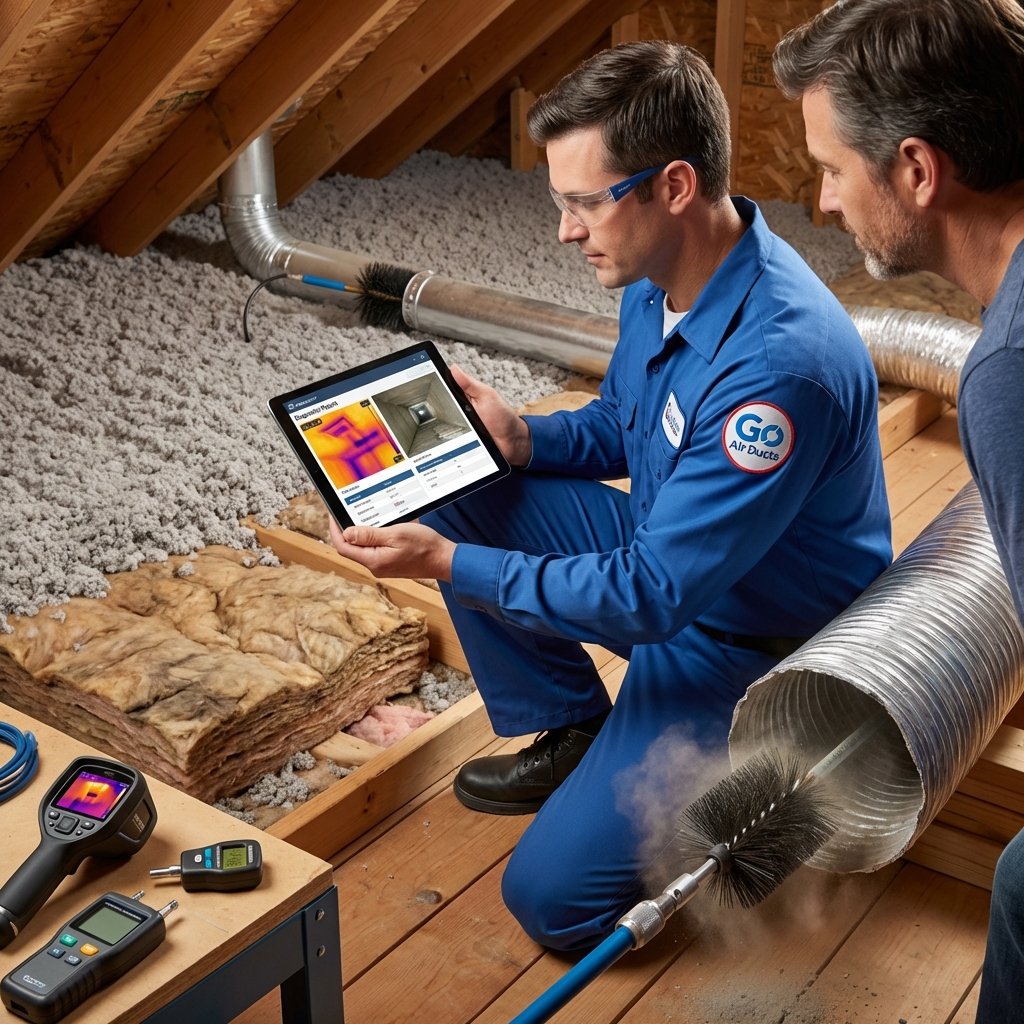
Step one is always the comprehensive video inspection. We look inside every accessible section of your ductwork, check for leaks, assess mold risk, and document conditions. Step two involves HVAC performance testing: we measure static pressure, airflow volume, and temperature differentials across the system. Step three is a detailed attic inspection where we measure insulation depth and identify air leaks around penetrations, electrical boxes, and skylights.
Only after we’ve completed all three inspections do we present recommendations. We show you the issues we found, explain why they matter, and outline which services will deliver the most impact for your budget.
This thorough approach takes an extra hour or so compared to a quick walk-through, but it’s the only way to avoid recommending unnecessary work or missing critical problems that will cost you later. Most importantly, it eliminates guessing and gives you confidence that every dollar you spend is solving a real problem we’ve identified and documented.
What to do next: Expect your free estimate to include visual documentation, written findings, and a prioritized service plan.
Comparison Matrix: Cleaning vs Repair vs Insulation and Expected Results
Here’s how these three pillars of home air quality compare:
Air Duct Cleaning
- Cost: $400-800 for typical home
- Timeline: 4-6 hours
- Energy savings: 10-15%
- Comfort improvement: Immediate
- Best for: High dust, pet dander, mold risk, uneven temperatures
HVAC Repair or Replacement
- Cost: $300-600 for repair; $5,000-10,000 for new system
- Timeline: Same day for repair; 1-2 days for replacement
- Energy savings: 0% (repair); 20-30% (replacement on old units)
- Comfort improvement: Moderate to major
- Best for: Poor airflow, weak cooling/heating, system noise, age over 15 years
Insulation Upgrade
- Cost: $1,500-3,500 for attic
- Timeline: 1-2 days
- Energy savings: 15-25%
- Comfort improvement: Moderate to major
- Timeline payback: 5-8 years
- Best for: High bills, uneven temperatures, dusty homes, hot upper floors
Most homes benefit from combining all three. Duct cleaning is the fastest payback and lowest cost starting point. HVAC work depends on system age and condition. Insulation is the long-term foundation that keeps working for 20+ years.
What to do next: Ask which combination our technicians recommend for your specific situation during your free estimate.
Why Professional Assessment Beats DIY Guessing for Your Home
You could buy a duct cleaning kit online or have a handyman check your insulation, but you’d be making decisions with incomplete information. Professional assessment matters because homes are complex systems where problems in one area cause symptoms elsewhere.
For example, a homeowner might assume poor cooling in upstairs bedrooms means they need a new HVAC system. Our assessment often reveals the real culprit: a kinked return duct in the attic reducing airflow, combined with inadequate insulation allowing heat gain through the roof. The fix is duct cleaning and insulation, not a $7,000 system replacement.
We have thermal imaging equipment that visualizes temperature differences across your home, revealing air leaks and insulation gaps invisible to the naked eye. We have duct pressure testing tools that quantify how much conditioned air is escaping through leaks. We have video inspection equipment that shows mold, pest damage, or buildup without tearing into walls or crawlspaces.
These tools cost thousands of dollars to own and require training to use correctly. They’re the reason our recommendations are accurate and specific to your home, not generic guesses based on what you describe over the phone.
What to do next: Don’t invest in any HVAC work without a professional assessment from us first. A free estimate takes a couple hours and prevents expensive mistakes.
How to Choose the Right Service Combination for Maximum ROI
Maximize your investment by prioritizing based on impact and payback. We recommend this hierarchy for most Texas homeowners:
First Priority: Air Duct Cleaning If you haven’t had your ducts cleaned in 5+ years, this is your starting point. It’s affordable, improves airflow immediately, and often reveals other issues like mold or duct damage that need attention.
Second Priority: HVAC Assessment Once ducts are clean, we can accurately test your HVAC system without the variable of clogged ducts skewing results. If your unit is over 12 years old or has a history of repairs, this determines whether to repair or replace.
Third Priority: Insulation Upgrade This is a long-term investment that compounds over time. If your system is healthy and ducts are clean, upgrading insulation ensures you’re not losing conditioned air through the roof.
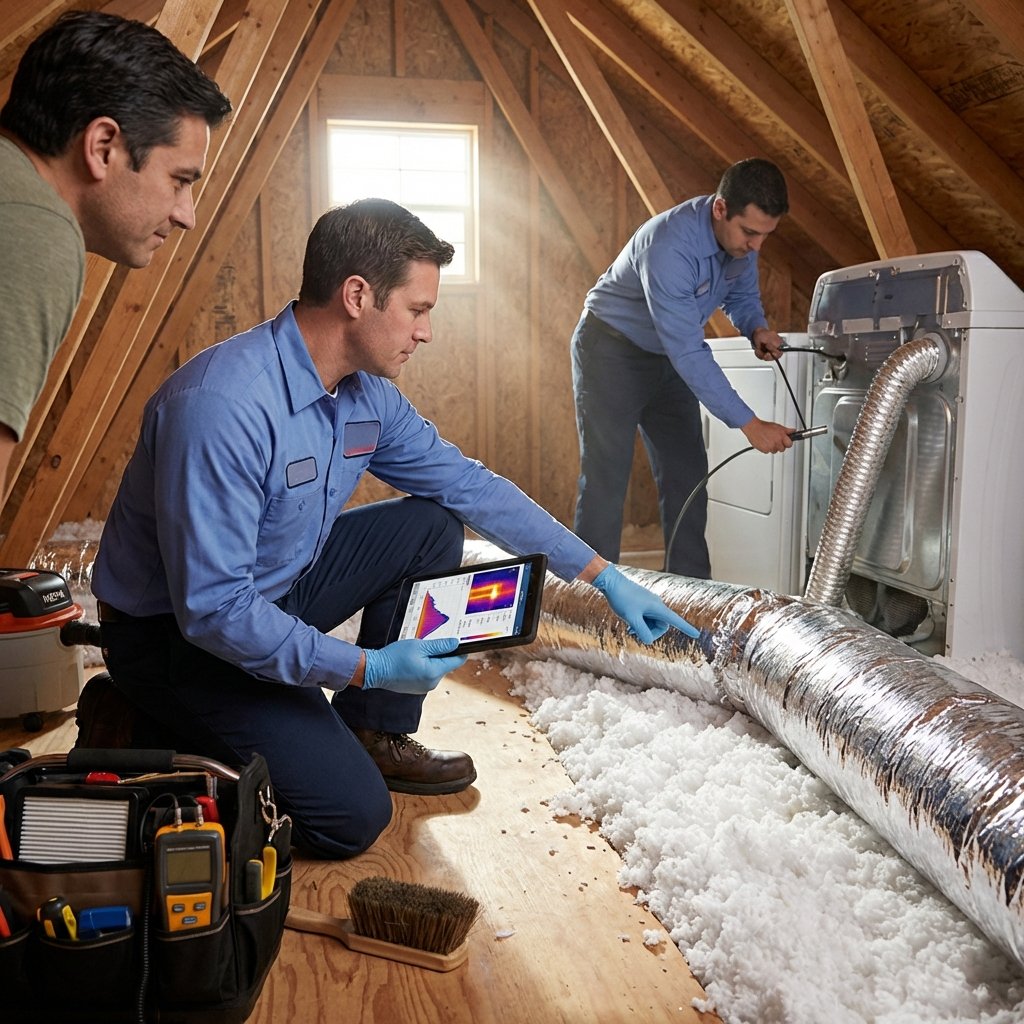
Some homes need all three immediately. Others benefit from staggering the work over 12-18 months based on budget constraints. Our goal is to create a plan that makes sense financially while ensuring you’re not delaying critical repairs that could cause damage.
What to do next: Tell us your biggest concern during your free estimate. We’ll build a prioritized plan around your budget and timeline.
What Our Certified Technicians Find During Free Estimates
When we arrive for your free comprehensive evaluation, we look for specific issues that affect comfort and energy efficiency. Understanding what we search for helps you know what questions to ask.
In ductwork, we look for disconnected sections, holes or tears that leak conditioned air, undersized ducts that restrict flow, and mold growth indicating moisture problems. We document the cleanliness level and identify any pest damage.
In HVAC equipment, we test refrigerant levels, electrical connections, filter condition, airflow volume, and temperature output. We listen for unusual noises and check for corrosion or rust.
In attic spaces, we measure insulation depth with a ruler, check for settling or compression, look for gaps around penetrations, and assess moisture conditions. We identify air leaks and heat loss patterns.
During the estimate, our technician walks you through each finding using photos, thermal imaging, or video footage. We explain what each problem costs you annually in wasted energy or what risks it creates. Then we present a service plan with honest recommendations prioritized by impact and cost.
This transparency is why homeowners choose us repeatedly and refer us to friends. We’re not there to sell you everything at once; we’re there to solve the problems that matter most to your home and family.
What to do next: Book your free estimate online or call us for same-day availability.
Schedule Your Comprehensive Home Evaluation with Go Air Ducts Today
You now understand the relationship between clean ductwork, healthy HVAC systems, and efficient insulation. You know the warning signs that indicate action is needed. Most importantly, you understand why professional assessment beats guessing.
The only step remaining is to let us evaluate your specific home. Our comprehensive approach identifies exactly which services will transform your comfort and energy costs. We’ll show you the issues with documentation, explain the solutions clearly, and present options that match your budget and timeline.
We’re confident that after our evaluation, you’ll understand why we’re the trusted choice for Austin and San Antonio homeowners who demand professional service, honest recommendations, and results that last. Our certified technicians have diagnosed thousands of homes and delivered measurable improvements in energy efficiency, indoor air quality, and comfort.
We offer free estimates with no obligation, same-day availability, and financing options to fit your budget. Contact Go Air Ducts today to schedule your home assessment. Your family’s comfort and your energy bills will thank you.
If you’re dealing with dust, poor airflow, mold in your ducts, or a clogged dryer vent — don’t wait. These issues can affect your health and safety. Go Air Ducts Group are the local experts in air duct cleaning, mold removal, dryer vent cleaning, and attic insulation. Call now for a free inspection and same-day service in Austin and San Antonio.
Frequently Asked Questions (FAQ)
What’s the difference between air duct cleaning and insulation upgrades, and do I need both?
We recommend air duct cleaning first because it addresses immediate air quality and HVAC efficiency issues, while insulation upgrades are a longer-term investment that reduces energy costs and improves temperature stability. Most homeowners benefit from duct cleaning every 3-5 years, but insulation replacement typically happens once every 15-20 years. We can assess your specific situation during a free estimate to determine which service will give you the best return on investment right now.
How do I know if my dryer vent needs cleaning?
If your clothes take longer to dry than they used to, your dryer feels hot to the touch, or you notice lint around the vent opening, those are clear signs we need to clean it. We’ve found that many homeowners overlook this service, but a clogged dryer vent is a serious fire hazard and forces your dryer to work harder, wasting energy. We recommend professional cleaning at least once a year, especially if your household does frequent laundry.
What should I do if I’m unsure whether to repair or replace my HVAC system?
We use a diagnostic framework that checks your system’s age, repair history, energy efficiency rating, and current performance to give you a clear answer. If your unit is under 10 years old and repairs are under 50% of replacement cost, we typically recommend repair, but systems over 15 years old almost always benefit from replacement. We’ll provide you with a detailed estimate and honest guidance so you can make the best decision for your home’s long-term comfort and budget.