
🕑 9 min read
Table of Contents
- 1. System Size and Complexity Impact on Cleaning Time
- 2. Extent of Dust and Debris Buildup in Your Ducts
- 3. Ductwork Configuration and Accessibility Challenges
- 4. Number of Return and Supply Vents Throughout Your Space
- 5. Professional Equipment Technology That Speeds Up Service
- 6. Additional Services Like Chimney or Dryer Vent Cleaning
- Frequently Asked Questions (FAQ)
1. System Size and Complexity Impact on Cleaning Time
When you call us to schedule air duct cleaning for your Austin office, one of the first questions you’ll ask is simple: “How long will this take?” The answer isn’t one-size-fits-all. We’ve cleaned ductwork in downtown office towers, medical facilities, tech campuses, and everything in between, and the timeline varies significantly based on several key factors.
Understanding what affects your cleaning duration helps you plan your schedule, minimize business interruption, and set realistic expectations. It also helps you recognize when a company quotes an unrealistically short timeframe or when they’re factoring in corners being cut. Let’s walk through the six biggest factors that determine how long your office duct cleaning will actually take.
The square footage of your office space and the corresponding HVAC system size are the foundation of any timeline estimate. A small 2,000-square-foot office suite won’t take nearly as long to clean as a 20,000-square-foot commercial space with multiple zones and interconnected ductwork.
Here’s what we see in practice: a modest single-zone system in a smaller office typically requires 4 to 6 hours, while larger multi-zone systems with separate returns for different departments or floors can stretch to 12 to 16 hours or more, sometimes spanning two days. The complexity compounds when you have rooftop units serving multiple buildings, variable air volume (VAV) boxes, or complex damper systems that need careful attention.
During our initial assessment, we map out your entire system to calculate total linear footage of ductwork, the number of junction points, and whether you have a standard ducting layout or something more intricate. Older Austin buildings sometimes feature outdated ductwork designs that aren’t as straightforward to navigate, which adds time.
What to do next: Request a site walk-through from your cleaning company. We provide free estimates and spend time actually looking at your system rather than making assumptions over the phone. This gives you an accurate timeline and prevents surprise delays.
2. Extent of Dust and Debris Buildup in Your Ducts
Not all ductwork is equally dirty. Some offices we service have been properly maintained for years and show minimal dust accumulation. Others haven’t had professional cleaning in a decade or longer, and the buildup is substantial.
When we encounter heavy dust and debris buildup, the cleaning process naturally takes longer because we’re removing more material and doing it carefully to prevent particles from re-entering your occupied spaces. Offices with poor filter maintenance, high foot traffic, or those near construction sites tend to accumulate debris faster and require more intensive cleaning.
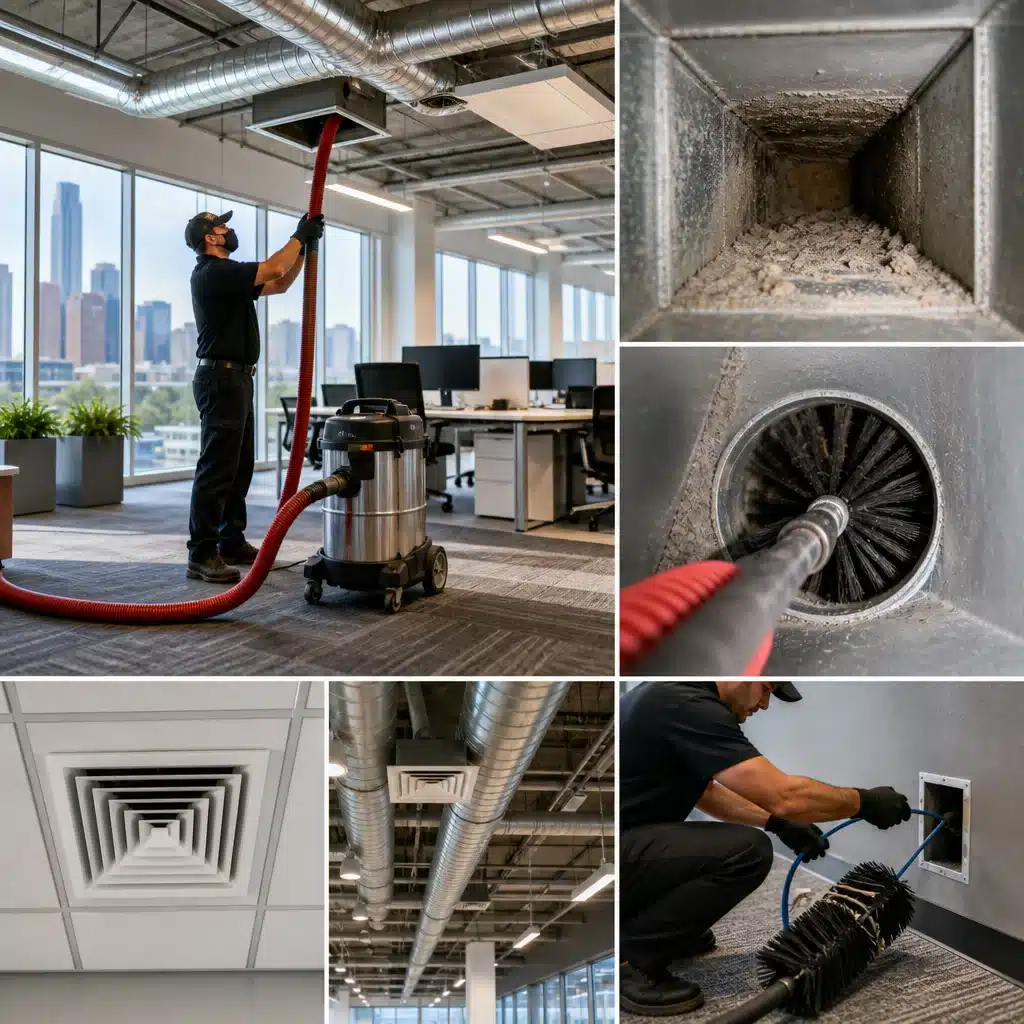
The presence of mold spores, pet dander, or residue from cigarette smoke (especially in older buildings) also extends the timeline because these contaminants require different treatment protocols. We may need to apply antimicrobial agents or use specialized vacuum systems with HEPA filtration to ensure thorough removal.
A lightly maintained system might finish in the low end of our time range. A heavily contaminated system could easily add 50 percent to the total duration because we’re not rushing through the process. You’re paying for thoroughness, not speed.
What to do next: Ask your cleaning provider to perform a pre-cleaning video inspection. This shows exactly what’s inside your ducts and allows for an honest conversation about how much time the job will actually require.
3. Ductwork Configuration and Accessibility Challenges
Not all ductwork is created equal, and accessibility determines how quickly we can move through the system. Some Austin offices have beautifully planned, accessible ductwork in crawl spaces or mechanical rooms. Others have ductwork running through tight attic spaces, buried under insulation, routed through walls, or installed in areas we can only reach by ladders and contortions.
If your ductwork is easily accessible from a central mechanical room, we can work efficiently. If access points are scattered across multiple floors, require special equipment like lifts, or involve removing drywall panels, the timeline stretches. We’ve encountered jobs where ducting runs under concrete slabs or through areas that demand creative problem-solving to reach the necessary access points safely.
Spiral ductwork (often found in modern commercial spaces) also cleans differently than rectangular ductwork. The design affects how we position cleaning equipment and how thoroughly we can remove buildup from the seams and bends.
Safety always comes first. We’ll never rush through tight spaces or take shortcuts that compromise the quality of our work or the integrity of your building’s structure.
What to do next: Walk through your office and note where mechanical systems, return air plenums, and main trunk lines are located. Share these observations when getting your estimate so the cleaning company accounts for access challenges.
4. Number of Return and Supply Vents Throughout Your Space
Each return air vent and supply vent in your office represents a connection point that needs attention during cleaning. A small office with 3 or 4 return vents is fundamentally different from a sprawling space with 15 to 20 individual vents spread across multiple rooms or floors.
We clean from both ends: the main lines and the branch lines leading to individual vents. The more endpoints in your system, the more careful assessment and cleaning work is required. Modern office layouts with individual office spaces, open floor plans with distributed vents, and multi-floor buildings all increase the vent count significantly.
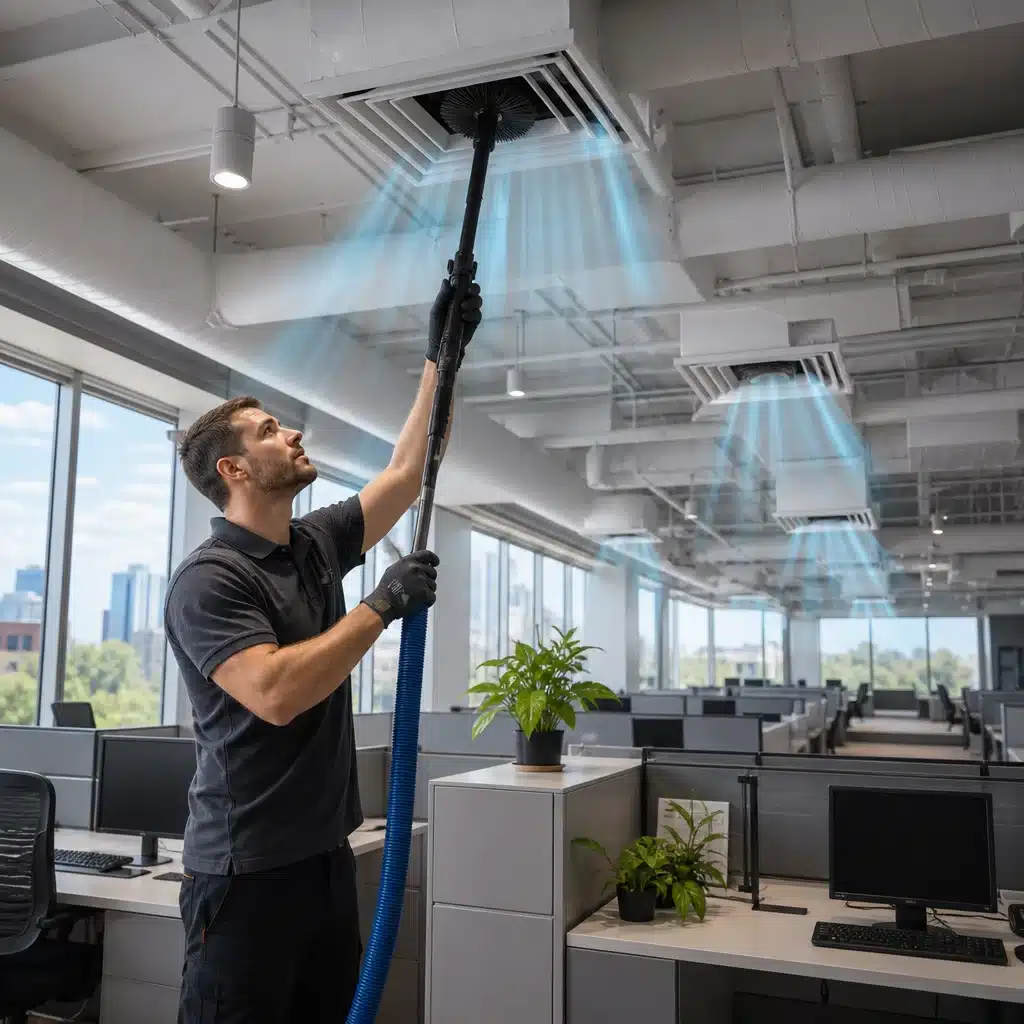
Additionally, we inspect and clean the registers themselves (the visible grilles), and if they’re heavily soiled or have been painted over multiple times, they require extra care to avoid damage and ensure proper airflow after cleaning.
A commercial space with well-organized ductwork and a modest vent count might take one team and one day. A complex space with scattered vents across different zones could require two technicians working simultaneously to stay efficient.
What to do next: Count your visible vents and ask whether your cleaning estimate accounts for each one individually. This is a straightforward factor that should be clearly addressed in any proposal.
5. Professional Equipment Technology That Speeds Up Service
This is where the difference between a professional operation and a budget service becomes obvious. We invest in truck-mounted vacuum systems, rotary brush equipment, and access tools that allow us to clean quickly without cutting corners.
A truck-mounted vacuum system creates negative pressure throughout your ductwork, pulling debris out efficiently and containing it safely in our truck. This is dramatically faster and more effective than portable equipment that contractors sometimes rely on. We also use camera systems to inspect before and after cleaning, which adds confidence but requires some time investment upfront.
Older or poorly maintained equipment can actually slow down a job. If a cleaning company is using outdated tools or relying on manual labor without proper support systems, they’ll either take twice as long or deliver incomplete results.
Our equipment allows us to tackle the job thoroughly without the timeline becoming unreasonable. It’s a real distinction that affects your experience and the actual cleanliness of your system when we’re finished.
What to do next: Ask any cleaning company about their equipment. Do they use truck-mounted systems? Will they provide pre and post-cleaning video inspections? Companies investing in quality equipment can deliver faster, better results.
6. Additional Services Like Chimney or Dryer Vent Cleaning
Many Austin offices don’t need chimney or dryer vent cleaning, but some do. If your facility includes a break room or kitchen area with a commercial dryer, or if you have a fireplace or heating system that requires chimney cleaning in Austin, bundling those services affects your total timeline.
We often recommend addressing multiple issues during one service visit. It’s more efficient for you and better for your business continuity. A dryer vent cleaning typically adds 1 to 2 hours. Chimney inspection and cleaning can take 2 to 4 hours depending on complexity and chimney height.
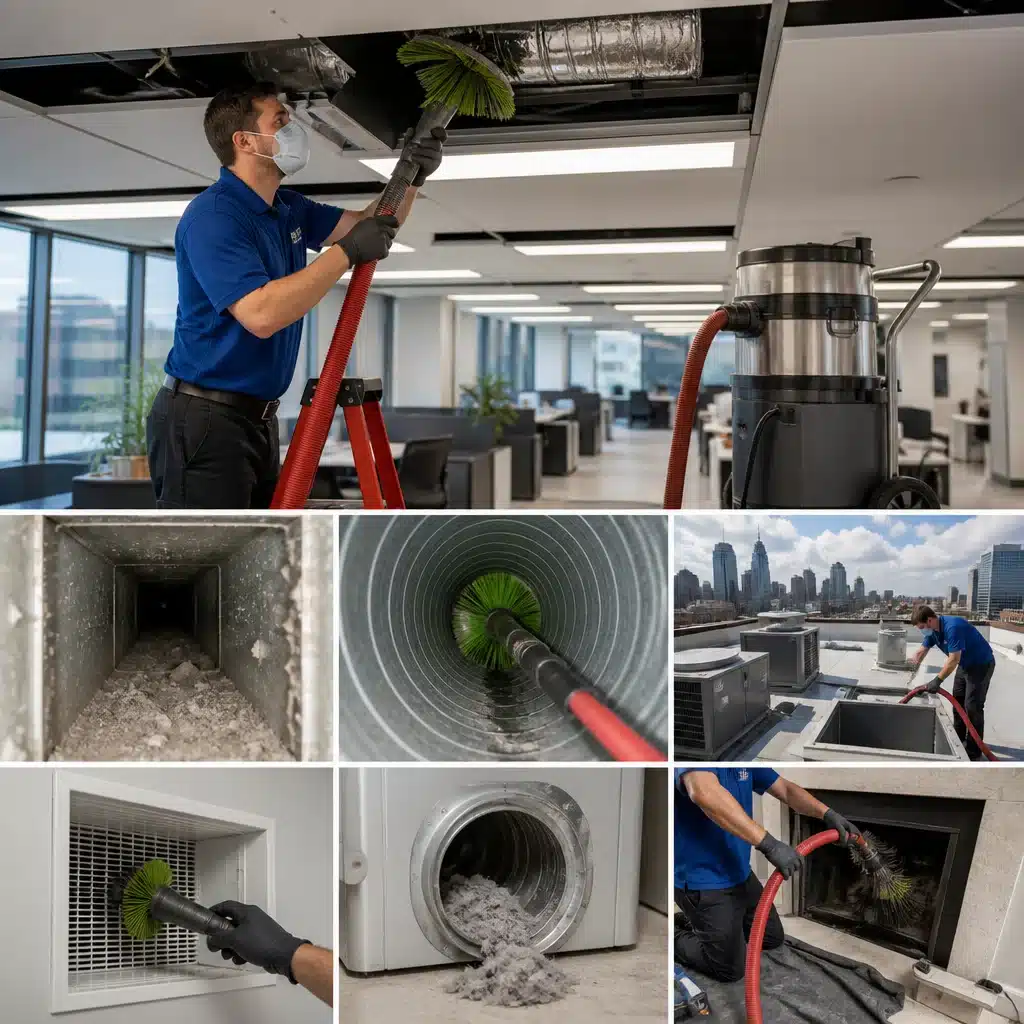
If you’re combining air duct cleaning with these services, the total job might stretch longer, but you’re avoiding multiple service calls and coordinating with fewer contractors. From a scheduling perspective, this often works better than spacing out services over several weeks.
What to do next: When requesting your estimate, mention all HVAC and ventilation services your office needs. We can create a consolidated timeline that addresses everything in one efficient visit.
—
Getting an accurate timeline for your Austin office duct cleaning comes down to transparency and expertise. We provide free service estimates where we actually assess your specific situation rather than guess. We explain what factors will affect your timeline and give you realistic expectations upfront.
The goal isn’t the fastest cleaning. It’s the most thorough, professional cleaning that improves your indoor air quality, boosts HVAC efficiency, and prevents future problems. When you’re ready to move forward, contact us for a consultation. We’ll walk through your facility, answer your questions, and create a timeline that works with your business schedule.
If you’re dealing with dust, poor airflow, mold in your ducts, or a clogged dryer vent — don’t wait. These issues can affect your health and safety. Go Air Ducts Group are the local experts in air duct cleaning, mold removal, dryer vent cleaning, and attic insulation. Call now for a free inspection and same-day service in Austin and San Antonio.
Frequently Asked Questions (FAQ)
How long does a typical office duct cleaning take in Austin?
We’ve found that most commercial duct cleaning projects in Austin take between 4 to 8 hours, depending on your system’s size and complexity. Larger office buildings with extensive ductwork may require a full day or split across multiple visits, while smaller spaces can often be completed in a single afternoon. We’ll provide you with a specific timeline during your free estimate after assessing your particular setup.
What factors could extend our duct cleaning timeline?
Several conditions can impact how long our work takes, including heavy dust accumulation that requires extra attention, difficult-to-reach ductwork in older buildings, and additional services like chimney or dryer vent cleaning. We always communicate any timeline adjustments upfront so you know exactly what to expect before we begin. Our certified technicians work efficiently without cutting corners on quality.
Do you offer faster duct cleaning services for busy office schedules?
We understand that downtime affects your business, so we’re flexible with scheduling early mornings, evenings, or weekend appointments to minimize disruption. Our advanced equipment allows us to work more efficiently than standard methods, which helps us complete most commercial jobs quickly. Contact us to discuss your timeline needs, and we’ll find a solution that works for your Austin office.