
🕑 11 min read
What R-value attic insulation is best for San Antonio?
San Antonio attics generally perform best around R-38 or higher to block intense summer heat and lower cooling costs. The right level depends on your attic and budget. Go Air Ducts helps San Antonio homeowners choose the ideal insulation R-value and installs it for maximum energy savings and comfort.
Table of Contents
- 1. Understanding R-Value Ratings and What They Mean for Your Home
- 2. Recommended R-Value for San Antonio’s Hot Climate Zone
- 3. Cost-Benefit Analysis of Higher R-Values in South Texas
- 4. Common Insulation Types and Their R-Value Performance
- 5. How Our Professional Installation Ensures Maximum Efficiency
- 6. Energy Savings You Can Expect With Proper Attic Insulation
- 7. Signs Your Current Insulation Doesn’t Meet Modern Standards
- Frequently Asked Questions (FAQ)
1. Understanding R-Value Ratings and What They Mean for Your Home
If you’ve walked into your attic in summer and felt a blast of heat that nearly knocked you over, you already know the problem. San Antonio’s intense climate demands serious attic insulation, and getting the right R-value is the difference between a comfortable, energy-efficient home and one that bleeds money through the roof every month.
We’ve installed insulation in hundreds of San Antonio homes, and we consistently see the same mistake: homeowners guessing at R-values instead of matching them to our specific climate zone and their home’s actual needs. The result is undersized insulation that fails to protect against our relentless heat and humidity.
This guide cuts through the confusion. We’ll show you exactly what R-value works best for San Antonio, how to evaluate your options, and why installation matters just as much as the material you choose.
R-value measures thermal resistance. The higher the number, the more effective the insulation is at slowing heat transfer. Think of it as a barrier strength rating: R-19 blocks less heat movement than R-30, which blocks less than R-49.
The number itself is linear but the benefit isn’t. Upgrading from R-19 to R-38 doesn’t double your cooling savings because your house loses heat through multiple pathways (windows, doors, foundation, etc.). However, attic insulation still accounts for 40% of unwanted heat gain in a typical home during summer.
What makes R-value confusing for homeowners is that it depends on the material. Fiberglass batts, blown cellulose, and spray foam all have different R-values per inch of thickness. A 6-inch layer of spray foam delivers much higher R-value than 6 inches of loose-fill fiberglass, which is why material selection matters.
San Antonio’s building codes haven’t kept pace with modern efficiency standards, which is why we always recommend exceeding the minimum. Local builders often cut corners, and older homes built to code 15 or 20 years ago are now underperforming.
2. Recommended R-Value for San Antonio’s Hot Climate Zone
San Antonio sits in Climate Zone 2, which the U.S. Department of Energy classifies as a hot climate. For this zone, recommended attic R-values range from R-38 to R-60, depending on whether you’re prioritizing cooling costs or long-term efficiency.
We recommend R-38 as the practical minimum for new construction or major retrofits. This meets current code in most Texas jurisdictions and provides solid protection against summer heat gain. If you’re upgrading an older home with R-19 or R-25, jumping to R-38 delivers noticeable monthly savings.
For maximum efficiency and future-proofing, R-49 to R-60 is the sweet spot in San Antonio. At this level, your attic becomes a true thermal barrier, and the energy savings compound over 10-15 years. We see homeowners recovering their installation cost through lower cooling bills within 5-8 years, then enjoying pure savings after that.
Your specific recommendation depends on three factors: your home’s age, current insulation depth, attic ventilation, and cooling system efficiency. A home with a 15-year-old air conditioner running against R-19 insulation is hemorrhaging energy. Adding R-49 insulation transforms that system’s efficiency even if the AC itself is aging.
Action: Get a free insulation assessment from our certified technicians. We’ll measure your current R-value, assess your attic ventilation, and recommend the exact level your home needs.
3. Cost-Benefit Analysis of Higher R-Values in South Texas
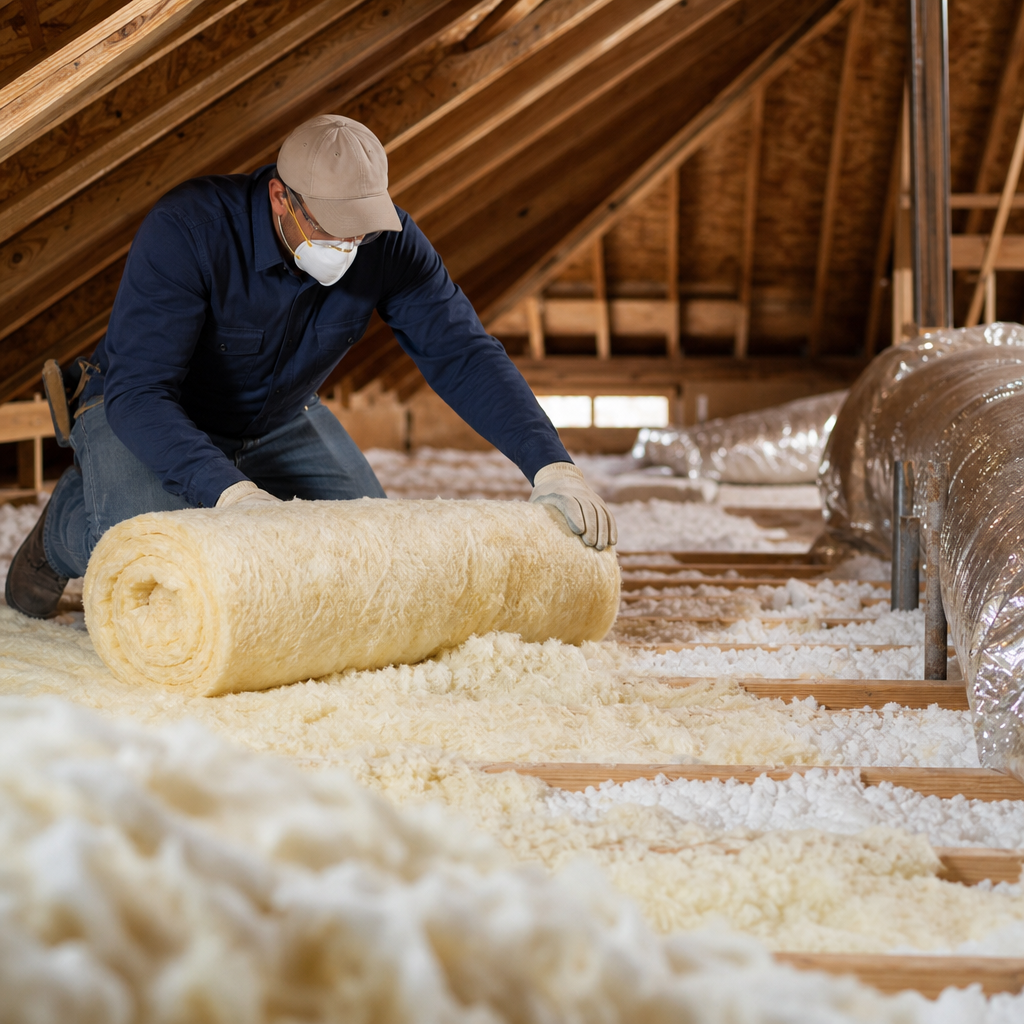
R-38 insulation costs roughly 30-50% less to install than R-49. For a 1,500-square-foot attic, you might spend $1,200-$1,800 for R-38 versus $2,500-$3,500 for R-49.
But here’s where San Antonio’s climate makes higher R-values make financial sense: we cool our homes nine months a year, not four. The daily heat stress on your attic is relentless, which means the energy payback window is shorter than it would be in milder climates.
A homeowner in Austin or San Antonio typically saves 15-25% on cooling costs by upgrading from R-19 to R-38, and an additional 10-15% by going from R-38 to R-49. With average cooling bills around $150-$200 monthly in summer, that’s real money.
There’s also the mold and moisture factor. Better insulation creates a cooler attic, which reduces condensation risk. That directly cuts your odds of attic mold, a costly problem we address regularly in South Texas homes.
And don’t forget tax credits. Texas homeowners often qualify for attic insulation rebates that offset 20-30% of installation costs. Combined with lower cooling expenses, R-49 pays for itself faster than most home upgrades.
Action: Run your own numbers using your current cooling bill and the savings percentage we estimate during your free assessment. Most homeowners are surprised how quickly higher R-values return their investment.
4. Common Insulation Types and Their R-Value Performance
Fiberglass batts deliver R-3.5 to R-3.8 per inch. They’re cheap, easy to install, and widely available. But they’re also prone to settling over 10-15 years, which reduces effective R-value. In humid climates like San Antonio, fiberglass also traps moisture more easily than newer materials. We rarely recommend batts for new installations anymore.
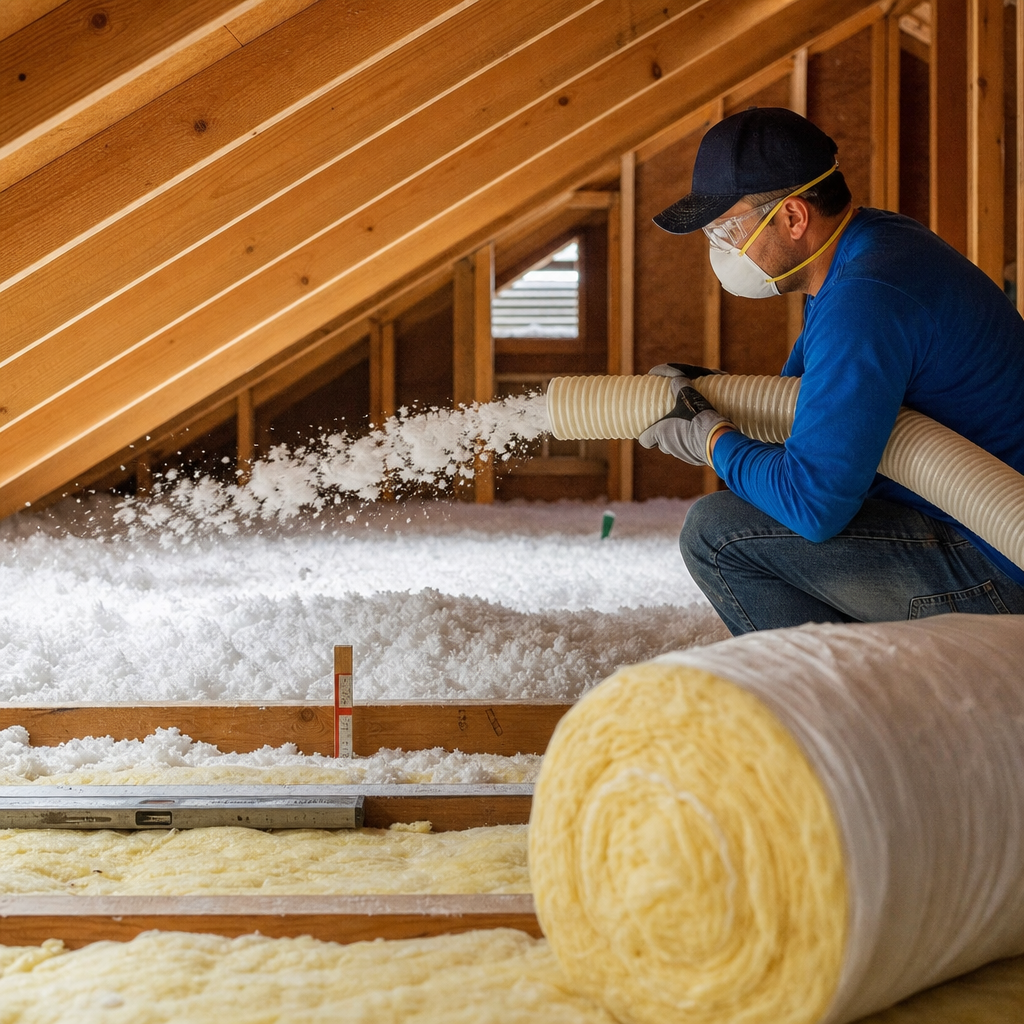
Blown fiberglass or cellulose gives R-2.5 to R-3.5 per inch depending on density and material. The advantage is that dense packing fills gaps and irregular spaces better than batts. The downside is settling: blown insulation loses 10-20% of its R-value over a decade. Cellulose is slightly more stable but performs poorly if it gets wet.
Spray foam (open-cell) delivers R-3.5 per inch and creates an air seal, blocking convection losses. Open-cell foam is cheaper than closed-cell but allows some moisture permeability, which is actually useful in hot climates where you want vapor to escape.
Spray foam (closed-cell) gives R-6 to R-7 per inch, the highest of any material. It also acts as a vapor barrier and air seal. The downside is cost: closed-cell runs 2-3 times the price of blown insulation. For San Antonio homes, it’s worth considering in smaller areas like rim joists or above the ceiling of conditioned spaces.
Mineral wool offers R-3.5 per inch and superior fire resistance. It’s moisture-tolerant and denser than fiberglass, resisting settling better. It’s more expensive than fiberglass but less than spray foam.
For attic applications in San Antonio, we typically recommend blown cellulose at higher densities (R-38 to R-49) or open-cell spray foam if your budget allows. Both handle our humidity better than batts and maintain performance over time.
5. How Our Professional Installation Ensures Maximum Efficiency
Installation quality directly determines whether you actually get the R-value you paid for. A common mistake we see is improper attic ventilation setup during retrofits. If you add high-R insulation but don’t ensure proper soffit-to-ridge airflow, you create moisture problems that undermine the whole investment.
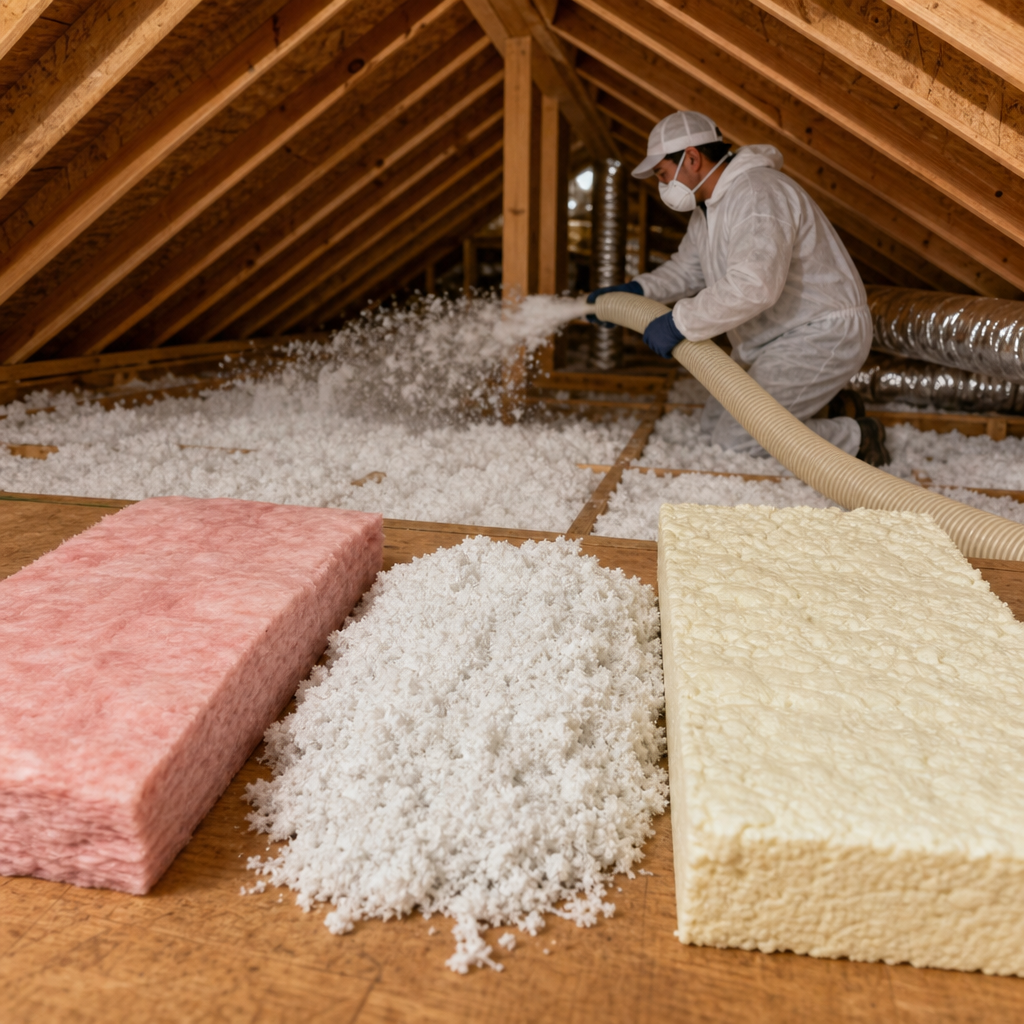
Our process starts with inspection. We assess your current insulation, identify any existing air leaks, check for mold or moisture issues, and evaluate your attic ventilation system. Many San Antonio homes have inadequate ventilation that needs correction before new insulation goes in. That’s a step most contractors skip, which is why we lead with it.
We then air-seal major gaps and leaks before installing new insulation. Blow insulation into an attic full of air gaps is like wearing a sweater with holes in it. Our technicians know where the problems typically hide: around recessed lights, HVAC penetrations, plumbing vents, and near the attic perimeter.
During installation, we measure density and depth using calibrated techniques to confirm you’re getting the exact R-value specified. We don’t just dump material and leave; we verify coverage, check for voids, and document everything with photos. That documentation matters for warranty claims and future inspections.
Finally, we test attic temperature and humidity post-installation to confirm the system is performing. We also explain how insulation boosts HVAC efficiency so you understand the full impact on your home’s climate control.
Action: Ask any contractor to show you their pre-installation photos and post-installation verification. If they can’t document the work, their installation probably isn’t optimized.
6. Energy Savings You Can Expect With Proper Attic Insulation
Realistic expectations matter. Upgrading from R-19 to R-38 in a San Antonio home typically cuts cooling costs by 15-20% during the cooling season. For a house with $1,800 annual cooling bills, that’s $270-$360 in annual savings.
Jumping to R-49 typically yields an additional 10-12% savings beyond R-38, so roughly $180-$216 more per year.
These numbers assume proper installation, intact air sealing, functional HVAC systems, and no unusual home configuration. Homes with high ceilings, poor attic ventilation, or aging air conditioning may see lower percentages because the attic isn’t the only bottleneck in their cooling system.
Winter heating benefits in San Antonio are modest (our winters are mild) but still present. You’ll notice slightly warmer attics and reduced heat loss during cold snaps, adding another 5-10% savings during the rare heating season.
Beyond dollars, proper insulation delivers comfort gains. Upstairs bedrooms stay cooler longer in summer. Attic temperatures drop by 10-20 degrees, which reduces thermal stress on your roof and extends shingle life. We’ve also seen homeowners report fewer dust and allergen issues because better insulation and air sealing reduce infiltration of outdoor pollutants.
Action: Track your electric bills for three months post-installation to establish your baseline savings. Most homeowners are surprised how quickly the numbers add up.
7. Signs Your Current Insulation Doesn’t Meet Modern Standards
If your home was built before 2010, your attic insulation almost certainly falls short of current efficiency standards. Homes from the 1990s and early 2000s commonly have R-19 or R-25, which is inadequate for today’s climate patterns and energy costs.
Warning signs include visibly thin insulation (less than 4-5 inches of blown material or single-layer batts), wet or water-stained insulation, visible settling in blown insulation, or signs of attic mold. Water damage is a red flag that your current insulation isn’t managing moisture properly, especially common in San Antonio’s humid summers.
Extreme attic temperatures are another indicator. If your attic reaches 130+ degrees on a hot day despite ventilation, your insulation isn’t slowing heat gain effectively. Professional thermographic imaging confirms whether insulation density is adequate.
High cooling bills that spike in summer despite a functioning air conditioner often point to inadequate attic insulation. If your upstairs stays significantly warmer than your downstairs despite your system running constantly, your attic is losing the battle against heat transfer.
Rising energy costs also mask an aging insulation problem. San Antonio’s electricity rates have climbed 25-30% over the past five years, making poor insulation more expensive to tolerate. An upgrade now locks in efficiency before rates climb further.
Attic mold prevention is another compelling reason to upgrade. High-R insulation combined with proper ventilation eliminates the moist, warm conditions mold thrives in.
Action: Schedule a free attic inspection with our team. We’ll measure your current R-value, identify any moisture or mold issues, and show you exactly what needs upgrading.
—
Getting the right R-value for your San Antonio home isn’t guesswork. It’s a straightforward calculation based on climate, budget, and your cooling priorities.
We recommend R-38 as the practical minimum and R-49 for optimal long-term efficiency and comfort. Proper installation with complete air sealing and verified coverage is non-negotiable. Cut corners on installation, and you’re wasting money on materials that won’t perform.
We’ve helped hundreds of San Antonio homeowners upgrade their attics, and the pattern is consistent: those who invest in R-49 insulation with professional installation recover their costs in 5-8 years and enjoy decades of savings after that. Those who cheap out with R-19 upgrades to R-30 find themselves back in the insulation conversation within a few years as rising energy costs make the inadequate upgrade regrettable.
If your home still has original or aging insulation, we’re ready to help. Call us for a free estimate and professional assessment of your specific R-value needs. We’ll show you the exact upgrade our team recommends and walk you through your financing and rebate options.
If you’re dealing with dust, poor airflow, mold in your ducts, or a clogged dryer vent — don’t wait. These issues can affect your health and safety. Go Air Ducts Group are the local experts in air duct cleaning, mold removal, dryer vent cleaning, and attic insulation. Call now for a free inspection and same-day service in Austin and San Antonio.
Frequently Asked Questions (FAQ)
What R-value does our team recommend for San Antonio attic insulation?
We typically recommend R-38 to R-49 for attic insulation in San Antonio’s hot climate, depending on your home’s age and current energy efficiency. Our certified technicians assess your specific situation during a free estimate and factor in factors like your roof type, ventilation, and cooling costs to give you a personalized recommendation that balances comfort and savings.
How do we ensure maximum efficiency when we install attic insulation?
We use professional-grade equipment and follow industry best practices to eliminate gaps, air leaks, and compression that reduce performance. Our team properly seals penetrations around pipes and electrical fixtures before installing insulation, which prevents thermal bridging and ensures you get the full R-value benefit our materials promise.
What energy savings can we help you achieve with upgraded attic insulation?
Most of our San Antonio customers see cooling cost reductions of 15-20% after we upgrade their attic insulation to current standards. Your actual savings depend on your current insulation condition, local utility rates, and cooling habits, which is why we provide detailed energy projections during your free consultation so you know exactly what to expect.