
🕑 8 min read
Table of Contents
- 1. How Long Blow-In Insulation Actually Lasts in Our Texas Climate
- 2. Moisture and Humidity Impact on Insulation Performance
- 3. Pest Damage and How to Prevent It
- 4. Settling and Compression Over Time
- 5. Installation Quality Makes All the Difference
- 6. HVAC System Efficiency and Insulation Connection
- 7. When to Schedule Professional Insulation Inspection and Upgrades
- Frequently Asked Questions (FAQ)





1. How Long Blow-In Insulation Actually Lasts in Our Texas Climate
If you’ve had blow-in insulation installed in your San Antonio home, you’re probably wondering how long it will actually protect your investment. The truth is that insulation lifespan isn’t one-size-fits-all. We’ve inspected hundreds of attics across San Antonio and Austin, and we’ve seen brand-new insulation start failing within five years and well-maintained systems outlast 25-year projections.
The difference comes down to seven critical factors that directly impact how long your insulation performs and what you’ll pay in energy costs while it’s degrading. Understanding these factors helps you make smarter decisions about your attic now and know when professional upgrades become necessary.
Blow-in insulation typically lasts between 15 and 25 years in ideal conditions. However, San Antonio’s climate creates specific pressures that can cut that timeline short.
Our region experiences intense summer heat, fluctuating humidity, occasional heavy rains, and seasonal temperature swings. These conditions accelerate insulation settling and create moisture challenges that standard installation doesn’t always account for. In our experience, homeowners who don’t actively monitor their attic insulation often see meaningful performance drops by year 10 to 12.
Cellulose insulation, commonly used for blow-in applications, can last up to 30 years in dry climates but often performs closer to 15-20 years here in Texas. Fiberglass blow-in insulation tends toward the longer end of the spectrum if properly installed and protected from moisture, but even fiberglass loses R-value when compressed or wet.
The key insight: don’t rely on the “25-year estimate” you heard at installation. Schedule a professional inspection every 5-7 years to catch settling, moisture damage, or pest intrusion before it becomes costly.
2. Moisture and Humidity Impact on Insulation Performance
Moisture is the silent killer of blow-in insulation performance in San Antonio. Our humid summers and occasional roof leaks create the perfect environment for insulation degradation.
When moisture penetrates your attic, it reduces R-value dramatically. Wet cellulose insulation can lose 50% of its insulating power. It also creates conditions for mold growth, which we’ve seen spread across entire attic sections when homeowners don’t catch leaks early. Mold in attic spaces affects indoor air quality and can trigger respiratory issues in your household.
Common moisture sources we encounter include:
- Roof leaks (especially where gutters overflow during heavy rain)
- Poor attic ventilation trapping humid air
- Attic bypass holes around electrical fixtures, light fixtures, or plumbing penetrations
- HVAC ducts leaking conditioned air into unconditioned spaces
- Inadequate soffit and ridge vents allowing moisture buildup
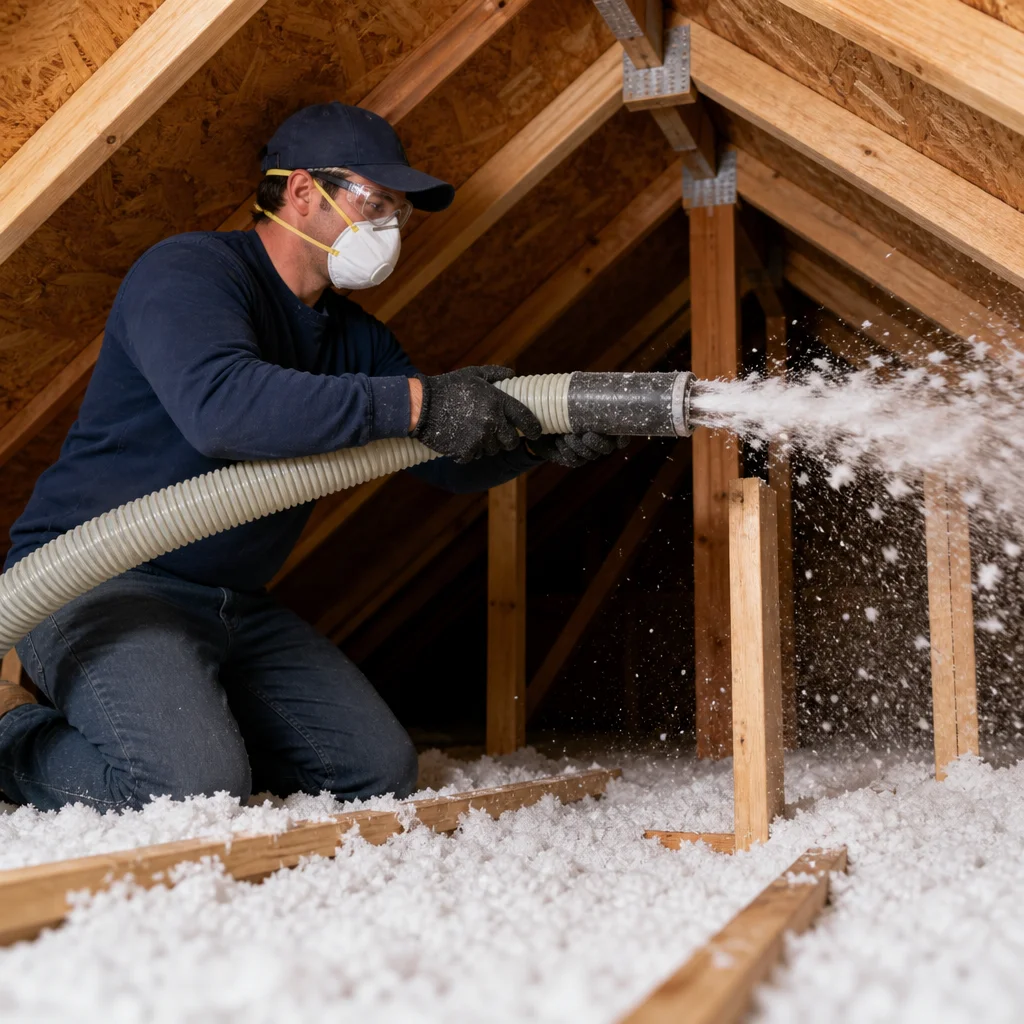
Even without visible leaks, San Antonio’s humidity can cause slow, persistent moisture absorption in attic cavities. We recommend addressing attic insulation mold prevention before problems develop.
Your action: Have a professional inspect your attic for roof leaks and verify your ventilation is working. If you spot discoloration on insulation or a musty odor, call us for a same-day evaluation.
3. Pest Damage and How to Prevent It
Rodents, squirrels, and insects don’t just make noise in your attic. They actively destroy insulation by burrowing through it, and their droppings create sanitation hazards plus additional moisture that degrades the material further.
We regularly see attic insulation with extensive tunneling where rats or squirrels have nested. Once pests move in, they typically create multiple pathways through your insulation layer, essentially creating air leaks that bypass your entire thermal barrier. A single family of rodents can compromise R-value across 100+ square feet of attic space.
Prevention strategies that actually work:
- Seal all entry points larger than 1/4 inch around roof edges, vents, and soffit gaps
- Keep gutters clean and ensure downspouts direct water at least 6 feet from your foundation
- Remove tree branches within 6 feet of your roof line
- Install chimney caps and secure all vent openings with mesh screens
If you’ve already had pest damage, patching isn’t enough. We recommend replacing the compromised insulation section entirely, since material that’s been disturbed loses its settling consistency and doesn’t restore full R-value even if compacted.
4. Settling and Compression Over Time
Gravity works on blow-in insulation constantly. Cellulose and fiberglass both settle and compress, which reduces the depth and density that delivers insulating power.
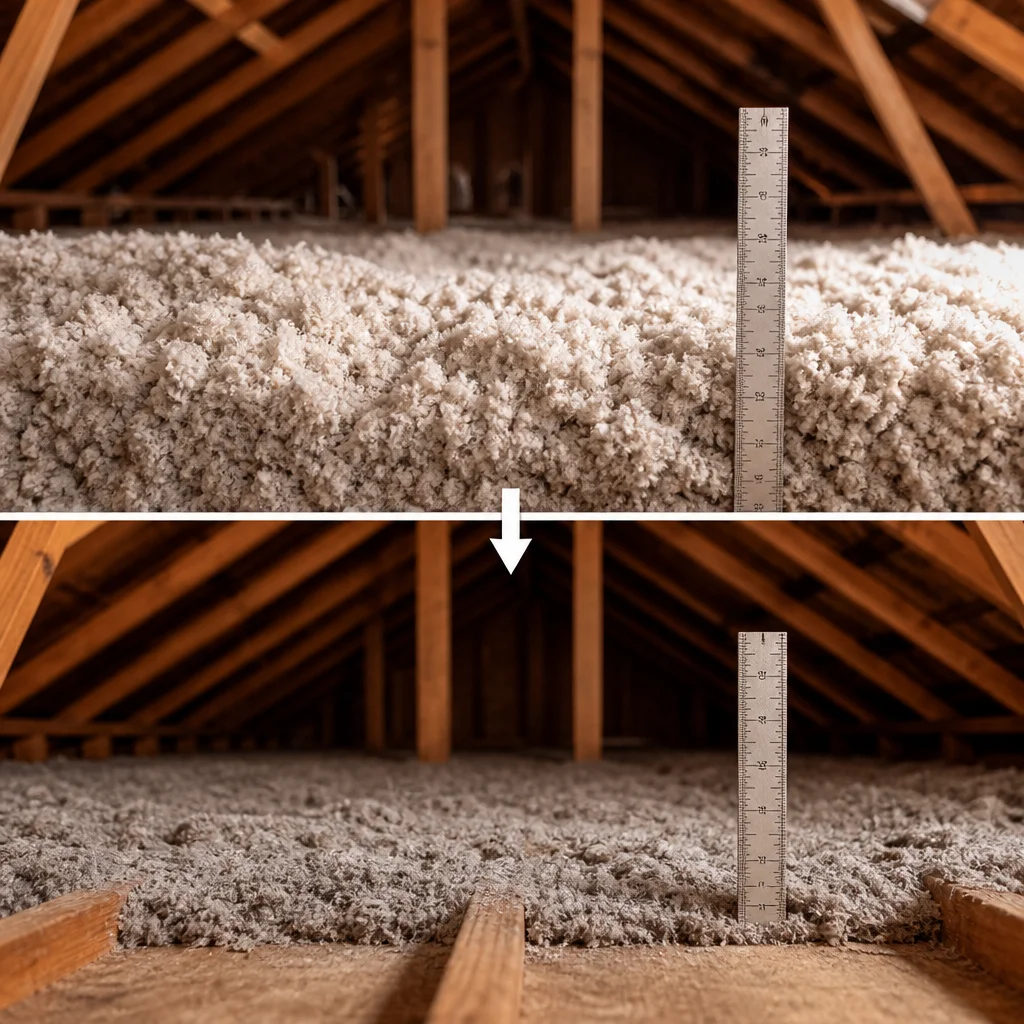
New blow-in insulation is fluffed to fill every cavity. Over time, it naturally compresses under its own weight. The first few years see the most dramatic compression. After 10 years, many attics we inspect show insulation levels 2-4 inches lower than the original installation depth.
This isn’t just a minor issue. If your insulation settled from R-38 (about 12 inches) to R-25 (about 8 inches), your heating and cooling efficiency drops noticeably. Your HVAC system works harder, your energy bills climb, and your equipment ages faster.
Settling happens faster when:
- Insulation was installed with inadequate density to begin with
- Your attic experiences excessive temperature swings
- Roof penetrations allow air movement through the insulation layer
- Pest activity disturbs the material
The practical fix is a professional re-fluffing or partial top-up around year 8-12, depending on how much compression you’re seeing. This costs far less than full replacement and restores your R-value back to design levels.
5. Installation Quality Makes All the Difference
Poor installation is the single biggest factor shortening insulation lifespan. We’ve inspected hundreds of attics where previous contractors cut corners that guaranteed performance failure.
Common installation mistakes we find:
- Insulation applied too thin to meet R-value claims
- Vents blocked or partially covered, trapping moisture
- Gaps left around roof penetrations where warm or cool air escapes
- Improper layering or mixing of materials that don’t perform together
- Failure to air-seal before insulation installation
When we perform blow-in insulation installation, we start by sealing every bypass and penetration, then install to proper depth and density verified by measurement. This foundation work is what separates installations lasting 25 years from those failing by year 8.
Cheap installation often uses generic density and doesn’t account for San Antonio’s specific climate challenges. We design every installation around local conditions, roof orientation, and your existing HVAC configuration to maximize lifespan and performance.
Your takeaway: Get a second opinion if your energy bills are high within a few years of installation. One of our certified technicians can verify whether your insulation was installed to proper specifications.
6. HVAC System Efficiency and Insulation Connection
Your insulation and HVAC system work together. When one is compromised, the other suffers.
Inadequate insulation forces your air conditioning and heating to run longer and cycle more frequently. This accelerates HVAC wear and increases energy waste. Conversely, poor HVAC performance (leaky ducts, inefficient operation) creates unnecessary temperature swings in your attic that accelerate insulation settling and moisture issues.
We’ve seen homeowners spend $3,000 on insulation upgrades that deliver minimal savings because their HVAC system was leaking 20% of conditioned air through disconnected ducts. The two systems need to be evaluated together.
When we recommend HVAC and insulation upgrades, we assess both. An efficient system paired with quality insulation can cut your cooling costs 25-40% compared to either upgrade alone. This is especially important in San Antonio’s 100+ degree summers.
Proper ductwork sealing, HVAC maintenance, and attic insulation work as one system. Skipping any component undermines the entire efficiency picture.
7. When to Schedule Professional Insulation Inspection and Upgrades
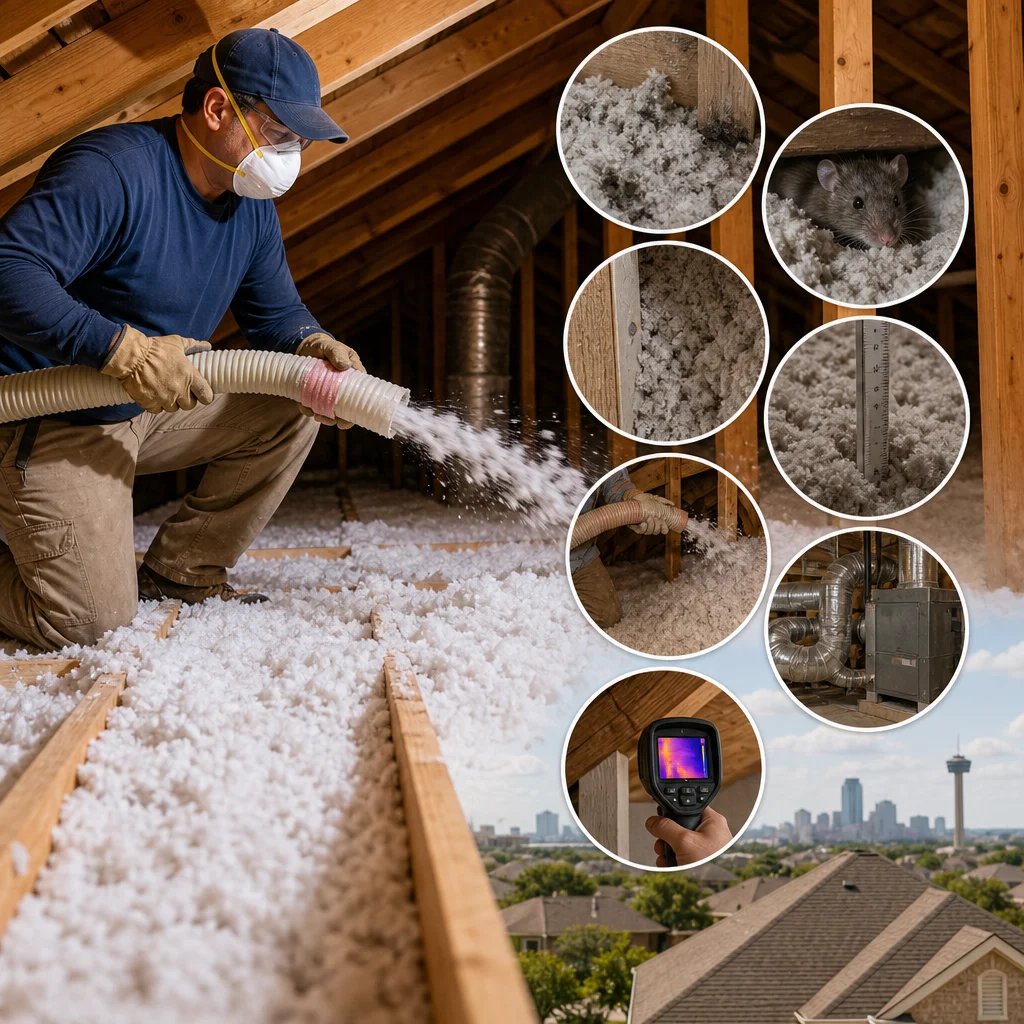
Waiting until insulation fails completely costs you money every single month. Catching issues early prevents energy waste and protects your indoor air quality.
Schedule a professional inspection if any of these apply:
- Your energy bills have increased 15% or more without rate hikes
- You notice temperature inconsistencies between rooms
- Your attic feels hot even with air conditioning running
- It’s been more than 10 years since your last insulation installation
- You’ve had roof leaks, pest problems, or HVAC issues
- You’re seeing mold, discoloration, or moisture in your attic
We provide free service estimates for all San Antonio and Austin homeowners. A certified technician will measure your current insulation depth and R-value, check for settling and compression, inspect for moisture and pest damage, and verify your ventilation is adequate.
From that assessment, we’ll recommend specific actions: re-fluffing sections, spot repairs, partial top-ups, or full replacement. We’re transparent about what actually needs doing versus what’s nice-to-have, so you can make a confident investment decision.
Most homeowners who invest in attic insulation solutions see their energy bills drop within the first billing cycle. Combined with proper HVAC maintenance and duct sealing, the savings compound year after year.
Your next step: Contact us for your free attic inspection. We’ll give you exact measurements, a timeline for when action is needed, and a no-surprise quote. Call today or schedule online to get a certified technician in your San Antonio or Austin home this week.
If you’re dealing with dust, poor airflow, mold in your ducts, or a clogged dryer vent — don’t wait. These issues can affect your health and safety. Go Air Ducts Group are the local experts in air duct cleaning, mold removal, dryer vent cleaning, and attic insulation. Call now for a free inspection and same-day service in Austin and San Antonio.
Frequently Asked Questions (FAQ)
How long does blow-in insulation typically last in San Antonio’s climate?
Based on our experience serving the San Antonio area, we find that blow-in insulation generally lasts 15-20 years under normal conditions, though our Texas heat and humidity can accelerate deterioration. The exact lifespan depends heavily on factors like installation quality, ventilation, and whether your attic experiences moisture problems. We recommend our customers have their insulation inspected every 5-7 years to catch settling or damage early.
What’s the main reason insulation fails prematurely in our region?
We’ve seen moisture and humidity cause the most damage to blow-in insulation throughout San Antonio and Austin. When humidity levels stay elevated in your attic space, it can compress cellulose insulation and reduce its R-value significantly. This is why we always evaluate your attic’s ventilation and moisture levels before recommending insulation work—addressing these issues first prevents premature failure.
How do I know when my insulation needs replacement?
We typically recommend scheduling an inspection if your insulation is over 15 years old, you’ve noticed pest activity in your attic, or your energy bills have climbed without explanation. During our free estimates, our certified technicians use thermal imaging and physical inspection to assess whether your current insulation still meets performance standards or if an upgrade would benefit your home’s efficiency and comfort.