
🕑 10 min read
Why do dirty HVAC coils cause musty odors?
Dirty coils collect moisture and organic debris that feed mold and bacteria, producing that musty smell whenever the system runs. Cleaning the coils removes the source. Go Air Ducts cleans HVAC coils to eliminate musty odors and restore fresh, healthy air in Texas homes.
Table of Contents
- 1. Understanding How Dirty Coils Create Musty Smells
- 2. The Role of Blower Fan Accumulation in Odor Development
- 3. Mold Growth on Evaporator Coils and Its Health Risks
- 4. Why Standard HVAC Filter Replacements Miss the Problem
- 5. Condensation Buildup and Stagnant Water in Your System
- 6. How Our Professional Coil Cleaning Eliminates Odors Permanently
- 7. Signs You Need Professional HVAC Coil Service Now
- Frequently Asked Questions (FAQ)
1. Understanding How Dirty Coils Create Musty Smells
That musty smell coming from your vents isn’t just unpleasant—it’s a warning sign that your HVAC system needs attention. We’ve encountered this issue countless times across Austin and San Antonio homes, and the root cause is almost always the same: dirty evaporator and condenser coils accumulating moisture, dust, and organic debris. Most homeowners don’t realize their air conditioning coils are breeding grounds for odor-causing bacteria until the smell becomes impossible to ignore.
The problem escalates quickly because standard maintenance routines often miss coil cleaning entirely. A new filter helps, but it doesn’t address what’s happening deep inside your system where the real damage occurs. Understanding why your coils cause these odors is the first step toward fixing them permanently and protecting your home’s air quality.
Your HVAC evaporator coil sits inside your indoor air handler, where it removes heat and moisture from the air circulating through your home. When this coil becomes dirty, it traps dust, pet dander, and organic particles that feed bacteria and fungi. These microorganisms produce volatile organic compounds (VOCs) that create that distinctive musty, stale odor spreading through your ductwork.
The mechanism is straightforward: cold surfaces attract condensation, and moisture combined with trapped organic matter creates the perfect environment for microbial growth. Over time, the coil surface becomes coated with a biofilm layer that continuously releases odors into your air supply. Unlike a one-time chemical treatment, this requires physically removing the buildup to stop the smell at its source.
We’ve found that homes with higher humidity levels (common in Texas) experience accelerated odor development because the coils work harder to dehumidify incoming air. If your home feels muggy or you notice the smell intensifying during summer months, dirty coils are almost certainly the culprit.
Your next step: Schedule a visual inspection of your indoor air handler to confirm whether your coils are visibly dirty or darkened. This takes 15 minutes and costs nothing.
2. The Role of Blower Fan Accumulation in Odor Development
The blower fan that pushes conditioned air through your ducts collects dust and debris right alongside your coils. As the fan blades spin, they create turbulence that spreads this accumulated material throughout your entire ductwork, amplifying the musty odor across multiple rooms. The faster the fan runs, the more efficiently it distributes odor-causing particles.
What makes this particularly frustrating is that homeowners often blame their air filter when the real problem sits inside the system itself. The blower compartment becomes a secondary source of odor because it’s rarely cleaned during standard maintenance. Dust accumulation on fan blades reduces airflow efficiency and creates dead zones where stagnant air collects and sours.
In our experience, homes that haven’t had professional duct cleaning in over three years show significant blower-side accumulation. The dust isn’t just cosmetic—it insulates the blower motor, causing it to work harder and consume more energy while spreading odors continuously.
Your next step: Check whether your HVAC system runs louder than usual or if certain rooms smell worse than others when the fan is on. This pattern indicates blower and coil contamination.
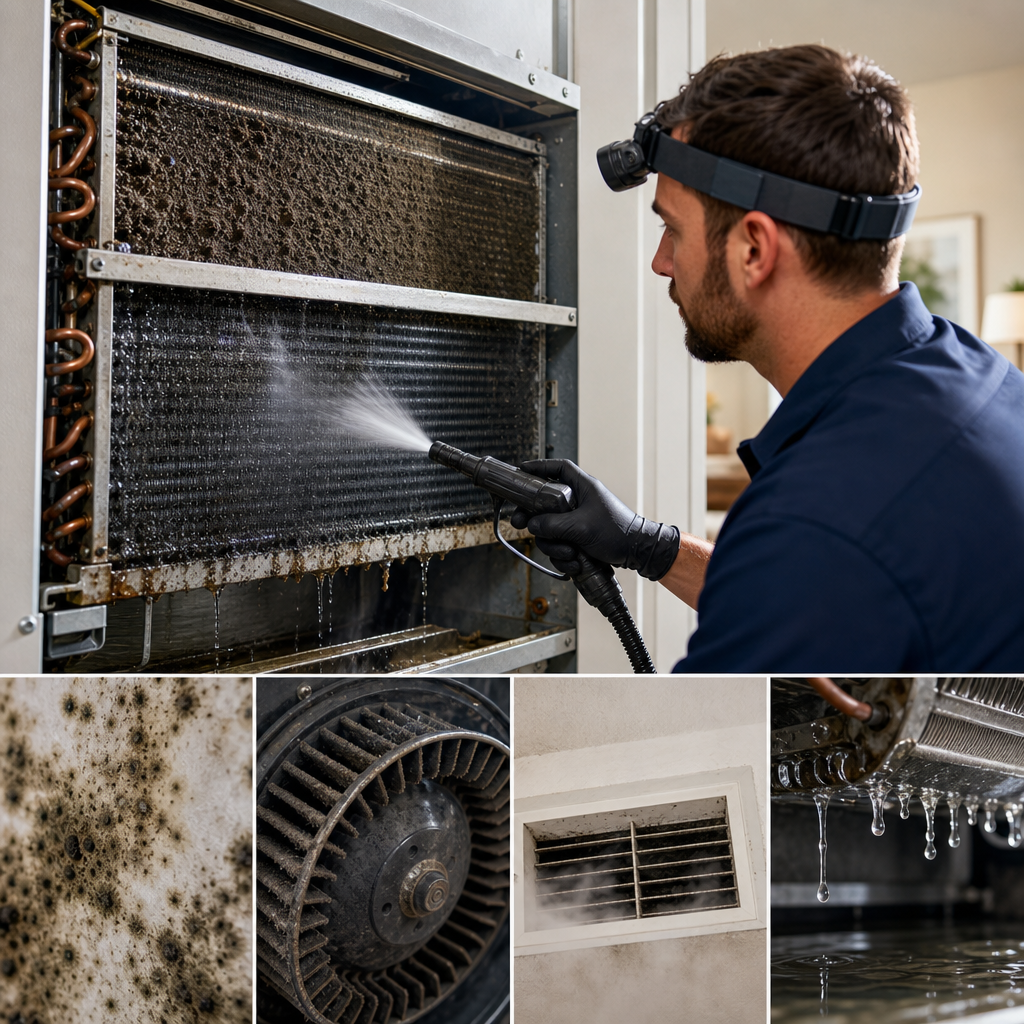
3. Mold Growth on Evaporator Coils and Its Health Risks
Texas humidity creates ideal conditions for mold colonization on HVAC coils. Mold spores are microscopic, and when your system circulates air across moldy coils, those spores enter your living spaces. This isn’t a cosmetic issue—mold exposure triggers allergies, asthma attacks, and respiratory irritation, especially in children and elderly family members.
The musty odor you’re smelling often indicates active mold growth rather than simple bacterial biofilm. Black or green discoloration on coil surfaces confirms mold presence. Since coils are enclosed within your system, most homeowners never see the mold until an HVAC technician looks directly at the coils using specialized equipment.
Health effects from moldy coil circulation include:
- Persistent allergies that worsen indoors
- Unexplained coughing or wheezing when the AC runs
- Skin irritation or reactions
- Fatigue or general malaise that improves when you leave your home
Professional coil cleaning removes the mold colony completely, which is critical for homes with immune-compromised occupants or anyone with documented mold sensitivity.
Your next step: If anyone in your home has worsening allergies or respiratory symptoms during cooling season, request mold testing during your HVAC inspection.
4. Why Standard HVAC Filter Replacements Miss the Problem
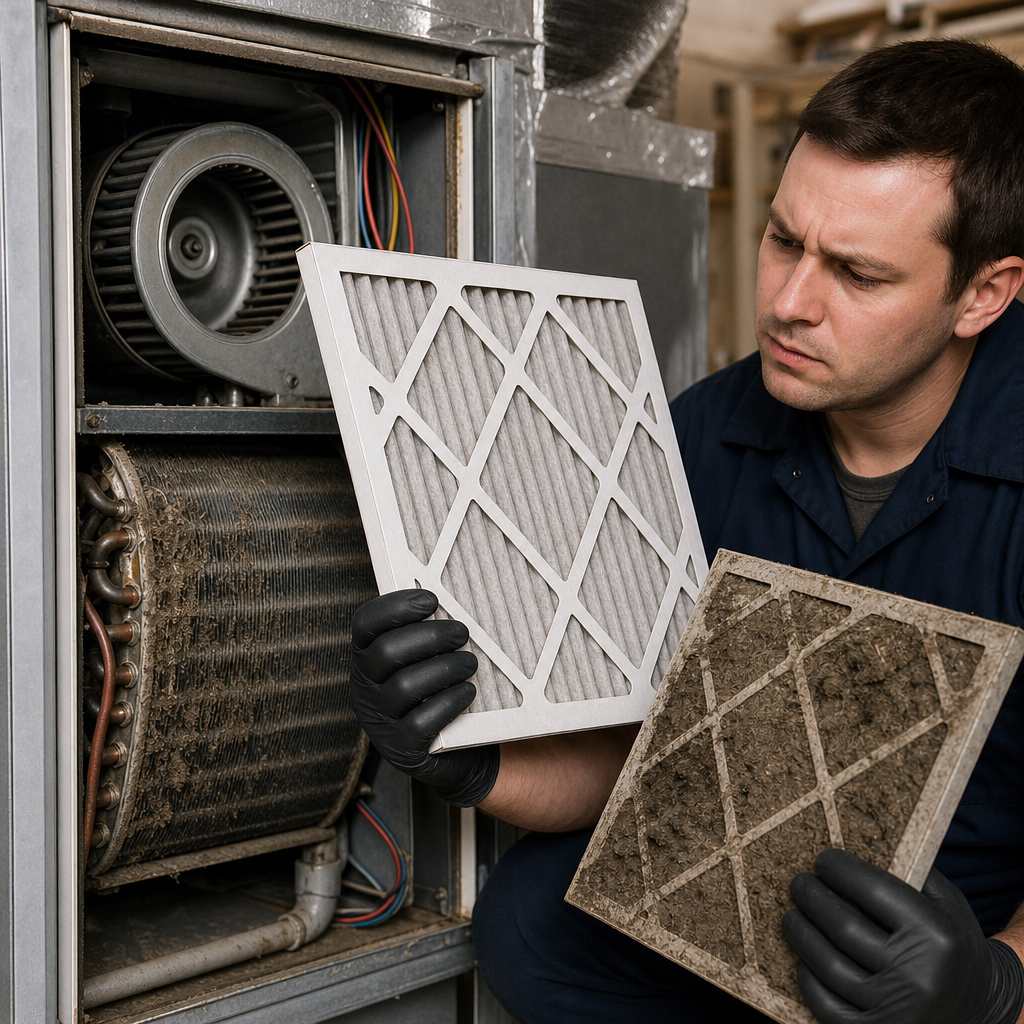
This is where most homeowners get frustrated. They change their filter on schedule, notice no improvement in the musty smell, and assume something else is wrong. The truth is that your air filter sits downstream from your evaporator coil—it catches particles after they’ve already been blown through your living space.
A standard 1-inch filter stops larger dust particles, but odor molecules are chemical compounds that pass through any filter. More importantly, the filter doesn’t stop the source: dirty coils. You’re treating the symptom (particles in the air) while ignoring the cause (mold and bacteria growing on coils).
We’ve evaluated thousands of filter-only maintenance plans across Texas, and none address coil cleanliness. Higher MERV filters might trap smaller particles, but they still can’t eliminate the musty smell because the smell originates from the coil itself. It’s like spraying air freshener instead of cleaning a moldy bathroom—temporary masking that doesn’t solve the real problem.
See our detailed comparison of professional HVAC cleaning vs. filter change to understand why coil cleaning must be part of your maintenance routine.
Your next step: Stop assuming a new filter will solve persistent odors. Request coil inspection as part of your next HVAC service call.
5. Condensation Buildup and Stagnant Water in Your System
Every time your AC runs, your evaporator coil pulls moisture from indoor air and creates condensation that should drain away through a condensate line. When coils become dirty, this drainage system gets compromised. Standing water collects in the coil pan and drain line, creating an oxygen-poor environment where anaerobic bacteria thrive.
Anaerobic bacteria produce hydrogen sulfide, which smells like rotten eggs—one of the most offensive HVAC odors homeowners report. This stagnant water also becomes a mosquito breeding ground and can back up into your system, causing water damage and mold spread.
The condensate line (usually a small PVC pipe) clogs easily when coils aren’t clean. Algae and bacterial biofilm accumulate inside the line, blocking drainage and forcing water to pool. A simple drain line cleaning helps temporarily, but if your coils remain dirty, the problem returns within weeks.
We’ve discovered backed-up condensate systems in roughly 40% of homes we inspect in Austin and San Antonio, and nearly all cases involved dirty coils as the root cause. Cleaning the coil eliminates the biofilm that clogs the drain line, restoring proper water removal.
Your next step: Look under your indoor air handler for a drain line with a small vertical pipe. If you see water dripping slowly or not at all during AC operation, your drainage is compromised.
6. How Our Professional Coil Cleaning Eliminates Odors Permanently
Our approach to coil cleaning goes far beyond what a homeowner or a filter change can accomplish. We use specialized equipment designed to access and clean both evaporator coils (inside your home) and condenser coils (outside), plus the blower compartment where secondary odor sources hide.
Here’s what our professional deep HVAC coil cleaning process includes:
- Complete system shutdown and access panel removal for direct coil inspection
- Chemical-free coil rinse followed by compressed air agitation to dislodge stubborn biofilm
- Mold treatment for affected coils (if present)
- Condensate line cleaning and drain pan sanitization
- Blower fan and compartment cleaning
- System restart and airflow verification
Unlike DIY methods or budget services that spray coils from a distance, we clean every square inch of coil surface. The entire process takes 2-3 hours and eliminates odors at the source rather than temporarily masking them. Once your coils are clean, maintaining them through annual professional cleaning prevents regrowth.
Many homeowners compare our coil cleaning to professional coil cleaning vs. DIY methods—and discover that DIY attempts often damage coils or leave residue behind. We carry proper insurance, use EPA-approved chemicals when necessary, and guarantee results.
Our technicians are certified and trained to spot secondary issues like refrigerant leaks, compressor problems, or ductwork contamination that may contribute to ongoing odor issues. One service frequently prevents multiple future problems.
Your next step: Call for a free estimate. We’ll inspect your coils visually and explain exactly what we find, with no obligation to proceed.
7. Signs You Need Professional HVAC Coil Service Now
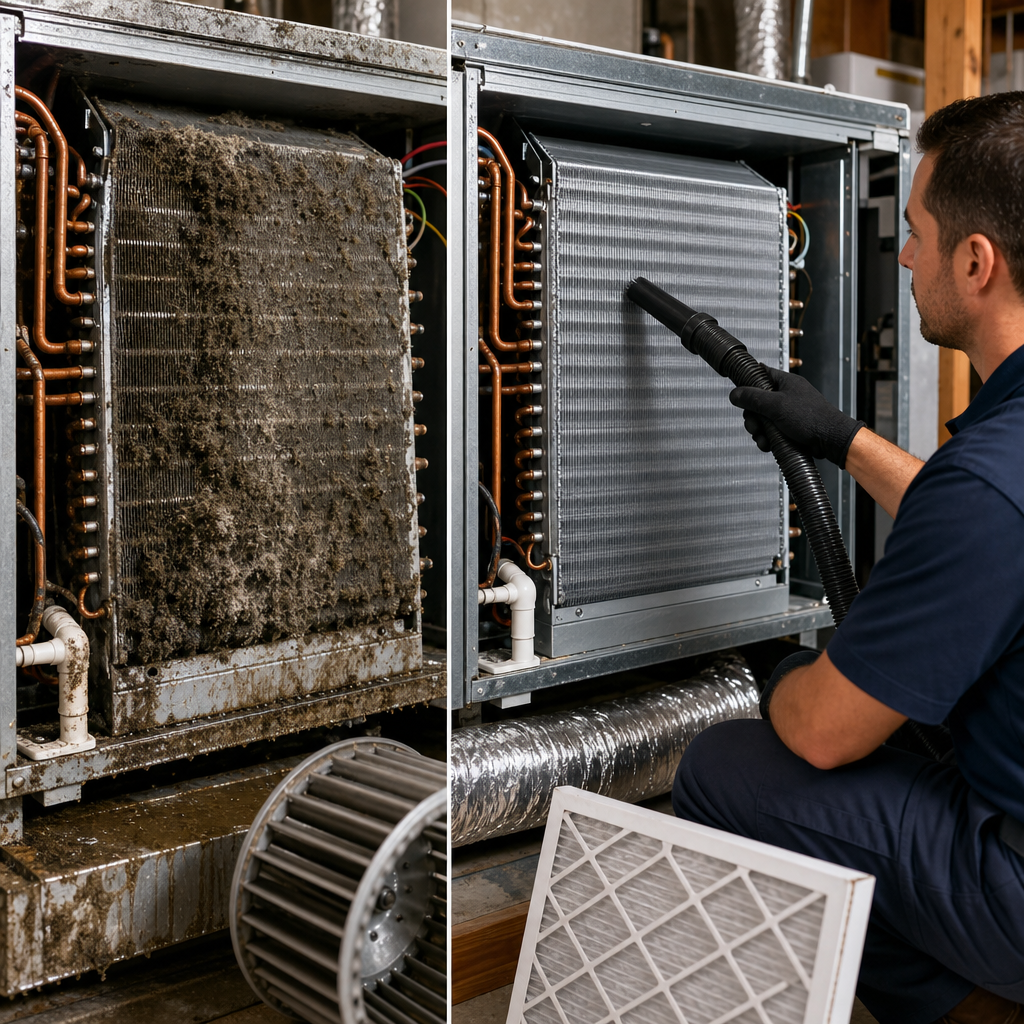
Not every home needs immediate coil cleaning, but certain warning signs indicate you shouldn’t wait. If you notice any of these, schedule a professional inspection this week:
- Persistent musty odor from vents that doesn’t improve after filter changes
- Visible mold or discoloration on coil surfaces (if you can see inside your air handler)
- Allergies or respiratory symptoms that worsen when AC runs
- Water pooling around your indoor air handler
- Weak or reduced airflow despite a new filter
- Rotten egg or sulfur-like smell specifically during humid conditions
- AC system running longer than usual to reach set temperature
Additionally, if you’re buying a home in Austin or San Antonio, request HVAC coil inspection as part of your pre-purchase walkthrough. Many homes have never had professional coil cleaning and represent an easy fix for a new owner.
Our HVAC maintenance guide outlines when coil cleaning should happen alongside other seasonal tasks. Most homes benefit from professional coil inspection annually and cleaning every 2-3 years, depending on humidity levels and usage patterns.
Your next step: Text “COIL” to schedule a same-day or next-day free inspection. We typically complete service within 48 hours of your call.
Dirty HVAC coils are the source of most musty odors in Texas homes, and no amount of air freshener or filter changes will solve the problem. We’ve cleaned thousands of systems across Dallas, Houston, Austin, and San Antonio, and the pattern is consistent: professional coil cleaning eliminates odors permanently and improves home air quality measurably.
Contact us today for a free estimate. Our certified technicians will inspect your system, identify the exact cause of your odor problem, and explain our solution clearly. Once your coils are professionally cleaned, you’ll notice fresher air, better airflow, and relief from the musty smell that’s been bothering you.
If you’re dealing with dust, poor airflow, mold in your ducts, or a clogged dryer vent — don’t wait. These issues can affect your health and safety. Go Air Ducts Group are the local experts in air duct cleaning, mold removal, dryer vent cleaning, and attic insulation. Call now for a free inspection and same-day service in Austin and San Antonio.
Frequently Asked Questions (FAQ)
What causes the musty smell coming from my HVAC system?
We find that musty odors typically develop when dirty evaporator coils accumulate debris and moisture, creating the perfect environment for mold and mildew growth. Your blower fan also collects dust and organic matter over time, which combines with condensation buildup to produce that unpleasant smell throughout your home. Standard filter replacements won’t solve this because they only catch particles in the airflow, not the buildup already coating your coils and ductwork.
How does your coil cleaning process remove odors permanently?
We use specialized equipment to thoroughly clean your evaporator and condenser coils, removing all mold, mildew, and bacterial buildup that causes the smell. Our process also flushes out stagnant water and debris from your condensation drain lines so moisture can’t accumulate and create new odors. After our service, we recommend regular maintenance intervals to prevent the problem from returning.
How often should I have my HVAC coils professionally cleaned?
We typically recommend professional coil cleaning every 2-3 years for most Austin and San Antonio homeowners, though this depends on factors like humidity levels, pets, and how often you use your system. If you notice musty odors returning or have allergies that worsen when your AC runs, we can assess your specific situation and suggest a cleaning schedule that works for your home.