
🕑 10 min read
Table of Contents
- 1. Visible Tears and Physical Damage to Ducts
- 2. Excessive Dust and Debris Around Vents
- 3. Uneven Heating and Cooling Across Rooms
- 4. Rising Energy Bills Without Explanation
- 5. Mold Growth Inside Your Ductwork
- 6. Strange Odors Coming from HVAC System
- 7. Old Ductwork Nearing End of Life Expectancy
- Frequently Asked Questions (FAQ)
1. Visible Tears and Physical Damage to Ducts
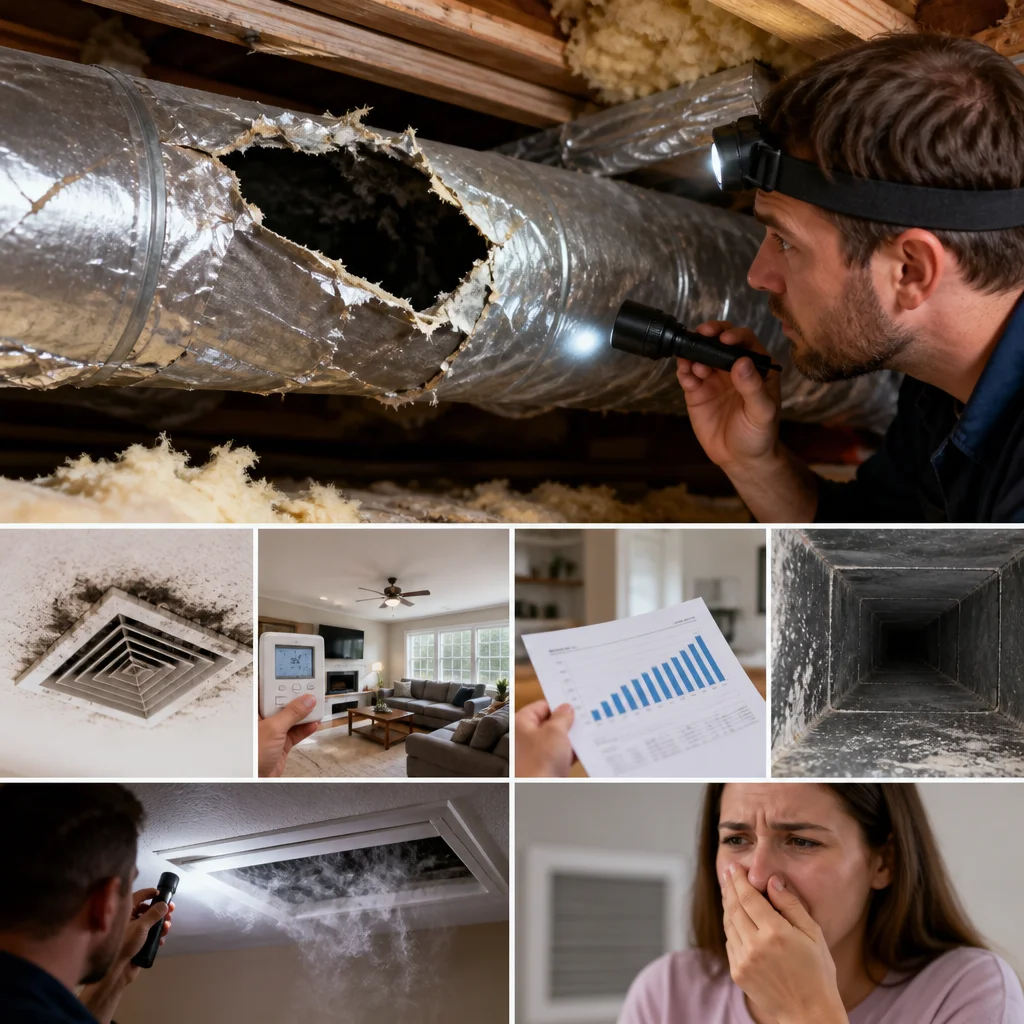
Torn or punctured ductwork is one of the easiest problems to spot and one of the most damaging to ignore. Whether you’ve spotted holes in exposed ducts in your attic or basement, or noticed damaged sections during routine maintenance, physical tears are a direct line for conditioned air to escape.
A single 1-inch tear in your ductwork can waste enough cooled air to run your AC compressor for an extra 20 percent of the cooling season. In Austin summers, that adds up fast. Beyond energy waste, tears also allow dust, insulation fibers, and outdoor air to get pulled directly into your living spaces.
Here’s what typically causes visible damage:
- Impact from drilling, nails, or pest damage
- Age-related brittleness in flex ducts
- Poor original installation with inadequate support
- Deterioration from standing water or humidity exposure
When we perform attic inspections, we often find ducts that have been damaged for years without anyone knowing. The small holes don’t announce themselves, but your energy bills do. Small tears rarely stay small, and patching with duct tape is a temporary band-aid that fails within months in Texas heat.
We recommend a full ductwork assessment if you’ve spotted any visible damage. Replacement of damaged sections typically costs far less than months of wasted energy, and our certified technicians can identify damage that isn’t obvious to the untrained eye.
2. Excessive Dust and Debris Around Vents
Walk around your home and look at the supply vents and return air grilles. Do you see a ring of dust buildup around the openings? Does dust accumulate quickly even after cleaning? That’s a sign your ducts are leaking conditioned air and pulling unconditioned air (plus whatever dust and debris come with it) into the system.
When ductwork has gaps, leaks, or poor seals, the system can’t maintain balanced pressure. This forces air to be drawn in from unconditioned spaces like attics, crawl spaces, and wall cavities. You end up breathing dust, insulation particles, and contaminants that should never reach your living areas.
Excessive dust also signals internal deterioration. Flex ducts degrade over time, and the interior lining can shed fibers into the airstream. Fiberglass duct board, common in older Austin homes, absorbs moisture and breaks down, releasing particles into your home. Common air duct problems found during inspections often include this exact issue, which impacts both air quality and system efficiency.
What you should check for:
- Dark rings of dust around supply and return grilles
- Dust accumulation despite frequent cleaning
- Visible dust or debris coming from vents when system runs
- Musty or stale air near return vents
This is your home’s air quality speaking to you. If you’re noticing dust buildup, especially if anyone in your household has allergies or respiratory sensitivity, ductwork replacement should be a priority. New, properly sealed ducts eliminate this problem entirely and immediately improve the air your family breathes.
3. Uneven Heating and Cooling Across Rooms
One of the most frustrating problems we hear from Austin homeowners is this: certain rooms stay hot while others feel cold, even though the thermostat is set the same everywhere. You end up closing vents in some rooms to “balance” the system, which only makes it worse. This is almost always a ductwork problem, not a thermostat problem.
When ducts have leaks, separations, or blockages, airflow becomes unbalanced. Some rooms get plenty of conditioned air while others get starved. Older flex ducts can pinch or collapse under their own weight, restricting flow to distant rooms. Rigid ductwork can settle and develop gaps at the seams.
The real issue is that your HVAC system is designed assuming all ducts deliver air properly. When they don’t, your system fights to compensate, running longer cycles and consuming far more energy to deliver uneven comfort. In Austin’s humidity, this also means some rooms stay too humid while others dry out, which stresses both your comfort and your home’s structure.
Signs of uneven heating and cooling:
- Upstairs rooms significantly warmer than downstairs (or vice versa)
- Bedrooms or back rooms never reach set temperature
- Closing vents in some areas to make others more comfortable
- Thermostat constantly adjusting; system runs constantly
- Humidity levels vary noticeably between rooms
This problem rarely fixes itself, and it gets worse as ductwork ages. Replacement restores proper balance and lets your system operate efficiently for the first time in years. You’ll notice the difference immediately, and your energy bills will reflect it.
4. Rising Energy Bills Without Explanation
Your electric bill has climbed 15, 20, or even 30 percent, but your usage hasn’t changed. You’re not running the AC any longer than usual, yet somehow you’re paying significantly more. In almost every case we investigate, failing ductwork is the culprit.
Leaky ducts force your HVAC system to work harder to maintain temperature. Your compressor runs longer cycles, your blower motor runs more frequently, and your thermostat keeps signaling for more heating or cooling because air isn’t reaching where it’s supposed to go. All that extra runtime translates directly to higher utility costs.
The math is sobering: ducts with just 20 percent leakage can increase your cooling costs by 30 to 40 percent. In a typical Austin summer, that’s hundreds of dollars extra per month. By winter, heating losses add another layer of waste. Over three to five years, that’s thousands of dollars you’re literally blowing into your attic.
What typically causes energy waste in ducts:
- Leaks in flex ducting or at duct seams
- Disconnected or partially separated ducts
- Inadequate or missing duct insulation
- Deteriorated ductwork that can no longer hold pressure
- Ducts routed through unconditioned spaces without proper insulation
We recommend a professional blower door test combined with ductwork inspection if your energy bills are rising. This identifies exactly where your conditioned air is escaping and gives you a clear return-on-investment picture for replacement. Most of our Austin clients recoup the cost of new ductwork within 2 to 3 years through lower energy bills alone.
Energy efficient duct replacement is one of the most cost-effective home upgrades available. New ductwork with proper sealing and insulation is airtight and designed to modern efficiency standards that save money from day one.
5. Mold Growth Inside Your Ductwork

This one gets homeowners’ attention fast, and rightfully so. If you’ve had a professional air duct cleaning and the technician reports visible mold, or if you notice musty smells coming from your vents, mold is colonizing your ductwork. This isn’t just a comfort issue; it’s a health issue.
Austin’s humidity creates perfect conditions for mold growth inside ducts. When ductwork leaks or sweats due to temperature differences, moisture accumulates on interior surfaces. Dust and debris settle in low spots. Mold spores, which are constantly floating through the air, land in these damp environments and multiply. Before long, your ducts become a mold distribution system, sending spores directly into your living spaces every time the AC runs.
Mold in ducts is particularly dangerous because the system pushes contaminated air throughout your entire home. People with mold sensitivity, asthma, or compromised immune systems can experience significant health impacts. Children and elderly residents are especially vulnerable.
Common causes of mold in ducts:
- Moisture infiltration from leaks or condensation
- Blocked or undersized return air ducts that create stagnant zones
- Standing water in duct pans or low sections
- High indoor humidity that ducts can’t control
- Contamination from previous water damage or flooding
When mold is present, cleaning alone is a temporary fix. The underlying moisture problem remains, and mold returns within weeks or months. The real solution is ductwork replacement with proper moisture control and drainage. New ducts with correct sizing, slope, and sealed seams prevent moisture accumulation entirely.
We’ve helped hundreds of Austin families eliminate mold problems permanently through ductwork replacement. It’s one of the most impactful improvements we make, especially for families with health sensitivities.
6. Strange Odors Coming from HVAC System
Smells coming from your vents tell a story, and it’s rarely a pleasant one. Whether it’s a musty, moldy smell, a burning odor, or something distinctly unpleasant, these odors originate somewhere in your ductwork system.
Musty smells indicate mold or bacterial growth. Burning smells can indicate dust or debris accumulated on heating elements or in ducts, overheating insulation, or an electrical issue. A dead animal smell means something crawled into your ducts and didn’t make it back out. Stale, stuffy air suggests poor ventilation, low return air capacity, or blockages in the duct system.
Many of these problems get worse over time. Dead animals decompose, increasing the odor and potentially contaminating the entire system. Dust accumulation can create a genuine fire hazard if it contacts hot surfaces in your furnace or ductwork. Mold and bacterial growth multiply and spread.
The challenge with odor problems is that sealing or cleaning dirty ducts is often ineffective because the ducts themselves are compromised. You might improve the smell temporarily, but it returns because the underlying damage remains. For persistent problems, replacement is the definitive answer.
When you need to address persistent duct odors:
- Get a professional inspection to identify the source
- Understand whether cleaning, repair, or replacement is appropriate
- Address any moisture or ventilation issues causing the problem
- Replace ducts if they’re damaged, deteriorated, or contaminated beyond cleaning
Your home should smell fresh, not stale or musty. If odors persist despite cleaning or maintenance, ductwork replacement eliminates the problem at its source.
7. Old Ductwork Nearing End of Life Expectancy
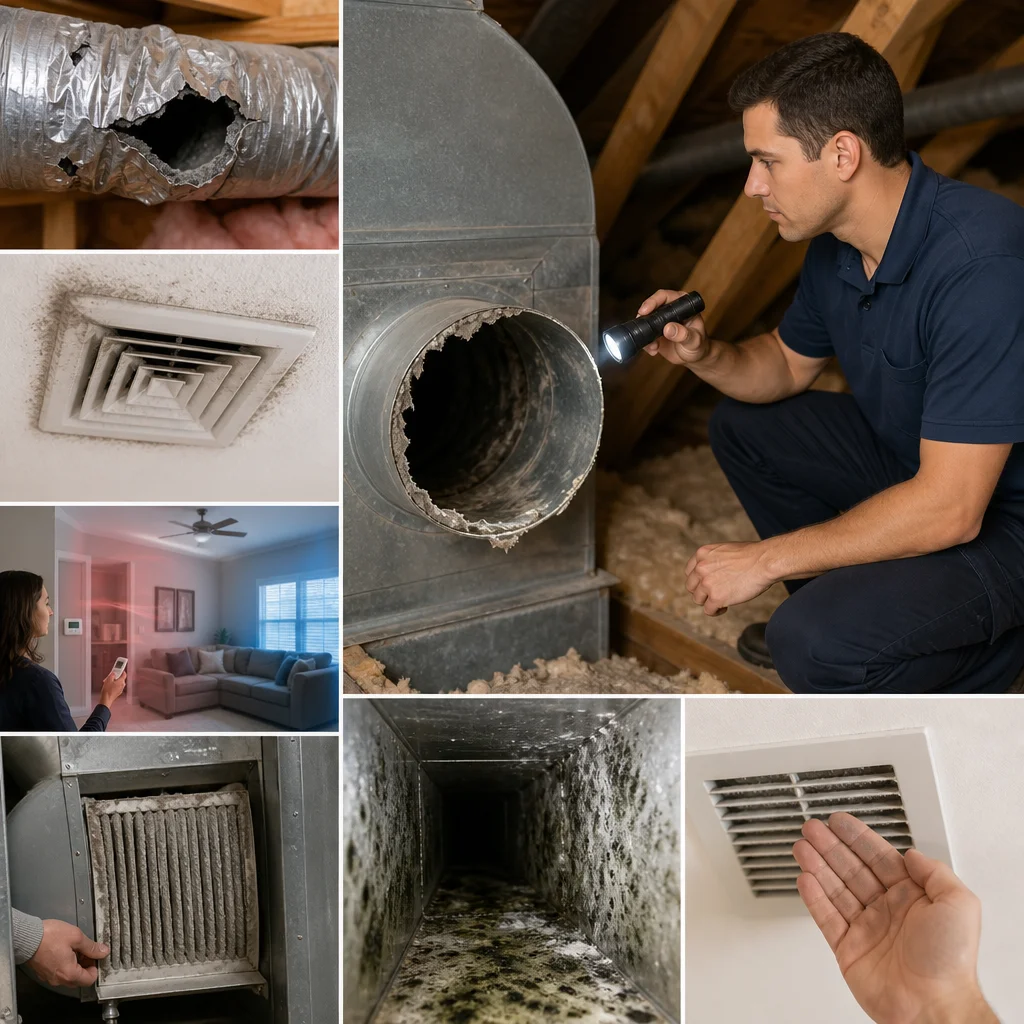
Most residential ductwork is designed to last 15 to 20 years. If your home was built in the early 2000s or earlier, and you’ve never replaced the ductwork, you’re likely approaching or past the end of its serviceable life. Even if the ducts seem fine, age alone is a valid reason to plan replacement.
Older ducts weren’t built to modern efficiency standards. Flex ducting was thinner and more prone to kinking and deterioration. Sealing methods were less reliable. Duct design and sizing often reflect outdated HVAC practices that waste energy compared to current best practices. If your ductwork is 18 years old or older, it’s almost certainly leaking, losing efficiency, and approaching failure.
The economics of replacement shift dramatically when your ducts are aging. You’re not just improving efficiency and comfort; you’re preventing the emergency of sudden ductwork failure. Blowouts, complete separations, and catastrophic deterioration happen without warning on old ducts. That emergency replacement costs far more than planned replacement and leaves you without comfort during the process.
Austin and San Antonio homes built in the 1990s and early 2000s are particularly common in our service area, and many still have original ductwork. Indoor humidity in Texas is especially relevant for these older systems, which weren’t designed with modern humidity management in mind.
Consider planned ductwork replacement if:
- Your home was built before 2006 and ducts have never been replaced
- You’re planning other HVAC upgrades (new furnace, new AC system, new heat pump)
- You’re performing an energy retrofit or major home upgrade
- You want to maximize efficiency and comfort for the long term
Think of it like replacing an old roof. You don’t wait for a catastrophic leak; you replace it proactively before problems develop. The same logic applies to ductwork.
For further reading: Energy efficient duct replacement, HVAC odor solutions, Mold specialized installers.
If you’re dealing with dust, poor airflow, mold in your ducts, or a clogged dryer vent — don’t wait. These issues can affect your health and safety. Go Air Ducts Group are the local experts in air duct cleaning, mold removal, dryer vent cleaning, and attic insulation. Call now for a free inspection and same-day service in Austin and San Antonio.
Frequently Asked Questions (FAQ)
How long does HVAC ductwork typically last before replacement becomes necessary?
We generally recommend replacing ductwork that’s over 15-20 years old, though this depends on installation quality and maintenance history. If your ducts show signs of deterioration like visible damage, mold, or significant air leaks, we can assess them regardless of age and provide honest guidance on whether replacement or repair makes sense for your situation.
What’s the typical cost range for ductwork replacement in Austin?
We provide free estimates so we can evaluate your specific home’s layout, duct size, and accessibility before quoting a price. Costs vary based on square footage and complexity, but we always break down our estimates clearly so you understand what you’re investing in and why.
Can I get by with just cleaning my ducts instead of replacing them?
We often recommend duct cleaning first if you’re dealing with dust, debris, or odor issues, as it’s a more affordable solution that can significantly improve your air quality. However, if we find structural damage, mold growth, or persistent leaks during our inspection, replacement is the better long-term investment for your home’s efficiency and health.