🕑 8 min read
Table of Contents
- 1. Professional Air Duct Cleaning Systems
- 2. HVAC Maintenance and Inspections
- 3. Advanced Air Filtration Technology
- 4. Mold Remediation and Prevention
- 5. Ventilation System Upgrades
- 6. Dryer Vent and Exhaust Cleaning
- 7. Energy-Efficient Insulation Solutions
- 8. Indoor Air Quality Testing and Assessment
- Frequently Asked Questions (FAQ)





1. Professional Air Duct Cleaning Systems
When your commercial space has poor indoor air quality, it affects everything: employee productivity, customer comfort, equipment longevity, and your bottom line. We’ve worked with San Antonio businesses across offices, retail spaces, warehouses, and medical facilities, and we’ve seen firsthand how air quality directly impacts operations. A contaminated air system can cost you thousands in wasted energy, increased HVAC repairs, and potential liability issues. The good news is that proven commercial air quality solutions exist, and they deliver measurable results.
Here are eight essential strategies we recommend to San Antonio business owners who are serious about fixing their indoor air quality problems.
Dirty air ducts are the hidden enemy in most commercial buildings. Over months and years, dust, debris, mold spores, and contaminants accumulate inside ductwork, recirculating throughout your space with every HVAC cycle. We’ve opened up duct systems in San Antonio that looked like they hadn’t been cleaned in a decade, and the difference after our work is dramatic.
Our commercial air duct cleaning uses truck-mounted vacuum systems with rotating brush technology to dislodge and remove deep buildup from duct walls. This isn’t just vacuuming the return grill, it’s a complete system restoration that reaches every branch and run. We also inspect all accessible ductwork with camera equipment so you know exactly what we’re removing and why.
The payoff: cleaner air delivered to your space, reduced HVAC strain, and often a noticeable energy savings within weeks. Businesses report fewer dust complaints from employees and customers, and reduced respiratory issues among staff.
Next step: Request a free commercial duct inspection to measure contamination levels and get a transparent estimate.
2. HVAC Maintenance and Inspections
Preventive maintenance is the difference between a system that runs smoothly and one that fails during peak season. Many San Antonio businesses treat HVAC like a black box: it runs until it breaks, then they call for emergency repair at triple the cost. That approach leaves money on the table and creates downtime risk.
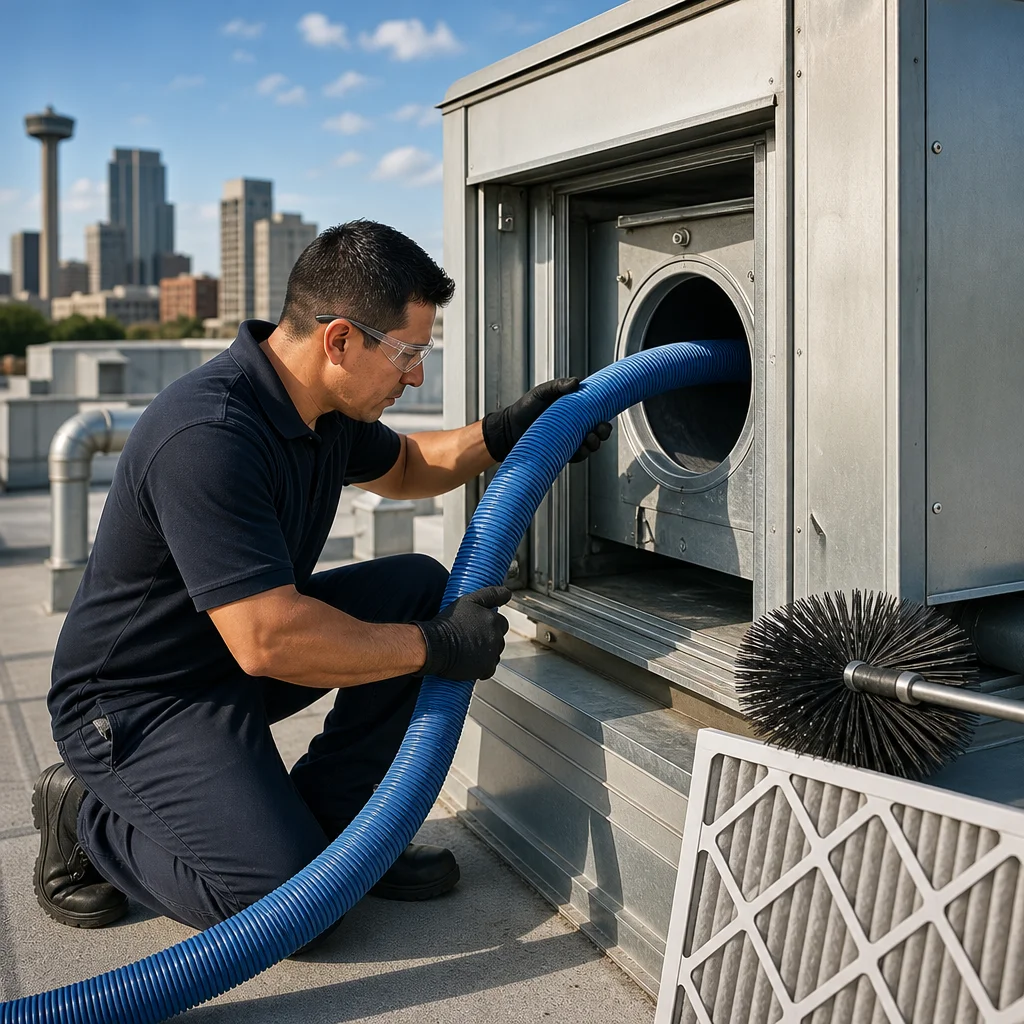
We provide quarterly and seasonal maintenance plans that include coil cleaning, filter replacement, refrigerant checks, electrical inspection, and airflow testing. Our certified technicians catch small problems before they become expensive failures. A worn capacitor, dirty evaporator coil, or clogged condensate line gets fixed during routine service, not during a breakdown that shuts down your operation.
Commercial HVAC maintenance also extends equipment life by 3-5 years, which matters when you’re managing multi-unit rooftop systems or large central units.
Next step: Schedule a comprehensive HVAC audit to identify maintenance gaps and potential failure points in your current system.
3. Advanced Air Filtration Technology
Standard fiberglass filters capture maybe 20-30% of particles. If you’re using those, you’re recirculating most of the contaminants that are causing your air quality problems. Commercial-grade filtration is in a different league.
We install HEPA-grade media filters, electrostatic filters, and high-MERV rated cartridge systems that capture 95%+ of particles down to 0.3 microns. For businesses concerned about allergens, bacteria, or fine dust contamination, these upgrades are non-negotiable. They also place higher demand on your system, so they work best alongside duct cleaning and proper HVAC maintenance.
Some of our clients add UV germicidal lights to their HVAC returns as well, which neutralize airborne viruses and bacteria before recirculation. This is increasingly important for medical offices, schools, and public-facing retail.
Next step: Have us test your current air quality and recommend the filtration level that matches your business type and occupancy.
4. Mold Remediation and Prevention
Mold in air ducts and HVAC systems is a serious health and liability issue. It grows in damp environments, spreads through the ductwork, and contaminates every room the system serves. We’ve found mold in commercial units where building managers had no idea of the problem.
Our air duct mold remediation process includes thorough duct cleaning, antimicrobial treatment, and moisture source identification. We locate where water is entering the system, whether from condensation issues, roof leaks, or blocked condensate lines, and address the root cause so mold doesn’t return.
For commercial properties with high humidity or moisture risk (kitchens, bathrooms, data centers), we also recommend moisture barriers, improved drain slopes, and condensation management upgrades.
Next step: If you’ve noticed musty odors or have staff with unexplained respiratory complaints, request a professional mold assessment.
5. Ventilation System Upgrades
Outdated ventilation often can’t handle modern occupancy loads. An older office designed for 50 people now hosts 80, or a retail space was never upgraded after a remodel. Inadequate ventilation leads to stuffiness, CO2 buildup, and reduced air quality that no filter can fully fix.
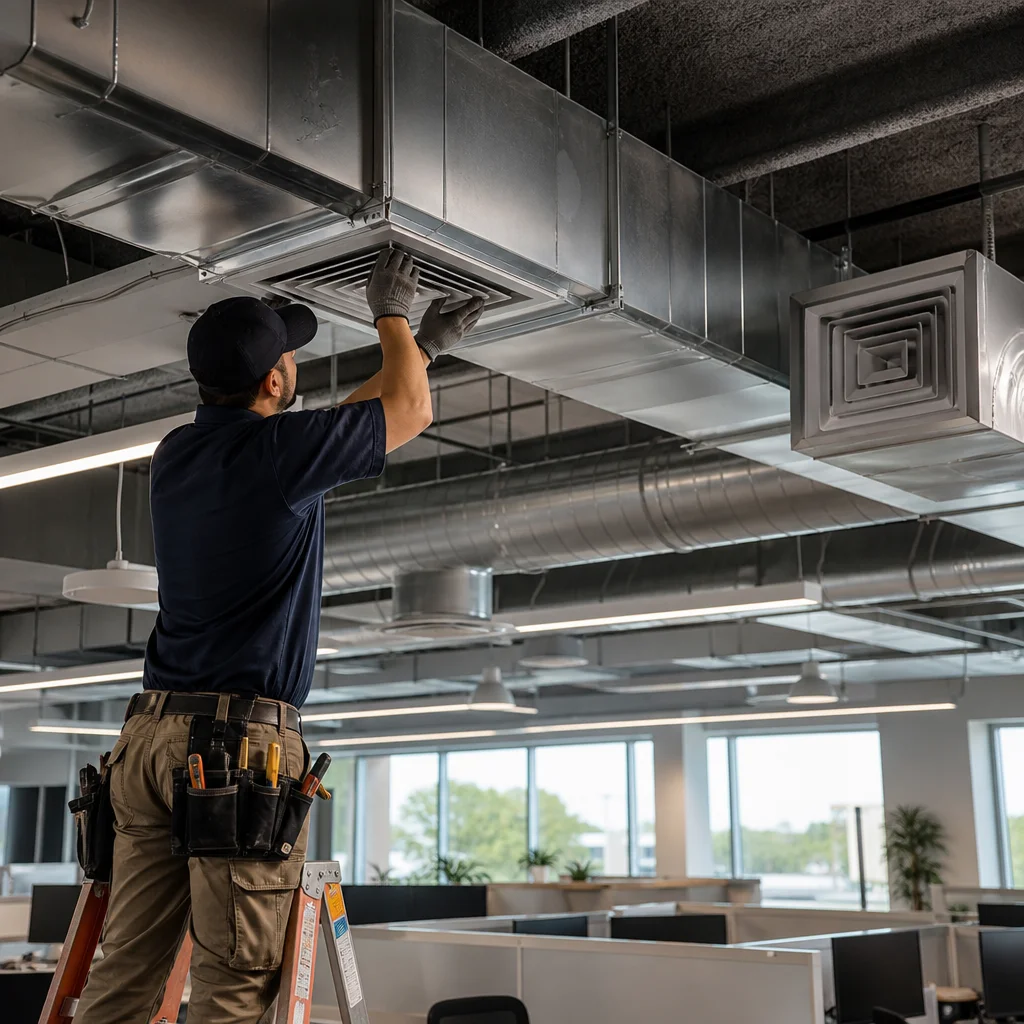
We evaluate outdoor air intake, exhaust capacity, and ductwork sizing to match current building use. This might mean adding dedicated outdoor air units (DOAS), upgrading dampers and controls, or expanding branch ductwork. Energy recovery ventilators (ERV) can be added to improve air quality without excessive energy waste.
Proper ventilation is also critical for compliance with commercial codes and standards like ASHRAE 62.1, which sets minimum outdoor air requirements based on occupancy type.
Next step: Have us perform a ventilation assessment to confirm your system meets current code and occupancy needs.
6. Dryer Vent and Exhaust Cleaning
Commercial kitchens, laundries, and facilities with multiple dryers accumulate lint and debris in exhaust vents at a rapid pace. A clogged dryer vent reduces efficiency, increases drying times, and creates a serious fire hazard. We’ve cleaned commercial dryer vents in San Antonio that were 70-80% blocked.
Our dryer vent cleaning service includes full ductwork inspection, lint removal, damper function check, and termination point cleaning. We also clean commercial kitchen exhaust hoods and ductwork, which accumulate grease and require specialized degreasing.
Regular cleaning improves equipment performance, reduces energy use, and eliminates fire risk. This is especially important for multi-unit commercial dryers where blockage can go unnoticed.
Next step: Schedule quarterly exhaust cleaning if you operate commercial laundry or kitchen equipment.
7. Energy-Efficient Insulation Solutions
Air leakage around ducts, through walls, and around building penetrations wastes massive amounts of conditioned air. A commercial space with poor insulation works your HVAC system twice as hard, driving energy bills up and air quality down. San Antonio’s heat means you’re battling outdoor temperature gain constantly.
Our HVAC and insulation upgrades include attic insulation improvements, duct sealing, and air barrier work that tightens your envelope. Many buildings achieve 15-25% energy savings within the first year after these upgrades. Added bonus: better temperature control and more consistent comfort throughout occupied spaces.
For San Antonio businesses, incentive programs and HVAC rebates are sometimes available for efficiency upgrades, which can offset installation costs significantly.
Next step: Request a thermal scan or blower door test to identify air leakage points and calculate your energy waste.
8. Indoor Air Quality Testing and Assessment
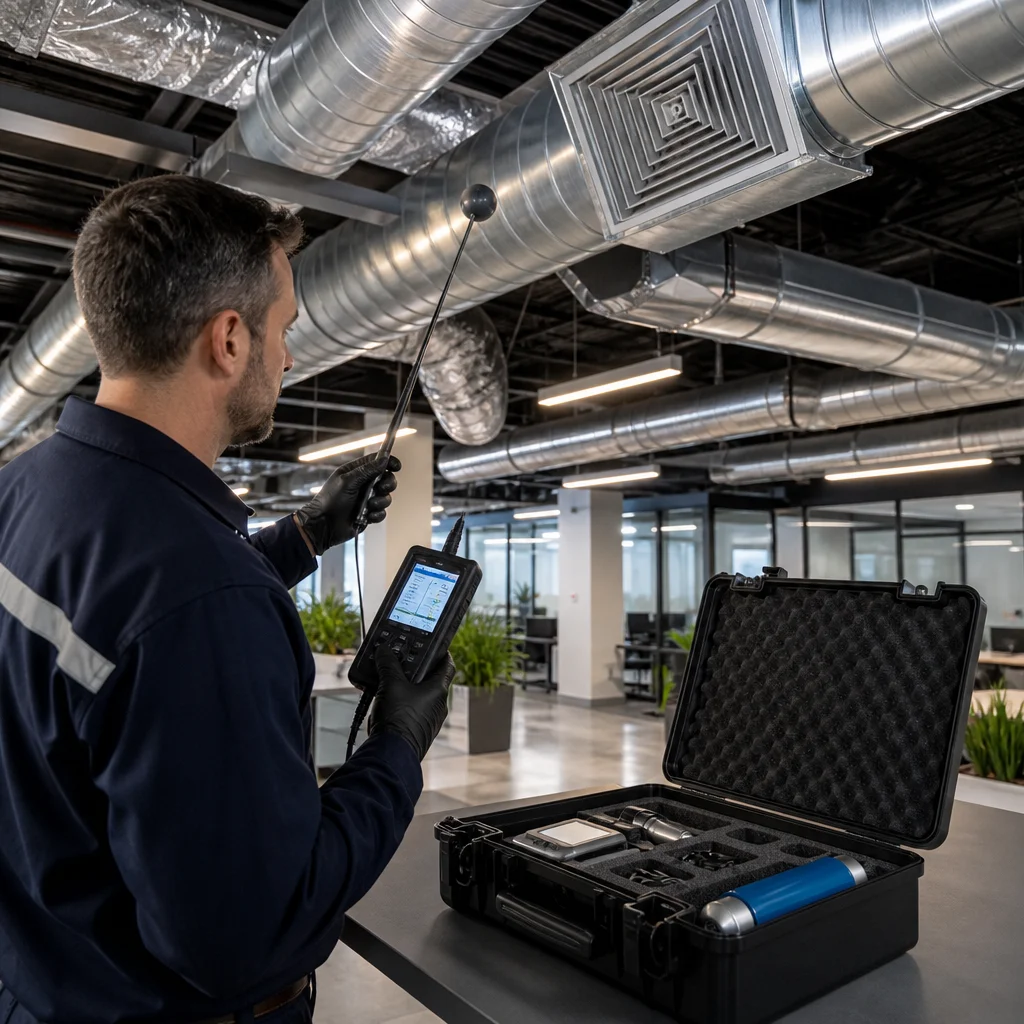
You can’t manage what you don’t measure. Professional air quality testing gives you objective data on particle counts, CO2 levels, humidity, temperature, and sometimes specific contaminants like mold spores or volatile organic compounds (VOCs).
We conduct comprehensive testing that includes real-time monitoring, baseline measurements, and post-cleaning verification. This tells you exactly what’s in your air now and confirms that your solutions actually worked. Many commercial clients use testing results to validate building codes compliance, satisfy tenant concerns, or prepare documentation for insurance or liability purposes.
Testing also helps us recommend the right combination of solutions rather than guessing or over-specifying. We’re not a one-size-fits-all service company. We diagnose your specific air quality problems, recommend only the solutions you actually need, and deliver certified, professional execution. Our San Antonio team understands the local climate challenges, the building types common to the area, and the business priorities that matter most.
Every job starts with a thorough inspection and honest assessment. We provide free estimates, flexible scheduling that fits your business hours, and transparent communication throughout the process. Our technicians are certified HVAC professionals trained in mold remediation, air quality testing, and commercial system diagnostics.
Next step: Contact us for a free indoor air quality assessment that includes testing, a detailed report, and a customized solution plan.
If you’re dealing with dust, poor airflow, mold in your ducts, or a clogged dryer vent — don’t wait. These issues can affect your health and safety. Go Air Ducts Group are the local experts in air duct cleaning, mold removal, dryer vent cleaning, and attic insulation. Call now for a free inspection and same-day service in Austin and San Antonio.
Frequently Asked Questions (FAQ)
Why should we get our commercial air ducts cleaned?
We recommend regular air duct cleaning because dirty ducts circulate dust, allergens, and contaminants throughout your workspace, which directly impacts employee health and productivity. Our professional cleaning removes buildup that restricts airflow, forcing your HVAC system to work harder and consume more energy. When we clean your ducts, you’ll notice improved air quality, better climate control, and often lower utility costs within the first month.
How often should our San Antonio business schedule HVAC maintenance?
We typically advise our commercial clients to have their systems inspected and maintained at least twice yearly, ideally before summer and winter peaks. Regular maintenance allows us to catch issues early, prevent costly breakdowns during critical seasons, and ensure your equipment operates at peak efficiency. We can also set up a customized maintenance plan based on your specific system type and usage patterns.
What’s the difference between air filtration and air duct cleaning?
We use air filtration systems to capture particles as air circulates through your HVAC system, while air duct cleaning physically removes accumulated debris already present inside your ductwork. Think of filtration as ongoing prevention and duct cleaning as deep remediation. For the best results, we typically recommend both services working together to maintain optimal indoor air quality for your business.