
🕑 11 min read
What are the signs an evaporator coil needs cleaning?
Common signs include weak cooling, higher energy bills, longer run times, ice on the coil, and musty odors from the vents. Go Air Ducts cleans evaporator coils across Central Texas to restore cooling performance and indoor air quality.
Table of Contents
- Why Evaporator Coil Cleaning Matters for Your Texas Home
- Understanding Your AC Evaporator Coil and Its Critical Role
- Sign 1: Reduced Cooling Performance and Weak Airflow
- Sign 2: Unusual Odors Coming from Your AC System
- Sign 3: Higher Energy Bills Without Increased Usage
- Sign 4: Visible Mold or Ice Buildup on Coils
- Sign 5: Water Leaks Around Your Indoor AC Unit
- How Professional Coil Cleaning Improves System Efficiency
- Why DIY Coil Cleaning Falls Short of Professional Results
- Our Expert Approach to Evaporator Coil Maintenance
- When to Schedule Professional Cleaning for Maximum Benefit
- Choose Go Air Ducts for Complete HVAC Care
- Frequently Asked Questions (FAQ)
Why Evaporator Coil Cleaning Matters for Your Texas Home
Your evaporator coil is one of the hardest working components in your air conditioning system, yet most homeowners never think about it until something goes wrong. Here in Texas, where summer temperatures routinely exceed 95 degrees, a dirty evaporator coil can turn your cooling system into an expensive, ineffective burden on your electric bill.
We’ve seen countless Austin and San Antonio homeowners struggle with AC systems that cost hundreds more per month to run while cooling their homes less effectively. The culprit? A buildup of dust, debris, and biological growth on the evaporator coil. This component sits inside your indoor AC unit and is responsible for the actual heat exchange that cools your air. When it gets dirty, your system has to work significantly harder to move cool air through your home.
The good news is that recognizing the warning signs early can save you thousands in repair costs and restore your comfort. Let’s walk through the key indicators that your evaporator coil needs professional attention.
Understanding Your AC Evaporator Coil and Its Critical Role
The evaporator coil is the component where your refrigerant absorbs heat from indoor air. Think of it as the cold heart of your AC system. Warm air from your home passes over thousands of metal fins on this coil, transferring heat to the refrigerant inside. That cooled air then circulates back into your living spaces.
Because this coil constantly handles moisture, dust, and airflow, it becomes a prime location for dirt accumulation and microbial growth. The coil’s design, while efficient for cooling, creates multiple surfaces where particles stick and debris collects. Over time, this buildup acts as an insulator, preventing effective heat transfer and forcing your compressor to run longer and harder.
When the coil is clean, your system operates at peak efficiency. When it’s dirty, you’re essentially trying to cool your home through a thick blanket of dust and contaminants. Understanding how dirty coils impact your system's overall efficiency is the first step toward protecting your investment.
Sign 1: Reduced Cooling Performance and Weak Airflow
One of the first signs homeowners notice is that their air conditioner simply isn’t cooling like it used to. You set the thermostat to 72 degrees, but your home settles at 76 or 77. Rooms that used to cool quickly now take hours. The cold air feels less forceful coming from your vents.
A dirty evaporator coil restricts airflow in two ways. First, dust buildup clogs the fins, creating physical resistance to air movement. Second, restricted airflow actually reduces heat absorption, so your refrigerant doesn’t get cold enough to properly cool the air passing over it. The result is warm air being circulated through your ducts instead of the crisp, cool air you expect.
If you notice weak airflow combined with reduced cooling, don’t wait for the problem to worsen. Schedule a professional inspection right away to assess your coil’s condition and plan for cleaning if needed.
Sign 2: Unusual Odors Coming from Your AC System
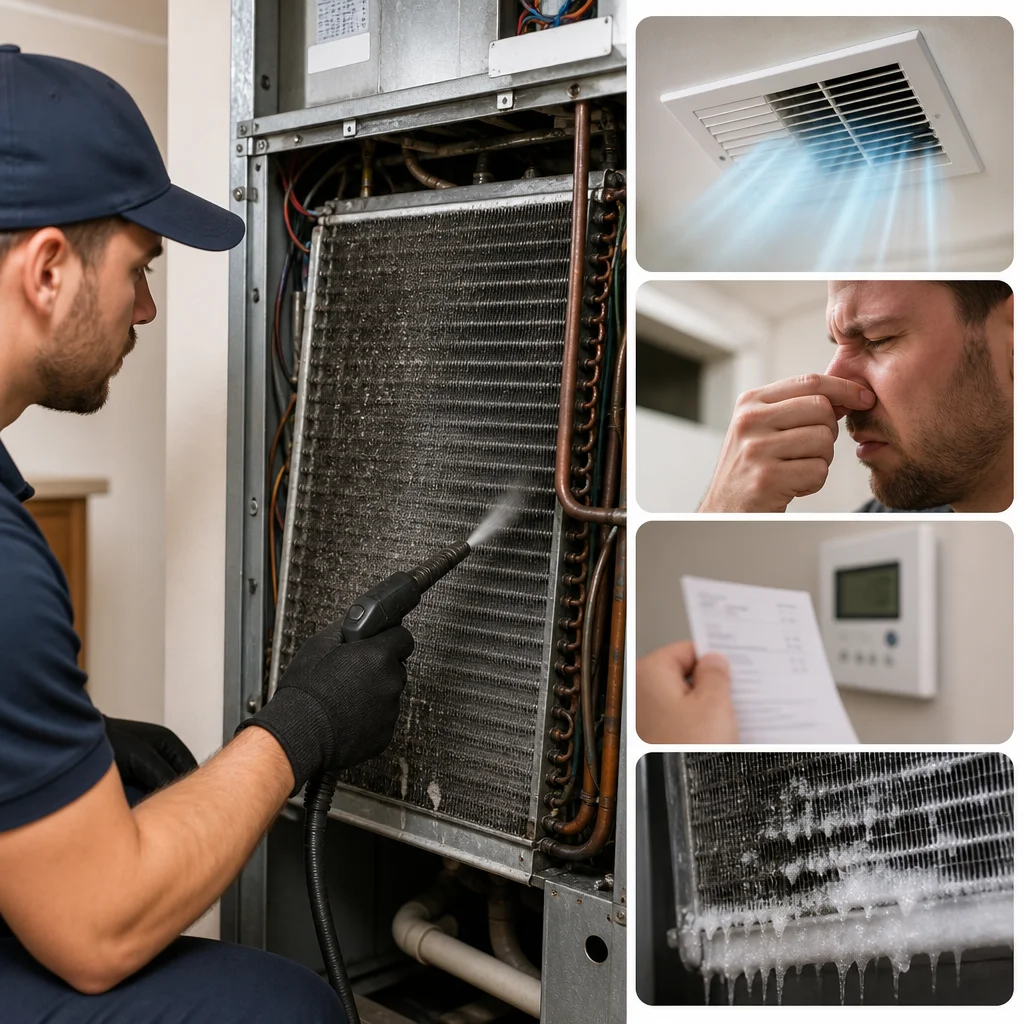
Musty, sour, or stale smells from your vents are a red flag that something is growing on your evaporator coil. Because the coil handles constant moisture and creates an ideal environment for mold, mildew, and bacterial growth, it becomes a source of indoor air quality problems. When your system cycles on, it literally spreads these odors throughout your home.
Many homeowners mistake this smell for something minor and try to mask it with vent fresheners or duct deodorizers. That approach is temporary and doesn’t solve the underlying contamination. The smell will persist and may worsen over time, especially during humid summer months when the coil stays wet longer.
Professional coil cleaning removes the biological growth and buildup causing the odor. Once the coil is clean, fresh air flows through your system again, and these unpleasant smells disappear completely.
Sign 3: Higher Energy Bills Without Increased Usage
Your cooling costs have climbed month after month, but your thermostat settings haven’t changed and you’re not home more than usual. A dirty evaporator coil is one of the most common reasons for escalating electric bills in Texas homes. When the coil can’t transfer heat efficiently, your compressor runs continuously, consuming significantly more energy to achieve the same cooling effect.
We’ve documented cases where homeowners saved 15 to 25 percent on their cooling costs after professional coil cleaning. That’s money going directly back into your pocket every single month during cooling season. For a typical Austin home, that translates to $30 to $60 per month or more, depending on your system size and local electricity rates.
If your energy bills are climbing, a coil cleaning often pays for itself within a single cooling season.
Sign 4: Visible Mold or Ice Buildup on Coils
If you can visually inspect your indoor AC unit and see mold, discoloration, or frost or ice formation on the coil itself, you have a clear indication that cleaning is overdue. Mold growth indicates moisture retention and biological contamination. Ice buildup suggests the coil is so dirty that it’s freezing up, preventing proper heat absorption and airflow.
Both of these conditions require immediate professional attention. Ice on the coil can damage the refrigerant lines and compressor, leading to expensive repairs. Mold spreads spores into your home’s air, creating potential health concerns, particularly for family members with allergies or respiratory sensitivities.
Don’t attempt to scrape ice or brush away mold on your own. You risk damaging the delicate fins and releasing contaminants into your living space. Professional technicians have the proper equipment and techniques to safely remove buildup and restore the coil to working condition.
Sign 5: Water Leaks Around Your Indoor AC Unit
Water pooling near your indoor AC unit or dripping from the drain pan suggests a clogged condensate drain or a buildup problem on the evaporator coil. When the coil is dirty, water doesn’t flow properly into the drain, causing it to back up and overflow into your home.
This isn’t just a nuisance. Standing water around your AC unit creates mold growth in your walls and attic, attracts pests, and can damage drywall, insulation, and structural components. The longer you ignore this sign, the more expensive the secondary damage becomes.
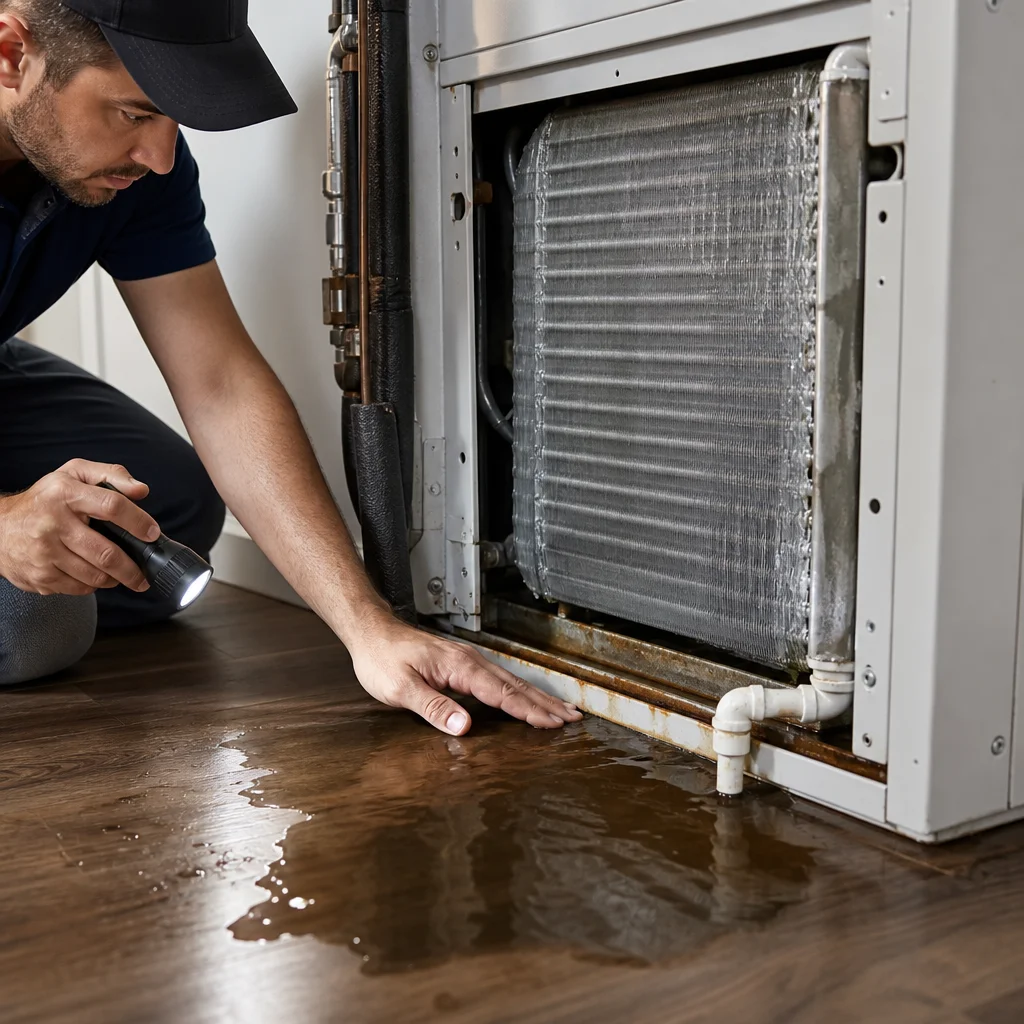
Professional coil cleaning restores proper drainage and eliminates the water backup issue at its source.
How Professional Coil Cleaning Improves System Efficiency
When we clean your evaporator coil professionally, we’re restoring the heat transfer capabilities your system was designed to deliver. Clean fins mean maximum surface area for your refrigerant to absorb heat. Restored airflow means your system cycles properly without overworking the compressor.
The efficiency gains are measurable and immediate. Your home cools faster, your air feels fresher, and your system runs quieter because it’s not struggling against buildup. Over the life of your AC system, that efficiency translates directly to lower repair costs and extended equipment lifespan. A well-maintained evaporator coil can help your system run reliably for 15 to 20 years instead of failing prematurely at 10 to 12 years.
Professional coil cleaning also improves your home’s air quality by removing dust, mold spores, and contaminants that would otherwise circulate through your living spaces.
Why DIY Coil Cleaning Falls Short of Professional Results
Some homeowners try to clean their evaporator coils themselves using commercial cleaning sprays or compressed air. While the intention is good, DIY approaches almost always leave the job incomplete.
The evaporator coil sits in a tight, confined space inside your indoor AC unit. Accessing it properly requires removing panels, drain pans, and sometimes relocating refrigerant lines. One misstep can puncture a fin, crack a refrigerant connection, or release pressurized refrigerant into your home, creating a safety hazard and voiding your warranty.
Compressed air can actually bend fins or push debris deeper into the coil instead of removing it. Surface-level sprays don’t reach the buildup between fins where mold and bacteria thrive. Professional methods use specialized equipment, commercial-grade cleaning solutions, and proper drainage techniques to thoroughly clean without risk of damage.
We recommend leaving coil cleaning to certified HVAC professionals who carry liability insurance and guarantee their work.
Our Expert Approach to Evaporator Coil Maintenance
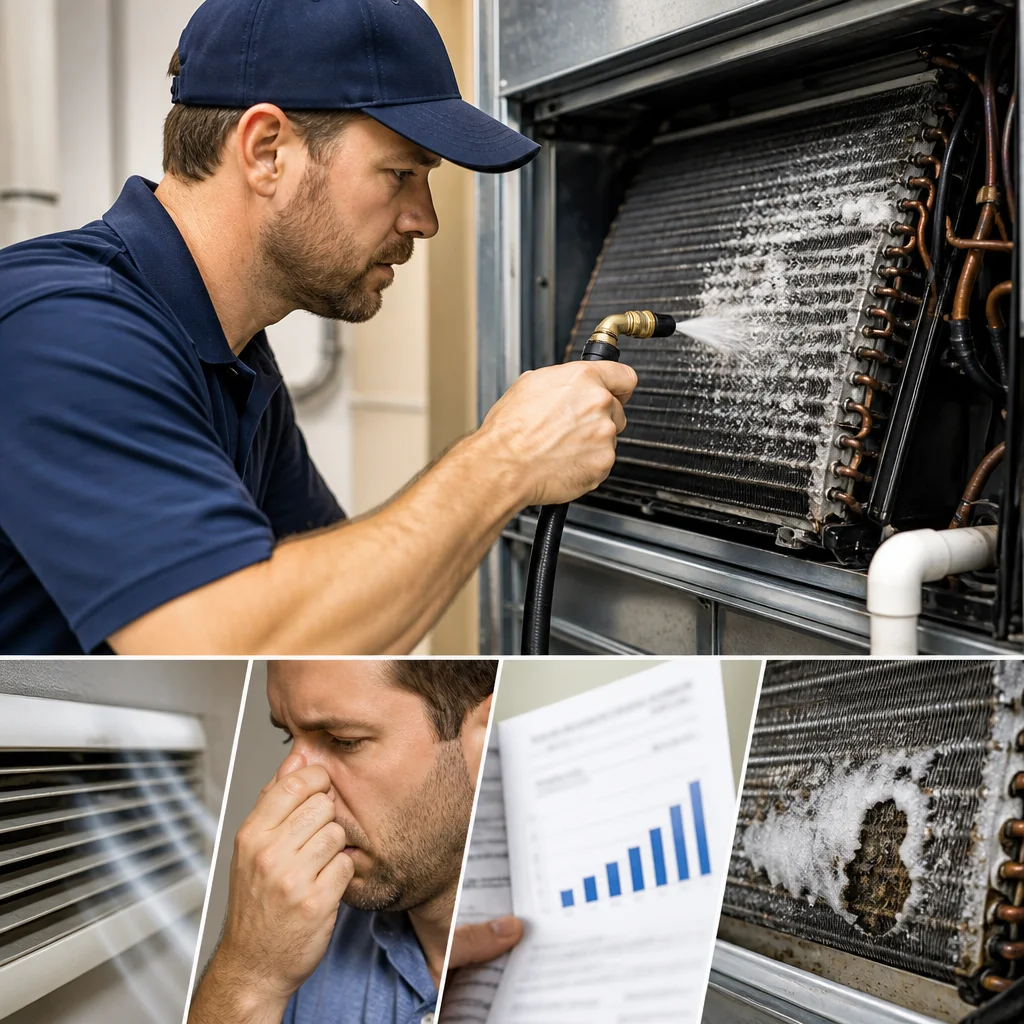
At Go Air Ducts, we’ve developed a comprehensive coil cleaning process specifically tailored to Texas homes. Our certified technicians begin with a detailed inspection using digital equipment to assess the extent of buildup and any potential damage.
We then use commercial-grade coil cleaning solutions combined with specialized flushing equipment to remove dust, mold, bacterial growth, and mineral deposits. Our process includes checking and clearing condensate drains, inspecting refrigerant lines, and verifying system performance after cleaning. We take photos before and after so you can see the difference we’ve made.
We also provide recommendations for ongoing maintenance to extend the time between cleanings. For many homes, professional coil cleaning every 12 to 24 months, combined with regular filter changes and routine HVAC maintenance, keeps your system running at peak efficiency year-round.
When to Schedule Professional Cleaning for Maximum Benefit
The best time to schedule coil cleaning is late spring, just before your system enters heavy use during summer cooling season. This timing ensures your system is operating at maximum efficiency when you need it most. If you notice any of the warning signs we’ve discussed, don’t wait for the next scheduled maintenance window. Call us immediately for an emergency AC coil cleaning.
For homes in dusty environments, homes with pets, or homes where family members have allergies, we recommend more frequent cleaning, sometimes as often as every six to eight months. Our team can assess your specific situation and recommend the cleaning schedule that works best for your home’s conditions and your system’s age.
Choose Go Air Ducts for Complete HVAC Care
Your evaporator coil doesn’t have to be a mystery or a source of frustration. When you choose Go Air Ducts for professional coil cleaning, you’re getting experienced, certified technicians who understand Texas homes and Texas heat. We serve Dallas, Houston, Austin, and San Antonio with the same commitment to quality and customer satisfaction.
We provide free service estimates so you know exactly what to expect before we begin work. Our team is available for same-day service in most cases, and we stand behind our work with professional guarantees. We’re not just cleaning your coil; we’re protecting your comfort, your air quality, and your energy budget.
Stop struggling with inefficient cooling and climbing electric bills. Contact us today for a free inspection and estimate. Your home deserves professional HVAC care from a team that knows your local climate and your system’s unique needs.
If you’re dealing with dust, poor airflow, mold in your ducts, or a clogged dryer vent — don’t wait. These issues can affect your health and safety. Go Air Ducts Group are the local experts in air duct cleaning, mold removal, dryer vent cleaning, and attic insulation. Call now for a free inspection and same-day service in Austin and San Antonio.
Frequently Asked Questions (FAQ)
How often should we have our evaporator coils professionally cleaned?
We typically recommend annual evaporator coil cleaning for most Texas homes, especially before the cooling season begins. However, if you notice any of the signs mentioned in our article—reduced airflow, unusual odors, or visible mold—we’d schedule a professional inspection right away rather than wait for your next annual service. Your specific needs depend on factors like pet ownership, humidity levels in your area, and your system’s age, so we’re happy to assess your situation during a free estimate.
What happens if we ignore evaporator coil problems?
When we leave dirty coils unaddressed, your AC system has to work harder to cool your home, which leads to higher energy bills and faster wear on your equipment. Additionally, accumulated moisture and debris create ideal conditions for mold growth, which can circulate through your home and affect indoor air quality. In worst cases, we’ve seen neglected coils cause refrigerant leaks and compressor failure, resulting in thousands of dollars in repairs that could’ve been prevented.
Why can’t we just clean the coils ourselves?
Evaporator coils are delicate components located inside your indoor AC unit, and accessing them safely requires proper tools and technical knowledge. We use specialized equipment and cleaning solutions that effectively remove buildup without damaging the fins, and we can spot underlying issues like refrigerant leaks or mold growth that DIY approaches would miss. Our certified technicians also ensure your system is properly reassembled and operating at peak efficiency after cleaning.