
🕑 10 min read
How do you remove duct mold fast in Austin?
Fast, safe duct mold removal combines quick scheduling, containment, HEPA extraction, and antimicrobial treatment to stop spread and eliminate the source. Go Air Ducts provides urgent duct mold remediation in Austin, responding quickly to protect your family's health and restore clean, mold-free air to your home.
Table of Contents
- Why Mold in Your Air Ducts Is a Serious Health Threat
- How to Spot Mold Growth in Your HVAC System
- The Real Dangers of Ignoring Ductwork Mold
- Our Professional Mold Remediation Process
- Why Our Certified Technicians Handle Mold Differently
- How We Prevent Mold from Returning to Your Ducts
- Signs You Need Emergency Duct Cleaning in Austin
- Get Your Free Mold Assessment Today
- Frequently Asked Questions (FAQ)
Why Mold in Your Air Ducts Is a Serious Health Threat
Mold growing inside your air ducts isn’t just an inconvenience. It’s spreading spores through every room of your home every time your HVAC system runs. If you’ve noticed a musty smell, unexplained allergies, or visible discoloration near your vents, you likely have a real problem that requires immediate professional attention. We’ve helped hundreds of Austin and San Antonio homeowners reclaim clean, healthy air by removing mold colonies that were silently compromising their indoor air quality. This guide walks you through exactly what you’re facing, how we eliminate it, and what you should do next.
Mold thrives in dark, damp environments, and your ductwork is often the perfect breeding ground. When moisture accumulates inside ducts, whether from high humidity, condensation, or water intrusion, mold spores begin colonizing the interior walls and insulation. Every time your system cycles air, those spores spread throughout your home.
The health risks are significant. Mold exposure can trigger respiratory issues, worsen asthma, cause chronic coughing, and aggravate allergies year-round. People with compromised immune systems, young children, and the elderly face even greater vulnerability. Unlike outdoor mold exposure, which you can limit by staying indoors, ductwork mold reaches you continuously through the air you breathe at home.
What makes ductwork mold especially dangerous is its invisibility. You can’t see the contamination unless you look inside the ducts themselves. Most homeowners don’t realize they have a problem until symptoms develop or they notice the smell.
Action for today: If your home has musty odors or unexplained respiratory issues, schedule a visual inspection before the problem worsens.
How to Spot Mold Growth in Your HVAC System
Catching mold early prevents costly remediation and health risks. Watch for these clear warning signs:
Visual indicators often appear around vents and return air grilles. Black, green, or white fuzzy growth near ductwork openings is an immediate red flag. You might also notice discoloration on supply registers or visible dust buildup with an unusual color or texture.
Odor is frequently the first clue. A persistent musty smell when your HVAC runs indicates mold activity. This isn’t normal dust; it’s specifically a damp, earthy odor that lingers even after opening windows.
Health and comfort changes can signal ductwork problems. Unexplained allergies or asthma flare-ups happening indoors, constant coughing, or family members mentioning respiratory symptoms warrant investigation. Pay attention if these issues improve when you’re away from home and worsen when you return.
Moisture and condensation around ductwork, especially near the HVAC unit or in attic areas, create ideal conditions for mold growth. Feel the exterior of visible ducts; they should be dry to the touch.
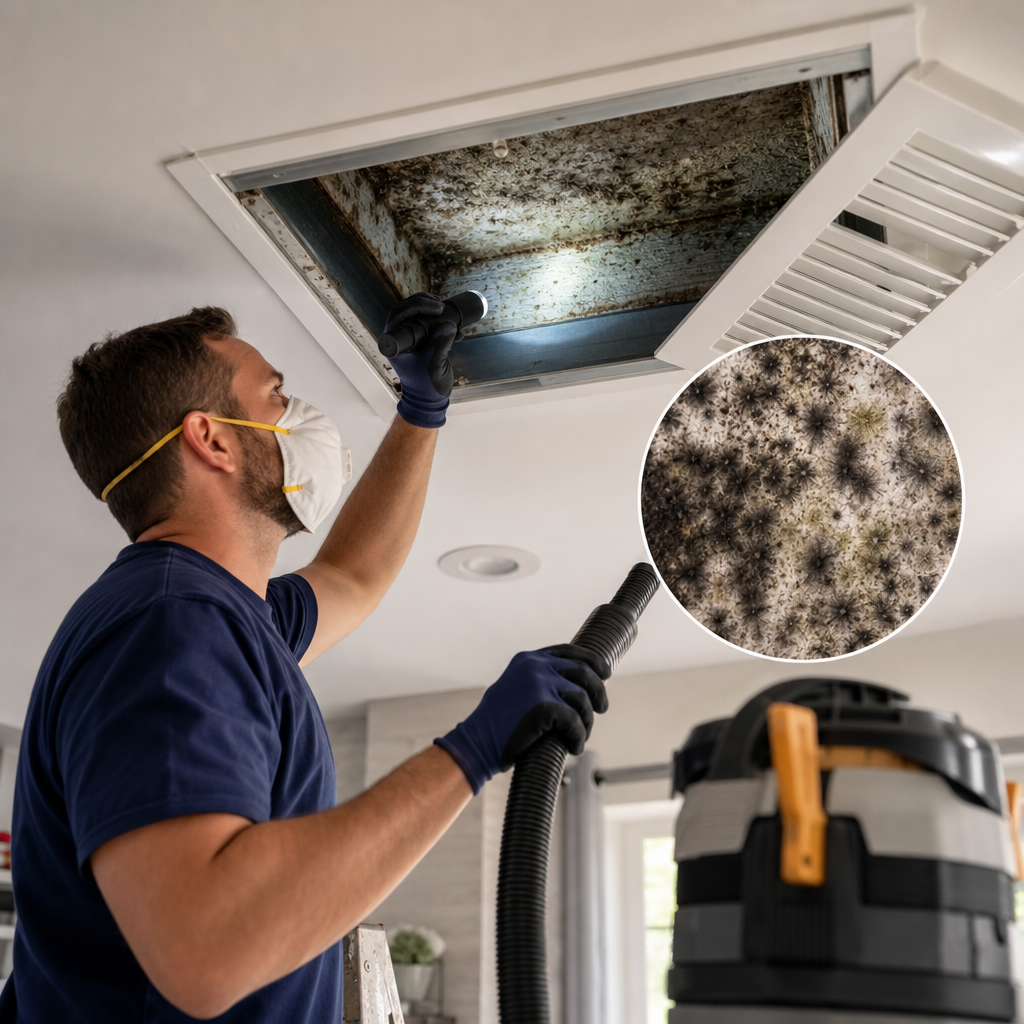
We recommend a professional ductwork inspection if you notice any of these signs. Our technicians use video camera equipment to see inside ducts where mold commonly hides, giving you a definitive answer.
The Real Dangers of Ignoring Ductwork Mold
Delaying mold remediation allows the problem to expand dramatically. Mold colonies grow exponentially in undisturbed environments. What starts as a small contaminated section spreads to branch ducts, the main trunk, and eventually the air handler itself. Remediation becomes more expensive as the contamination spreads.
Beyond cost, the health impact intensifies. Continuous mold exposure weakens immune response over time. Family members develop persistent coughs, chronic sinusitis, and worsening allergies that doctors struggle to treat because the underlying cause remains in your home’s air supply. Children exposed to mold in their living spaces show increased respiratory infections and developmental concerns in clinical research.
Your HVAC system also deteriorates faster. Mold growth restricts airflow, forcing your equipment to work harder and consume more energy. Motors strain, compressors work overtime, and components fail prematurely. Many homeowners spend thousands replacing HVAC systems when the real culprit was uncleaned, moldy ductwork.
Additionally, mold can become toxic. Certain mold species produce mycotoxins that pose serious health threats. You won’t know what type of mold is growing in your ducts without professional analysis, so assuming it’s “safe” mold is a dangerous gamble.
The smart choice is addressing mold immediately through professional air duct mold remediation.
Our Professional Mold Remediation Process
We don’t simply blow air through your ducts and call it done. Our remediation process is thorough, certified, and designed for complete mold elimination.
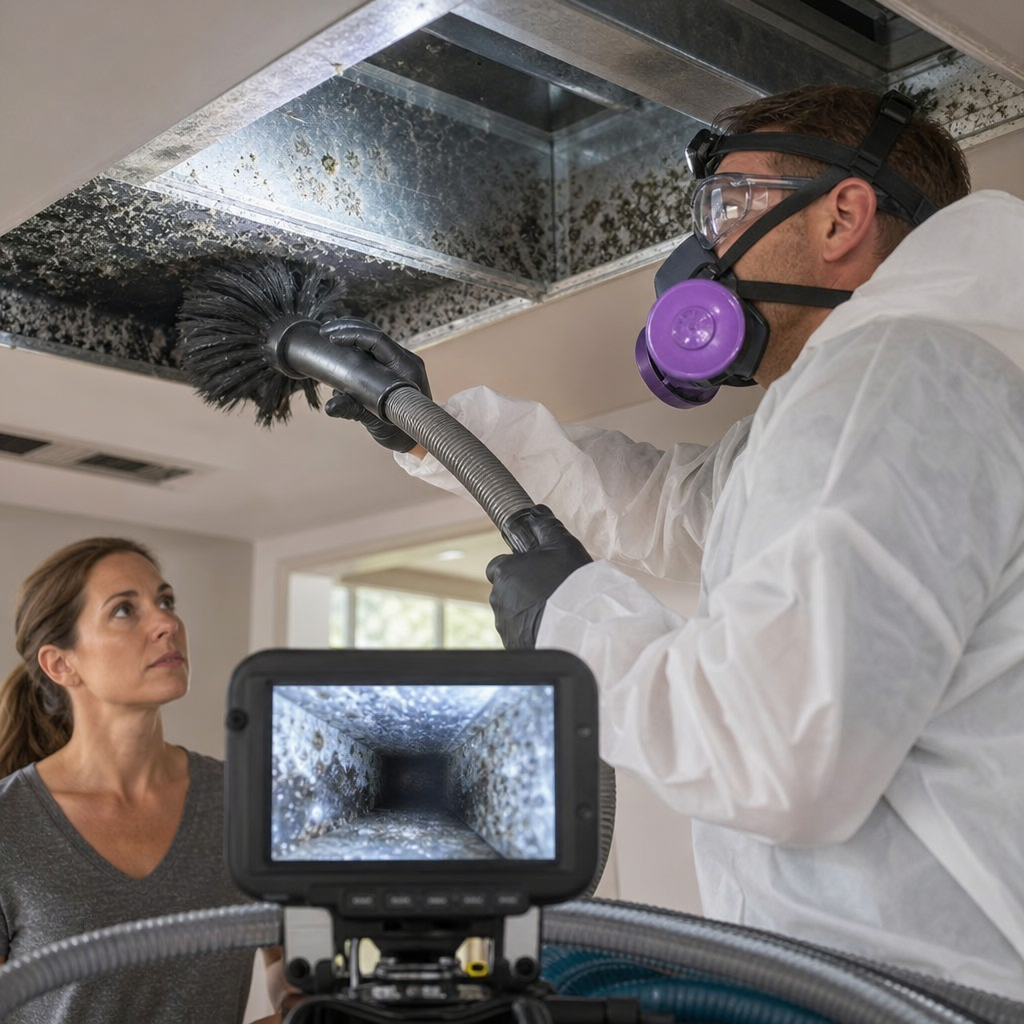
Step one is comprehensive inspection and testing. We use high-definition video cameras to locate all mold colonies inside your ductwork. We also conduct air quality sampling and culture tests to identify the mold species and spore levels. This data guides our remediation strategy and confirms when the job is complete.
Step two involves containment and preparation. We seal off affected areas to prevent spore spread during cleaning. We set up negative pressure systems and HEPA filtration to capture spores before they enter your living spaces. This is where DIY approaches fail; without proper containment, cleaning actually spreads contamination throughout your home.
Step three is chemical-free mold elimination. We use specialized agitation equipment and dry ice blasting, combined with hospital-grade antimicrobial treatments designed specifically for ductwork surfaces. This approach kills mold at the root without leaving chemical residue that could irritate your respiratory system.
Step four covers restoration and sealing. After mold removal, we clean ductwork thoroughly, replace contaminated insulation where necessary, and apply protective sealants to prevent moisture re-entry. We also address any underlying moisture sources that allowed mold growth in the first place.
Step five is verification testing. After remediation, we retest your air quality and inspect ducts visually to confirm mold elimination. You receive documentation of before and after results so you have proof the problem is resolved.
The entire process typically takes one to two days, depending on contamination extent. You’ll notice improved air quality and odor elimination immediately.
Why Our Certified Technicians Handle Mold Differently
Not all HVAC companies have the training or equipment for safe mold remediation. We employ certified mold technicians in Austin who specialize exclusively in ductwork contamination.
Our technicians hold certifications from the Institute of Inspection, Cleaning and Restoration Certification (IICRC) and the National Air Duct Cleaners Association (NADCA). These credentials mean they understand mold biology, safe containment protocols, proper antifungal treatments, and Texas-specific humidity challenges that contribute to duct contamination.
Experience matters enormously with mold work. Our team has completed hundreds of remediation jobs in Austin and San Antonio, so we understand exactly how humidity patterns, building construction, and local HVAC designs create mold risk. We’ve seen what works and what doesn’t.
Additionally, we use equipment and techniques that general HVAC contractors simply don’t have. Our dry ice blasting technology, negative air machines, and antimicrobial treatments are specifically designed for mold remediation, not just general duct cleaning. This distinction directly impacts how effectively we eliminate mold and prevent recurrence.
We also stand behind our work with guarantees. If mold returns within 12 months due to our incomplete remediation, we return and finish the job at no charge. That confidence comes from knowing our process works.
How We Prevent Mold from Returning to Your Ducts
Removing mold is only half the solution. Without addressing root causes, mold grows back within months. We implement prevention measures that keep your ducts clean long-term.
Humidity control is foundational. We identify moisture sources: condensation around the air handler, poor attic ventilation, or HVAC equipment located in damp areas. We recommend dehumidification strategies, proper insulation installation, and ventilation upgrades that reduce indoor humidity below the 55% threshold where mold thrives.
Duct sealing prevents moisture intrusion. Small cracks and loose connections in ductwork allow humid air to enter the system. We seal these vulnerabilities permanently, using mastic sealant and insulation to create a barrier against moisture.
Regular professional air duct cleaning becomes part of your maintenance routine. We recommend cleaning every 3-5 years in Austin’s climate. Regular cleaning removes dust and debris that feed mold growth and allows us to catch early contamination before it becomes dangerous.
Air handler and filter upgrades matter significantly. We recommend high-efficiency filters and antimicrobial filter treatments that capture mold spores before they enter ductwork. Regular filter changes (monthly or quarterly, depending on your system) reduce the organic material mold needs to colonize.
Maintenance documentation helps you stay accountable. We provide a written prevention plan with recommended cleaning schedules, humidity targets, and seasonal maintenance tasks. Following this plan dramatically reduces mold recurrence risk.
Signs You Need Emergency Duct Cleaning in Austin
Some situations require immediate action rather than scheduling weeks out. Contact us today if you experience:
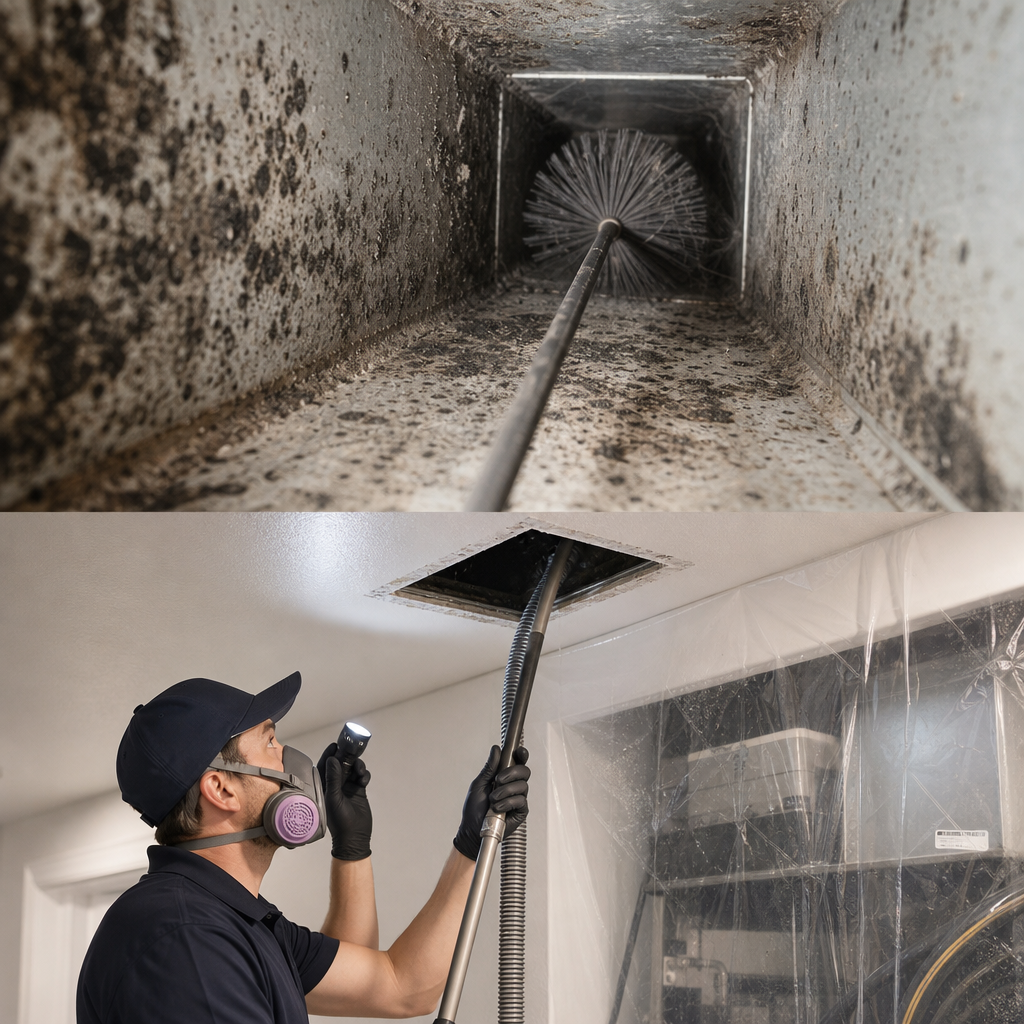
- Visible mold growth inside vents or around ductwork
- Strong musty odors that persist regardless of ventilation
- Multiple family members with new or worsening respiratory symptoms
- Recent water damage, flooding, or HVAC system leaks
- Evidence of pest infestation in ducts (droppings, nesting material)
- Sudden loss of airflow or unusual system noises
Austin’s hot, humid climate accelerates mold growth once contamination starts. The window between initial detection and serious infestation can be narrow. Professional remediation within days of discovery prevents significant health impacts and reduces overall remediation costs.
If you’re uncertain whether your situation qualifies as urgent, call us anyway. We offer same-day estimates and emergency service availability for acute contamination.
Get Your Free Mold Assessment Today
You don’t need to guess whether mold is growing in your ducts or live with uncertainty about your family’s air quality. We provide complimentary mold assessments that include visual inspection, air quality testing, and a detailed remediation recommendation with transparent pricing.
Our process is straightforward: we schedule at a time convenient for you, inspect your system thoroughly, answer every question you have, and leave you with concrete next steps. Many homeowners discover they have mold they didn’t know about and feel relieved to finally have a solution. Others learn their ducts are clean and can focus on other home priorities.
Contact us online at https://goairducts.com/ or call for immediate availability. We serve Austin, San Antonio, Dallas, and Houston with certified technicians ready to restore your indoor air quality. Your family’s health is worth the conversation.
If you’re dealing with dust, poor airflow, mold in your ducts, or a clogged dryer vent — don’t wait. These issues can affect your health and safety. Go Air Ducts Group are the local experts in air duct cleaning, mold removal, dryer vent cleaning, and attic insulation. Call now for a free inspection and same-day service in Austin and San Antonio.
Frequently Asked Questions (FAQ)
How quickly can we remove mold from our air ducts?
We typically complete duct mold remediation within 1-2 business days from your initial assessment. Our certified technicians use specialized equipment to access all ductwork areas, remove contaminated sections, and apply antimicrobial treatments to prevent regrowth. We understand that mold poses health risks, so we prioritize fast service without compromising thoroughness.
What causes mold to grow in air ducts?
Mold thrives in our ducts when moisture builds up from high humidity, condensation on cold ducts, or water leaks near the HVAC system. In Austin’s climate, we see mold problems spike during humid months when air conditioning systems struggle to dehumidify properly. We inspect the underlying moisture source during remediation to address the root cause, not just the visible mold.
Will mold return after we clean your ducts?
We take preventive steps that significantly reduce the chance of mold returning, including installing UV germicidal lights and improving ductwork insulation to minimize condensation. However, if humidity levels remain excessively high in your home, mold can eventually regrow. We recommend pairing our cleaning service with our energy-efficient insulation upgrades and regular HVAC maintenance to keep your system mold-free long-term.