
🕑 5 min read
What should you do if your air ducts get wet?
After ducts or HVAC equipment get wet, stop the water source, turn off the system and power if it is safe, and do not run it until it has been inspected. Wet or moldy duct insulation should be replaced, hard ducts may be cleaned and sanitized, and the moisture source must be fixed so mold does not return.
Table of Contents
- Common Ways Ducts Get Wet
- Safety First
- What to Do in the First 24 to 48 Hours
- What Can Be Cleaned and What Must Be Replaced
- Signs of Lingering Moisture or Mold
- What a Professional Inspection Includes
- The Repair Process
- How to Prevent Future Water Problems
- Frequently Asked Questions
- Get Your System Checked





Water and HVAC systems do not mix. A roof leak above the attic, a burst pipe, an overflowing condensate line, or a flood can soak ductwork, insulation, and equipment. The damage is not always obvious, and what you do in the first day or two makes a big difference in whether mold and long-term problems follow.
This guide explains what to do after your ducts or HVAC equipment get wet, what can be saved, and what should be replaced.
Common Ways Ducts Get Wet
- Roof leaks that let water into the attic and onto ducts and insulation
- Plumbing leaks from supply or drain lines near ductwork
- Overflowing condensate drains from the air conditioner
- Flooding from storms or overflowing water
- Condensation from uninsulated or damaged ducts that stay damp for long periods
The source matters because it affects how contaminated the water may be and what needs to be replaced.
Safety First
Water and electricity are a dangerous combination. If your HVAC equipment, wiring, or ducts near electrical components have been in contact with water:
- Turn off power to the equipment at the breaker if you can do so safely. Do not stand in water to reach a panel.
- Do not run the heating or cooling system until it has been checked.
- Floodwater can carry contaminants. Keep children and pets away from affected areas.
- If the area is unsafe or you are unsure, call a professional.
What to Do in the First 24 to 48 Hours
Mold can begin to grow quickly in damp conditions, so speed matters.
- Stop the water at its source. Shut off the water, fix the leak, or clear the drain if you can.
- Turn off the HVAC system so it does not spread moisture or contaminants.
- Document the damage. Take photos or video for insurance.
- Remove standing water and begin drying the area with fans and ventilation where safe.
- Contact a professional to inspect the ducts and equipment before you turn the system back on.
What Can Be Cleaned and What Must Be Replaced
| Item | Usually Cleaned or Replaced? |
|---|---|
| Hard sheet-metal duct with light, clean water exposure | Often can be dried and cleaned |
| Hard duct that contacted contaminated water | Requires cleaning and sanitizing after inspection |
| Flexible duct that got soaked | Often replaced |
| Wet or moldy duct insulation | Replaced |
| Fiberglass duct board that stayed wet | Often replaced |
| HVAC equipment that was submerged | Needs evaluation by a technician |
The EPA advises that if insulated air ducts get wet or moldy, the insulation cannot be effectively cleaned and should be removed and replaced. It also notes that if the conditions causing the moisture are not corrected, mold growth will recur, so fixing the source is as important as cleaning.
Signs of Lingering Moisture or Mold
After a water event, watch for:
- A musty or earthy smell when the system runs
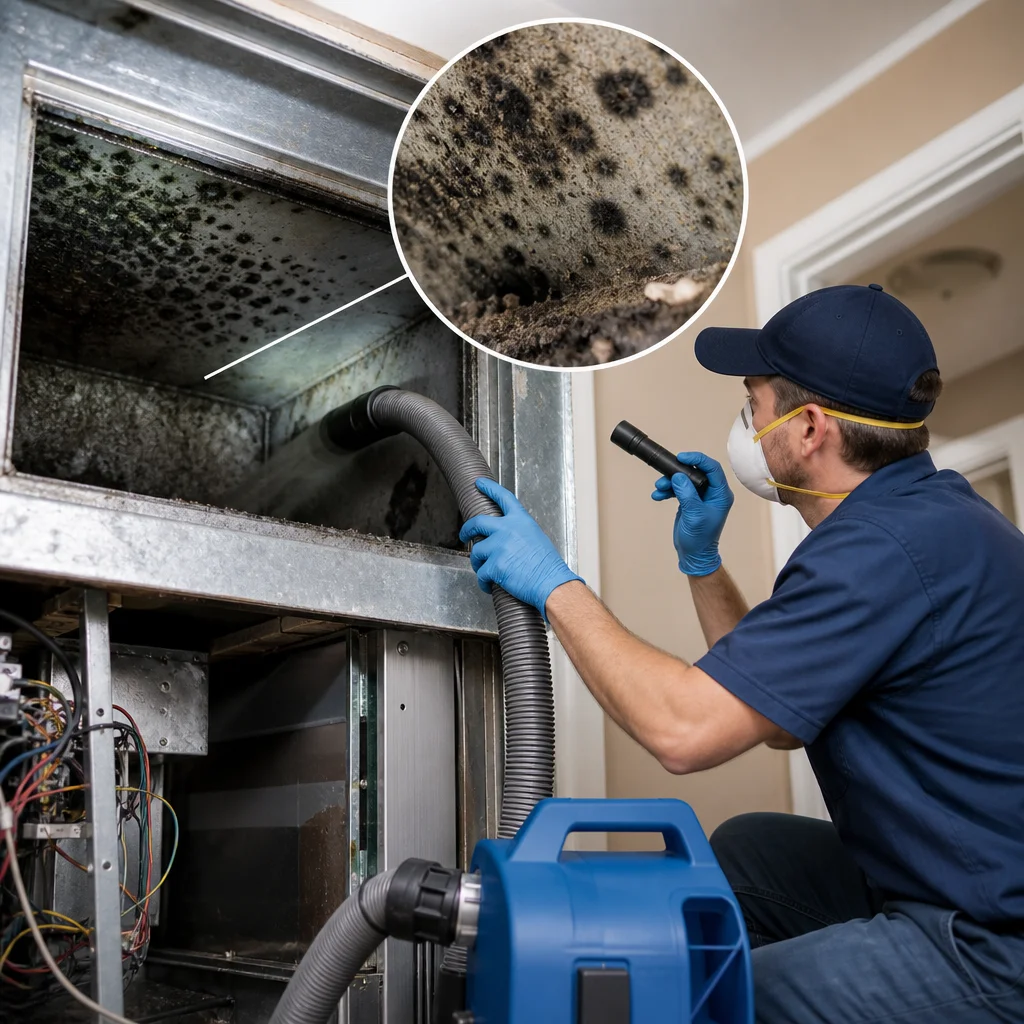
- Visible dark spotting or fuzzy growth around registers or inside ducts
- Stains, bubbling paint, or soft spots on ceilings and walls
- Damp insulation in the attic or crawlspace
- Rust on metal duct, boots, or registers
- New allergy-like symptoms that improve when you leave the house. If this happens, talk to a doctor.
If you suspect mold, remember that a substance that looks like mold may not be mold, and the EPA notes that confirming it requires an expert and may require lab analysis. Ask any provider to show you what they find.
What a Professional Inspection Includes
A technician can:
- Check the ducts, insulation, and equipment for moisture and damage
- Use a camera to look inside ducts and the air handler
- Identify which sections can be cleaned and which should be replaced
- Look for the source of moisture
- Check for leaks and disconnected sections that water may have caused
The Repair Process
Depending on what the inspection finds, repairs may include:
- Fix the moisture source so the problem does not return.
- Remove damaged materials, such as wet insulation and flex duct.
- Clean and sanitize hard duct surfaces and components that can be saved.
- Replace ductwork that cannot be restored.
- Seal and insulate the new or repaired ducts.
- Test the system and replace the filter before returning it to normal use.
How to Prevent Future Water Problems
- Have the roof and attic checked for leaks, especially after storms.
- Keep condensate drain lines clear and have them checked during HVAC maintenance.
- Insulate and seal ducts so they do not sweat.
- Check around plumbing that runs near ducts.
- Act quickly when you notice stains or dampness.
Frequently Asked Questions
Can I run my HVAC after a leak?
Not until the area is dry and the system has been checked, especially if ducts, wiring, or equipment got wet. Running a wet system can spread moisture and cause damage.
How fast does mold start?
Mold can begin to grow in damp conditions within a day or two, which is why quick action matters.
Will insurance cover duct replacement?
It depends on your policy and the cause of the damage. Document everything and ask your insurer.
Can wet duct insulation be dried?
The EPA says wet or moldy insulation cannot be cleaned effectively and should be replaced.
Get Your System Checked
Go Air Ducts can inspect your ductwork after a leak or flood and help with the next steps, including duct repair after water damage, air duct mold remediation, and ductwork replacement. Start with an air duct inspection, or contact us to schedule service in Austin, San Antonio, and nearby Texas communities.