
🕑 13 min read
What qualifications should an attic insulation contractor have?
A qualified contractor is licensed and insured, trained in proper R-values and air sealing, and uses the right insulation for your attic and climate. Go Air Ducts provides qualified, professional attic insulation services across Austin for lasting energy savings.
Table of Contents
- Why Choosing the Right Attic Insulation Contractor Matters for Your Home
- The Problem With Unqualified Insulation Installers in Austin
- Essential Certifications and Licenses to Look For
- How We Vet Our Team of Certified HVAC and Insulation Professionals
- Understanding Energy Efficiency Ratings and R-Value Standards
- Red Flags That Indicate an Inexperienced Contractor
- Our Process for Professional Attic Insulation Assessment and Installation
- Why Experience in Austin's Climate is Critical for Long-Term Performance
- How Proper Insulation Installation Improves Your HVAC System Efficiency
- What to Expect During Your Free Service Estimate
- Protecting Your Investment With Warranties and Guarantees
- Frequently Asked Questions (FAQ)





Why Choosing the Right Attic Insulation Contractor Matters for Your Home
Your attic’s insulation is one of the most important invisible investments in your home. It directly affects your energy bills, indoor comfort, and the lifespan of your HVAC system. Yet many Austin homeowners treat insulation installation like a commodity, comparing prices without understanding what separates a qualified contractor from someone who’s just learning on the job.
We’ve spent years working alongside Austin families, and we’ve seen the damage caused by poor insulation work. Gaps, compression, improper installation, and wrong R-values create air leaks that waste thousands in energy costs and force your air conditioning system to work overtime in our Texas heat. Choosing the right attic insulation contractor isn’t just about getting a lower bid. It’s about protecting your home and your investment for decades to come.
Insulation quality directly impacts three critical areas of your home: energy efficiency, indoor air quality, and HVAC performance. When insulation is installed correctly, your cooling and heating systems don’t have to compensate for lost conditioned air. When it’s done poorly, even premium equipment can’t overcome the loss.
We’ve inspected homes in Austin where previous contractors left gaps around electrical boxes, didn’t seal air leaks before installing insulation, or compressed batts into spaces too tight for proper R-value. The result? Homeowners paying 20-30% more on cooling bills than they should, while also dealing with temperature inconsistencies and higher allergen buildup.
Beyond energy costs, proper installation affects your attic’s moisture management, which is critical in our humid climate. Poorly installed insulation traps moisture, creating conditions for mold growth that spreads to your HVAC ducts and living spaces. The cost of remediation far exceeds the cost of getting it right the first time.
Actionable takeaway: Before booking any insulation work, ask potential contractors about their pre-installation air sealing process and their approach to moisture control in attics.
The Problem With Unqualified Insulation Installers in Austin
Not all insulation contractors have equal training or accountability. Some operate as one-person operations without formal training in energy codes or attic building science. Others are general contractors who subcontract insulation work to the lowest bidder, creating a chain where the actual installer has no relationship with the homeowner or responsibility for long-term performance.
The problems we encounter regularly include:
- Missing kraft paper vapor barriers, leaving insulation exposed to attic air
- Insulation installed over electrical fixtures without proper clearance, creating fire hazards
- Incorrect R-values for Austin’s climate zone (homeowners often see R-30 when R-38 is needed)
- Compressed insulation that loses 50% of its effectiveness
- Air gaps around penetrations, vents, and eaves that compromise the entire system
When we assess attics before our own installations, we find that roughly 40% of previously installed insulation is underperforming due to installation defects. These homeowners paid for a service, but they’re not getting the performance they expected.
The real cost of choosing an unqualified contractor isn’t just the failed installation. It’s the years of wasted energy, the stress of temperature swings, and the potential for mold or pest problems that follow.
Essential Certifications and Licenses to Look For
Legitimate insulation contractors carry specific credentials that demonstrate expertise and accountability. Here’s what you should verify before hiring anyone:
State and local licensing – All insulation contractors in Texas should have a valid Texas Department of Licensing and Regulation (TDLR) license. Verify this online before scheduling an estimate.
Energy audit certifications – Look for contractors trained in building science and certified by organizations like RESNET or NATE (North American Technician Excellence). These certifications require ongoing education and testing.
Manufacturer training – Top insulation brands require their installers to complete training programs specific to their products. Ask which brands your contractor is trained by.
EPA certification – If any lead abatement or mold remediation is involved, your contractor should hold EPA RRP (Renovation, Repair, and Painting) certification.
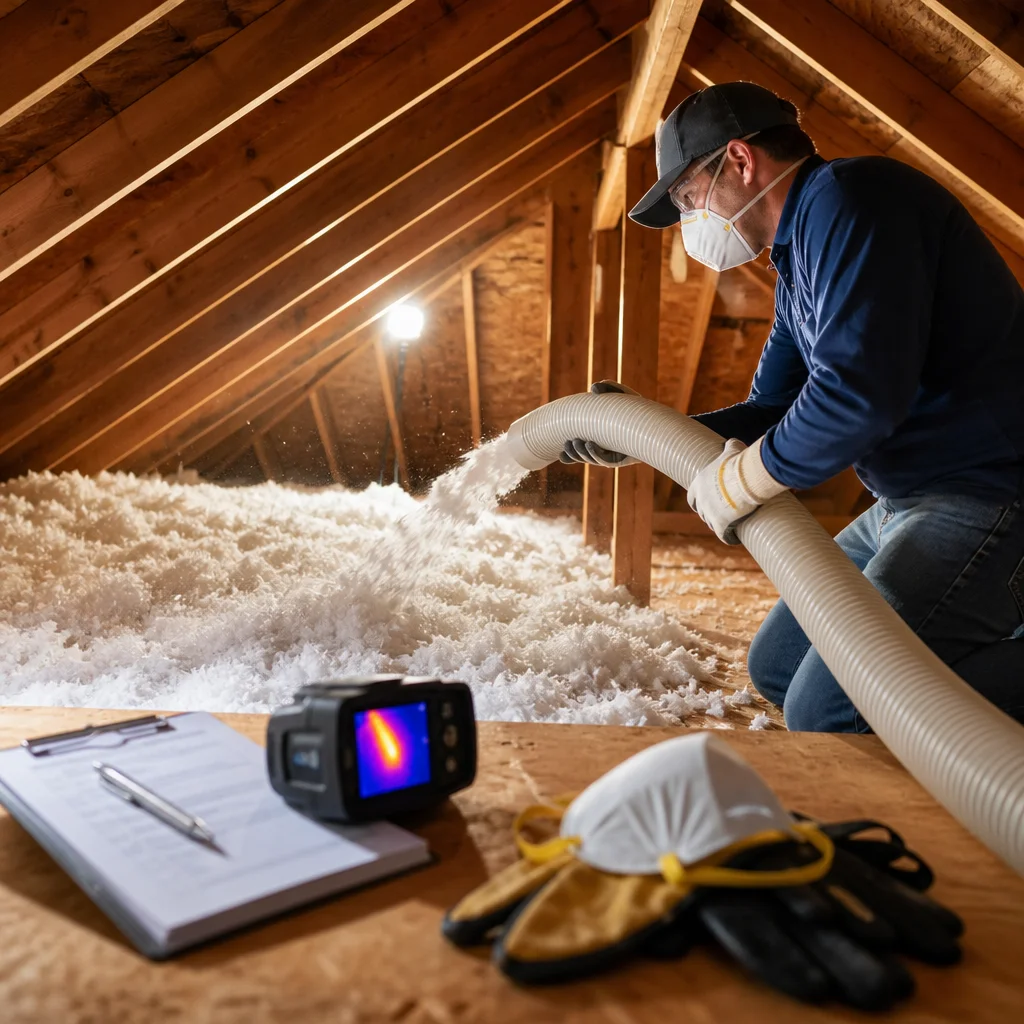
Liability and workman’s comp insurance – Always request proof of both. This protects you if damage occurs during installation or if someone is injured on your property.
Bonding – For larger projects, bonding ensures that if the contractor fails to complete the work, you’re covered financially.
Don’t accept verbal promises. Ask for copies of all credentials and verify them directly with issuing organizations. Most legitimate contractors keep these documents readily available because they’re proud of their qualifications.
How We Vet Our Team of Certified HVAC and Insulation Professionals
At Go Air Ducts, we maintain a rigorous vetting process for every technician on our team. Every insulation specialist completes:
- NATE certification for HVAC system integration and energy efficiency
- Comprehensive manufacturer training for all insulation products we install
- Building science education covering attic ventilation, moisture management, and air sealing
- Annual recertification and continuing education requirements
- Background checks and references verification
We also cross-train our team so insulation specialists understand how their work impacts your HVAC system’s performance. Many contractors treat insulation and HVAC as separate systems. We recognize they’re interconnected. Poor insulation forces your air conditioning unit to run longer and hotter, reducing its lifespan and efficiency. This integrated approach means our recommendations address your whole-home comfort, not just one component.
When you work with us, you’re not getting a contractor who learned insulation from YouTube videos. You’re getting experienced professionals who understand Austin’s specific climate challenges and have installed insulation in thousands of local homes.
Understanding Energy Efficiency Ratings and R-Value Standards
R-value measures thermal resistance, or how well a material resists heat flow. Higher R-values mean better insulation. In Austin, energy codes typically require R-38 to R-49 in attics, depending on your specific home’s construction and your goals for energy savings.
The challenge is that R-value assumes perfect installation. When insulation is compressed, has gaps, or isn’t properly sealed at edges, the effective R-value drops significantly. A study by the Building Science Institute found that real-world performance is often 20-30% lower than lab-rated R-values due to installation quality issues.
For Austin’s climate zone, here’s what you should expect:
- R-38 minimum – Meets current code but represents baseline efficiency
- R-49 – Recommended for new construction and major renovations, provides noticeable energy savings
- R-60+ – Optimal for maximum efficiency and comfort, especially in high-humidity areas
We always recommend asking contractors to calculate your specific R-value needs based on your home’s age, condition, and current HVAC performance. Generic recommendations are a red flag. Your needs might differ from your neighbor’s home just two houses down.
Red Flags That Indicate an Inexperienced Contractor
Not all cheap quotes come from inexperienced contractors, but certain warning signs consistently indicate problems ahead:
Pressure to decide immediately – Legitimate contractors understand you need time to compare options. Fast-talking sales tactics suggest the company relies on volume over quality.
No detailed scope of work – Vague estimates that don’t specify R-values, square footage, air sealing approach, or ventilation strategy are a problem. You can’t verify the quality later.
No mention of pre-installation inspection – Professional attic insulation always starts with assessing your current attic condition, moisture levels, and existing insulation. Contractors who skip this phase are cutting corners.
Refusing to provide references – Call past customers and ask about their energy bill changes and overall satisfaction. Companies proud of their work encourage this.
No discussion of attic ventilation – Your attic needs to breathe properly for moisture to escape. Any contractor who doesn’t discuss your current ventilation setup is missing a critical component.
Not trained in your specific climate – Austin’s heat and humidity require different approaches than, say, Denver. Contractors with experience outside Texas might not understand local moisture and pest challenges.

No warranty or guarantee – If they won’t stand behind their work in writing, question why.
We’re transparent about every aspect of our work because we’re confident in our qualifications and long-term relationships with Austin families.
Our Process for Professional Attic Insulation Assessment and Installation
Our insulation process begins with a comprehensive assessment. We inspect your current insulation condition, measure existing R-values, check for moisture damage or mold, and identify air leaks. This initial evaluation determines whether you need blow-in insulation installation or a complete removal and replacement.
Once we’ve assessed your attic, we create a detailed plan that includes:
- Air sealing of gaps and penetrations using appropriate sealants
- Installation of proper ventilation if needed to manage moisture
- Insulation installation using equipment that ensures proper density and no compression
- Final inspection with documentation of R-values and coverage
Many homeowners don’t realize that insulation improves HVAC efficiency by reducing the load on your system. When we install insulation, we’re also optimizing your heating and cooling performance.
We document everything with photos and written reports so you know exactly what was done and why. You’re not just getting installed material. You’re getting a detailed record of your home’s energy upgrade.
Why Experience in Austin’s Climate is Critical for Long-Term Performance
Austin’s climate presents unique challenges that generic insulation contractors often miss. Our summers exceed 100 degrees regularly, and our humidity levels fluctuate dramatically between seasons. This combination creates moisture movement that can damage insulation and foster mold growth if not managed properly.
We’ve worked in thousands of Austin and San Antonio attics, and we understand how ventilation, insulation depth, and air sealing must work together in our specific environment. A contractor experienced primarily in dry climates might install insulation that works fine in Colorado but traps moisture in Texas.
We also understand the specific pest pressures in Central Texas. Proper air sealing and insulation installation reduces entry points for rodents and insects, a benefit that goes beyond energy savings.
Local experience also means we’re familiar with typical home construction in Austin neighborhoods. Homes built in different decades have different challenges. We adjust our approach accordingly, rather than applying a one-size-fits-all methodology.
How Proper Insulation Installation Improves Your HVAC System Efficiency
Your HVAC system and attic insulation are a team. When insulation is installed properly, your air conditioning doesn’t have to work as hard to maintain your desired temperature. This extends equipment life and reduces monthly energy costs.
Here’s the connection: Every degree of heat that infiltrates through gaps in your attic requires your AC unit to run longer to cool that air back down. In Austin’s heat, this adds up quickly. We’ve seen homes where poor insulation forces cooling systems to run nearly continuously on 100-degree days, when a properly insulated home reaches the thermostat setpoint and runs in cycles.
Proper insulation also maintains more consistent temperatures throughout your home, reducing the strain on your HVAC system and improving comfort. You’re less likely to have hot upstairs bedrooms or cold spots in certain rooms.
When we plan insulation work, we always coordinate with HVAC considerations. If your system is aging, proper insulation might extend its life by years. If you’re considering a new system, better insulation means you might need a smaller, less expensive unit to meet your cooling and heating needs.
What to Expect During Your Free Service Estimate
Our free service estimate starts with a thorough attic inspection. We measure existing insulation depth, check R-values with thermal imaging, inspect for moisture or mold, and assess air leaks around electrical penetrations, vents, and other openings.
During the walkthrough, we explain what we’re finding in simple terms. We show you areas of concern and explain how they affect your energy efficiency and home comfort. We’re not here to scare you into a sale. We’re here to give you accurate information so you can make an informed decision.
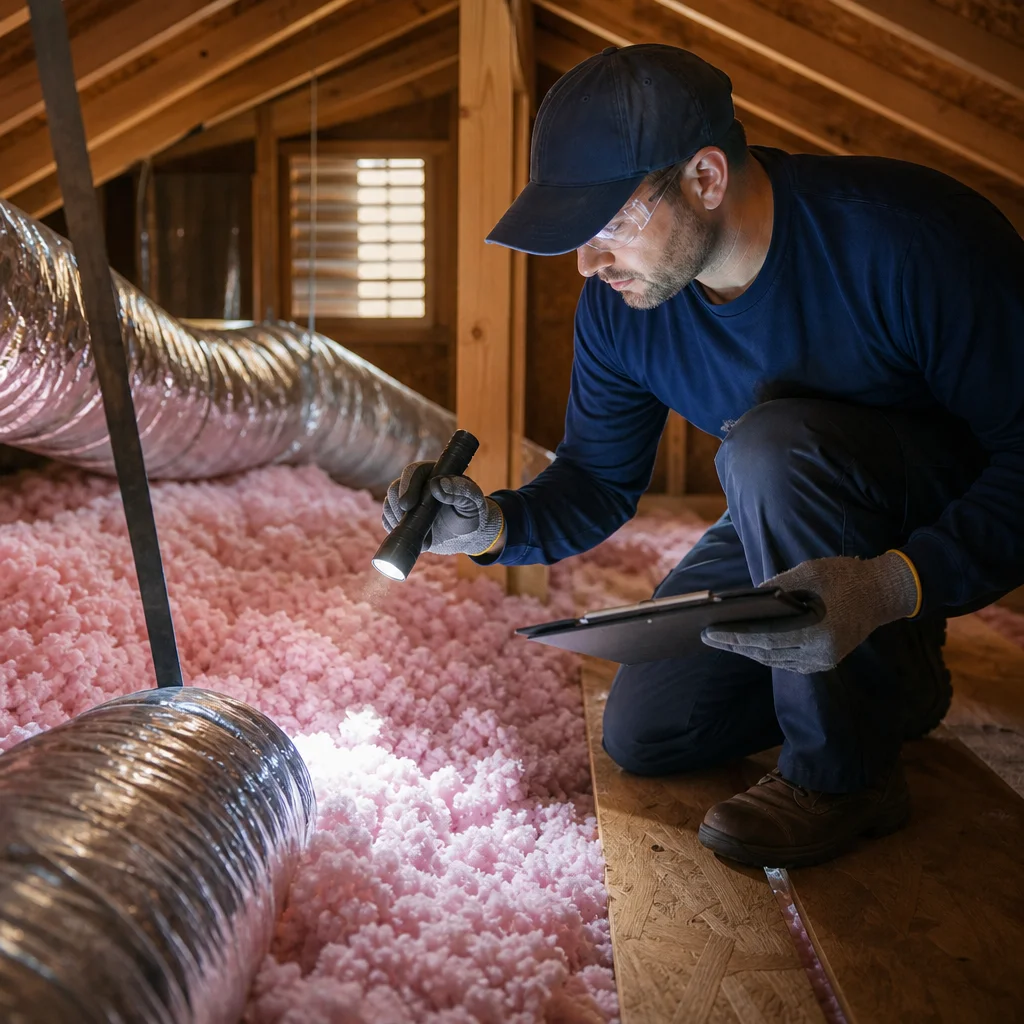
After the inspection, we provide a detailed written estimate that includes:
- Current R-value assessment and recommended upgrades
- Specific air sealing work needed
- Insulation material options and their performance characteristics
- Ventilation recommendations if needed
- Expected energy savings based on your current usage
- Project timeline and warranty details
We also discuss any financing options available and answer questions about the installation process. Our goal is for you to feel completely confident in your decision before work begins.
Contact us for your free service estimate. We serve Austin, San Antonio, Dallas, and Houston, and we schedule estimates quickly so you’re not waiting weeks for an assessment.
Protecting Your Investment With Warranties and Guarantees
Professional insulation installation comes with warranties that protect your investment. We stand behind our work with comprehensive coverage that includes:
Material warranty – Our insulation products are backed by manufacturer warranties covering defects in the material itself.
Workmanship warranty – We guarantee that our installation meets industry standards and our own quality specifications. If you discover installation defects, we’ll address them.
Performance guarantee – We provide estimates of expected energy savings based on your specific situation. If actual performance differs significantly from our projections, we’ll investigate and make necessary corrections.
Written documentation – Every job includes detailed photos, measurements, and reports that serve as proof of what was installed and where.
When comparing contractors, ask about their specific warranty terms. Some offer limited coverage or require expensive warranty transfers if you sell your home. Our warranties travel with your home, which adds real value if you decide to sell.
The difference between choosing based on price alone versus choosing a qualified contractor often becomes apparent within the first year of operation. You’ll see it in your energy bills, feel it in your home’s comfort, and appreciate it when your HVAC system doesn’t have to work itself to death keeping up with poor attic insulation.
Ready to get your attic professionally assessed? Call Go Air Ducts today for a free service estimate. Our certified insulation specialists will inspect your attic, answer your questions, and provide a detailed plan for improving your home’s energy efficiency and comfort. We’re available for same-day service in Austin and San Antonio.
For further reading: Attic blow-in insulation services.
If you’re dealing with dust, poor airflow, mold in your ducts, or a clogged dryer vent — don’t wait. These issues can affect your health and safety. Go Air Ducts Group are the local experts in air duct cleaning, mold removal, dryer vent cleaning, and attic insulation. Call now for a free inspection and same-day service in Austin and San Antonio.
Frequently Asked Questions (FAQ)
What certifications should I look for in an attic insulation contractor?
We recommend verifying that your contractor holds current licenses from the Texas Department of Licensing and Regulation, plus industry certifications like EPA RRP (Renovation, Repair, and Painting) certification if your home was built before 1978. At Go Air Ducts, all our installers maintain HVAC and insulation certifications that demonstrate they understand proper installation techniques, building codes, and energy efficiency standards specific to Texas homes.
How do you ensure proper insulation installation for Austin’s climate?
We’ve installed insulation across Austin for years, so we understand how our hot summers and occasional cold snaps affect home performance differently than other regions. Our team assesses your attic’s current condition, recommends appropriate R-value ratings for our climate, and installs materials using methods that prevent air leaks and maintain consistent performance year-round. This localized expertise means your investment will actually deliver the energy savings and comfort you’re paying for.
What should I watch out for when hiring an insulation contractor?
Red flags include contractors who won’t provide written estimates, skip the assessment phase, or pressure you into decisions without explaining why a specific R-value or material suits your home. We always start with a free service estimate where we inspect your attic, discuss your concerns about allergies or energy costs, and explain exactly what we’re recommending and why before any work begins.