
🕑 8 min read
Why is a bird nest in a dryer vent a serious problem?
A bird nest blocks the dryer vent's airflow, trapping heat and highly flammable lint inside the duct, which raises the risk of a dryer fire. It also traps moisture that can lead to mold, and a nest with eggs or chicks may be protected by wildlife law, so removal often needs to be timed and handled carefully rather than pulled out right away.
Table of Contents
- Why Do Birds Nest in Dryer Vents?
- Signs You Might Have a Bird Nest in Your Dryer Vent
- Why a Bird Nest Is More Than a Nuisance
- Is It Legal to Remove a Bird Nest From a Dryer Vent?
- What to Do If You Find a Nest in Your Vent
- Preventing Birds From Nesting in Your Vent Again
- Schedule a Dryer Vent Inspection With Go Air Ducts
- Frequently Asked Questions (FAQ)





If you’ve noticed your dryer taking longer to finish a load, or you’ve heard faint chirping near your laundry room wall, there’s a good chance a bird has decided your dryer vent makes a fine place to raise a family. It happens more often than most homeowners realize, especially during spring nesting season.
It’s easy to brush this off as a minor annoyance. A little nesting material in a vent doesn’t sound like a big deal compared to a real HVAC problem. But a bird nest in dryer vent openings creates a genuine fire and moisture hazard, not just an inconvenience.
Here’s why it matters more than you’d think, how to tell if it’s already happened to you, and what to actually do about it.
Why Do Birds Nest in Dryer Vents?
Dryer vents are, unfortunately, close to ideal from a bird’s point of view. The vent hood offers a small, sheltered opening that’s protected from wind and rain. The warm air coming from your dryer makes the space even more appealing, especially in cooler months when a warm, dry cavity is hard to come by outdoors.
Small birds like house sparrows and starlings are the most common culprits, and they’re persistent. If the flap on your exterior vent cover is bent, missing, or doesn’t seal tightly, it’s an open invitation. Once a bird builds a nest inside, it can block airflow almost completely within a matter of days.
What to do next: If your home has an older or damaged vent cover, that’s the first thing worth checking, since it’s usually what makes nesting possible in the first place.
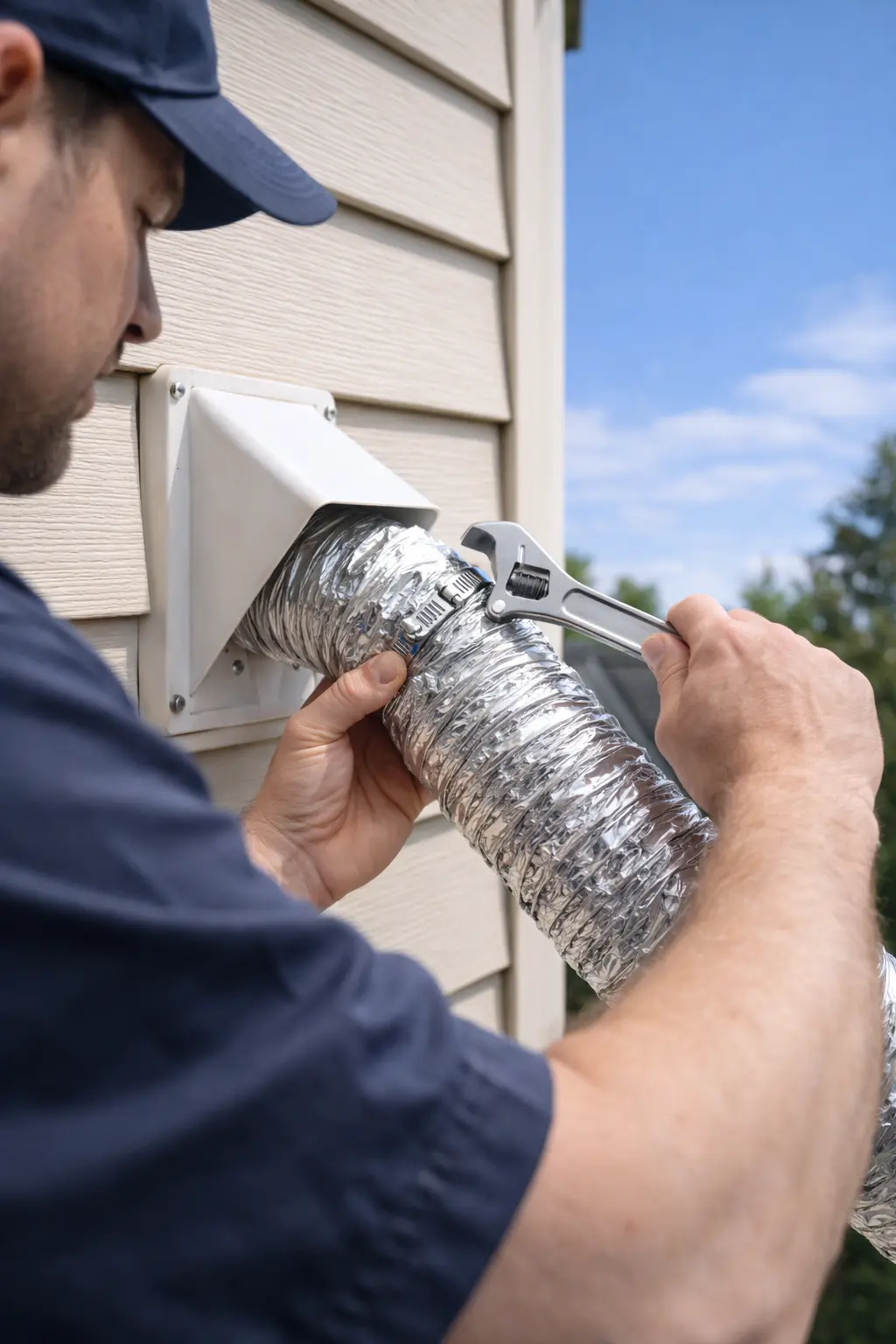
Signs You Might Have a Bird Nest in Your Dryer Vent
Because the vent opening is usually up high or out of sight, most homeowners don’t discover a nest until the dryer stops working properly. Watch for:
- Clothes that take two or three cycles to dry when one used to be enough
- A burning or musty smell when the dryer is running
- Chirping or scratching sounds coming from the vent or nearby wall
- Little to no airflow felt at the exterior vent hood when the dryer is on
- Visible nesting material, feathers, or droppings around the vent opening
Any one of these on its own could point to a few different causes, including ordinary lint buildup. But if you notice more than one, especially the chirping, it’s worth taking a look outside before running another load.
Why a Bird Nest Is More Than a Nuisance
A blocked vent might seem like it just means slower drying. In reality, it affects your dryer, your air quality, and your home’s fire safety all at once.
Increased Fire Risk
Nesting material is dry, loosely packed, and highly flammable, and it sits directly in the path of the hot air your dryer pushes out with every cycle. Combined with the lint that naturally collects in the vent, a nest can turn a normal exhaust duct into fuel for a fire. This is the same reason a clogged or poorly routed vent is treated as a real fire hazard rather than just a performance issue.
Trapped Moisture and Mold
A dryer’s job is to push warm, moist air out of your home. When a nest blocks that path, the moisture has nowhere to go. Over time, that trapped humidity can lead to mold growth inside the vent and around the wall opening, which is a problem that tends to spread rather than resolve on its own.
Pests, Parasites, and Odor
Bird nests can carry mites, lice, and other parasites that don’t necessarily stay contained to the nest itself. Old nests left in place can also produce a persistent musty or foul odor, particularly if droppings or, in unfortunate cases, a deceased bird are part of what’s blocking the vent.
Strain on Your Dryer
A dryer fighting against a blocked vent has to run longer and hotter to get clothes dry. That extra strain shows up as higher energy bills and added wear on the appliance itself, and it’s the same pattern you’d see with any severely restricted dryer vent line.
Is It Legal to Remove a Bird Nest From a Dryer Vent?
This part surprises a lot of homeowners. In the United States, many native wild bird species, along with their active nests, eggs, and young, are protected under federal law. That means an active nest with eggs or chicks generally can’t just be pulled out and thrown away on the spot, even if it’s blocking your dryer vent.
This doesn’t mean you’re stuck living with it. It usually means the timing and method of removal matter. An empty or inactive nest can typically be cleared right away, while an active one may need to be left until the young birds have left, or handled by someone familiar with local wildlife regulations. If you’re not sure which situation you’re dealing with, that’s a good reason to have a professional take a look rather than guess.
What to Do If You Find a Nest in Your Vent
If you suspect a nest is blocking your vent, stop running the dryer until it’s cleared. Continuing to use it pushes hot air directly against blocked, flammable material, which is exactly the scenario you want to avoid.
From there:
- Look at the exterior vent hood to confirm whether the flap is stuck open or blocked
- Avoid reaching into the vent or duct yourself, since nesting material can be packed deeper than it looks
- Note whether you can see or hear activity, which suggests an active nest rather than an old, abandoned one
- Have the vent professionally inspected and cleared before using the dryer again
What to do next: A professional dryer vent inspection can confirm exactly what’s blocking the line and whether any part of the vent was damaged in the process, rather than leaving you guessing.
At Go Air Ducts, our dryer vent cleaning service is built to clear this kind of blockage safely, and if the ductwork itself was damaged by the nesting activity, our dryer vent repair and dryer vent replacement services can get the system back to a safe, working condition.
Preventing Birds From Nesting in Your Vent Again
Once the vent is clear, the goal is making sure it doesn’t happen again next season. A properly fitted exterior vent cover with a working flap is the main line of defense. If yours is bent, rusted, or missing screws, birds and other small animals will keep finding their way in.
Vent guards designed specifically to keep birds and pests out, without restricting airflow, are worth considering if your home has had repeat problems. This is the same principle behind rodent proofing for ductwork and a properly capped chimney: sealing off the entry point without blocking the airflow the system needs to work.
It’s also worth checking your vent at the start of spring, since that’s when most nesting activity begins. Catching a partial nest early is a lot simpler than dealing with a fully built one weeks later.
Schedule a Dryer Vent Inspection With Go Air Ducts
A bird nest in your dryer vent is easy to underestimate until you understand what’s actually happening inside that duct: trapped heat, blocked moisture, and flammable material with nowhere to go. It’s a fire and air quality issue wearing the disguise of a minor annoyance.
At Go Air Ducts, we inspect and clear blocked dryer vents throughout Austin and San Antonio, and help homeowners put the right protection in place so the problem doesn’t come back. Contact us today to schedule an inspection if your dryer has been acting up or you suspect something is nesting where it shouldn’t be.
If you’re dealing with dust, poor airflow, mold in your ducts, or a clogged dryer vent, don’t wait. These issues can affect your health and safety. Go Air Ducts Group is the local expert in air duct cleaning, mold removal, dryer vent cleaning, and attic insulation. Call now for a free inspection and same-day service in Austin and San Antonio.