
🕑 10 min read
What should you consider before a mini-split in an older Austin home?
Key considerations include home layout, insulation, electrical capacity, and which rooms need comfort, since mini-splits offer flexible, zoned efficiency without ducts. Go Air Ducts assesses these factors for older Austin homes and installs mini-split systems that deliver comfort and air quality without costly ductwork retrofits.
Table of Contents
- 1. Space Constraints and Installation Feasibility
- 2. Energy Efficiency and Long-Term Savings
- 3. Aesthetic Integration with Historic Homes
- 4. Zoning and Individual Room Control
- 5. Maintenance and Professional Service Requirements
- 6. Cost Comparison with Traditional HVAC
- 7. Indoor Air Quality Improvements
- Frequently Asked Questions (FAQ)
1. Space Constraints and Installation Feasibility
If you own an older home in Austin or San Antonio, you’re likely dealing with one of two HVAC realities: outdated ducting that wastes energy, or no central air system at all. Many of our customers with vintage properties face challenges that traditional systems can’t solve without major renovation costs. That’s where ductless mini-split systems come in.
A ductless mini-split offers flexibility and efficiency that conventional HVAC struggles to match, especially in homes with crawlspaces, uneven layouts, or historic preservation requirements. But before you decide whether a mini-split is right for your older home, there are seven critical considerations you need to understand.
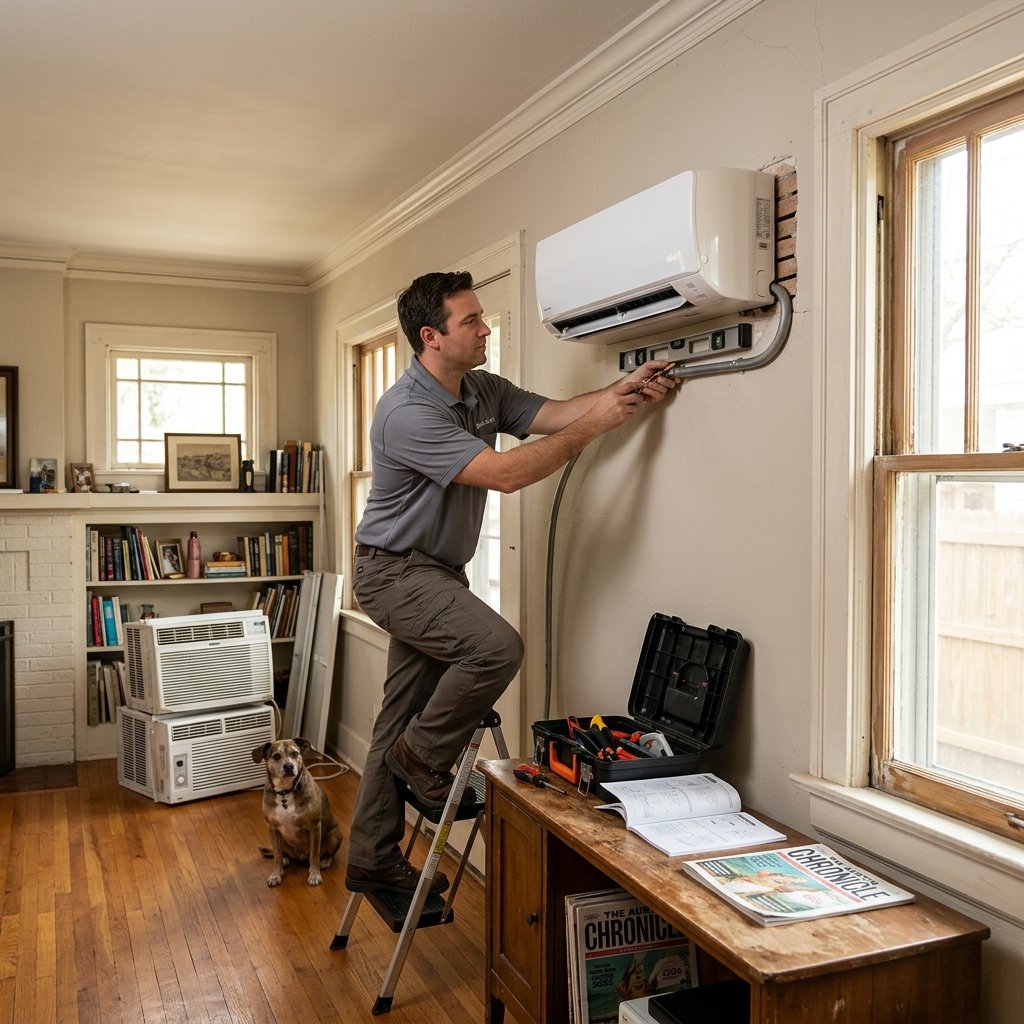
Older Austin homes often present unique structural challenges. Many lack the wall cavities, attic space, or basement infrastructure needed for traditional ductwork. That’s one major advantage of ductless mini-splits: they require only a small refrigerant line and electrical connection running through your walls, eliminating the need for extensive renovation.
However, “minimal installation” doesn’t mean “simple installation.” The outdoor condenser unit needs proper clearance and ventilation. Your wall thickness, insulation type, and existing wiring may complicate the drilling process. In homes with original masonry or stone exterior walls, routing refrigerant lines can be more involved than expected. The indoor head unit must be mounted at least 7-8 feet from the floor for optimal air distribution and requires sufficient wall space away from obstacles.
We’ve worked on hundreds of older homes where retrofitting a mini-split required careful planning around electrical panels, water lines, and structural elements. The key is having a certified technician assess your specific layout before committing to the project.
Your next step: Schedule a free estimate that includes a physical walk-through. Our team identifies potential installation hurdles early, so you avoid costly surprises mid-project.
2. Energy Efficiency and Long-Term Savings
Ductless mini-splits consistently deliver superior efficiency compared to older central air systems or window units. They typically achieve SEER2 ratings of 20 or higher (compared to 13-15 for aging central units), translating to measurable savings on your monthly cooling and heating bills.
In Austin’s hot climate, this difference compounds quickly. A homeowner running a 20+ year-old air conditioner might spend $150-200 monthly during summer. A modern mini-split in the same home could reduce that to $80-120, depending on usage and thermostat settings. Over a 15-year lifespan, that’s thousands in recovered utility costs.
The efficiency advantage comes from inverter-driven compressors that adjust cooling output in real-time rather than cycling on and off. There’s also zero ductwork loss. Traditional central systems lose 20-30% of conditioned air through leaky ducts and connections. Mini-splits deliver 100% of their output directly to the room.
Texas humidity compounds the challenge for older homes. Existing ductwork often carries moisture issues that reduce efficiency. Learn more about how Texas humidity impacts your ductwork and HVAC efficiency to understand whether your current system is working against you.
Actionable takeaway: Compare your current energy bills to a mini-split projection. Request an energy audit showing potential savings based on your home’s square footage and usage patterns.
3. Aesthetic Integration with Historic Homes
In Austin’s neighborhoods filled with Craftsman bungalows and mid-century homes, appearance matters. A bulky outdoor condenser or an obvious wall-mounted indoor head can clash with period architecture. But ductless systems offer design flexibility that central air simply doesn’t.
Modern mini-split heads come in slim, low-profile designs that can mount high on a wall where they’re less visually obtrusive. Some units feature wood-tone or paintable grilles that blend into interior finishes. For exterior components, the condenser can often be placed on a side yard or screened by landscaping, keeping it out of sight lines.
We’ve successfully integrated mini-splits into historic homes where installing traditional central air would have required permits the homeowner couldn’t obtain, or compromised the home’s original character. One client in South Austin had a 1930s cottage where drilling through exterior walls for ductwork would have damaged original siding. A mini-split solved the problem with minimal impact.
If your home is listed or has HOA restrictions, verify that mini-split installation complies with guidelines. Most modern units pass aesthetic reviews precisely because they’re less intrusive than the alternatives.
Concrete step: Take photos of your walls and intended placement areas. Share them during your estimate consultation so our technicians can recommend positioning that complements your home’s style.
4. Zoning and Individual Room Control
Traditional central air treats your entire home as one temperature zone. If you’re heating a two-story Victorian or cooling a sprawling ranch, some rooms will always be uncomfortable while others are over-conditioned. Mini-splits solve this with independent room control.
Each indoor head unit operates independently, with its own thermostat and temperature settings. You can cool the master bedroom to 68 degrees while keeping the guest room at 74, or leave unoccupied areas off entirely. This flexibility not only increases comfort but drives additional energy savings by eliminating conditioned air wasted in unused rooms.
Multi-zone mini-split systems can support up to eight indoor units on a single outdoor condenser, giving you granular control over every bedroom, living space, and office. For older homes with irregular layouts or uneven sun exposure, this is a game-changer.
Families with different temperature preferences no longer argue over the thermostat. Remote controls and smart app integration let everyone adjust their space independently.
Actionable choice: List the rooms you’d want to control separately. This determines how many indoor units you’ll need and refines your cost estimate.
5. Maintenance and Professional Service Requirements

Ductless systems are simpler than central HVAC in many ways, but they still need professional attention. The outdoor condenser requires annual cleaning of its coils and fins, especially in Austin where dust and pollen accumulate quickly. Indoor heads need filter changes every 1-3 months, depending on usage and air quality.
The most critical maintenance task is checking refrigerant charge levels and ensuring the sealed system remains leak-free. This must be done by a certified technician with proper EPA certification. You can’t service a mini-split yourself like you might change a furnace filter in a central system.
We recommend professional maintenance at the start and end of each cooling and heating season. This catches issues early and keeps your efficiency ratings high. Many homeowners overlook this, then wonder why their system’s performance drops over time.
If your existing ducts are part of the equation, don’t assume a mini-split eliminates the need for quality air. Leaky or contaminated ductwork still affects indoor air quality. Consider pairing your mini-split installation with professional air duct cleaning to eliminate dust, mold, and allergens lurking in the existing system.
What to do: Schedule professional servicing twice yearly, spring and fall. It’s inexpensive compared to emergency repairs and extends your system’s lifespan by years.
6. Cost Comparison with Traditional HVAC
A complete mini-split system for a 1,500-2,000 sq ft home typically costs $4,000-$7,000 installed, depending on the number of zones and refrigerant line routing complexity. This is higher than window units but competitive with replacing an aging central air system when you factor in efficiency gains and long lifespan.
A central air replacement runs $5,000-$10,000+ and often requires ductwork repairs or replacement, pushing costs higher. Plus, central systems lose efficiency every year as ducts deteriorate. Mini-splits maintain their rated efficiency indefinitely.
The payback period typically ranges from 7-12 years through energy savings alone. After that, it’s pure savings. If your current central unit is 15+ years old and failing, a mini-split investment starts looking economical immediately.
Financing options and tax incentives may reduce out-of-pocket costs. Some ENERGY STAR-qualified systems qualify for federal tax credits or local utility rebates in Texas. We help customers identify available programs during the estimate phase.
Next step: Request a detailed cost comparison showing total installed price, estimated monthly utility savings, and available incentives.
7. Indoor Air Quality Improvements
This is where we bring our real expertise. Air quality in older homes is often compromised by decades of dust, mold, and contaminants building up in existing ductwork and around windows and doors. While a mini-split itself doesn’t clean your existing air distribution, modern units include multi-stage filtration that removes allergens, dust, and particulates.
Many of our customers report noticeably clearer air after installing a mini-split, particularly if they combine it with air duct cleaning services that reduce allergies. The HEPA and activated carbon filters in quality mini-splits capture particles that older central systems miss.

For Austin homeowners dealing with allergies or asthma, this combination is transformative. You’re not just upgrading your climate control; you’re upgrading your home’s respiratory health. Understand more about how clean air ducts improve indoor air quality to see the full picture.
Austin’s heat and humidity also create conditions where mold grows in ductwork. If you suspect mold or experience musty odors when your system runs, don’t wait. Professional inspection and cleaning prevent health risks and extend your HVAC equipment’s life.
Action item: Request an indoor air quality assessment alongside your mini-split estimate. We’ll test your existing ductwork and identify any contamination that should be addressed before or during your system upgrade.
—
Ductless mini-splits are an excellent solution for older Austin and San Antonio homes, but the right choice depends on your specific situation. The seven considerations above help you evaluate whether a mini-split aligns with your home’s constraints, budget, and comfort goals.
We’ve guided hundreds of homeowners through this decision. Our certified technicians understand the unique challenges of older homes, from wall construction to local code requirements. We provide free estimates that include a complete site assessment, so you have all the information you need before committing.
Schedule your free consultation today. We’ll identify which rooms would benefit most from ductless cooling or heating, calculate realistic energy savings, and design a system that respects your home’s character while delivering modern comfort and efficiency.
If you’re dealing with dust, poor airflow, mold in your ducts, or a clogged dryer vent — don’t wait. These issues can affect your health and safety. Go Air Ducts Group are the local experts in air duct cleaning, mold removal, dryer vent cleaning, and attic insulation. Call now for a free inspection and same-day service in Austin and San Antonio.
Frequently Asked Questions (FAQ)
Can we install a ductless mini-split system in my older Austin home without major renovations?
Yes, we can typically install these systems with minimal disruption to your home’s structure. Since ductless mini-splits don’t require extensive ductwork, we usually only need to run a small refrigerant line and electrical conduit through your walls. Our team assesses your specific layout during the free estimate to determine the best installation approach that respects your home’s character.
How much will switching to a ductless mini-split system save us on energy bills compared to our current central air?
We generally see our customers reduce their energy costs by 20-40% with ductless systems, especially when they zone only the rooms they actively use. Mini-splits operate more efficiently than older central systems because there’s no energy loss through ductwork, and you’re not cooling or heating unused spaces. We’ll review your current utility bills during our consultation to give you a more precise savings estimate for your home.
What kind of maintenance do ductless mini-split systems require from us?
We recommend having our technicians perform professional maintenance annually to keep your system running at peak efficiency. Between our visits, you’ll need to clean the indoor unit filters monthly, which takes just a few minutes. We can set up a maintenance plan that ensures your system stays in top condition and maintains any manufacturer warranties you may have.