
Table of Contents
- 1. Assessment and Inspection of Your Duct System
- 2. High-Pressure Vacuuming and Debris Removal
- 3. Antimicrobial Sanitization and Mold Treatment
- 4. Sealing and Insulation of Ductwork
- 5. Equipment Certification and Safety Standards
- 6. Post-Service Air Quality Testing
- 7. Regular Maintenance Scheduling for Optimal Performance
- Frequently Asked Questions (FAQ)
1. Assessment and Inspection of Your Duct System
Commercial buildings accumulate far more dust, debris, and contaminants than residential spaces. When your HVAC system isn’t properly cleaned and sanitized, it becomes a circulation system for allergens, mold spores, and bacteria that directly impact employee health, building efficiency, and your bottom line. We’ve helped San Antonio property managers and business owners restore air quality and system performance through proven commercial duct cleaning and sanitization practices.
The difference between a quick surface cleaning and a genuinely effective sanitization comes down to methodology. We’ve learned from thousands of commercial projects that cutting corners on inspection, debris removal, or antimicrobial treatment always leads to complaints, callbacks, and wasted money. Here’s exactly how we approach commercial duct cleaning to deliver lasting results.
Before we touch a single duct, we conduct a thorough visual and video inspection to map out the entire system’s condition. This isn’t optional—it’s the foundation of everything that follows. We use high-definition camera equipment to identify dust buildup, microbial growth, debris accumulation, and structural damage that invisible to the naked eye.
During inspection, we look for several critical indicators:
- Visible dust and debris coating interior duct surfaces
- Mold or discoloration suggesting moisture problems
- Leaks, disconnections, or damaged insulation
- Blockages or restricted airflow zones
- Evidence of pest activity or rodent nesting
This step reveals whether you have a standard buildup issue or a deeper problem like active mold growth that requires specialized air duct mold remediation. We document everything with photos and video so you understand exactly what we’re treating and why. Many commercial clients tell us they’ve never actually seen inside their ducts before—the inspection alone changes how they think about system maintenance.
What to do next: Schedule a professional air duct inspection before committing to any cleaning plan. Don’t rely on estimates based on assumptions about your system’s condition.
2. High-Pressure Vacuuming and Debris Removal
Once we understand the scope of contamination, we deploy industrial-grade negative pressure vacuum systems connected to containment units. This pulls debris directly out of the ductwork without spreading it through the building. Standard shop vacs won’t cut it for commercial work—the pressure differential has to be controlled and powerful enough to dislodge stubborn accumulation.
Our process involves:
- Sealing the main trunk lines and working section by section
- Using compressed air to agitate compacted debris buildup
- Vacuuming all debris into sealed containers (never re-circulated into the space)
- Cleaning registers, returns, and accessible supply ducts manually where needed
- Inspecting removed debris for signs of mold, rodent activity, or other hazards
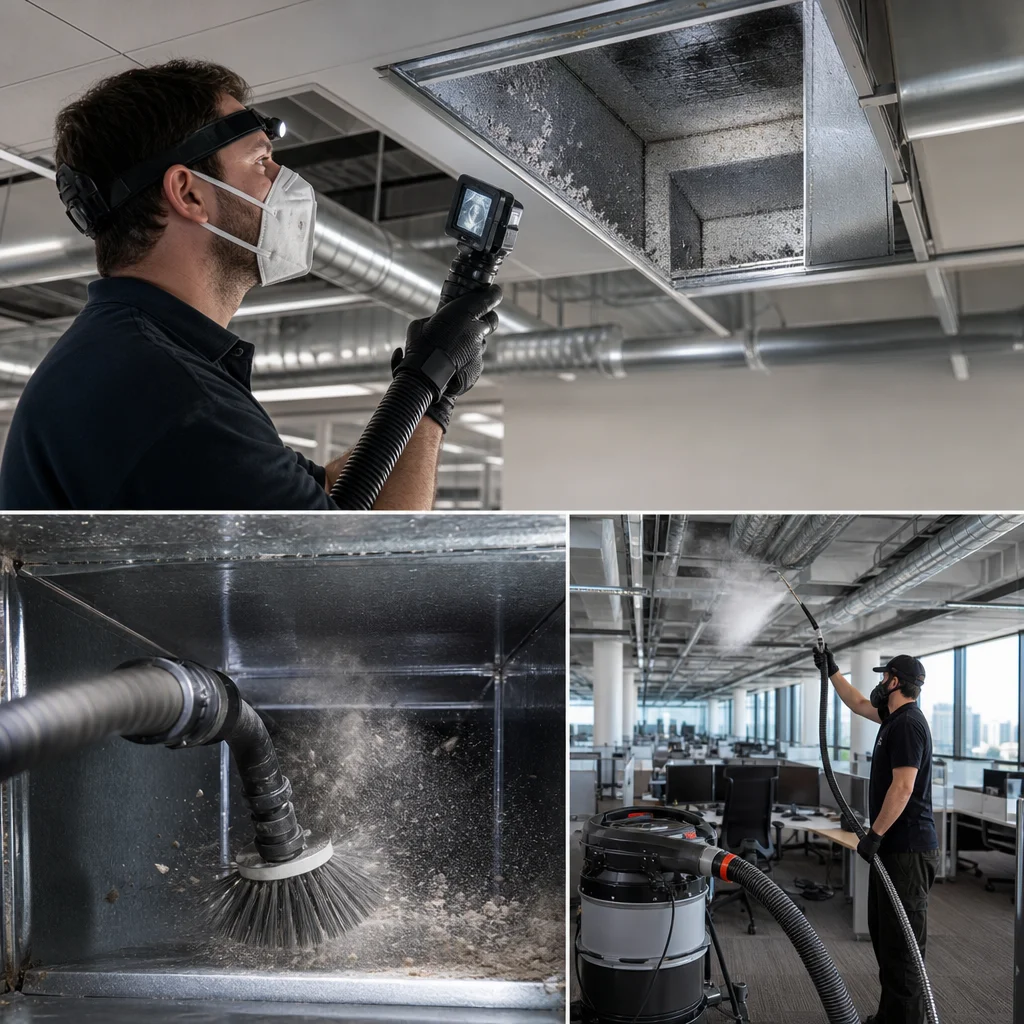
In commercial buildings, we often find surprising amounts of construction dust, HVAC filter breakdown, outdoor air contaminants, and accumulated skin cells trapped in the system. High-pressure vacuuming removes 90-95% of loose debris, but that remaining 5-10% is where antimicrobial sanitization becomes critical.
Action step: If your commercial building hasn’t had professional duct cleaning in over two years, debris accumulation is almost certainly affecting air quality and energy efficiency.
3. Antimicrobial Sanitization and Mold Treatment
After debris removal, we apply EPA-approved antimicrobial treatments throughout the entire duct system. This kills bacteria, viruses, and fungi that survive the vacuuming process and prevents rapid re-colonization. For San Antonio’s humid climate, this step is non-negotiable—moisture and heat create ideal conditions for mold growth inside ducts.
Our sanitization approach includes:
- Fogger application of hospital-grade disinfectant throughout the system
- Targeted treatment of high-moisture zones and problem areas
- Application of antimicrobial sealant where appropriate for long-term protection
- Special protocols for buildings with known mold exposure or water damage history
If we identify active mold growth beyond surface contamination, we escalate to comprehensive air duct mold remediation, which may involve duct replacement, humidity control upgrades, or moisture barrier installation. This is where professional expertise matters—improper mold treatment creates liability and leaves the problem unresolved.
Sanitization isn’t just about killing microbes; it’s about maintaining a healthier building environment for employees, reducing sick days, and creating cleaner air that meets commercial HVAC standards.
4. Sealing and Insulation of Ductwork
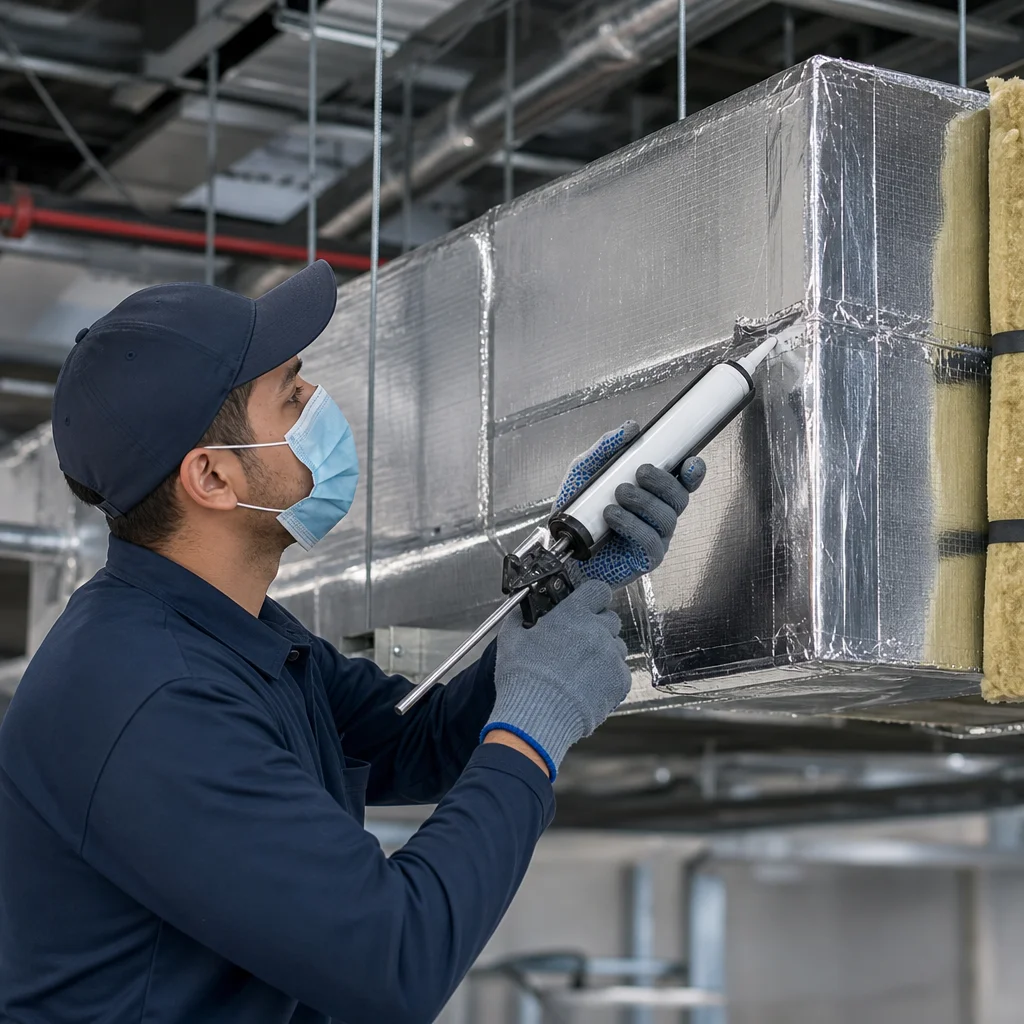
Leaky ducts undermine everything you’ve accomplished through cleaning. In commercial buildings, duct leaks can account for 20-30% of conditioning energy loss. Once we’ve sanitized the system, we identify and seal any gaps, cracks, or disconnections that compromise system integrity.
Our sealing and insulation services address:
- Duct joints and connections that have separated or deteriorated
- Penetrations where ducts pass through unconditioned spaces
- Damaged insulation that reduces efficiency and allows condensation
- Thermal bridging that creates temperature inconsistencies
- Air leakage that draws in unconditioned air or contaminants
Proper insulation and sealing typically reduces HVAC energy consumption by 10-20%, depending on the building’s age and duct condition. For commercial properties, this translates to thousands in annual utility savings. We use UL-approved mastic sealants and fiberglass-backed insulation that meets fire codes and maintains system performance.
Practical takeaway: Duct cleaning without sealing is like fixing a roof leak but leaving the holes in the walls—you’re solving half the problem.
5. Equipment Certification and Safety Standards
We maintain all equipment to NADCA (National Air Duct Cleaners Association) standards and comply with EPA, OSHA, and local San Antonio building codes. Our technicians are certified in commercial HVAC systems, respiratory safety, and hazardous material handling. This matters because commercial duct cleaning involves high-pressure systems, chemical treatments, and confined space entry—corners cut here create genuine safety and liability risks.
Key certifications we maintain:
- NADCA ACR certification for air duct cleaning
- EPA Section 608 certification for refrigerant handling
- Mold remediation and air quality testing credentials
- OSHA confined space entry certification
- General liability and workers’ compensation coverage
When you hire us for commercial duct cleaning and sanitization, you’re working with certified professionals using properly maintained equipment—not handymen with a borrowed compressor. This protects your business, your employees, and ensures the work meets commercial standards that actually matter.
6. Post-Service Air Quality Testing
We verify that sanitization worked by conducting post-service air quality testing. This typically involves duct pressure testing to confirm system integrity and optional microbial sampling to confirm contamination levels have dropped significantly. For buildings with prior mold issues or air quality concerns, post-service testing provides documentation that the problem is resolved.
Testing reveals:
- System pressure drops (indicating leakage)
- Microbial colony counts (before and after comparison)
- Particulate levels in supply air
- Humidity levels and potential condensation risks
- Overall HVAC performance and airflow balance
This data-driven approach means you’re not guessing whether the cleaning worked—you have measurable proof. It’s especially valuable for facilities managers who need to justify maintenance spending to building owners or corporate leadership.
Next step: Request post-service testing as part of your cleaning contract. It costs less than you’d expect and provides peace of mind that the investment paid off.
7. Regular Maintenance Scheduling for Optimal Performance
Commercial duct systems should be professionally cleaned every 2-3 years as a baseline, though buildings with high foot traffic, moisture exposure, or prior contamination may benefit from annual cleaning. We help clients develop preventive maintenance schedules that keep systems clean, efficient, and compliant without emergency situations.
A maintenance plan typically includes:
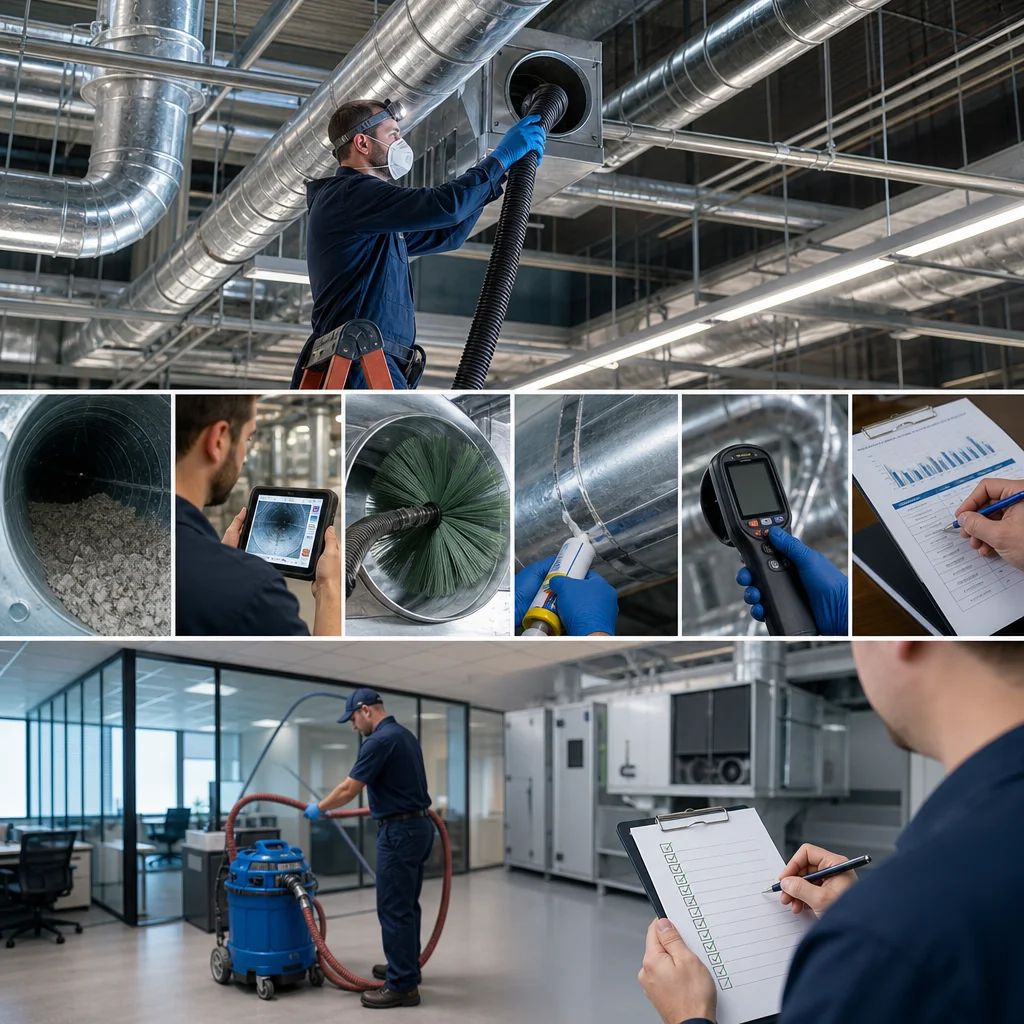
- Annual HVAC filter inspection and replacement
- Biennial professional duct cleaning
- Quarterly or semi-annual filter changes for high-traffic facilities
- Immediate evaluation if air quality complaints arise
- Regular monitoring of humidity levels and condensation risk
Regular maintenance prevents costly problems. A commercial building that skips duct cleaning for five years often faces system failures, indoor air quality complaints, energy waste, and potential mold remediation costs that dwarf the cleaning budget. We’ve seen this pattern repeatedly in San Antonio—the cheapest maintenance is the most expensive in the long run.
—
Why Go Air Ducts is Your San Antonio Commercial Duct Cleaning Partner
Commercial duct cleaning and sanitization requires expertise, proper equipment, certifications, and accountability. We’ve spent years perfecting these seven practices specifically for San Antonio’s climate and commercial building types. We don’t cut corners on inspection, we don’t skimp on sanitization, and we back our work with testing and documentation.
When you need professional HVAC system sanitization that actually protects your building, your employees, and your operational efficiency, call us for a free service estimate. We’ll inspect your system, explain exactly what we find, and deliver a cleaning solution built to last. Schedule your commercial duct cleaning today and experience the difference professional sanitization makes.
If you’re dealing with dust, poor airflow, mold in your ducts, or a clogged dryer vent — don’t wait. These issues can affect your health and safety. Go Air Ducts Group are the local experts in air duct cleaning, mold removal, dryer vent cleaning, and attic insulation. Call now for a free inspection and same-day service in Austin and San Antonio.
Frequently Asked Questions (FAQ)
How do we assess whether our commercial duct system needs cleaning?
We start with a comprehensive inspection using video camera technology to evaluate dust buildup, mold growth, and debris accumulation inside your ducts. If you’re noticing reduced airflow, increased energy costs, or visible dust around vents, those are strong indicators your system needs professional attention. We’ll provide you with a detailed report and recommendations based on what we find.
What sanitization methods do we use to eliminate mold and bacteria?
We apply EPA-approved antimicrobial treatments after high-pressure vacuuming to target mold, bacteria, and allergens throughout your ductwork. Our technicians are trained in safe application protocols to ensure effective sanitization without compromising your indoor air quality. Post-treatment, we conduct air quality testing to verify that contaminants have been eliminated.
Why does regular duct maintenance matter for commercial properties?
We recommend scheduled maintenance because clean ducts directly impact your HVAC efficiency, tenant health, and energy expenses. Regular cleanings prevent debris from accumulating and reduce the risk of mold returning, which extends your system’s lifespan and maintains consistent airflow. We’ll work with you to establish a maintenance schedule that keeps your property running smoothly year-round.