🕑 6 min read
What are common air duct cleaning myths?
Duct cleaning has not been shown to prevent health problems, dusty vents do not prove dirty ducts, and the EPA recommends cleaning only as needed, such as for visible mold, pests, or ducts clogged with excessive dust. Quality varies widely, so ask how debris is contained and what will be cleaned.
Table of Contents
- Myth 1: Duct Cleaning Prevents Health Problems
- Myth 2: Dusty Vents Mean Your Ducts Are Dirty
- Myth 3: Every Home Needs Its Ducts Cleaned on a Schedule
- Myth 4: Duct Cleaning Always Lowers Your Energy Bill
- Myth 5: All Duct Cleaning Companies Do the Same Work
- Myth 6: A Very Cheap Whole-House Special Is a Bargain
- Myth 7: Seeing Mold Means the Ducts Must Be Cleaned
- Myth 8: You Can Do the Whole Job With a Shop Vacuum
- Myth 9: Cleaning Fixes Leaky or Damaged Ducts
- When Duct Cleaning Does Make Sense
- What a Good Provider Does
- Frequently Asked Questions
- Get Straight Answers
Few home services come with as many claims, promises, and warnings as air duct cleaning. Some of what you hear is true, some is exaggerated, and some is just wrong. That makes it hard to decide whether cleaning is worth the money, or what to expect if you hire someone.
This guide separates common myths from what is actually known, using guidance from the U.S. Environmental Protection Agency (EPA) as a reference point.
Myth 1: Duct Cleaning Prevents Health Problems
What is known: The EPA states that duct cleaning has never been shown to actually prevent health problems. It also notes that studies have not conclusively shown that particle levels in homes increase because of dirty air ducts or decrease after cleaning, because much of the dirt in ducts clings to the surface and does not necessarily enter the living space.
That does not mean cleaning is pointless. It means it should not be sold as a health cure. If a family member has unexplained symptoms, the EPA suggests talking to a doctor.
Myth 2: Dusty Vents Mean Your Ducts Are Dirty
What is known: The EPA says it is normal for return registers to get dusty as dust-laden air is pulled through the grate, and that this does not indicate the ducts are contaminated with heavy deposits. Registers can be vacuumed or removed and washed.
Myth 3: Every Home Needs Its Ducts Cleaned on a Schedule
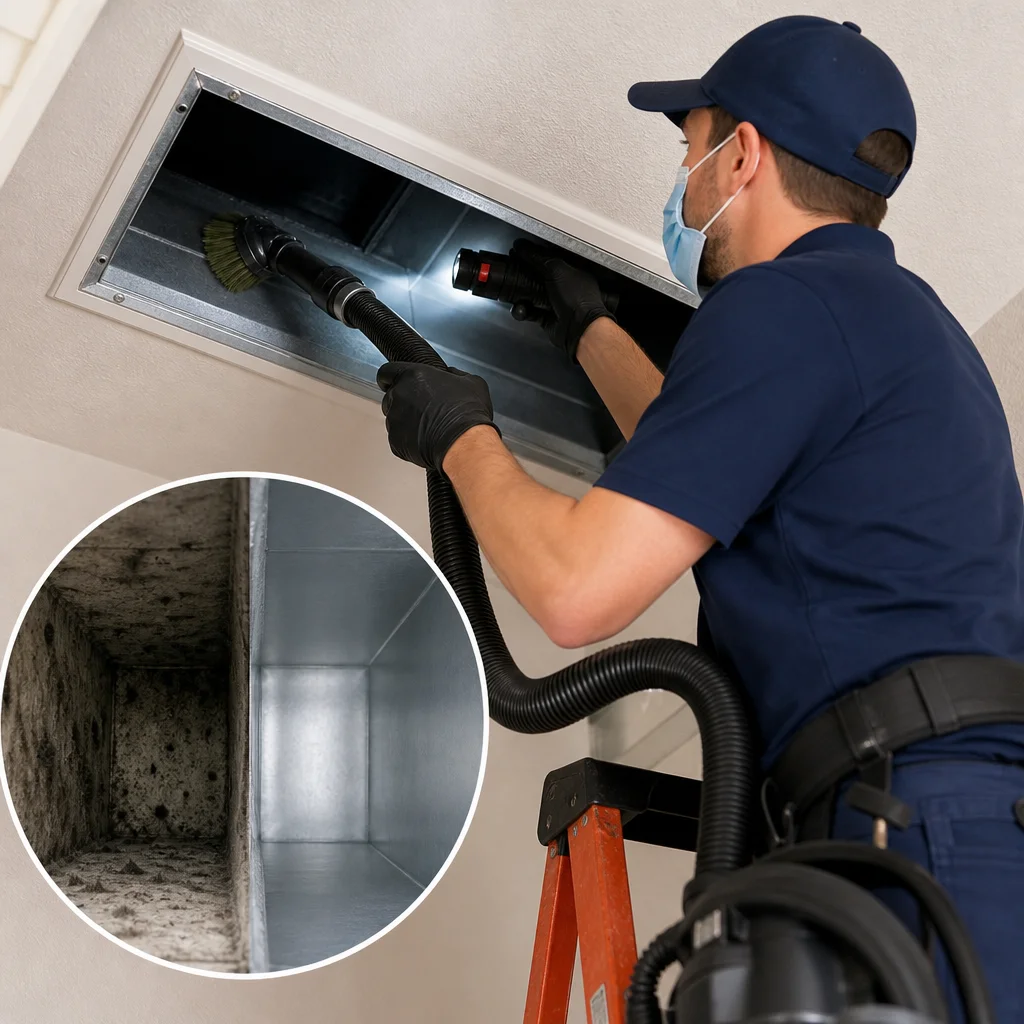
What is known: The EPA does not recommend cleaning except on an as-needed basis. It says to consider cleaning when there is substantial visible mold growth, when ducts are infested with rodents or insects, or when ducts are clogged with excessive amounts of dust and debris or particles are being released into the home from the registers.
If none of those apply, cleaning may be unnecessary. An inspection can tell you where you stand.
Myth 4: Duct Cleaning Always Lowers Your Energy Bill
What is known: Results vary. A system that is heavily contaminated with debris can have restricted airflow, and clearing it may help. But for most homes, bills are affected more by leaks, insulation, equipment condition, and the weather. ENERGY STAR notes that in a typical house, about 20 to 30 percent of the air moving through the duct system is lost to leaks, holes, and poorly connected ducts. Sealing leaks often does more for efficiency than cleaning does.
Myth 5: All Duct Cleaning Companies Do the Same Work
What is known: Quality varies a great deal. The EPA warns that if a service provider does not follow proper procedures, duct cleaning can cause indoor air problems. For example, an inadequate vacuum collection system can release more dust and dirt than if the ducts had been left alone, and a careless provider can damage ducts or heating and cooling equipment.
Ask how the provider contains debris, what parts of the system they clean, and whether they will show you before-and-after photos.
Myth 6: A Very Cheap Whole-House Special Is a Bargain
What is known: A thorough cleaning takes time, equipment, and access to the entire system. An extremely low advertised price is a reason to ask what is included, such as whether returns, the blower, and the main trunk lines are covered, and whether there will be add-on charges. Compare scope as well as price.
Myth 7: Seeing Mold Means the Ducts Must Be Cleaned
What is known: The EPA points out that a substance that looks like mold may not be mold, and that a positive determination can only be made by an expert and may require laboratory analysis. It also advises asking a provider to show you any mold they say exists. If the conditions that caused the mold are not corrected, it can return. Insulation that gets wet or moldy cannot be cleaned effectively and should be replaced.
Myth 8: You Can Do the Whole Job With a Shop Vacuum
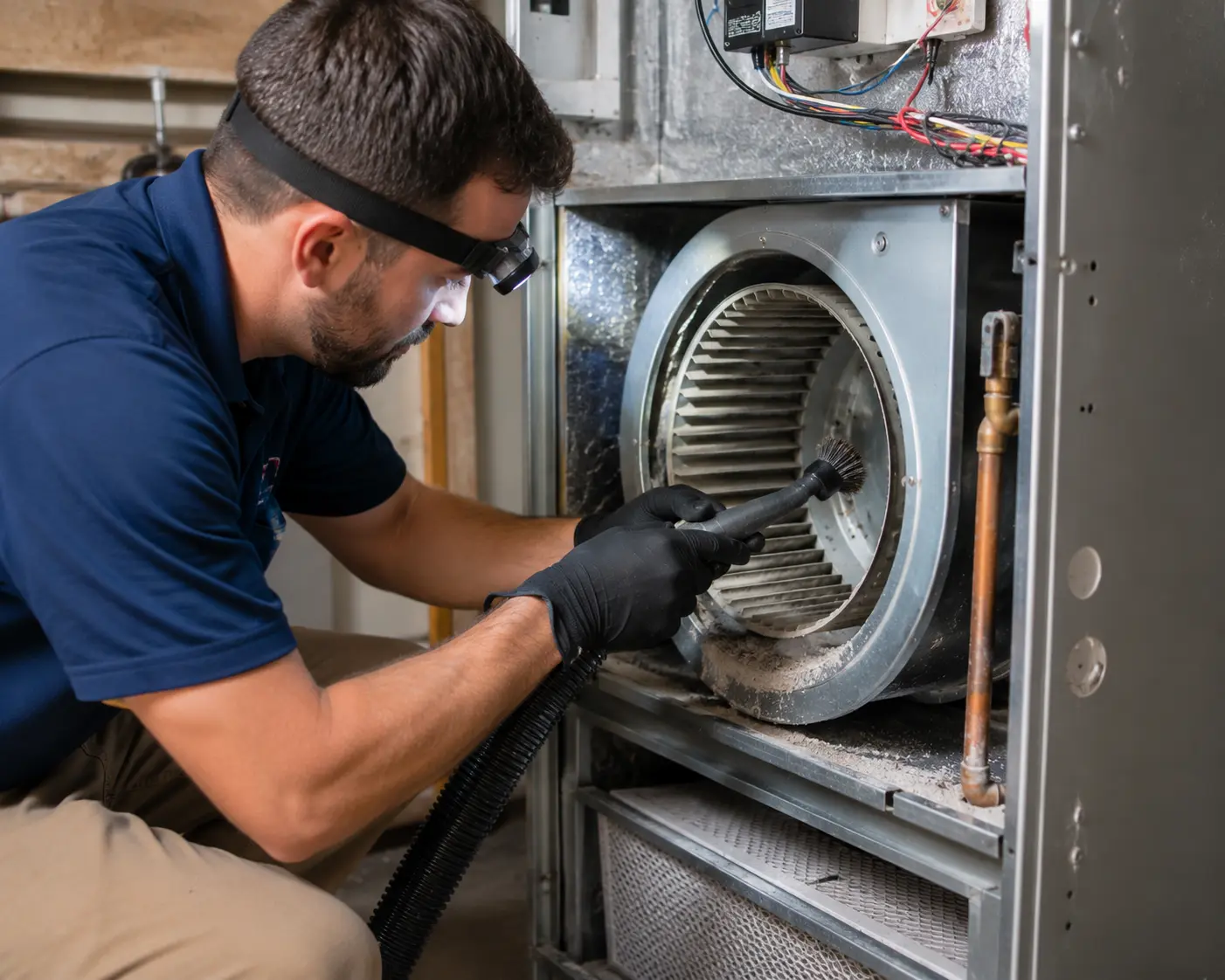
What is known: You can vacuum registers and the parts of the ducts you can reach, but a full cleaning requires equipment that agitates the duct surfaces and captures debris under negative pressure. Using the wrong tools can damage flexible ducts.
Myth 9: Cleaning Fixes Leaky or Damaged Ducts
What is known: Cleaning removes debris. It does not repair gaps, crushed sections, or disconnected ducts. If dust returns quickly, leaks may be pulling dirty air into the system. Our guide on why dust returns so fast after duct cleaning covers that problem.
When Duct Cleaning Does Make Sense
Cleaning is a good idea when:
- There is substantial visible mold growth on hard duct surfaces or system components
- Rodents or insects have infested the ducts
- Ducts are clogged with excessive dust or debris, or dust is blowing out of the registers
- You have finished a major renovation or construction project that sent dust into the system
What a Good Provider Does
- Inspects the system before quoting the job
- Explains what will be cleaned and how debris is contained
- Uses negative-pressure collection equipment
- Cleans registers, returns, ducts, and the blower area
- Shows you evidence of the condition before and after
- Does not promise health results
Frequently Asked Questions
Is duct cleaning ever harmful?
Done properly, the EPA says no evidence suggests that cleaning is detrimental. Done poorly, it can release dust and damage equipment.
How do I know if my ducts need cleaning?
Look for visible mold, signs of pests, or heavy dust and debris coming from the registers. An inspection can confirm what is inside.
Should I clean my ducts or seal them first?
If the ducts leak, sealing may do more to reduce dust and improve efficiency. A technician can test for leaks and tell you which comes first.
Can I trust a free inspection?
It can be a fair way to see the condition of your system. Be cautious of anyone who pushes cleaning without showing you the problem.
Get Straight Answers
Go Air Ducts can inspect your system and tell you whether cleaning, sealing, or neither makes sense. Learn more about air duct inspection, air duct cleaning, and duct sealing, or contact us to schedule service in Austin, San Antonio, and nearby Texas communities.