
🕑 12 min read
What is an air duct mold inspection in Austin?
A duct mold inspection uses cameras and testing to find hidden mold and moisture inside your HVAC system before it spreads. Catching it early protects health and prevents costly remediation. Go Air Ducts performs thorough air duct mold inspections in Austin so you know exactly what is in your ductwork.
Table of Contents
- Why Mold in Air Ducts Is a Hidden Health Risk for Austin Homeowners
- Signs Your Austin Home May Have Mold Growing Inside Air Ducts
- How Professional Mold Inspection Protects Your Family’s Health
- Our Comprehensive Air Duct Mold Inspection Process
- Mold Remediation and Duct Cleaning Solutions We Provide
- Energy Efficiency and Indoor Air Quality After Treatment
- Why Choose Go Air Ducts for Your Mold Inspection Needs
- Preventing Future Mold Growth in Your HVAC System
- Schedule Your Free Air Duct Mold Inspection Today
- Frequently Asked Questions (FAQ)
Why Mold in Air Ducts Is a Hidden Health Risk for Austin Homeowners
Austin’s humid climate creates the perfect breeding ground for mold inside your home’s air ducts. Many homeowners don’t realize that mold thriving in ductwork can circulate through your entire home every time your HVAC system runs, affecting air quality and health without any visible signs. At Go Air Ducts, we’ve inspected thousands of Austin homes and found that mold in air ducts is far more common than most people expect, especially in properties with older HVAC systems or homes that have experienced water damage.
This guide walks you through what mold in air ducts means for your family, how to spot warning signs, and what a professional inspection and remediation process looks like. Understanding these risks empowers you to take action before small problems become expensive health and property issues.
Mold spores circulate silently through your ductwork whenever your heating or cooling system operates. Unlike mold on a bathroom ceiling, duct mold isn’t visible until it’s already growing inside your system, making it especially dangerous.
Austin’s climate contributes significantly to this risk. High humidity levels, combined with temperature fluctuations and the moisture generated by air conditioning condensation, create an ideal environment for mold to flourish inside ducts. When moisture collects in low-lying sections of ductwork or around HVAC components, mold begins growing within days.
The health impact hits hardest for vulnerable household members:
- Children and elderly family members with developing or weakened immune systems
- Anyone with asthma, allergies, or chronic respiratory conditions
- People with mold sensitivity who experience headaches, sinus issues, or fatigue
Breathing mold spores daily can worsen existing allergies, trigger asthma attacks, and even contribute to respiratory infections. Beyond immediate symptoms, consistent exposure to indoor mold increases the risk of long-term respiratory problems and fungal infections in some individuals.
Many Austin homeowners attribute persistent coughing, congestion, or allergy flare-ups to seasonal factors, not realizing that contaminated ductwork is the actual culprit. Once our team removes the mold source, these symptoms often improve dramatically.
Actionable step: If anyone in your household has experienced worsening allergies or respiratory issues over the past year, schedule a professional air duct inspection to rule out mold as a contributing factor.
Signs Your Austin Home May Have Mold Growing Inside Air Ducts
Mold growing inside air ducts doesn’t announce itself loudly. Instead, it reveals itself through subtle clues that homeowners often overlook.
The most common warning signs include:
- Musty odors from vents: A damp, earthy smell coming from your supply vents is the clearest indicator. This smell intensifies when you first turn on your heating or cooling system after it’s been off.
- Visible discoloration around vent openings: Black, green, or brown spots around registers and vent grilles suggest mold spores are being released into your living spaces.
- Increased dust and debris: Excessive dust settling on furniture or visible debris coming from vents indicates deteriorating duct linings or heavy mold growth breaking apart inside ducts.
- Worsening allergy symptoms indoors: Family members sneezing, congestion, or itchy eyes that worsen indoors (not outdoors) often point to poor indoor air quality from duct contamination.
- Water stains or condensation around ducts: Visible moisture around basement or attic ductwork shows that your HVAC system isn’t properly draining condensation.
- Poor airflow from vents: Restricted airflow can result from mold buildup blocking ducts or causing HVAC components to shut down automatically due to moisture detection.
Austin’s older homes, particularly those built before improved moisture barriers became standard, tend to show these signs earlier. Homes that have experienced water damage, flooding, or roof leaks also face significantly higher mold risk inside ductwork.
Next step: Walk around your home and check all visible vents and registers. Notice any odors or discoloration? That’s your signal to call for a professional inspection before symptoms worsen.

How Professional Mold Inspection Protects Your Family’s Health
A professional air duct inspection goes far beyond what your nose can detect. We use specialized equipment to look inside your ducts where your eyes can’t reach, identifying mold growth before it spreads further.
Our inspection process identifies not just whether mold is present, but where it’s concentrated, how extensive the problem is, and what’s causing it. This information is crucial because mold treatment must address both the contamination and the underlying moisture source, or the problem will return.
We also assess your ductwork’s overall condition, looking for cracks, disconnections, or poor insulation that might be allowing humid air into ducts. Many Austin homes have ductwork running through unconditioned attic spaces where summer temperatures exceed 130 degrees, causing significant condensation inside ducts when cold conditioned air flows through.
Here’s what makes a professional inspection valuable:
- Early detection prevents mold from spreading to other parts of your HVAC system, like the furnace or air handler
- Understanding the root cause (excess humidity, condensation, water intrusion) lets us recommend lasting solutions
- Documentation provides a baseline if you’re concerned about home resale or insurance claims
- Professional assessment helps prioritize spending on mold remediation versus other HVAC improvements
Without professional inspection, homeowners often spend money treating visible mold in one area while missing extensive contamination elsewhere in the system. We’ve found mold concentrated in areas that would be impossible to spot without specialized equipment.
What to do: Request a free estimate that includes a visual and thermal inspection of your ductwork, especially if your home is over 15 years old or has experienced water issues.
Our Comprehensive Air Duct Mold Inspection Process
When we arrive for your inspection, we start by understanding your home’s HVAC history and any symptoms you’ve noticed. This context helps us focus on the most likely problem areas.
Our team uses video inspection equipment to view the interior of your ductwork, capturing real images of any mold growth, dust buildup, or structural damage. We photograph findings so you can see exactly what we’re seeing, not just hear about it.
We also use moisture meters and thermal imaging to identify areas where condensation is likely forming. In Austin’s climate, condensation inside ducts is one of the primary mold triggers, so locating these moisture hotspots is essential for recommending effective solutions.
The inspection includes:
- Visual duct assessment: Video scope inspection of accessible ductwork sections
- Moisture and humidity measurement: Identifying condensation and moisture sources
- Component evaluation: Checking the furnace, air handler, and ductwork connections for signs of contamination
- Air quality assessment: Noting dust levels and debris visible in airflow
- Pressure and airflow testing: Determining if leaks or blockages are limiting system performance
After inspection, we provide a detailed report with our findings and recommendations. If mold is present, we outline air duct mold remediation options specific to your home’s situation.
Your advantage: You’ll have clear, documented evidence of what’s inside your ducts, making it easy to move forward with confidence on whatever solution makes sense for your home.
Mold Remediation and Duct Cleaning Solutions We Provide
Once we’ve identified mold, our remediation approach addresses both the contamination and its cause. One-time cleaning without fixing the underlying moisture problem is a temporary fix that leaves you vulnerable to regrowth.
We combine several strategies based on your specific situation:
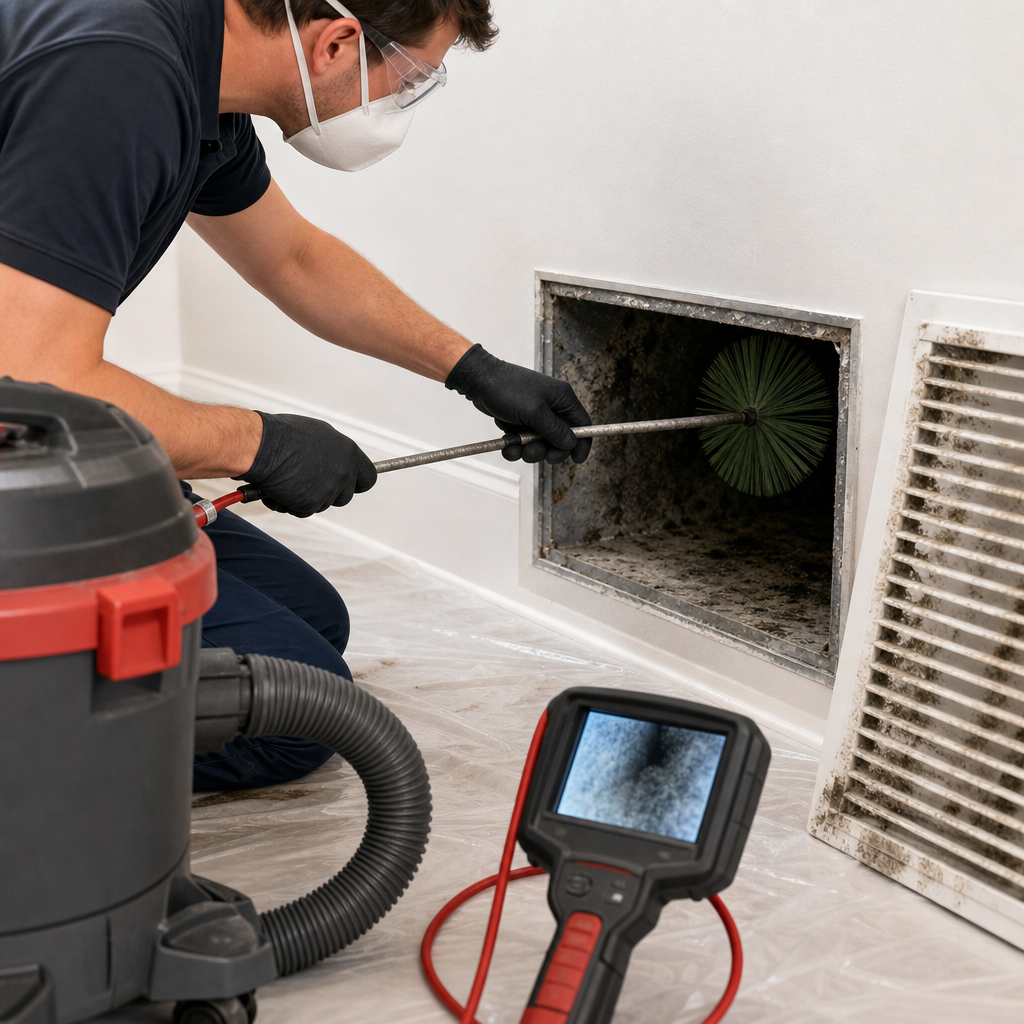
Professional duct cleaning: We use industrial-grade equipment to remove mold spores, dust, and debris from throughout your ductwork. This isn’t a quick vacuum job, it’s a thorough purification that restores airflow and removes the contamination source.
Mold treatment and encapsulation: For active mold growth, we apply EPA-approved treatments that eliminate mold and prevent regrowth. We also seal and encapsulate affected areas to prevent spore dispersal during cleaning.
Moisture control: We address the root cause by improving drainage around your air handler, insulating ducts in unconditioned spaces to prevent condensation, or sealing ductwork leaks that are allowing humid air inside.
HVAC system inspection and sealing: Leaky ducts lose efficiency and allow outside moisture in. We seal connections and gaps to improve performance while reducing humidity inside ducts.
Condensation drain cleaning: Clogged condensation drains are a major source of moisture inside ductwork. We clean and clear these lines so water drains properly instead of pooling inside ducts.
In many Austin homes, we recommend combining duct cleaning with insulation upgrades for ductwork running through attic spaces. This prevents future condensation while also improving energy efficiency.
What happens next: We’ll provide a cost estimate for remediation options, clearly explaining what each step accomplishes and why it’s necessary for your home.
Energy Efficiency and Indoor Air Quality After Treatment
Clean, properly sealed ductwork doesn’t just improve air quality, it reduces your energy bills. Mold-contaminated ducts restrict airflow, forcing your HVAC system to run longer to reach desired temperatures. This constant overwork drives up utility costs by 15-30% in many Austin homes.
After mold remediation, homeowners typically notice:
- Lower monthly heating and cooling costs due to improved system efficiency
- More consistent temperatures throughout the home
- Reduced dust settling on furniture and surfaces
- Noticeable improvement in air quality and reduced allergy symptoms
- Quieter HVAC operation since the system doesn’t have to strain as hard
When we seal leaky ducts and insulate ductwork in unconditioned spaces, the efficiency gains become even more dramatic. A well-maintained, clean HVAC system delivers conditioned air where it’s meant to go instead of losing it to unconditioned areas.
Our comprehensive indoor air quality strategy ensures that remediation leads to lasting improvements in both comfort and efficiency. This is why we don’t just clean ducts; we optimize the entire system.
Measurable benefit: Most Austin homeowners see noticeable energy savings within the first month after completing duct mold remediation and sealing.
Why Choose Go Air Ducts for Your Mold Inspection Needs
We’ve served Austin and San Antonio homeowners for years, building our reputation on thorough inspections, honest assessments, and lasting solutions. Our HVAC technicians are certified professionals trained in mold identification, indoor air quality assessment, and duct system optimization.
What sets us apart:
- Local expertise: We understand Austin’s specific climate challenges and how they contribute to duct mold. We’re not following a national template; we’re applying local knowledge to your home’s unique situation.
- Free estimates: You’ll never pay for an inspection consultation. We provide detailed findings and recommendations at no charge.
- Transparent communication: We explain what we find in clear language, showing you exactly what’s in your ducts and why it matters.
- Comprehensive solutions: Rather than offering just cleaning or just mold treatment, we address root causes so problems don’t return.
- Same-day response: When you’re concerned about mold in your home, waiting weeks isn’t acceptable. We prioritize rapid response for urgent situations.

Austin homeowners trust us because we’ve consistently delivered results. When families with mold-related health concerns schedule inspections, they’re making a decision to protect their households with professional expertise and proper equipment.
Preventing Future Mold Growth in Your HVAC System
Once you’ve addressed existing mold, preventing regrowth involves managing the moisture that fuels it.
Practical prevention steps include:
- Maintain your AC drain line: Have your condensation drain cleaned annually before cooling season starts. A clogged drain is one of the fastest ways mold returns.
- Monitor humidity levels: Keep indoor relative humidity below 50%. If your home consistently runs above 60% humidity, consider installing a whole-home dehumidifier.
- Ensure proper ductwork insulation: Ducts running through attic spaces should be insulated with at least R-8 insulation to prevent condensation.
- Fix water leaks promptly: Any roof, plumbing, or foundation leak can introduce moisture into ductwork. Address these immediately.
- Schedule annual HVAC maintenance: Professional maintenance catches condensation buildup, clogged drains, and early mold growth before they become problems.
- Improve attic ventilation: Adequate attic airflow reduces humidity in spaces where ductwork runs, reducing condensation inside ducts.
For Austin homes, we specifically recommend having condensation drains flushed before each cooling season. The Texas heat drives significant condensation, making proactive drain maintenance critical.
Maintenance plan: Contact us about annual HVAC inspections and air duct cleaning schedules that keep your system mold-free year-round.
Schedule Your Free Air Duct Mold Inspection Today
If you’ve noticed musty odors from vents, visible discoloration around registers, or worsening allergy symptoms, don’t wait for the problem to get worse. Mold inside air ducts doesn’t improve on its own, and every month of exposure puts your family’s health at risk.
Contact Go Air Ducts today for a free professional inspection of your ductwork. We’ll identify any mold present, explain what’s causing it, and outline remediation options tailored to your Austin home. With our certified technicians and transparent approach, you’ll have clarity on your HVAC system’s condition and a clear plan for restoring healthy indoor air quality.
Call us now or request an estimate online. We’re ready to help you breathe easier in your home.
If you’re dealing with dust, poor airflow, mold in your ducts, or a clogged dryer vent — don’t wait. These issues can affect your health and safety. Go Air Ducts Group are the local experts in air duct cleaning, mold removal, dryer vent cleaning, and attic insulation. Call now for a free inspection and same-day service in Austin and San Antonio.
Frequently Asked Questions (FAQ)
How do we detect mold in air ducts if I can’t see it?
We use specialized equipment including borescopes and moisture detection tools to inspect inside your ductwork where mold often hides. Our certified technicians access different sections of your system to identify mold growth, moisture problems, and contamination that’s invisible to the naked eye. If we find mold, we document it clearly so you understand exactly what we’re addressing.
What happens after we clean mold from my air ducts?
We don’t just remove the mold and leave you with the same conditions that created it in the first place. We apply antimicrobial treatments where needed, seal any duct leaks that trapped moisture, and often recommend insulation upgrades to prevent condensation. Many of our Austin customers also improve their system’s performance and energy efficiency once we complete the full remediation process.
How quickly can we schedule your mold inspection?
We offer free estimates and work to accommodate your schedule within days, not weeks. Our local Austin team understands that mold concerns need prompt attention, especially if you’re experiencing allergy symptoms or noticing musty odors. Contact us directly to book your inspection and get answers about what’s happening inside your HVAC system.