
🕑 9 min read
How do you remediate air duct mold in Austin?
Effective remediation locates the moisture source, contains the area, removes mold with HEPA equipment, disinfects, and prevents regrowth. Go Air Ducts provides professional air duct mold remediation in Austin, removing mold at the source and adding prevention steps so your home's air stays clean and healthy long-term.
Table of Contents
- How Mold Grows Inside Your Austin Home's Air Ducts
- Signs Your Air Ducts Need Professional Mold Remediation
- Why DIY Mold Removal Fails to Solve the Problem
- Our Comprehensive Mold Remediation Process
- Advanced Techniques We Use to Eliminate Mold
- Preventing Future Mold Growth in Your Ductwork
- How Mold Remediation Improves Your Home's Air Quality
- Why Austin Homeowners Trust Our HVAC Experts
- What to Expect During Your Free Service Estimate
- Protecting Your Family's Health and Your Investment
- Frequently Asked Questions (FAQ)
How Mold Grows Inside Your Austin Home’s Air Ducts
Mold in your air ducts isn’t just a cosmetic problem, it’s a health and comfort issue that spreads contamination throughout your entire home every time your HVAC system runs. Many Austin homeowners don’t realize they have mold growing in their ductwork until someone in the family develops unexplained respiratory issues or a musty smell becomes impossible to ignore. We’ve been removing mold from air ducts across Austin and San Antonio for years, and we know how quickly this problem escalates when left untreated.
The good news is that professional mold remediation stops the contamination at its source. Unlike surface cleaning or temporary fixes, our approach eliminates mold completely and addresses the conditions that allowed it to grow in the first place.
Mold thrives in dark, moist environments, and your air ducts check every box. Austin’s humidity levels, especially during spring and summer, create ideal breeding conditions inside ductwork where moisture accumulates and air circulation is limited.
Moisture enters your ducts through several routes. Condensation builds up when cool air from your AC encounters warm ductwork in unconditioned spaces like attics or crawl spaces. Leaks in return ducts pull humid air directly into the system. If your dryer vent or bathroom exhaust vents into attic spaces instead of outside, that moisture-laden air seeps into nearby ducts. Even small plumbing leaks above the ductwork create puddles that support mold colonies.
Once moisture settles, mold spores floating through your home find a perfect landing spot. They feed on dust, pet dander, and skin cells that naturally accumulate in ducts over time. Within days, colonies establish themselves. Within weeks, you’re distributing mold spores into every room your HVAC system serves.
Temperature fluctuations in unconditioned attics accelerate this process. The cooler your AC runs and the hotter your attic gets, the more condensation forms on metal ductwork.
Signs Your Air Ducts Need Professional Mold Remediation
A musty or moldy smell when your HVAC system turns on is the clearest warning sign. This odor indicates active mold colonies releasing spores into your living spaces. If the smell is strongest near certain vents or rooms, that’s where mold concentration is highest.
Watch for these additional indicators:
- Visible black, green, or white growth around vent registers or inside visible ductwork
- Increased allergy or asthma symptoms that worsen when the system runs
- Respiratory issues that appeared recently without other obvious causes
- Discolored or stained duct tape and insulation
- Condensation or dampness visible on return air vents
- Allergic reactions that improve when you leave home and return when you arrive
Many homeowners attribute these symptoms to seasonal allergies when the real culprit is mold in their ductwork. We recommend scheduling an inspection if you notice any combination of these signs, especially if you’ve had any water damage, high humidity events, or previous HVAC issues.
Why DIY Mold Removal Fails to Solve the Problem
The internet suggests spray bottles, vinegar, and bleach can kill mold, but these approaches fail in air ducts for one critical reason: you can’t reach or treat the mold that’s already established deep inside your ductwork. Surface spray treatments only kill visible growth on accessible surfaces, leaving colonies thriving in bends, junctions, and the insulation wrap itself.
Professional air duct cleaning vs DIY approaches reveal another issue: improper duct access can damage the system, spread contamination further, or leave holes that invite more moisture infiltration.
Over-the-counter mold killers also fail to address the moisture source. Kill the mold today, and it returns in two weeks if humidity and condensation aren’t fixed. You’ll be treating the symptom repeatedly instead of solving the underlying problem.
Without professional containment, DIY treatments release mold spores throughout your home during application. You’re essentially spreading the contamination you’re trying to eliminate.
Our Comprehensive Mold Remediation Process
We start with a complete inspection using visual assessment and moisture monitoring equipment to identify mold locations and the moisture sources feeding them. This step is critical because hidden mold behind insulation won’t show up during a casual look.
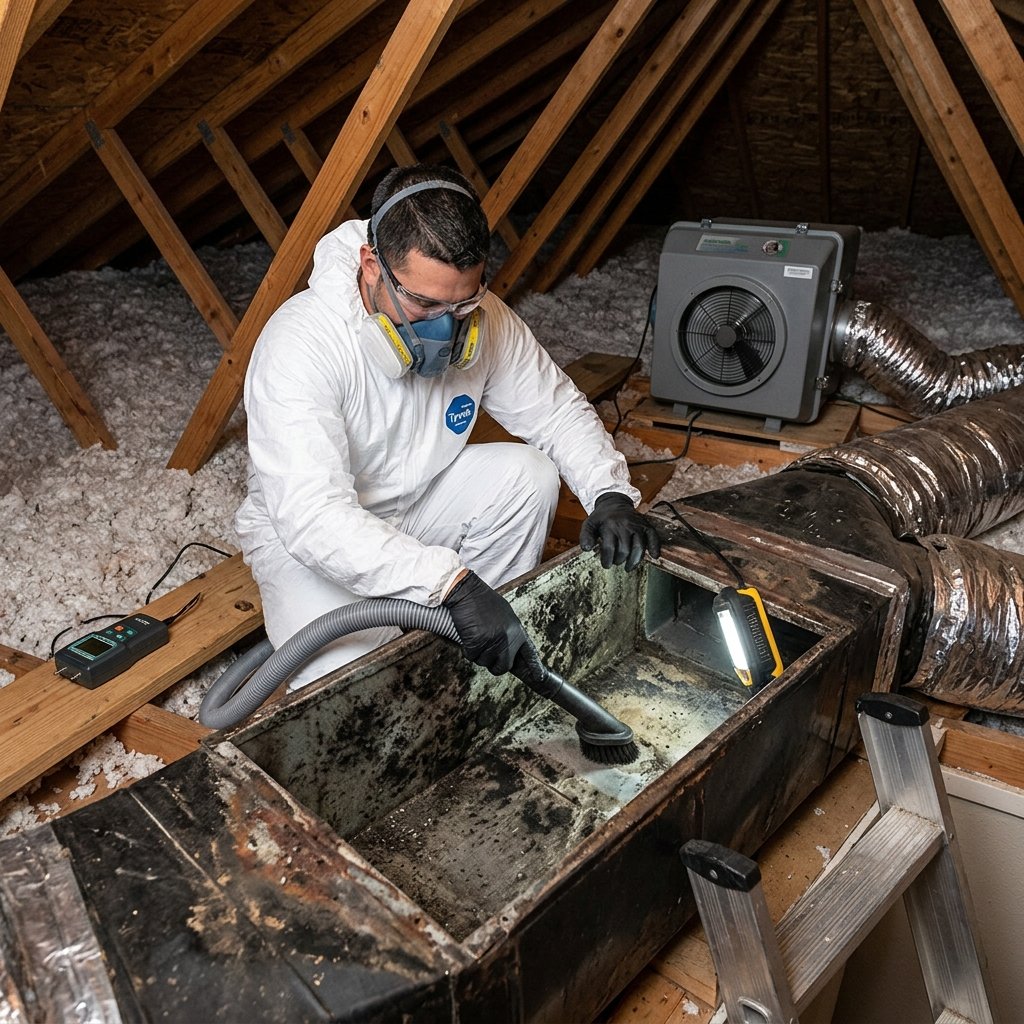
Once we understand the full scope, we contain the affected area and seal off return air vents to prevent spore distribution during treatment. Our technicians use professional-grade equipment to safely remove mold from interior duct surfaces, insulation, and components.
After removal, we address the moisture problem directly. This might include sealing duct leaks, improving attic ventilation, installing vapor barriers, or redirecting dryer and exhaust vents to eliminate ongoing humidity sources. Without this step, your investment in mold removal won’t last.
Finally, we apply protective treatments where appropriate and schedule a follow-up inspection to confirm complete removal and verify that conditions no longer support mold growth.
Advanced Techniques We Use to Eliminate Mold
Our technicians employ tools and methods that DIY approaches cannot match. We use negative air pressure equipment that safely extracts contaminated air while preventing spore escape into living spaces. High-powered vacuum systems with HEPA filtration capture mold spores rather than blowing them through your home.
For deeper contamination, we use combination methods including manual scrubbing of accessible duct surfaces, antimicrobial treatments applied by licensed technicians, and UV-light technology that disrupts mold reproduction in treated areas.
Moisture barrier treatments create an environment where mold cannot re-establish. We don’t just kill existing mold, we make your ducts inhospitable to future growth.
Every treatment is followed by post-remediation testing to confirm mold levels have returned to normal. You receive documentation proving the problem is solved.
Preventing Future Mold Growth in Your Ductwork
The foundation of prevention is controlling humidity. Austin homeowners should maintain indoor humidity between 30 and 50 percent. In summer, your AC naturally dehumidifies, but make sure your system is properly sized and your thermostat is set appropriately. In winter or shoulder seasons, a whole-home humidifier prevents humidity from dropping too low while maintaining safe moisture levels.
Ensure all exhaust sources vent directly outside. Bathroom fans, kitchen hoods, and dryer vents must terminate through exterior walls or rooflines, never into attics or crawl spaces. This single change eliminates a major moisture source for many Austin homes.
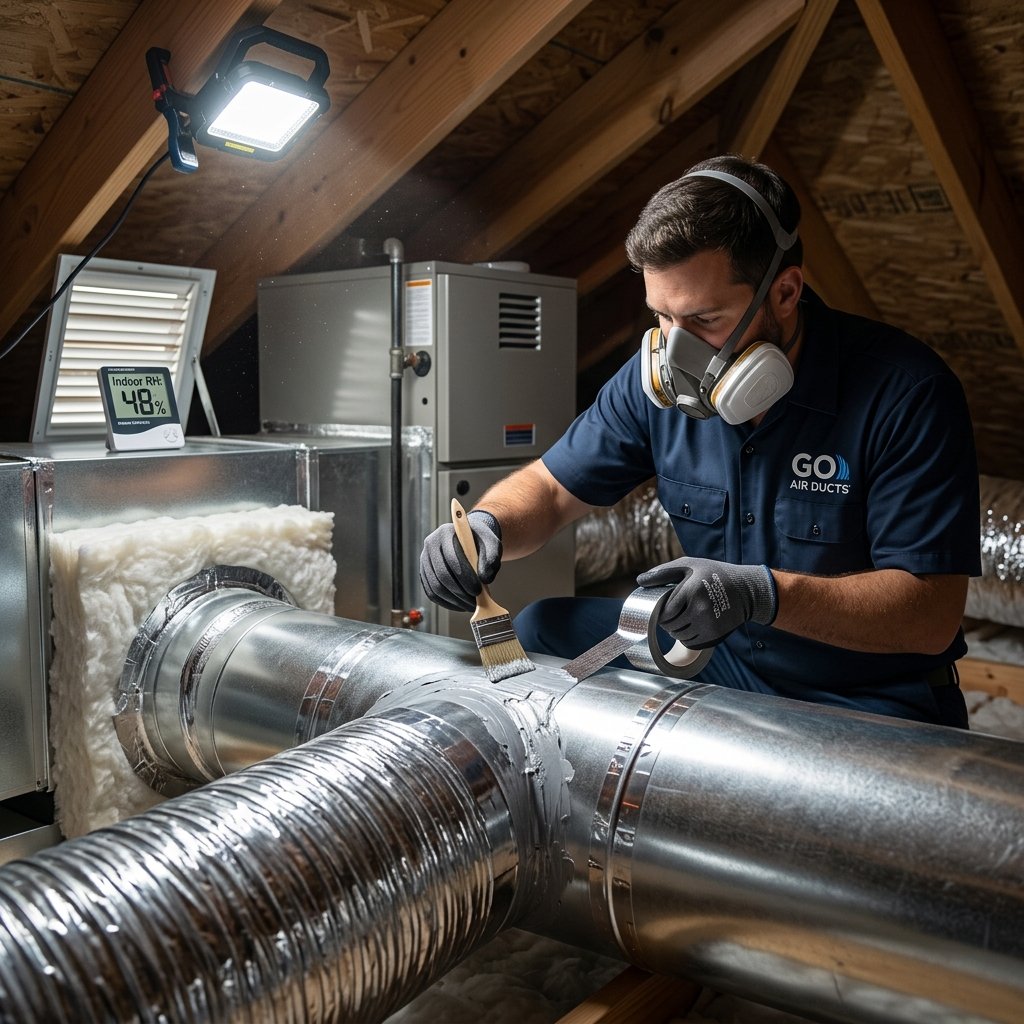
Duct sealing prevents return air from pulling moisture-laden air through leaks. We use mastic sealant and reinforced tape to seal seams and connections, stopping humidity at the source.
Schedule annual HVAC maintenance to catch condensation issues early. Our inspections identify moisture problems before mold colonies establish themselves.
How Mold Remediation Improves Your Home’s Air Quality
Removing mold directly reduces the spore count circulating through your home with every breath. Understanding air quality and its connection to clean ducts shows that homeowners report noticeable improvement in allergy symptoms, asthma control, and general respiratory comfort within days of professional remediation.
Your HVAC system also operates more efficiently. Mold growth and moisture reduce airflow and force your system to work harder, driving up energy bills. Remediation restores proper airflow and efficiency.
The musty smell disappears completely, improving comfort and making your home more pleasant for family and guests. Many homeowners tell us they didn’t realize how bad the smell had become until it was gone.
Why Austin Homeowners Trust Our HVAC Experts
We’re local HVAC specialists who understand Austin’s specific climate challenges. Our humidity and temperature patterns create mold risk that differs from other regions. We’ve treated thousands of Austin and San Antonio homes and built our reputation on genuine expertise, not shortcuts.
All our technicians are certified and hold current EPA and HVAC licenses. We follow industry standards and use only proven methods and products. Your home receives the same rigorous approach we’d use on our own families’ properties.
We provide free estimates so you understand exactly what’s involved before any work begins. Transparent pricing and honest assessments guide every recommendation we make.
What to Expect During Your Free Service Estimate
When you contact us, we schedule a time that works with your schedule and arrive ready to inspect your system thoroughly. Your technician conducts a complete walkthrough, examines visible ductwork, checks for moisture sources, and explains findings in plain language.
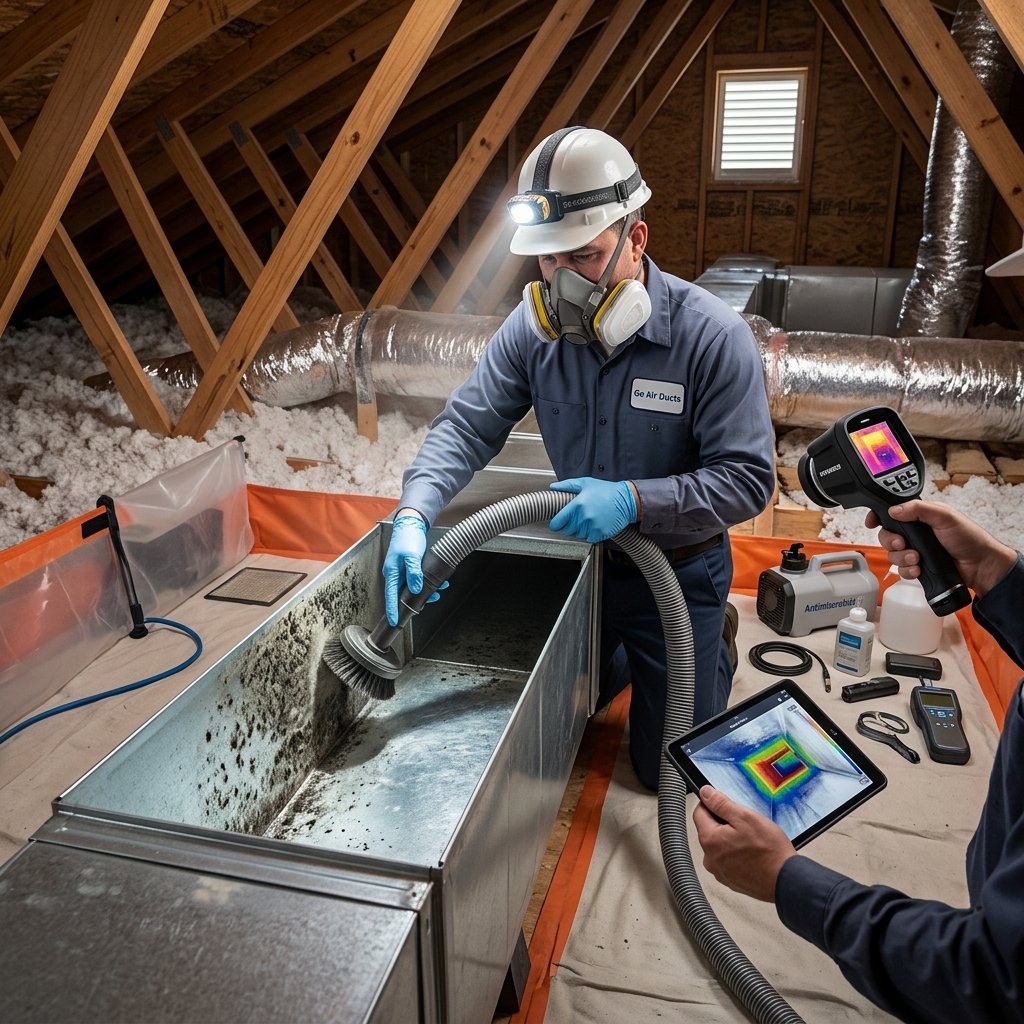
We assess whether mold is present, where it’s located, what’s causing moisture accumulation, and what remediation will actually solve your problem. If you don’t have mold, we tell you that. If you do, we explain your options and pricing.
You’ll receive a written estimate detailing every step, the timeline, and the expected outcome. No surprises, no hidden fees.
Protecting Your Family’s Health and Your Investment
Mold remediation protects two critical assets: your family’s health and your home’s structural integrity. Active mold in your ductwork exposes everyone in your home to spores daily. For families with asthma, allergies, or compromised immune systems, professional remediation isn’t optional, it’s necessary.
Your investment in remediation also protects your home’s value. Undisclosed mold problems become serious liability during home sales. Addressing the problem now prevents future complications and gives you peace of mind.
Take action today by scheduling your free inspection. Call us or visit our website to book a convenient time. Our Austin and San Antonio teams respond quickly, and same-day service is often available. We’re ready to eliminate mold from your air ducts and restore healthy indoor air quality to your home.
For further reading: Mold in ducts.
If you’re dealing with dust, poor airflow, mold in your ducts, or a clogged dryer vent — don’t wait. These issues can affect your health and safety. Go Air Ducts Group are the local experts in air duct cleaning, mold removal, dryer vent cleaning, and attic insulation. Call now for a free inspection and same-day service in Austin and San Antonio.
Frequently Asked Questions (FAQ)
How quickly can we schedule a mold remediation service in Austin?
We typically schedule free estimates within 2-3 business days of your call, and we prioritize urgent mold situations with same-week service appointments. Once we assess your air ducts and confirm mold presence, we can begin our remediation process promptly to protect your home’s air quality and prevent further contamination spread through your HVAC system.
What makes professional mold removal better than cleaning the ducts ourselves?
We use specialized equipment, antimicrobial treatments, and advanced inspection technology that identify hidden mold colonies DIY approaches miss. Our certified technicians also address the root cause of mold growth, such as moisture control and ductwork sealing, ensuring the problem doesn’t return after our work is complete.
Will mold remediation require us to replace our entire HVAC system?
In most cases, we can successfully remediate mold without full system replacement through our comprehensive cleaning and treatment process. We only recommend component replacement if ducts are severely damaged, which we’ll discuss honestly during your free estimate so you understand all your options upfront.