
🕑 13 min read
How does duct cleaning remove Texas pollen and dander?
Texas pollen and pet dander settle in ductwork and recirculate every time the HVAC runs, worsening allergies. Professional cleaning with HEPA collection removes these particles at the source. Go Air Ducts uses proven duct cleaning methods to clear pollen and dander from Texas homes for noticeably cleaner air.
Table of Contents
- Why Texas Pollen and Dander Damage Your Air Ducts
- How Contaminated Ducts Affect Your Home's Air Quality
- Professional Air Duct Cleaning Methods We Use
- Why DIY Air Duct Cleaning Falls Short
- Our Certified Technician Process for Maximum Pollen Removal
- Additional Services That Improve Your Indoor Air Quality
- Signs Your Air Ducts Need Professional Cleaning Now
- How Clean Ducts Save You Money on Energy Bills
- What Sets Our Air Duct Cleaning Apart
- Schedule Your Free Air Duct Inspection Today
- Frequently Asked Questions (FAQ)
Why Texas Pollen and Dander Damage Your Air Ducts
Texas pollen season can turn any home’s HVAC system into a dust trap. Between cedar fever in winter, tree pollen in spring, and grass allergens in summer, our air ducts work overtime filtering what comes through your walls. The problem is that standard air filters catch only a fraction of these particles. Everything else accumulates inside your ductwork, creating layers of buildup that no filter alone can remove.
We’ve been cleaning air ducts across Austin and San Antonio for years, and we see the same pattern repeatedly: homeowners don’t realize how contaminated their ducts are until allergies spike or their HVAC system starts struggling. That’s when most reach out to us. By then, their ducts have become a breeding ground for dust, pollen, pet dander, and moisture that fuels mold growth.
The good news is that professional air duct cleaning methods exist specifically to handle Texas’s unique air quality challenges. Understanding what actually works, and why DIY approaches fall short, helps you make an informed decision about your family’s health and your home’s efficiency.
Texas pollen counts rank among the highest in the nation. Cedar pollen spikes in December and January, reaching levels that trigger allergies for millions. Follow that with oak, elm, and pecan pollen in spring, then grass and weed pollen through summer and early fall. Your HVAC system essentially acts as a vacuum cleaner for all of it.
Here’s what happens physically inside your ducts: pollen grains, dust mites, pet dander, and skin cells travel through the air stream and lodge in the ductwork. Unlike a simple surface you can wipe down, ductwork has ridges, bends, and dead zones where particles settle and compact. Over time, this buildup creates a thick residue that restricts airflow. Some of it becomes sticky when it encounters humidity or condensation, adhering permanently to the duct interior.
Pet dander presents its own challenge. If you have dogs or cats, their shed skin cells end up in your ducts constantly. Dander is far smaller than pollen and penetrates deeper into the system. Combined with dust and moisture, it becomes an ideal environment for dust mites and their allergens to flourish.
Moisture amplifies all of this. In San Antonio and Austin’s humid climate, condensation builds inside ducts, especially those in unconditioned spaces like attics. That moisture binds particles together and creates conditions for mold and mildew to grow. Once mold establishes itself in your ductwork, no simple filter change will stop it from spreading spores throughout your home every time your HVAC runs.
The takeaway: Texas’s pollen volume, combined with our humidity and pet ownership, means your ducts accumulate contaminants far faster than homeowners typically realize.
How Contaminated Ducts Affect Your Home’s Air Quality
The air you breathe indoors cycles through your ducts multiple times daily. If those ducts are clogged with pollen, dander, and mold spores, you’re essentially recycling contaminated air.
Most people notice this as persistent allergy symptoms that don’t improve despite taking medication. Sneezing, itchy eyes, and congestion that worsens indoors is a red flag. Some describe a stale or musty smell when the HVAC kicks on, which often signals mold growth inside the ductwork.
Children and seniors tend to feel the effects first because their immune systems are more vulnerable. Pets also suffer, often exhibiting more coughing or lethargy in homes with contaminated ducts.
Beyond allergies, contaminated ducts reduce your HVAC system’s ability to move air efficiently. Dust buildup acts like an invisible filter that gets progressively more restrictive. Your system has to work harder to push air through, which raises your utility bills and accelerates wear on the equipment.
The professional ductwork inspection and cleaning guide we provide helps homeowners understand exactly what’s happening inside their system. Many are shocked when they see photos of the contamination we pull out.
Professional Air Duct Cleaning Methods We Use
We deploy several methods depending on your duct configuration and contamination level. Each has distinct advantages, and the best choice depends on your specific situation.
Negative pressure vacuuming is our primary method for most residential systems. We connect a large-capacity truck-mounted vacuum to your duct system, creating negative pressure that pulls debris toward the collection unit. We then use rotary brush tools and air whips to dislodge stubborn buildup as the vacuum extracts it. This method reaches deep into ductwork and removes compacted material that surface cleaning misses.
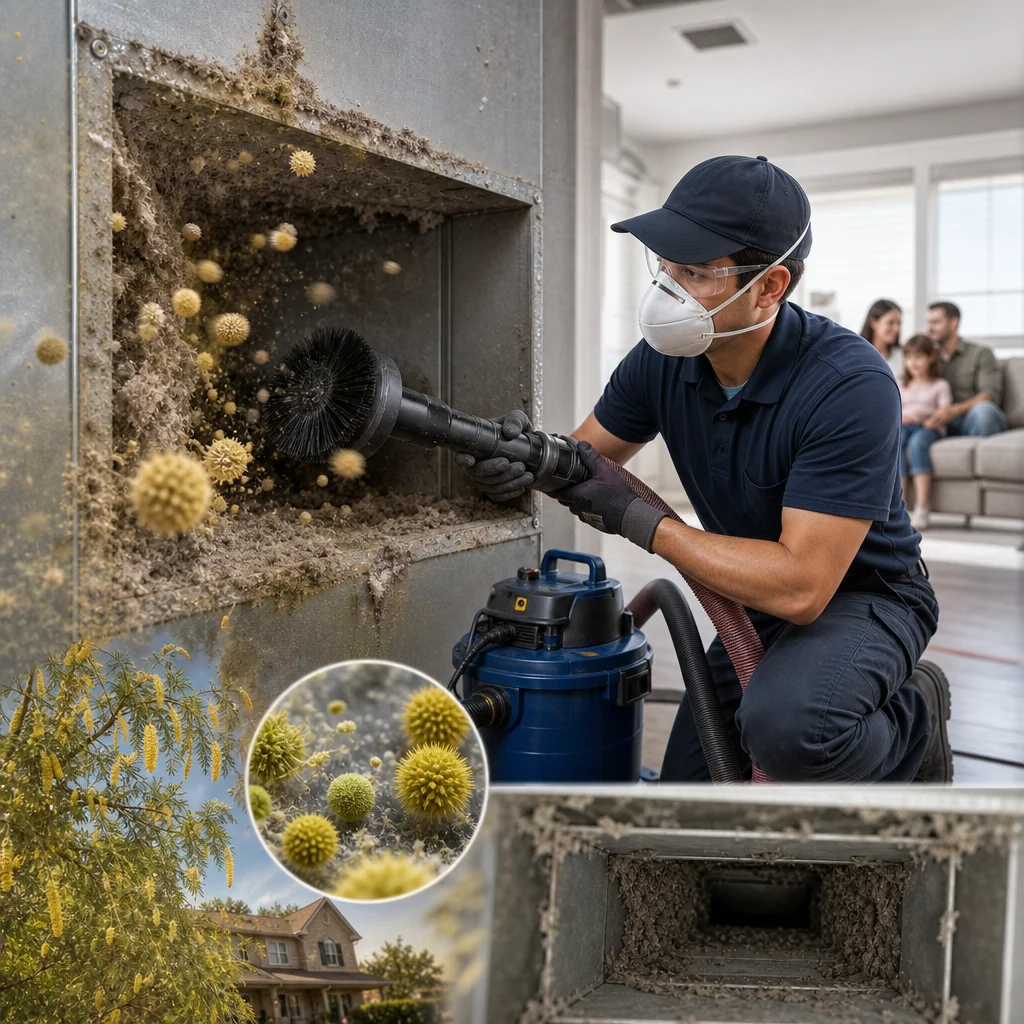
Compressed air and agitation works well for lighter buildup. We use compressed air jets to loosen particles while simultaneously vacuuming them away. This method is particularly effective for pollen that hasn’t yet adhered to duct surfaces.
HEPA filtration capture ensures that dislodged contaminants don’t re-enter your home during cleaning. Our truck-mounted units contain HEPA filters that trap 99.97% of particles before exhaust air is released outside.
Antimicrobial treatment follows cleaning when mold or bacteria is present. We apply EPA-approved products to duct surfaces to inhibit microbial growth and prevent rapid re-colonization.
The method we recommend depends on your duct material, system design, and contamination findings from an initial inspection. For ductwork that’s extremely dusty or moldy, we often combine negative pressure vacuuming with rotary brushes for maximum effectiveness.
Why DIY Air Duct Cleaning Falls Short
Homeowners sometimes try DIY duct cleaning using consumer-grade vacuum systems, brush attachments, or compressed air canisters. While the intention is good, these approaches have fundamental limitations.
Standard household vacuums lack sufficient suction to extract deeply embedded debris. They’re designed for carpets and floors, not the enclosed pressure environment of ductwork. Any particles they do capture often re-enter your home through the exhaust, spreading the contamination rather than removing it.
Brush kits sold online work on ducts close to registers but can’t reach the main trunk lines where most buildup accumulates. You’d need to access your ductwork from multiple points, which most homeowners can’t do safely without cutting access holes.
The biggest risk with DIY approaches is incomplete cleaning that leaves behind the exact particles causing problems. Pollen and dander you can’t see or reach remain in the system, continuing to circulate through your home. You invest time and money but don’t solve the underlying issue.
There’s also the safety factor. Working inside or around ductwork, especially in attics, involves risks of falls, exposure to mold spores, and potential system damage. Our technicians have the training, equipment, and protective gear to handle these safely.
Professional air duct cleaning delivers measurably better results because we have access to equipment that homeowners don’t: truck-mounted systems with industrial-grade vacuums, specialized tools designed for ductwork geometry, and HEPA filtration that captures the finest particles.
Our Certified Technician Process for Maximum Pollen Removal
Our process follows a structured approach that ensures complete contamination removal and protects your home during the service.
Step 1: System inspection. We visually assess your ductwork layout and contamination level. We may use camera inspection for hard-to-reach sections to identify mold, significant blockages, or damage that affects the cleaning approach.
Step 2: Access point preparation. We strategically create or use existing access points throughout your system. This allows our vacuum and cleaning tools to reach all duct sections, including main trunks, branches, and returns.
Step 3: Negative pressure activation. We connect our truck-mounted vacuum to your system, creating consistent negative pressure. This is the foundation of the entire cleaning process, providing continuous extraction of dislodged debris.
Step 4: Mechanical agitation. Technicians move through your ducts with rotary brushes and air whips, systematically loosening compacted material. The negative pressure simultaneously captures everything that’s dislodged.
Step 5: Supply and return verification. We pay special attention to supply ducts that carry conditioned air to living spaces and return ducts that pull air back to the unit. These are where pollen concentration is highest.
Step 6: Equipment cleaning. After ductwork is clean, we inspect and clean your return air filter box and blower components to ensure nothing is immediately re-contaminated.
Step 7: Antimicrobial treatment (if needed). If mold is present, we apply EPA-approved treatment to duct interiors to prevent regrowth over the next 12 months.
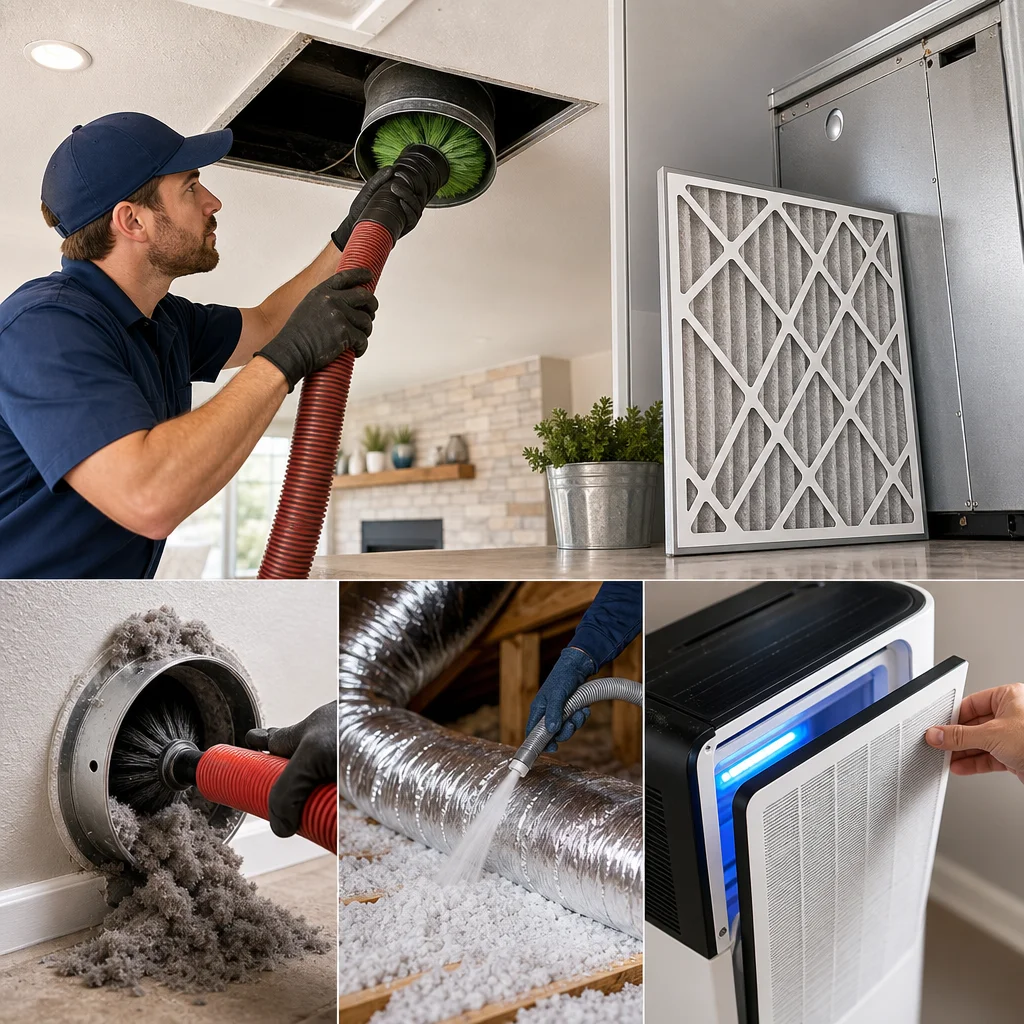
Most residential systems in Austin and San Antonio take 3-4 hours for complete cleaning. We protect your flooring and furniture throughout the process, and we dispose of all captured debris off-site.
Additional Services That Improve Your Indoor Air Quality
Air duct cleaning is the foundation, but it works best alongside complementary services that address other air quality sources.
Dryer vent cleaning removes lint buildup that reduces dryer efficiency and poses a serious fire hazard. Lint gets pulled into your HVAC return if your dryer vents into your ductwork, adding another contamination source.
Chimney inspection and cleaning prevents ash, creosote, and debris from entering your home when fireplaces or wood stoves are used. These contaminants travel into your air space and can cycle through ducts.
Energy-efficient insulation upgrades reduce air leaks that pull unconditioned outdoor air and pollen into your system. Better insulation means your HVAC doesn’t have to work as hard filtering incoming air.
HVAC maintenance ensures filters are changed regularly and your system operates at peak efficiency. We can set up quarterly filter replacements so you’re not resorting to months-old, clogged filters.
When combined, these services create a complete indoor air quality strategy. You’re not just cleaning ducts; you’re addressing the sources of contamination and improving your system’s overall performance.
Signs Your Air Ducts Need Professional Cleaning Now
Several warning signs indicate your ducts have accumulated enough contamination to warrant professional cleaning.
Visible dust around registers. If dust builds up around air vents within days of wiping them clean, your ducts are likely heavily contaminated. This dust is being blown directly from your ductwork into living spaces.
Musty or stale odors. A persistent smell when your HVAC cycles on usually signals mold or mildew inside the ducts. This is a sign that moisture and organic material have reached levels that support microbial growth.
Increased allergy symptoms indoors. If your allergies worsen inside your home or symptoms appear only when your HVAC is running, contaminated ducts are often the culprit.
Reduced airflow from vents. Blocked or heavily contaminated ducts restrict air movement. If some rooms feel stuffy or certain vents produce noticeably less airflow than others, debris is likely obstructing those sections.
Rising utility bills. Your HVAC working harder to push air through clogged ducts increases energy consumption. If bills jump without a corresponding change in usage patterns or weather, duct cleaning often reverses the increase.
Recent water damage or visible mold. Any history of leaking ducts, roof leaks, or mold growth means your system likely needs immediate professional inspection and cleaning to prevent or address contamination.
If you recognize any of these signs in your home, schedule an inspection. We provide free estimates for all Austin and San Antonio properties.
How Clean Ducts Save You Money on Energy Bills
The connection between dirty ducts and high energy bills is direct and significant. When your HVAC system has to push air through restrictive ductwork clogged with debris, it consumes substantially more electricity.
A typical Texas home with moderately contaminated ducts can see 15-25% energy waste just from reduced airflow efficiency. Your system cycles longer to reach thermostat setpoints, compressors work harder, and blower motors run at higher speeds more frequently.
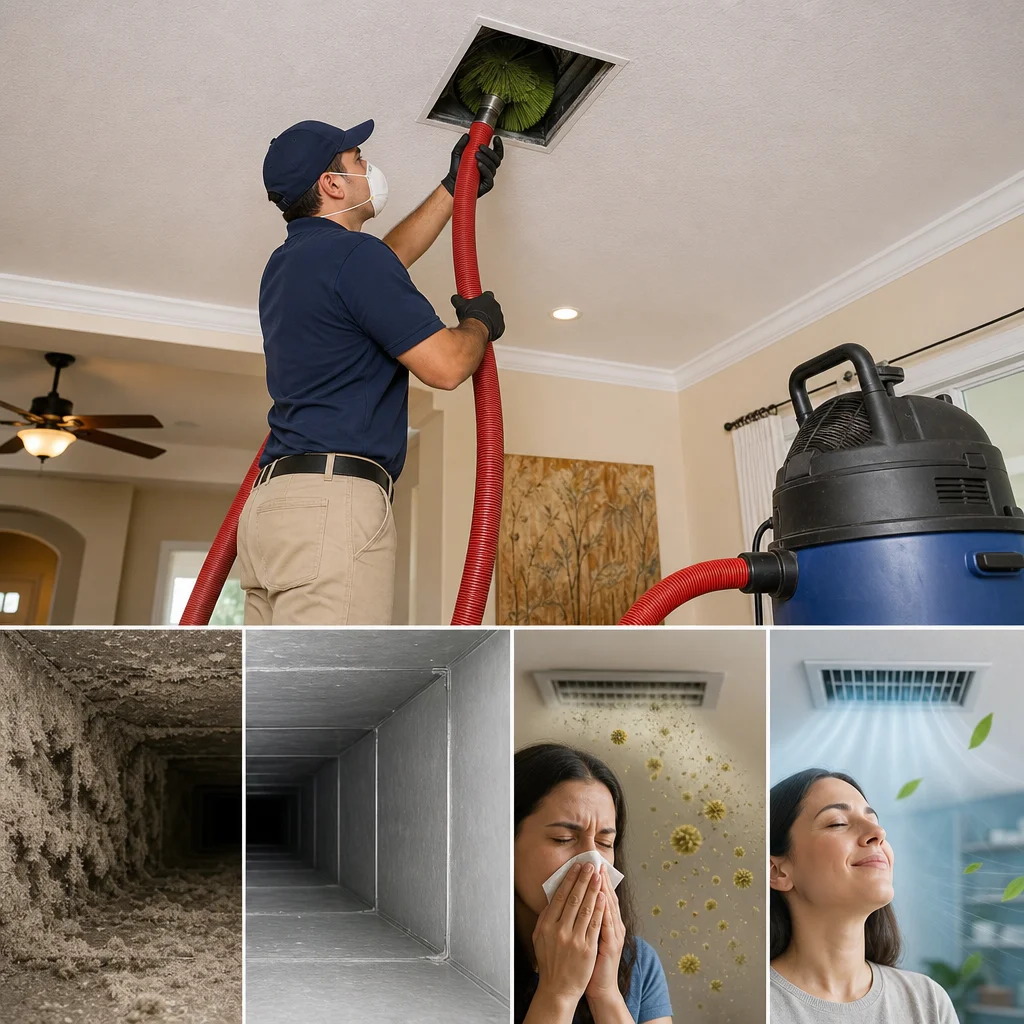
We’ve documented cases where homeowners saw measurable energy bill reductions within their first month after professional duct cleaning. Duct sealing and cleaning can reduce energy consumption by up to 25% when combined with addressing leaks and gaps.
The payoff timeline varies, but most homeowners recover their cleaning investment within 6-12 months through lower utility costs. After that, the savings continue indefinitely as your system operates more efficiently. Combine duct cleaning with regular filter maintenance, and you’re protecting both your comfort and your wallet.
What Sets Our Air Duct Cleaning Apart
We bring hands-on experience, certified expertise, and locally tuned service to every job. Our technicians are trained specifically in the air duct cleaning methods that work best in Texas’s climate and home construction patterns.
We use truck-mounted equipment with commercial-grade vacuum systems, not portable machines that plug into outlets. This provides the suction and volume needed to thoroughly clean large residential systems in reasonable timeframes.
Every technician carries certifications from NADCA (National Air Duct Cleaners Association), ensuring they follow industry standards for safety, effectiveness, and professionalism. We carry liability insurance and stand behind our work with guarantees.
Our service area covers Dallas, Houston, Austin, and San Antonio, with same-day or next-day availability in most cases. We provide free estimates, transparent pricing, and detailed explanations of what we find and why we recommend specific services.
We also customize our approach based on your specific situation. A home with cats needs different attention than one with active mold concerns. A recently built house requires different assessment than a 40-year-old home. We tailor our recommendations accordingly rather than applying a one-size-fits-all approach.
Schedule Your Free Air Duct Inspection Today
The first step toward cleaner air and lower energy bills is a professional assessment of your ductwork. We’ll tell you exactly what we find, explain what’s normal versus concerning, and provide a clear estimate if cleaning is recommended.
Contact us today to schedule your free inspection. Most homeowners in Austin and San Antonio can be assessed within 24-48 hours. We’ll answer your questions, review our findings in detail, and help you make the best decision for your home’s air quality and efficiency.
Your family deserves healthy indoor air. Let us help you achieve it.
If you’re dealing with dust, poor airflow, mold in your ducts, or a clogged dryer vent — don’t wait. These issues can affect your health and safety. Go Air Ducts Group are the local experts in air duct cleaning, mold removal, dryer vent cleaning, and attic insulation. Call now for a free inspection and same-day service in Austin and San Antonio.
Frequently Asked Questions (FAQ)
How often should we have our air ducts professionally cleaned?
We recommend professional air duct cleaning every 3 to 5 years for most Texas homes, though this can vary based on factors like pets, allergies, and local pollen levels. If you notice visible dust buildup around vents, experience worsening allergy symptoms, or see reduced airflow, we suggest scheduling a cleaning sooner. Our free inspection helps us determine the right timeline for your specific situation.
What makes professional air duct cleaning better than doing it ourselves?
We use specialized equipment like high-powered vacuums and rotary brushes that reach deep into your ductwork where pollen and dander accumulate, which standard household tools cannot access. Our certified technicians are trained to identify mold, contamination, and structural issues that DIY attempts often miss. Improper cleaning can actually damage ducts or spread particles throughout your home, so our professional approach protects both your system and your indoor air quality.
Will cleaning our air ducts really lower our energy bills?
Yes, we’ve seen meaningful savings for our customers because clean ducts allow your HVAC system to operate more efficiently without working against blockages. When pollen and debris restrict airflow, your system runs longer to maintain your desired temperature, which increases energy consumption. By removing these obstacles, we help your system run as it was designed to, reducing strain and lowering your monthly utility costs.