
🕑 11 min read
Is blown-in fiberglass insulation good for Austin homes?
Blown-in fiberglass insulation fills attic gaps to block Texas heat, lower cooling costs, and improve comfort, while resisting moisture and settling. It is a strong, cost-effective choice for Austin's climate. Go Air Ducts installs blown-in fiberglass insulation in Austin homes for lasting energy savings and steadier, more comfortable indoor temperatures year-round.
Table of Contents
- Why Austin Homeowners Need Better Insulation Today
- How Blown-In Fiberglass Works and Why It Matters
- Energy Savings You Can Expect From Upgrading
- Improved Indoor Air Quality and Comfort Benefits
- Our Professional Installation Process at Go Air Ducts
- Why DIY Insulation Falls Short of Professional Results
- How Blown-In Fiberglass Pairs With Air Duct Cleaning
- Comparing Insulation Options for Austin Homes
- Investment and Timeline for Your Insulation Project
- Getting Your Free Insulation Estimate From Us Today
- Frequently Asked Questions (FAQ)
Why Austin Homeowners Need Better Insulation Today
Austin’s heat is relentless. From May through September, temperatures regularly exceed 95 degrees, and many homes sit under direct afternoon sun that transforms attics into ovens. Poor insulation forces your air conditioning system to work overtime, driving up energy bills and shortening equipment lifespan. We’ve seen homes in South Austin and North Austin alike where inadequate insulation costs homeowners an extra $100 to $200 monthly in cooling costs.
Beyond energy waste, thin or settling insulation creates comfort problems. Hot spots in bedrooms, uneven temperatures between floors, and humidity buildup are signs that your insulation isn’t doing its job. Austin’s moisture-heavy climate means poor insulation also increases risk of mold growth in attics and walls—a serious health concern for families with allergies or respiratory sensitivities.
Modern blown-in fiberglass insulation addresses both problems at once. It fills gaps that traditional batts miss, maintains its R-value over time, and creates a more consistent thermal barrier across your entire home. For mid to high-value homes in Austin, upgrading insulation often delivers ROI within five to seven years through energy savings alone.
Action Step: Schedule a free attic inspection with us to assess your current insulation depth and identify thermal weak spots in your home.
How Blown-In Fiberglass Works and Why It Matters
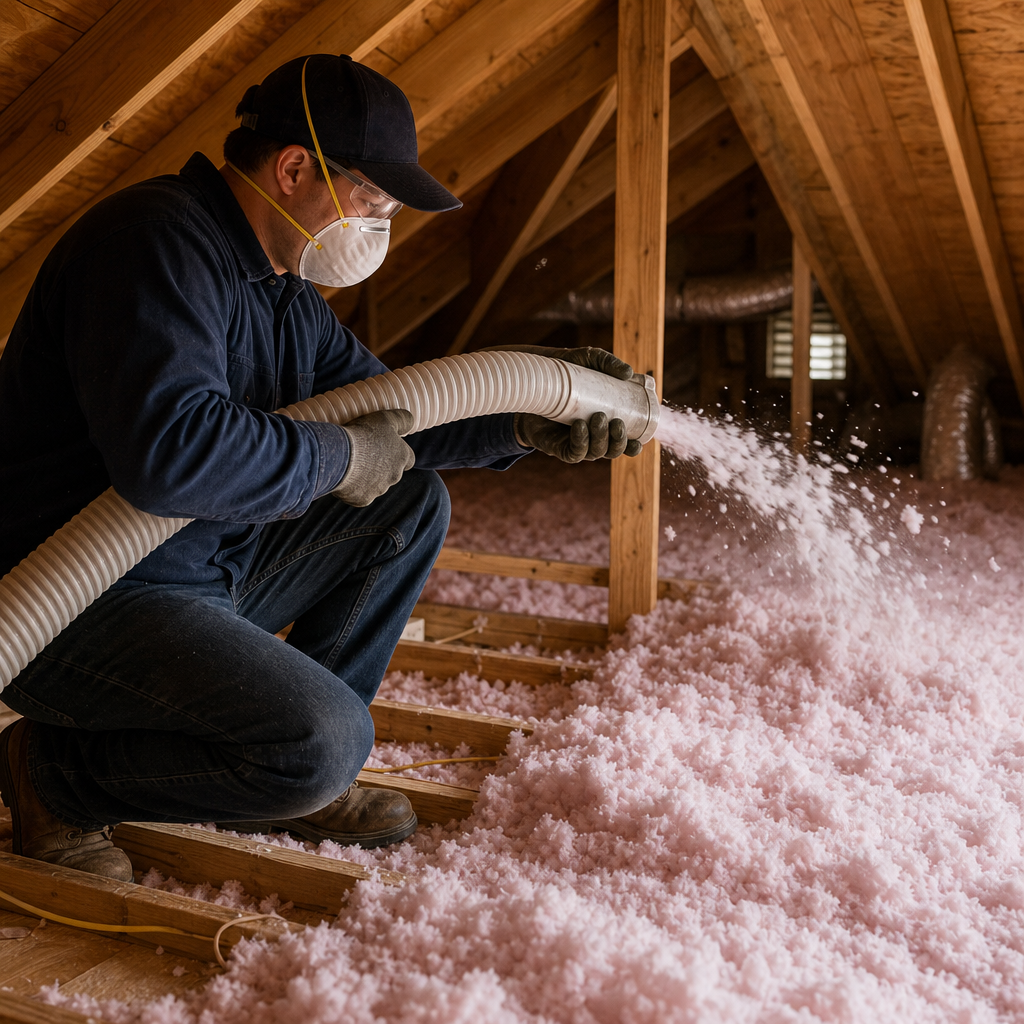
Blown-in fiberglass insulation consists of loose fiberglass fibers that we apply using specialized equipment that pneumatically distributes material into your attic space. Unlike batts (the rolled insulation you see in older homes), blown-in material conforms to irregular framing, electrical wiring, and ducting without leaving air gaps. Every corner and crevice gets filled, which is why it delivers superior thermal performance.
The fiberglass itself is made from recycled glass content, making it both durable and environmentally responsible. When properly installed to the right depth—typically R-38 to R-49 for Austin’s climate zone—blown-in fiberglass maintains its insulating properties for 20+ years without significant settling.
Key advantages include:
- Fills gaps and cavities that batts cannot reach
- Works around existing attic obstacles (ducts, wiring, vents) without compromising coverage
- More cost-effective than rigid foam or spray foam for large attic areas
- Non-toxic and safe for families and pets once installed and settled
- Improves both summer cooling and winter heating efficiency
We select fiberglass specifically because it performs reliably in Texas heat and humidity, resists mold growth when properly installed, and allows your attic to breathe while preventing air leakage that costs you money.
Energy Savings You Can Expect From Upgrading
Real energy savings depend on your current insulation level, home size, and cooling/heating habits. However, we consistently see homeowners reduce their HVAC energy consumption by 15% to 25% after upgrading to blown-in fiberglass at proper depth.
For a typical 2,000-square-foot home in Austin, that translates to $150 to $400 annual savings on cooling costs alone. Over 10 years, that’s $1,500 to $4,000 in recovered energy expense. Homes with existing insulation at R-19 or lower (common in Austin houses built before 2000) see savings at the higher end of that range.
During summer, improved insulation reduces peak cooling loads, which means your AC runs fewer hours and experiences less wear. During the rare cold snaps in January and February, better insulation also keeps conditioned heat inside longer, lowering heating costs.
Keep in mind that insulation works best as part of a complete efficiency strategy. Air leaks around ducts, light fixtures, and attic access doors undermine insulation benefits. That’s why we often recommend pairing insulation upgrades with professional air duct sealing and cleaning, which prevents conditioned air loss and maintains system efficiency.
Action Step: Calculate your potential savings by noting your current monthly summer energy bill and asking us how much improvement you might expect with your home’s specific square footage and layout.
Improved Indoor Air Quality and Comfort Benefits
Better insulation does more than save money. It stabilizes indoor temperatures and reduces humidity fluctuations, both critical for comfort and indoor air quality in Austin’s hot, humid climate.
Proper attic insulation prevents hot air from seeping into living spaces through ceiling leaks, which reduces dust and allergen circulation. Homes with sagging or missing insulation experience constant micro-convection currents that pull dusty attic air downward, aggravating allergies and asthma. Our customers consistently report fewer allergy symptoms and better sleep quality after upgrading insulation, especially those in older homes with significant thermal gaps.
Humidity control is equally important. When attics stay cooler due to better insulation, moisture condensation decreases, which lowers mold growth risk. We’ve prevented costly mold remediation projects simply by raising R-values and eliminating the temperature differential that causes attic moisture problems.
The comfort improvement is immediate. Bedrooms stay consistently cooler during hot months, hot water pipes don’t lose as much heat in winter, and your HVAC system cycles less frequently, reducing noise and vibration throughout the home.
Our Professional Installation Process at Go Air Ducts
We follow a methodical approach to ensure your blown-in fiberglass installation delivers maximum performance and longevity.
Step 1: Free Inspection and Assessment
We visit your home and measure existing insulation depth across multiple attic areas. We identify air leaks, check for moisture or mold issues, and evaluate attic ventilation. This determines how much material we need and whether any preparatory work (such as sealing air gaps) should happen first.
Step 2: Preparation
Before blowing insulation, we seal major air leaks around recessed lights, electrical penetrations, and ductwork. We also ensure soffit vents remain clear so your attic can breathe properly. Poor attic ventilation with new insulation can trap moisture, so this step prevents that risk.
Step 3: Professional Installation
We use commercial-grade pneumatic equipment to apply fiberglass to your target R-value. Our technicians monitor depth as they work, ensuring consistent coverage and preventing over-packing, which can compress fibers and reduce effectiveness. We protect HVAC equipment, electrical components, and existing insulation during the process.
Step 4: Final Verification
We inspect coverage, check that soffit vents remain open, and confirm proper installation around obstacles. We photograph completed work so you have documentation for future reference and insurance purposes.
The entire process typically takes one to two days for an average home. We clean up thoroughly, remove protective coverings, and leave your attic ready to perform.
Why DIY Insulation Falls Short of Professional Results
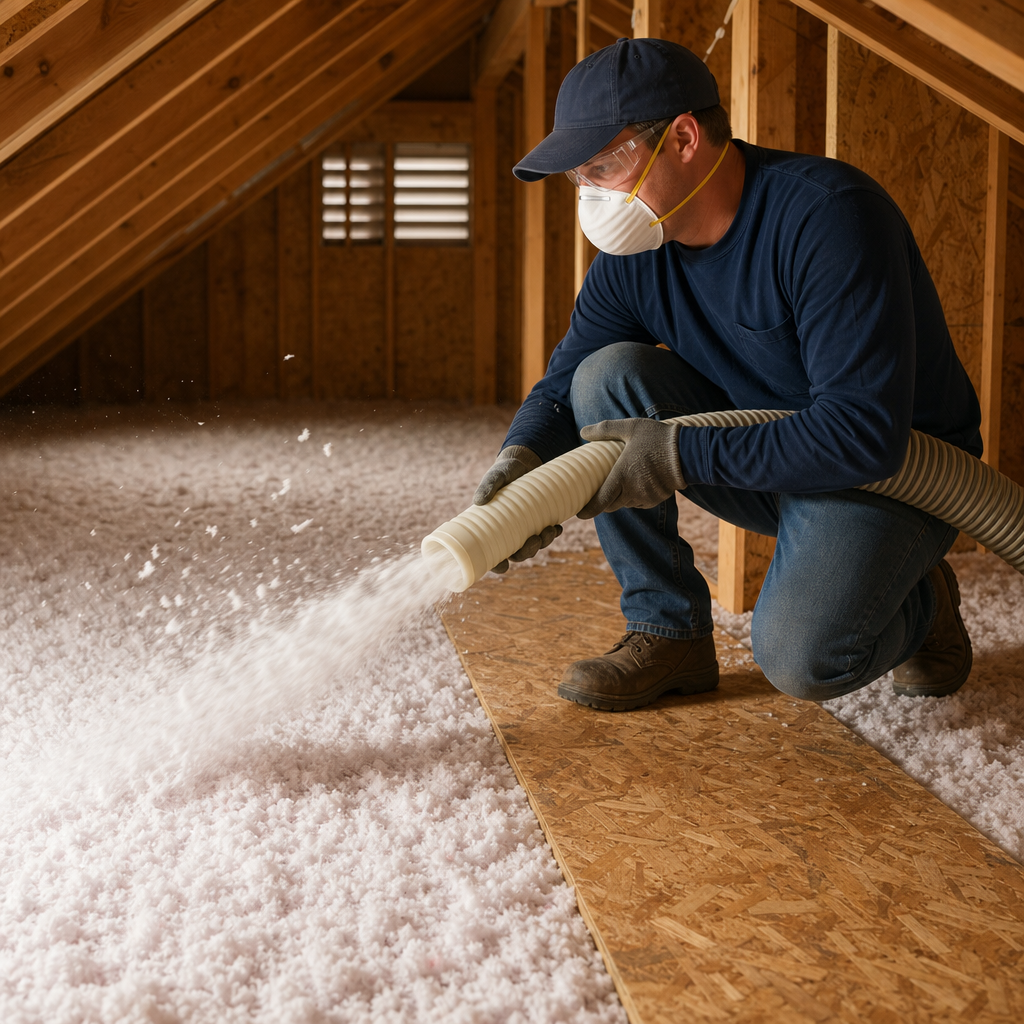
We understand the temptation to rent a blower and handle insulation yourself. However, DIY installation consistently underperforms in ways that cost you money.
Common DIY problems we see:
- Uneven depth distribution, leaving some areas under-insulated
- Air gaps around attic obstacles and penetrations due to lack of technique
- Over-packing material in accessible areas while under-insulating corners and edges
- Failure to seal air leaks before blowing, reducing overall effectiveness by 10% to 20%
- Safety risks, including falls from attic joists and inhalation of fiberglass particles without proper respiratory protection
- Incomplete ventilation protection, leading to moisture and mold issues months later
Professional installation ensures consistent R-value across your entire attic, which translates to predictable energy savings. We also carry liability insurance and warranty our work, protecting your investment. When you factor in equipment rental, material costs, and the time investment, hiring professionals typically costs only slightly more than DIY—and delivers results that actually save you money.
How Blown-In Fiberglass Pairs With Air Duct Cleaning
Insulation and air duct cleanliness work together to optimize your HVAC system’s efficiency and your home’s indoor air quality.
New insulation reduces heat gain through your attic, which means your ductwork carries slightly cooler air and experiences less thermal stress. However, if your ducts contain years of dust, mold spores, and debris, that cleaner air is still being circulated through contaminated pathways. The combination of poor air quality and good insulation defeats the purpose.
We recommend scheduling professional air duct cleaning as part of your overall HVAC optimization. Clean ducts paired with new insulation maximize energy savings and deliver the cleanest possible indoor air. Many of our Austin and San Antonio clients bundle both services, which also simplifies scheduling and often reduces overall cost.
Our indoor air quality strategy explains how these services reinforce each other and create measurable improvements in comfort and efficiency.
Comparing Insulation Options for Austin Homes
Blown-in fiberglass isn’t your only option. Here’s how the main alternatives compare for Austin homes:
Batts (Rolled Insulation)
Cost-effective upfront but leaves gaps around framing, wiring, and ducts. Settling occurs over time, reducing R-value. Labor-intensive to install correctly and difficult to reach tight spaces. Best for new construction, not retrofits.
Spray Foam (Closed-Cell)
Excellent air-sealing properties and highest R-value per inch. However, significantly more expensive than fiberglass. Overkill for attic insulation in most Austin homes. Better suited to rim joists and foundation crawl spaces.
Cellulose (Blown-In)
Made from recycled paper, cellulose is eco-friendly and slightly higher R-value per inch than fiberglass. However, it’s denser, weighs more, and requires stronger attic framing. It’s also more prone to settling in Texas humidity. Generally costs 20% to 30% more than fiberglass.
Blown-In Fiberglass
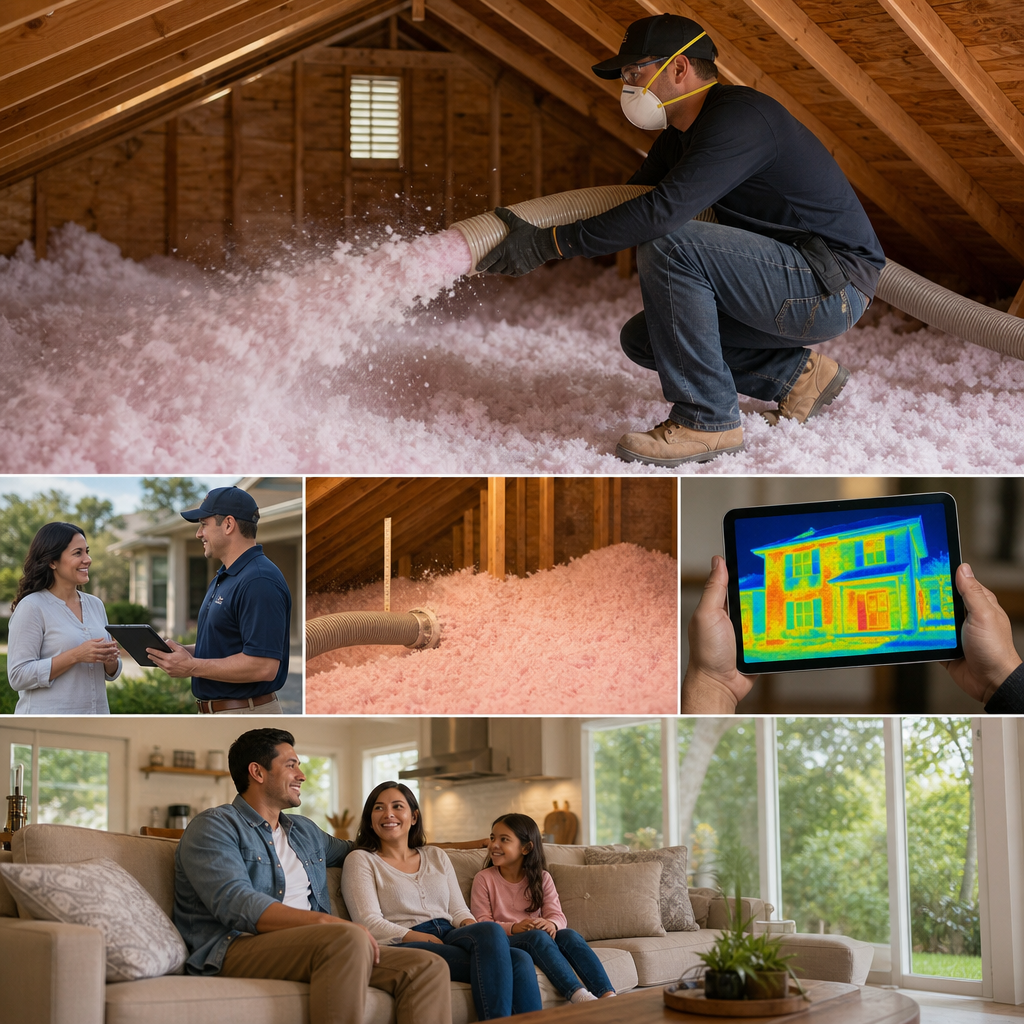
Best balance of cost, performance, and long-term reliability for Austin attic insulation. Maintains R-value, fills gaps effectively, and resists humidity-related settling. Widely available from multiple suppliers, ensuring competitive pricing and easy future additions if needed.
For most Austin homes, blown-in fiberglass delivers the strongest return on investment while meeting modern energy codes and comfort standards.
Investment and Timeline for Your Insulation Project
Blown-in fiberglass typically costs $1.00 to $1.50 per square foot of attic space, depending on your current insulation level and required depth. For a 1,500-square-foot attic upgrading from R-19 to R-49, expect an investment between $1,500 and $2,250.
Timeline is quick. Most projects complete in a single day. You don’t need to vacate your home, and HVAC systems remain operational throughout (we protect ductwork and equipment). You’ll notice temperature improvements and lower energy bills within the first full billing cycle after installation.
Many homeowners recoup their investment through energy savings within five to seven years. After that, every year of reduced cooling costs is essentially free savings. Combined with potential tax credits for energy-efficient home improvements (varying by year and filing status), your actual net cost is often lower than the initial quote.
Getting Your Free Insulation Estimate From Us Today
We serve Austin, San Antonio, Dallas, and Houston with the same professional standard and local expertise. Scheduling your free insulation estimate takes five minutes.
Simply call us or visit our website to request an appointment. We’ll visit your home at a time that works for you, inspect your attic, answer questions about your specific situation, and provide a transparent, detailed estimate with no obligation. We explain expected energy savings, timeline, and next steps so you can make a confident decision.
Our certified HVAC technicians bring genuine experience with Austin’s climate, building challenges, and homeowner priorities. We’re not here to oversell you services you don’t need. Instead, we provide honest assessment and practical solutions that deliver real, measurable results.
Contact us today to see how blown-in fiberglass insulation can lower your energy bills, improve comfort, and protect your home’s long-term value.
If you’re dealing with dust, poor airflow, mold in your ducts, or a clogged dryer vent — don’t wait. These issues can affect your health and safety. Go Air Ducts Group are the local experts in air duct cleaning, mold removal, dryer vent cleaning, and attic insulation. Call now for a free inspection and same-day service in Austin and San Antonio.
Frequently Asked Questions (FAQ)
How much energy savings can I expect from blown-in fiberglass insulation in my Austin home?
We typically see our Austin customers reduce their annual energy costs by 15-20% after upgrading to blown-in fiberglass insulation, especially when combined with proper air duct sealing. The exact savings depend on your current insulation levels, home age, and how well your HVAC system performs overall. We provide a detailed energy assessment during your free estimate so you can see realistic projections for your specific property.
Why should I hire a professional like Go Air Ducts instead of installing insulation myself?
Our certified technicians ensure proper installation density, complete coverage without gaps, and compliance with local building codes that DIY projects often miss. We also have specialized equipment to reach tight attic spaces safely and efficiently, preventing the health risks and incomplete results that come with amateur installation. Most importantly, we back our work with our service guarantee, so you know the job is done right.
Can blown-in fiberglass insulation help with indoor air quality and allergies?
Yes, upgraded insulation works alongside air duct cleaning to create a more controlled indoor environment that reduces dust infiltration and helps your HVAC system maintain better air quality. We recommend combining our blown-in fiberglass installation with professional air duct cleaning to maximize filtration and minimize allergens circulating through your home. Together, these services create a comprehensive approach to healthier air and improved comfort year-round.