
🕑 10 min read
What are certified mold duct technicians in Austin?
Certified mold duct technicians are trained to safely inspect, contain, and remove duct mold following industry standards. Go Air Ducts provides certified mold duct technicians in Austin who use proper equipment and methods to eliminate mold at the source and protect your home's air quality.
Table of Contents
- Why Mold in Your Air Ducts Threatens Your Austin Home
- How Mold Spreads Through HVAC Systems and Affects Health
- What Sets Our Certified Mold Duct Technicians Apart
- Our Comprehensive Mold Detection and Inspection Process
- Advanced Mold Remediation Techniques We Use
- Energy and Air Quality Benefits After Treatment
- Why Choose Go Air Ducts for Your Mold Problem
- Getting Your Free Professional Assessment Today
- Frequently Asked Questions (FAQ)
Why Mold in Your Air Ducts Threatens Your Austin Home
Mold in your air ducts isn’t something you can ignore or hope will go away on its own. We’ve inspected hundreds of Austin homes where mold silently spread through HVAC systems, affecting everything from indoor air quality to family health. The good news is that certified mold duct technicians can identify the problem, treat it properly, and prevent it from returning.
This guide walks you through what mold in your ducts means, how it spreads, and exactly what professional remediation involves. By the end, you’ll know whether your home needs inspection and what to expect from our team.
Austin’s warm, humid climate creates ideal conditions for mold growth. Your air ducts sit in attics, walls, and crawl spaces where temperature and moisture fluctuate. When warm air meets cool ductwork or condensation builds up inside, mold spores find the perfect breeding ground.
Here’s what makes mold in ducts particularly dangerous: it’s hidden. Unlike mold on a bathroom wall or basement floor, duct mold grows inside metal or fiberglass tubes where you can’t see it. By the time you notice musty odors or health symptoms, the contamination is often widespread.
We’ve found mold colonies in ducts where homeowners had no visible signs in their living spaces. The spores circulate through every room every time your HVAC system runs. That means mold isn’t just sitting in one spot. It’s traveling through your home’s respiratory system, distributing itself constantly.
Beyond health concerns, mold damages duct integrity. It eats away at insulation, creates holes in ductwork, and reduces your system’s efficiency. Repairs become more expensive the longer mold remains untreated.
What you should do: Schedule an inspection if you notice musty smells near vents, see visible dust clouds when your system starts, or have family members with unexplained respiratory issues.
How Mold Spreads Through HVAC Systems and Affects Health
Mold travels through your HVAC system in three primary ways. First, airborne spores enter through return air intakes, often pulling contaminants from attics or crawl spaces. Second, condensation inside ducts creates moisture that feeds mold growth. Third, once established, mold releases millions of microscopic spores that circulate with every air cycle.
The health impact depends on exposure levels and individual sensitivity. Some people experience allergic reactions including sneezing, itching, and watery eyes. Others develop asthma symptoms or chronic cough. Immunocompromised family members, children, and elderly residents face higher risk from prolonged exposure.
We’ve worked with Austin families who didn’t connect their persistent allergies to duct mold. Once mold remediation was complete, allergy symptoms dropped dramatically. One family in South Austin reported their daughter’s recurring sinus infections stopped within weeks of treatment.
Texas humidity amplifies this problem. Our climate keeps outdoor moisture levels high, and indoor humidity in Texas affects your ductwork significantly. During summer months especially, condensation inside ducts becomes inevitable without proper insulation and sealing.
Dust buildup compounds the issue. When ducts contain debris and moisture, mold colonies establish quickly. This is why we always recommend comprehensive duct cleaning alongside mold treatment.
Action item: If anyone in your household has developed new allergies or respiratory issues in the past year, air quality should be your first investigation point.
What Sets Our Certified Mold Duct Technicians Apart
Our technicians hold current certifications in mold remediation, HVAC systems, and air quality testing. This matters because mold treatment requires understanding both the biological contamination and the mechanical systems spreading it. Not every duct cleaner is trained to properly address mold.
Certification means we follow EPA guidelines and industry standards for mold remediation. We don’t just clean ducts. We identify root causes, treat contaminated areas, and implement prevention strategies. Our team stays current on new mold species, treatment protocols, and equipment innovations.
We also invest in diagnostic equipment that many competitors skip. Moisture meters, thermal imaging, and air quality testing tools let us see problems that aren’t visible to the naked eye. This means we catch mold in early stages and prevent the expensive damage that comes from missed contamination.
Perhaps most importantly, we guarantee our work. If mold returns within a specified timeframe after our treatment, we return at no charge. That confidence comes from knowing we’ve addressed the root cause, not just the symptom.
Next step: Ask any technician you contact for their certifications and equipment list. Legitimate mold remediation requires more than a vacuum and spray bottle.
Our Comprehensive Mold Detection and Inspection Process
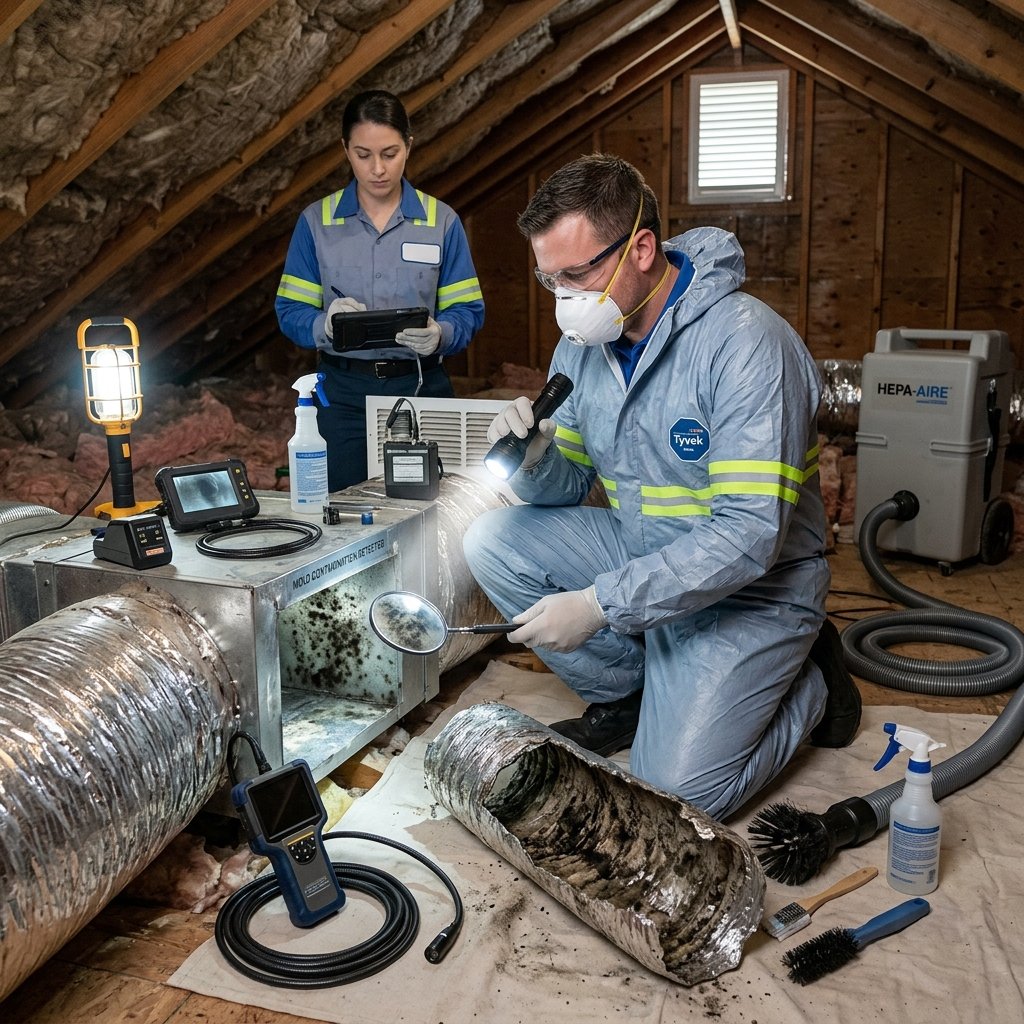
We start every assessment with a thorough visual inspection of accessible ductwork, return air intakes, and HVAC components. Our technicians look for visible mold colonies, water stains, condensation, and areas where moisture concentrates.
Next, we test indoor air quality using particle counters and air sampling equipment. This tells us whether mold spore levels in your home exceed normal ranges. If elevated, we know contamination is active and circulating.
Then we use moisture mapping to identify where condensation forms in your system. Ductwork in hot attics often shows moisture problems. So do poorly insulated sections near exterior walls. We measure insulation thickness and R-value to see whether thermal performance is adequate.
For suspected mold deeper in ductwork, we use fiber optic inspection cameras to peer inside. This reveals colonies you couldn’t see from outside and helps us plan treatment scope accurately. We document everything with photos so you see exactly what we found.
The inspection concludes with a detailed report showing problem areas, recommended treatments, and estimated costs. We explain findings in plain language, not technical jargon. You’ll understand what’s happening in your ducts and why specific treatment is necessary.
Our professional air duct cleaning process includes mold detection at every stage. We don’t treat mold as an afterthought.
What to expect: A thorough inspection takes 1-2 hours and includes a written report with photos before any treatment begins.
Advanced Mold Remediation Techniques We Use
Treatment approach depends on mold extent and location. For light surface mold on duct linings, we use antimicrobial foggers that penetrate the entire duct system. This approach reaches spores in inaccessible areas and kills mold at the source.
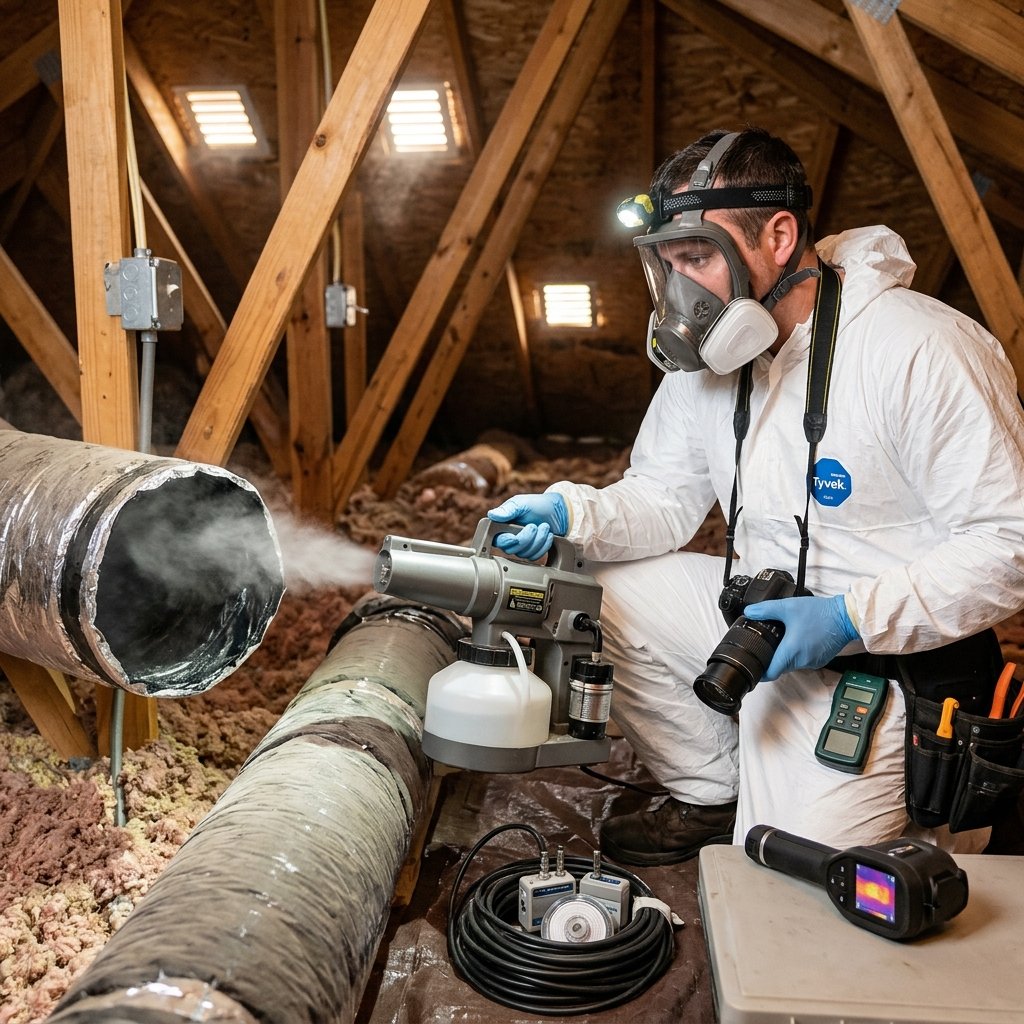
For heavier contamination, we combine mechanical cleaning with chemical treatment. Our technicians use specialized HEPA-filtered vacuum systems that capture mold spores without releasing them into your home. These vacuums meet strict filtration standards and prevent cross-contamination.
We then apply EPA-approved antimicrobial treatments formulated specifically for HVAC systems. These products kill existing mold and create residual protection against future growth. They’re non-toxic to your family once applied and fully dry.
In cases where ductwork is severely damaged or insulation is compromised, we recommend section replacement. Replacing compromised ducts is expensive, but living with active mold is worse. We help you prioritize which sections need replacement versus treatment.
Finally, we address the moisture problem that allowed mold to establish. This might mean improving duct insulation, sealing air leaks, installing dehumidification systems, or upgrading your HVAC condensate drainage. Without fixing moisture, mold returns.
Key takeaway: Professional mold remediation is multi-step and addresses both contamination and its cause.
Energy and Air Quality Benefits After Treatment
Properly cleaned and treated ducts work more efficiently. Mold and debris restrict airflow, forcing your HVAC system to work harder and use more energy. After remediation, your system operates at design capacity, which typically reduces energy consumption 10-20%.
Austin homeowners often see noticeable improvements within days. Musty odors disappear. Dust settling on furniture decreases. Rooms heat and cool more evenly because air flows properly through clean ducts.
Indoor air quality metrics show dramatic improvement. Particulate counts drop, and spore levels return to normal ranges. Allergy symptoms often improve for family members with mold sensitivity. People report breathing easier, sleeping better, and experiencing fewer respiratory irritations.
We’ve also documented improved HVAC equipment lifespan in treated systems. When ducts are clean and properly maintained, components don’t work under stress. Your furnace and air conditioner will likely last several years longer than they would in a contaminated system.
These benefits compound. You’re not just fixing a mold problem. You’re improving your home’s entire respiratory system. Understanding the role of air ducts in indoor air quality shows why this investment pays long-term dividends.
Action item: After mold treatment, ask us about a maintenance plan to keep your system clean and mold-free.
Why Choose Go Air Ducts for Your Mold Problem
We’ve been serving Austin and San Antonio homeowners for years, building our reputation on thorough work and honest advice. Our team consists of certified technicians who specialize in complex mold problems, not generalists who treat mold as a side service.
We’re local, which means we understand Austin’s specific climate challenges. Our technicians know how local contractors build homes, where moisture problems commonly develop, and which prevention strategies work best in our environment.
We offer free estimates with no pressure. We’ll inspect your system, explain findings clearly, and present options without pushing you into unnecessary work. Many homeowners appreciate that we recommend treatment scope based on actual contamination, not on maximizing our invoice.
Our service includes follow-up. We don’t disappear after finishing a job. We provide maintenance guidance, schedule post-treatment inspections, and remain available if questions arise. That’s the local expert approach.
We also carry full licensing, bonding, and insurance. Your protection matters to us, which is why we carry comprehensive coverage and maintain compliance with Texas HVAC and environmental regulations.
Getting Your Free Professional Assessment Today
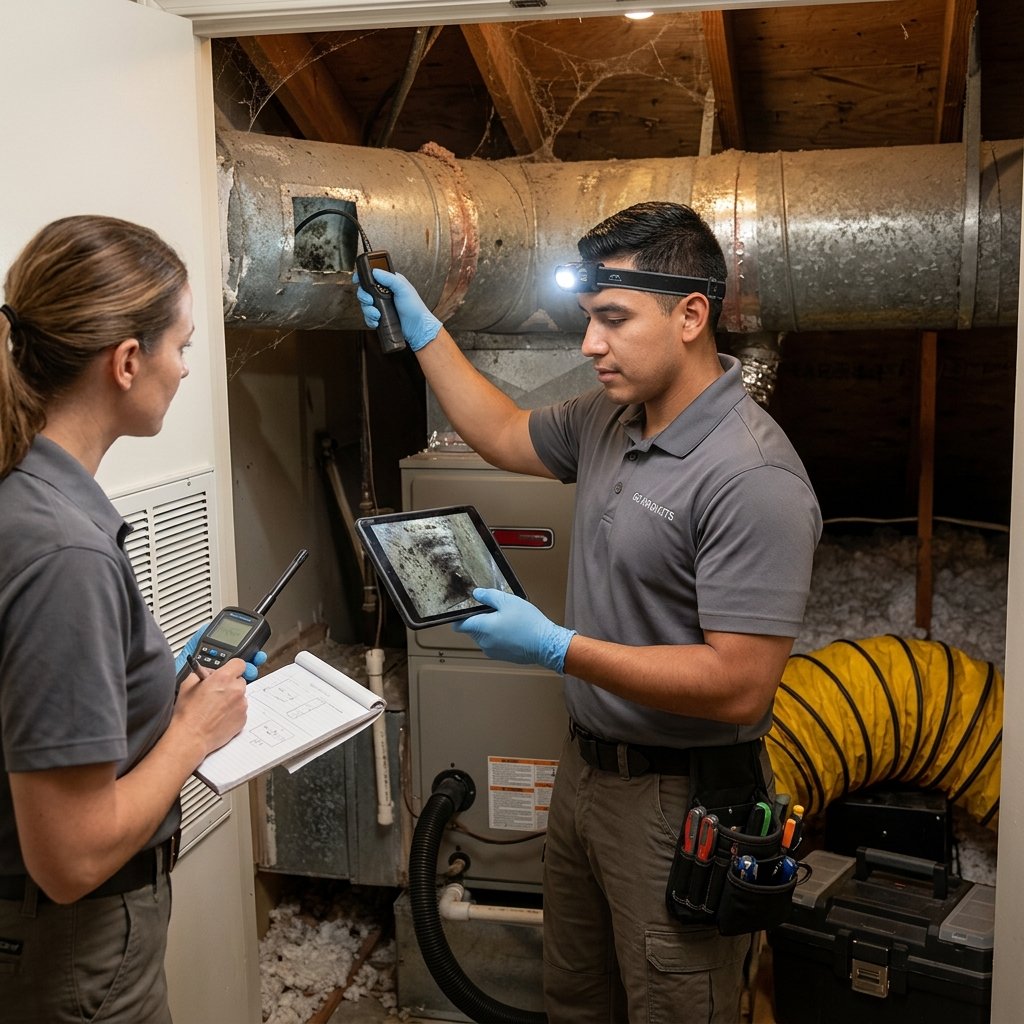
The first step is scheduling your free inspection. During your visit, our certified technician will examine your entire HVAC system, test air quality, and provide a detailed assessment with photos and recommendations.
Contact us at your convenience using our website or phone line. We serve Dallas, Houston, Austin, and San Antonio with flexible scheduling. Many appointments can be arranged within 24-48 hours.
Bring a list of any symptoms you’ve noticed: musty odors, allergy flare-ups, dust buildup, or cooling issues. This helps us prioritize inspection areas and understand what prompted your concern.
After inspection, you’ll receive a written report showing exactly what we found and what treatment costs. We’ll explain options, answer questions, and help you make an informed decision about your home’s air quality.
Don’t wait if mold is suspected. The longer contamination spreads, the more expensive remediation becomes. A free inspection today might prevent thousands in damage and health issues later.
Your next step: Call us or visit our site to schedule your free mold assessment. We’ll help you protect your Austin home and family from hidden duct contamination.
If you’re dealing with dust, poor airflow, mold in your ducts, or a clogged dryer vent — don’t wait. These issues can affect your health and safety. Go Air Ducts Group are the local experts in air duct cleaning, mold removal, dryer vent cleaning, and attic insulation. Call now for a free inspection and same-day service in Austin and San Antonio.
Frequently Asked Questions (FAQ)
How do we detect mold in air ducts if I can’t see it?
We use advanced inspection equipment including camera systems and thermal imaging to identify mold growth hidden deep within your ductwork. Our certified technicians also conduct air quality testing to measure mold spore levels and pinpoint contamination sources. If we find mold, we provide you with detailed documentation and photos so you understand exactly what we’re treating before we begin remediation.
What’s our process for removing mold from HVAC systems safely?
We start by isolating affected ductwork sections to prevent spore dispersal throughout your home, then use specialized equipment to physically remove mold buildup and contaminated debris. After removal, we apply EPA-approved antimicrobial treatments and seal any breaches in your ducts. We also address moisture sources that allowed mold to develop in the first place, since mold remediation only works long-term when we eliminate conditions that caused it.
How soon will we schedule our inspection, and what does it cost?
We offer free professional assessments with no obligation, and we typically schedule appointments within 2-3 business days in Austin and San Antonio. During your estimate, our certified technician evaluates your entire HVAC system, explains our findings, and provides transparent pricing before any work begins.