🕑 5 min read
What does a dryer vent hood do?
A dryer vent hood lets exhaust out and keeps weather and pests from getting in through a damper flap. Choose a hood with a free-moving damper and no screen, since mesh covers clog with lint. Check the flap and airflow a few times a year, and replace hoods that are cracked, rusted, or stuck.
Table of Contents
- What a Dryer Vent Hood Does
- Common Types of Dryer Vent Hoods
- Why a Mesh or Screen Cover Is a Problem
- Problems With the Exterior Hood
- How to Check Your Hood
- When the Hood Needs to Be Replaced
- Why the Hood Matters for Fire Safety
- Frequently Asked Questions
- Keep the Exit Clear





Most people think about a dryer vent as the pipe behind the dryer, but the small piece on the outside of your house matters just as much. The exterior vent hood is where hot, moist exhaust leaves your home, and it is also the opening that keeps wind, rain, birds, and rodents from getting in.
A hood that is blocked, broken, or the wrong type can cause drying problems and safety hazards. Here is what the hood does, the common types, and what to look for.
What a Dryer Vent Hood Does
The hood is the termination point of the dryer exhaust duct. It has three jobs:
- Let exhaust out. A damper or flap opens when air flows from the dryer.
- Keep the weather and pests out. The flap closes when the dryer stops, which helps block rain, wind, birds, and rodents.
- Reduce backdrafts. A working damper keeps outside air from flowing back into the duct.
Because the hood is the last point lint passes through, it is also where buildup shows first.
Common Types of Dryer Vent Hoods
| Type | How It Works | Where It Is Used |
|---|---|---|
| Louvered or flap-style hood | Hinged flap or louvers open with airflow | Common on exterior walls |
| Periscope or low-profile hood | Compact design that fits tight spaces | Where there is little room behind the dryer or outside |
| Roof vent | Terminates through the roof | Homes where the exit is through the attic or roof |
| Hood with a built-in damper | Spring or gravity-assisted damper | Many standard installations |
Hoods are available in metal or plastic. Metal is generally more durable, while plastic can become brittle and crack over time in sun and heat.
Why a Mesh or Screen Cover Is a Problem
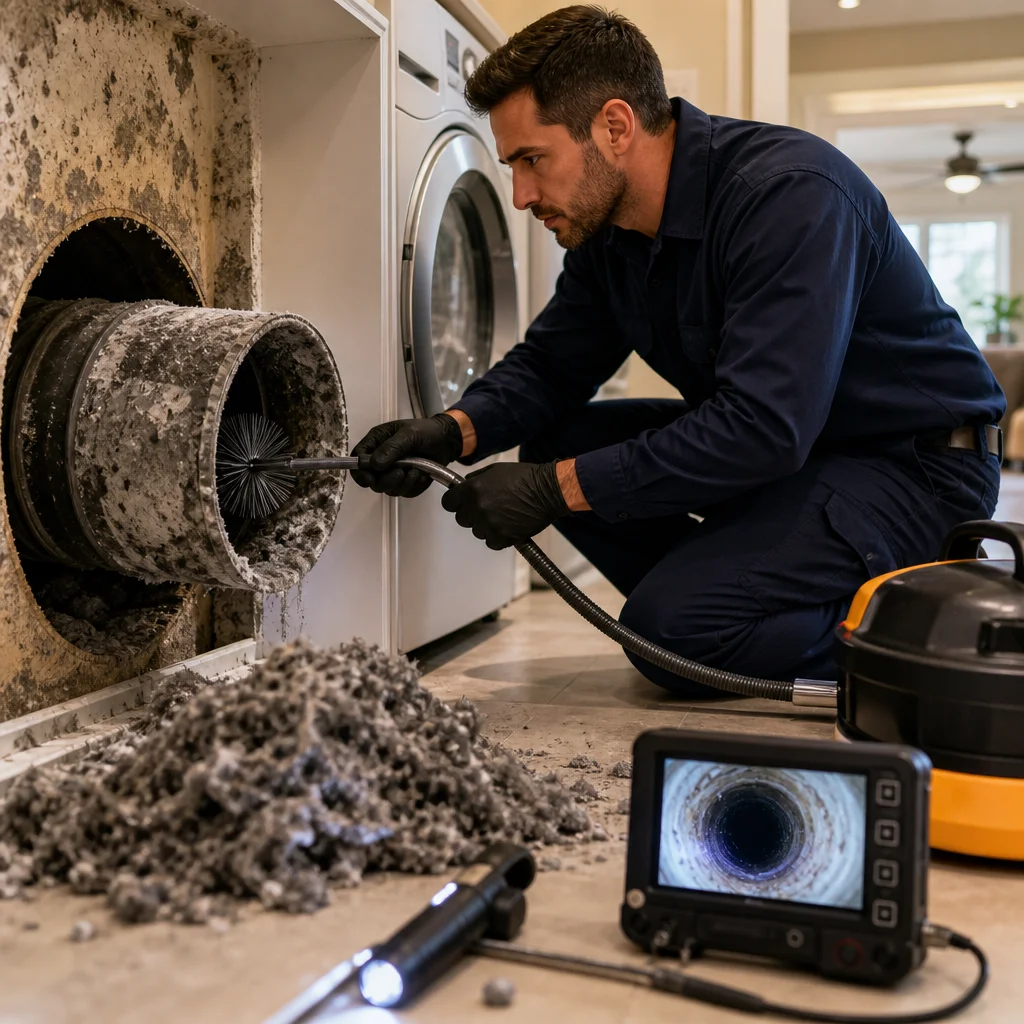
A screen or wire mesh over the opening may seem like a good way to keep animals out, but it is a common mistake. Lint collects on the mesh and quickly clogs it, which blocks exhaust. Building codes prohibit screens at the outlet of a dryer exhaust duct, so use a hood with a damper instead. If animals are the concern, a hood with a properly working flap is the right answer, along with regular checks.
Problems With the Exterior Hood
These issues are easy to spot from outside:
- Stuck or jammed flap. Lint, nesting material, or paint can hold it closed or half open.
- Missing or broken flap. Pests can enter and exhaust escapes poorly.
- Heavy lint buildup. Lint around the opening means airflow is restricted.
- Cracked, faded, or loose hood. Weather damage can let water in and break the seal.
- Nests inside the hood. Birds often nest in warm vents. See our post on bird nests in dryer vents.
- Wrong location. A hood that is too close to windows, doors, or other openings can send lint and moisture back toward the house. Check local code and your dryer manufacturer’s instructions for clearances.
How to Check Your Hood
You can check the hood in a few minutes:
- Run the dryer on a normal cycle.
- Go outside and look at the hood. The flap should open fully and stay open while air blows out.
- Feel for strong, steady airflow.
- Turn the dryer off. The flap should close completely.
- Look for lint, nests, cracks, rust, or a loose fit.
If the flap barely moves or little air comes out, the duct may be clogged or restricted somewhere along its length.
When the Hood Needs to Be Replaced
Cleaning is enough when the hood is intact and simply clogged. Replacement is a better choice when:
- The flap or damper is broken, bent, or missing.
- The hood is cracked or rusted.
- It is a mesh-covered design that traps lint.
- It is too small for the duct or sits too tightly against the wall.
- The hood is the wrong style for the location.
A professional can match the hood to your duct size and wall type and install it so the damper opens freely.
Why the Hood Matters for Fire Safety
When exhaust cannot leave the house freely, heat and lint build up in the duct. The U.S. Fire Administration identifies failure to clean as a leading factor in home clothes dryer fires, and a blocked or damaged hood contributes to the same problem. Keeping the exit clear helps the whole system work as designed.
Frequently Asked Questions
How often should I check my dryer vent hood?
Many homeowners check it a few times a year and after storms. If you notice longer drying times or lint outside, check it sooner.
Can I use a screen to keep birds out?
No. Screens clog with lint and are not allowed at dryer exhaust outlets. Use a hood with a working damper.
Is a plastic hood okay?
Plastic hoods are lower cost, but they can crack in sun and heat. Metal hoods are generally more durable.
Does a clean hood mean my vent is clean?
Not necessarily. The hood can look clear while lint builds up inside the duct. If drying times are long or the dryer gets hot, have the entire run inspected.
Keep the Exit Clear
Go Air Ducts can inspect, clean, and replace dryer vent hoods as part of a full system check. Learn more about dryer vent inspection, dryer vent cleaning, dryer vent repair, and dryer vent replacement, or contact us to schedule service in Austin, San Antonio, and nearby Texas communities.