
Table of Contents
- Why Austin Homeowners Need Energy Efficient HVAC Solutions
- The Cost of Inefficient Cooling in Texas Heat
- How HVAC Efficiency Impacts Your Monthly Energy Bills
- Go Air Ducts: Professional HVAC Optimization for Austin Homes
- Air Duct Cleaning and System Performance
- Insulation Upgrades That Work With Your HVAC System
- Certified Technician Assessment and Maintenance Plans
- Common Energy Waste Issues We Identify and Fix
- Choosing the Right HVAC Solution for Austin's Climate
- Our Proven Process for Maximizing Efficiency
- Get Your Free Energy Efficiency Estimate Today
- Frequently Asked Questions (FAQ)
Why Austin Homeowners Need Energy Efficient HVAC Solutions
Austin’s summers are relentless. From June through September, temperatures regularly exceed 95 degrees, and our air conditioning systems run nearly non-stop. Unlike homeowners in milder climates who can dial back their cooling load, we’re locked into heavy cooling cycles for half the year.
An inefficient HVAC system doesn’t just waste money—it struggles to maintain comfort on peak heat days. When your system has to work harder to cool your home, you end up with uneven temperatures, hot spots in bedrooms, and that frustrating moment when the AC can’t keep up despite running constantly.
The good news: investing in energy-efficient HVAC solutions pays dividends in Austin’s climate. Higher SEER ratings (Seasonal Energy Efficiency Ratio), proper duct sealing, and complementary insulation upgrades create a system that cools more effectively while using less electricity. For most Austin homeowners, this means comfort improvements alongside lower energy costs.
Actionable takeaway: Schedule a professional HVAC assessment to benchmark your current system’s efficiency rating and identify where you’re losing cooled air.
The Cost of Inefficient Cooling in Texas Heat
Running an inefficient air conditioning system in Austin isn’t a minor inconvenience—it directly impacts your annual energy budget. An older, poorly maintained unit can consume 20-30% more electricity than a well-optimized system, adding hundreds of dollars to your yearly bills.
Consider this: if your current air conditioning setup costs $1,200 annually to operate, a 25% efficiency gain saves you roughly $300 per year. Over a decade, that’s $3,000 in savings before accounting for rising electricity rates.
The hidden costs go beyond kilowatt-hours. Inefficient systems experience higher wear, leading to more frequent repairs, shorter equipment lifespan, and eventually costly replacement. A unit that should last 15-20 years might only run reliably for 10 if it’s constantly strained and poorly maintained.
We’ve inspected homes where homeowners didn’t realize how much of their cooled air was escaping through leaky ducts, unsealed connections, and gaps around registers. They assumed high bills were just the price of living in Texas. In reality, their systems were hemorrhaging efficiency.
How HVAC Efficiency Impacts Your Monthly Energy Bills
HVAC efficiency works on a straightforward principle: a properly functioning system delivers more cooling output per unit of electricity consumed. This efficiency compounds across three main areas.
First, your equipment’s inherent efficiency matters. Newer high-efficiency units typically carry SEER 16-21 ratings compared to older units rated SEER 10-13. That’s a measurable 40-50% improvement in raw cooling output per watt.
Second, ductwork integrity directly affects whether the cooled air you’re paying to generate actually reaches your living spaces. Leaky ducts can lose 20-30% of cooled air before it exits the vents. Duct sealing cuts energy bills by addressing this waste at the source.
Third, insulation, air sealing, and thermostat management reduce the cooling load your system must handle. A well-insulated attic prevents heat from radiating downward into living spaces. Proper weatherstripping and caulking prevent hot outdoor air from infiltrating through cracks and gaps.
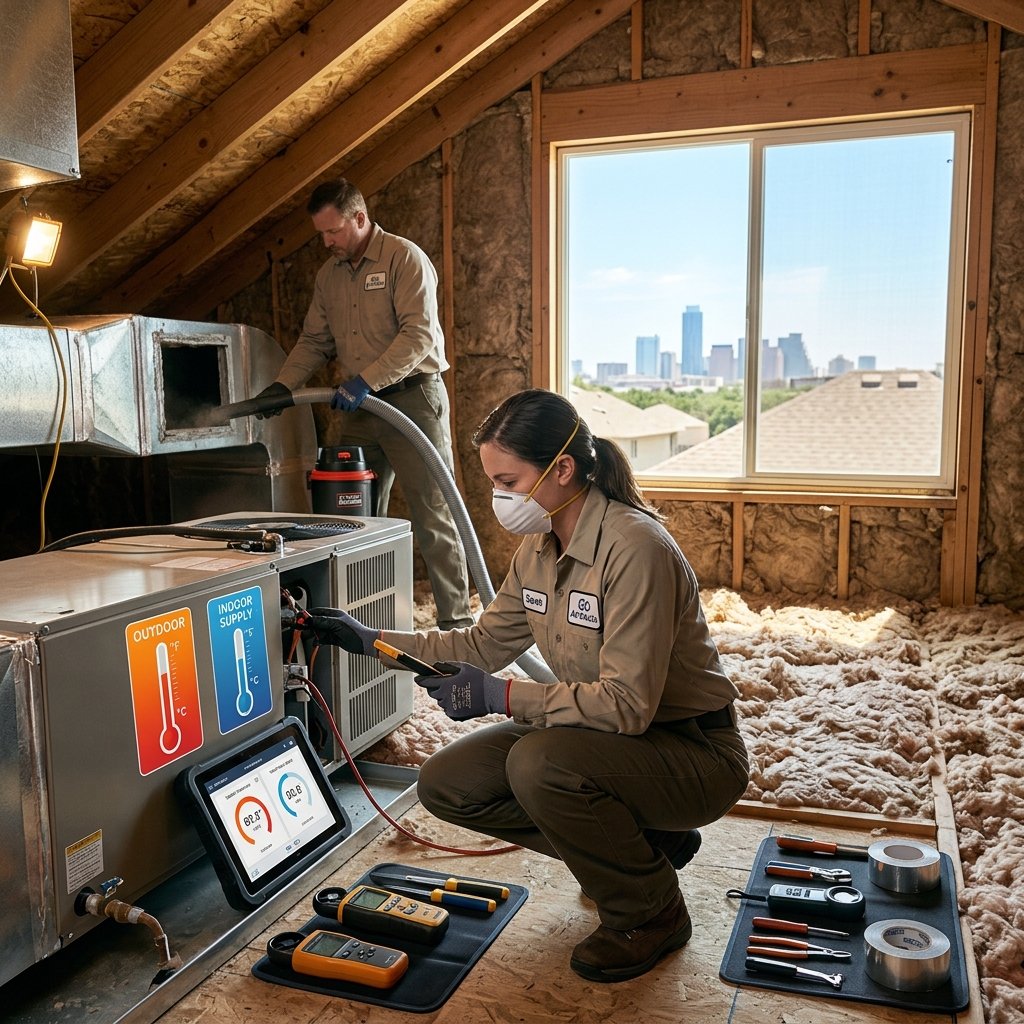
A typical Austin homeowner running an efficient system with sealed ducts, proper insulation, and smart thermostat use might spend $80-120 per month on cooling. The same home with an inefficient system and poor ductwork could easily cost $140-180.
Go Air Ducts: Professional HVAC Optimization for Austin Homes
We’ve been serving Austin and San Antonio homeowners for years, helping them tackle the specific cooling challenges our hot climate creates. Our approach isn’t one-size-fits-all marketing; we deliver hands-on assessments and targeted solutions based on what we actually find in your home.
We understand that Austin’s humidity, dust levels, and temperature swings demand HVAC systems that are not only efficient but also properly maintained and optimized. Whether you’re looking to maximize an existing system or planning an upgrade, we start with a comprehensive evaluation.
Our technicians carry the certifications and experience needed to assess your current setup honestly. We’ll tell you if your existing equipment can be optimized or if replacement makes financial sense over the next 5-10 years. We offer free estimates so you can make informed decisions without pressure or surprise costs.
Beyond equipment selection, we handle the complementary work that truly matters: duct sealing, cleaning, insulation upgrades, and system balancing. This integrated approach is why our customers see real energy savings, not just modest improvements.
Air Duct Cleaning and System Performance
Dirty air ducts undermine efficiency in two critical ways. First, dust and debris buildup restricts airflow, forcing your system to work harder to move air through your home. Second, the contamination blocks heat exchange surfaces inside your equipment, reducing its ability to cool effectively.
We’ve pulled pounds of dust, pet hair, and debris from Austin homes—buildup that accumulated over years of normal use. Even homes without obvious indoor air quality issues benefit from duct cleaning in terms of pure HVAC performance.
When airflow improves, your system reaches desired temperatures faster and cycles less frequently. This reduction in run time translates directly to lower energy consumption. A cleaned duct system can improve efficiency by 15-25%, depending on how severely it was restricted.
Professional air duct cleaning vs DIY work matters because our equipment reaches deep into your ductwork. We use rotary brushes, compressed air, and HEPA-filtered vacuums to remove the contamination that household methods miss. This isn’t just about air quality; it’s about system efficiency.
Next step: If you haven’t had your ducts professionally cleaned in 3+ years, or if you notice reduced airflow from vents, schedule a duct inspection.
Insulation Upgrades That Work With Your HVAC System
Your HVAC system can only control the temperature of air inside your home. If your attic, walls, and crawl spaces leak heat back outdoors during summer, your system runs longer and costs more to achieve the same comfort level.
Austin homes often need insulation help in the attic. Proper R-value insulation (R-38 minimum, R-49 preferred for our climate) prevents heat from radiating downward into living spaces during the day. This directly reduces the cooling load your HVAC system must handle.
We also identify air leaks around ducts, pipes, and ceiling penetrations that allow hot outside air to infiltrate. Sealing these gaps is cost-effective and pays back quickly through energy savings.
The relationship is simple: better insulation means your HVAC system runs fewer hours to maintain comfortable temperatures. Fewer run hours means lower energy bills and extended equipment life. Ducts vs insulation upgrade explores how to prioritize these investments based on your home’s current condition.
Homeowners sometimes ask whether insulation upgrades are worth the cost. In Austin’s climate, attic insulation typically pays for itself within 4-6 years through energy savings alone.
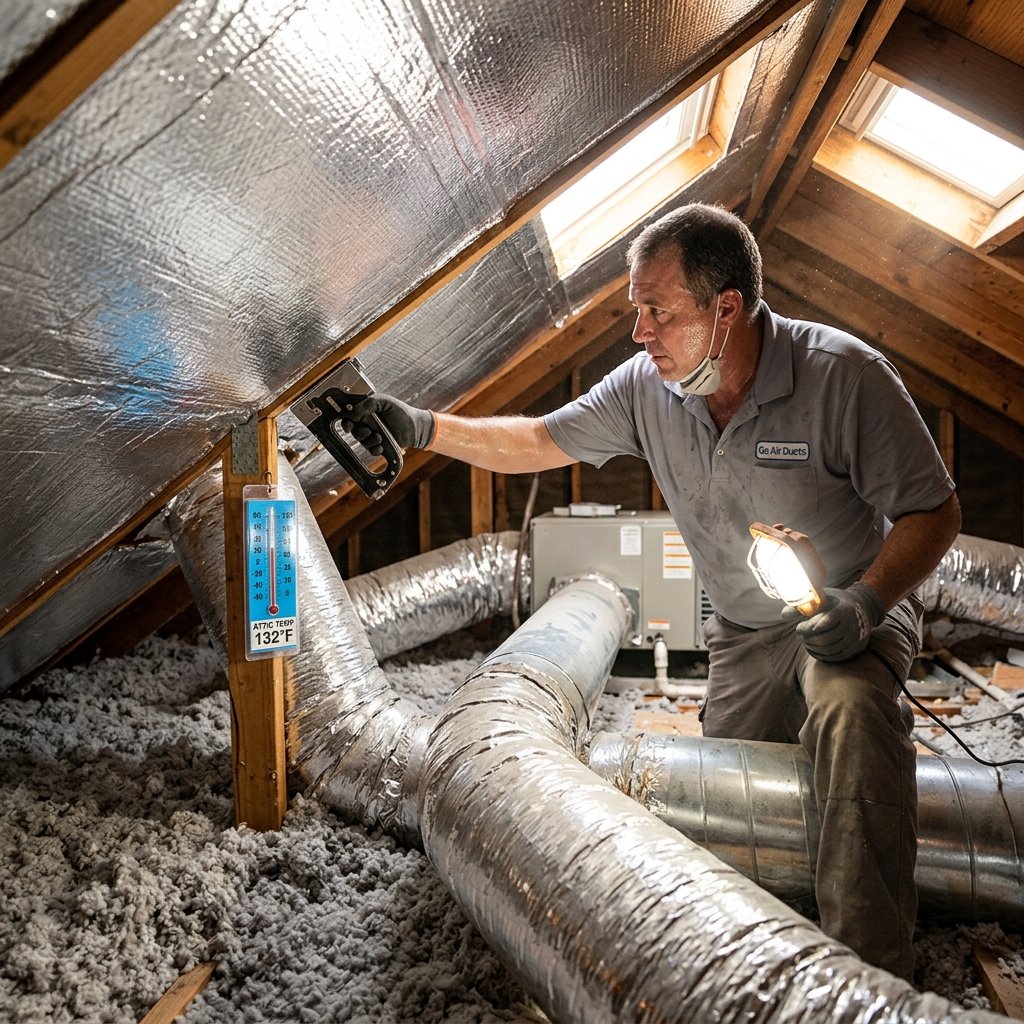
Certified Technician Assessment and Maintenance Plans
DIY HVAC troubleshooting can lead you in circles. Certified technicians, by contrast, follow systematic procedures to identify efficiency losses quickly and accurately.
Our assessments include checking refrigerant charge levels, inspecting blower motor operation, testing duct leakage, evaluating insulation, and analyzing how well your system maintains temperature setpoints. We measure actual performance data, not guesses.
Regular maintenance matters more in Austin’s intense heat environment. We recommend having your system serviced twice annually: once before the cooling season starts and once in fall before potential heating needs. Seasonal maintenance catches issues early, keeps your system running at peak efficiency, and extends equipment life.
A maintenance plan ensures you’re never caught without service during an emergency. When the heat hits 100 degrees and your AC stops working, you need a reliable provider who can respond quickly. We offer same-day service options for Austin and San Antonio customers.
Common Energy Waste Issues We Identify and Fix
Over hundreds of Austin home assessments, certain efficiency issues appear repeatedly. Recognizing these problems helps you understand where your home might be losing energy.
Leaky ductwork is the most common culprit. Ducts installed years ago often develop seal failures at joints and connections. Flex ducts degrade and separate from collars. Supply ducts in hot attics lose significant cooled air through thermal loss before air reaches vents.
Refrigerant undercharge happens gradually as small leaks develop. Your system still runs, but it can’t reach full cooling capacity, so it cycles longer. You notice the air isn’t as cold as it should be.
Dirty air filters and coils reduce airflow and heat transfer efficiency. Many homeowners don’t realize their filter hasn’t been changed in months, creating unnecessary restriction.
Improper thermostat placement leads to inaccurate temperature sensing. A thermostat in a sunny corner or near a heat source reads higher than actual living space temperature, causing the system to cycle off prematurely.
Uninsulated or poorly sealed crawl spaces and rim joists allow unconditioned air to infiltrate the home. Humidity affects HVAC efficiency because excess moisture makes cooling work harder and increases mold risk.
We identify these issues during our professional assessment and provide specific recommendations for each.
Choosing the Right HVAC Solution for Austin’s Climate
Not every home needs a new air conditioning unit. Sometimes optimization and maintenance deliver the efficiency and comfort improvements you need. Other times, replacement is the right choice.
If your current system is 10-12 years old, running poorly, and requiring frequent repairs, replacement with a modern high-efficiency unit typically makes financial sense. Newer units run quieter, cool more effectively, and deliver 30-50% better efficiency than units from 2012-2014.
If your system is 5-9 years old and running reasonably well, optimization might be your best path. Duct sealing, cleaning, insulation upgrades, and professional maintenance can dramatically improve efficiency without equipment replacement costs.
Austin’s hot, dry climate also means we often recommend units with variable-speed compressors and advanced refrigerant types. These technologies maintain comfort while reducing runtime and energy consumption during moderate temperature days.
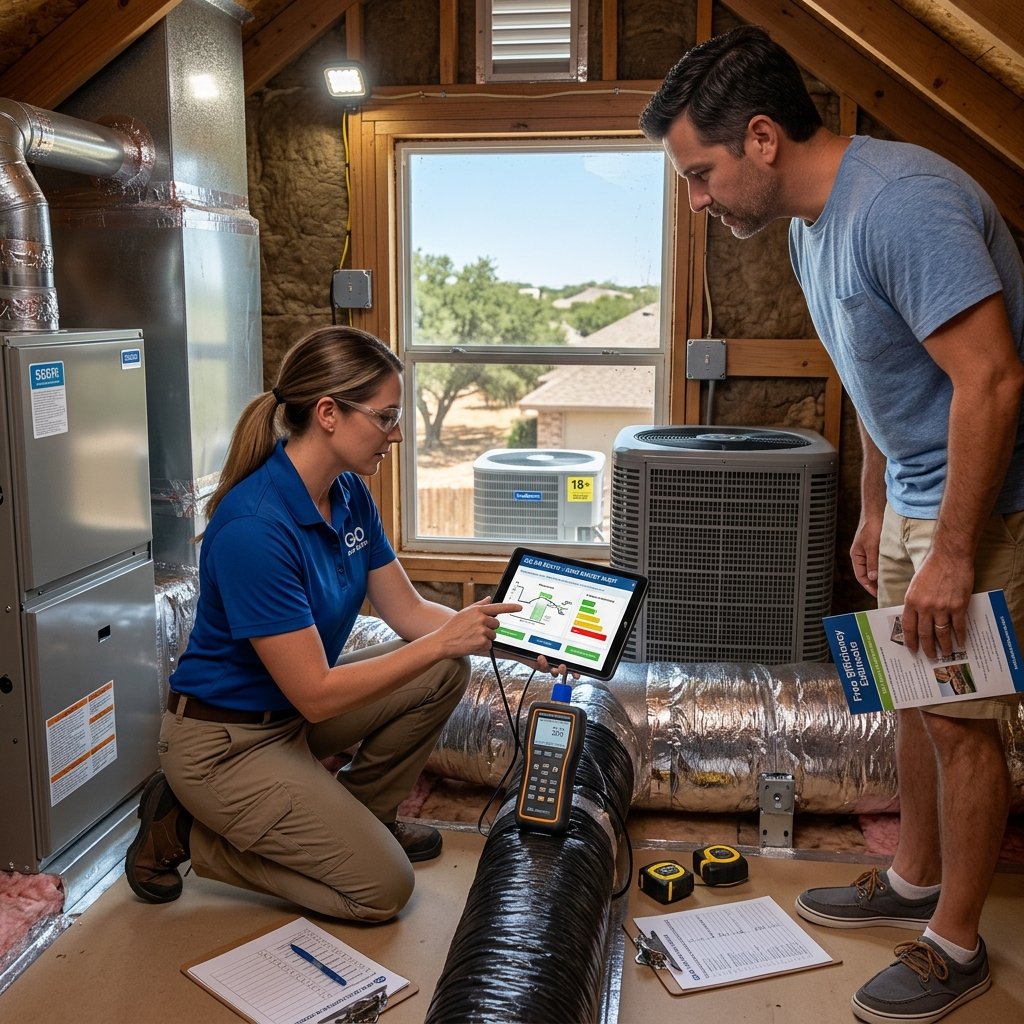
Size matters too. Oversized units cycle too quickly and don’t run long enough to dehumidify effectively. Undersized units never reach setpoint on peak heat days. Proper load calculations ensure your replacement system matches your home’s actual cooling demand.
Our Proven Process for Maximizing Efficiency
We start every engagement the same way: a comprehensive home energy assessment. Our technicians inspect your HVAC equipment, ductwork, insulation, air sealing, and operational performance. We measure duct leakage, check refrigerant charge, evaluate equipment condition, and test thermostat operation.
Based on findings, we prioritize improvements by cost-benefit. We might recommend duct sealing first (quick payback), insulation upgrades second (stronger long-term savings), and equipment replacement third (if necessary).
We provide a detailed written estimate showing expected efficiency improvements and annual energy savings for each recommendation. You decide which steps to take and when.
Once you approve work, our crews execute systematically. Duct sealing involves identifying all leaks, cleaning the area, and using mastic sealant or tape to seal joints. Duct cleaning uses specialized equipment to reach deep contamination. Insulation work includes proper installation and air sealing of gaps. Equipment service follows manufacturer specifications.
We test and verify results after completing work. Airflow improves, temperatures equalize, energy bills drop, and your home becomes more comfortable. Customers typically see measurable efficiency gains within the first billing cycle.
Get Your Free Energy Efficiency Estimate Today
The first step toward a more efficient cooling system is understanding your current situation. We offer free energy efficiency estimates for Austin and San Antonio homeowners. During your estimate, we’ll perform a detailed assessment, identify efficiency opportunities, and discuss realistic improvements and costs.
Contact us today to schedule your appointment. Our local technicians are ready to help you reduce energy waste, lower your cooling costs, and improve home comfort for Austin’s demanding summer heat.
If you’re dealing with dust, poor airflow, mold in your ducts, or a clogged dryer vent — don’t wait. These issues can affect your health and safety. Go Air Ducts Group are the local experts in air duct cleaning, mold removal, dryer vent cleaning, and attic insulation. Call now for a free inspection and same-day service in Austin and San Antonio.
Frequently Asked Questions (FAQ)
How much can we save homeowners on energy costs with air duct cleaning?
We typically see energy savings of 10-15% after cleaning air ducts clogged with dust and debris. When your system doesn’t have to work around blockages, your HVAC runs more efficiently and uses less electricity. Combined with our insulation upgrades, many of our Austin customers report even greater reductions in their monthly cooling bills.
What makes our HVAC maintenance different from basic tune-ups?
Our certified technicians perform comprehensive assessments that identify specific energy waste problems in your system, not just standard seasonal checks. We combine air duct cleaning, vent inspection, and efficiency testing to create a customized plan for your home’s unique cooling needs. This detailed approach is why we can guarantee meaningful improvements rather than just routine maintenance.
How does proper insulation work together with an efficient HVAC system?
We design insulation upgrades that reduce heat transfer into your home, which means your air conditioning doesn’t have to compensate for outdoor heat gain. When your HVAC system works with quality insulation instead of against it, you get faster cooling, longer system lifespan, and significantly lower energy costs. Our technicians evaluate both systems together to ensure they’re optimized as a team.