
🕑 11 min read
Why does my Austin AC condenser coil need service?
The outdoor condenser coil releases heat, and when it is caked with dirt and debris your system struggles, runs hot, and wastes energy. Professional cleaning restores efficiency and protects the compressor. Go Air Ducts provides HVAC condenser coil service in Austin to keep your outdoor unit running cool and efficient.
Table of Contents
- Why Your Condenser Coil Matters More Than You Think
- Common Signs Your Condenser Coil Needs Professional Service
- How Austin's Climate Impacts Your Outdoor Unit
- What Happens When Condenser Coils Get Neglected
- Our Professional Condenser Coil Cleaning and Repair Process
- Preventative Maintenance to Extend Your System's Lifespan
- Why DIY Condenser Coil Care Falls Short
- How We Protect Your Investment Year-Round
- Schedule Your Free HVAC System Estimate Today
- Frequently Asked Questions (FAQ)
Why Your Condenser Coil Matters More Than You Think
Your air conditioning system works hard to keep your Austin home cool during those brutal summer months. But the part doing the most work often gets the least attention: your outdoor condenser coil. This component is responsible for releasing the heat your AC pulls from inside your home, and when it’s not functioning properly, your entire system suffers. We’ve seen countless homeowners surprised to learn that a simple condenser coil service could have saved them hundreds in repair costs and energy bills.
The condenser coil is the core of your outdoor AC unit. It works by taking the hot refrigerant from inside your home and releasing that heat to the outside air, then sending cooled refrigerant back indoors to repeat the cycle. Without a properly functioning condenser coil, your air conditioner can’t complete this heat exchange process efficiently.
When the coil operates at peak performance, your system maintains steady cooling, uses less energy, and puts minimal strain on components like your compressor. When it deteriorates, your AC runs longer to achieve the same temperature, consuming more electricity and wearing out faster. Over time, this neglect can cost you thousands in premature system replacement.
Think of it this way: your condenser coil is like the radiator in your car. Just as a car’s engine overheats without proper cooling, your AC compressor overheats when the condenser can’t release heat efficiently. The difference is that AC repair costs significantly more than auto repair, and system failures often happen at the worst times during peak summer demand.
Common Signs Your Condenser Coil Needs Professional Service
Several warning signs indicate your condenser coil needs attention. Recognizing these early gives you a chance to fix the problem before it becomes expensive.
Your AC unit is running constantly but your home isn’t reaching the desired temperature. This is the most common complaint we hear. The system cycles for hours without providing adequate cooling because the condenser can’t shed heat properly. Measure your energy bill against previous months at similar temperatures. A noticeable spike often points directly to condenser coil problems.
You hear unusual hissing, bubbling, or gurgling sounds from your outdoor unit. These sounds indicate refrigerant leaks or internal coil damage. A bubbling sound specifically suggests refrigerant escaping, which means your coil has developed a crack or hole.
The outdoor unit feels hot to the touch or you notice frost forming on the indoor evaporator coil during summer months. Frost in summer is abnormal and signals that heat exchange isn’t happening properly.
Your utility costs have climbed steadily even though your usage patterns haven’t changed. A dirty or damaged condenser coil forces your compressor to work overtime, dramatically increasing electricity consumption.
Check our HVAC diagnostic checklist to identify other potential efficiency issues occurring alongside condenser problems.
How Austin’s Climate Impacts Your Outdoor Unit
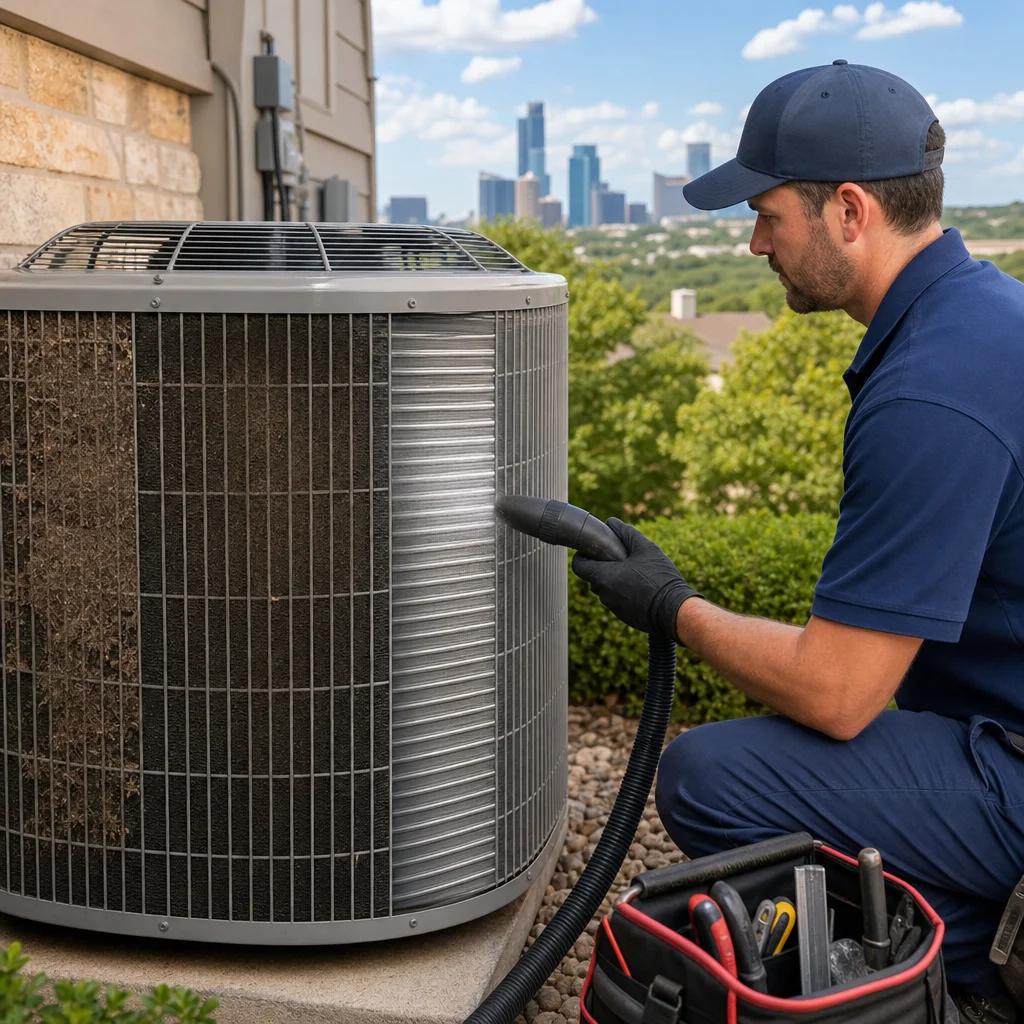
Austin’s environment presents unique challenges for HVAC condenser coils. Our hot, humid summers stress cooling systems like few other climates. Temperatures regularly exceed 95 degrees, and high humidity means your condenser has to work harder to release heat effectively.
Beyond the heat, Austin’s dust and pollen create buildup problems that homeowners in cooler regions rarely experience. The combination of dry heat, dust storms, and high pollen counts from cedar trees and other vegetation all accumulate on your outdoor coil fins. This debris layer acts as insulation, preventing the coil from transferring heat to the outside air effectively.
We’ve also seen mineral deposits from hard water affect condenser coils when they’re within range of sprinkler systems. If you’ve noticed white, chalky buildup on outdoor AC units in your neighborhood, that’s mineral scale from water splash. This coating further reduces the coil’s ability to shed heat.
The extended cooling season in Central Texas means your condenser coil operates nearly eight months per year. That’s significantly longer than most of the country, amplifying the impact of any neglect. What might be a minor efficiency loss in June becomes a substantial problem by August when outdoor temperatures peak.
What Happens When Condenser Coils Get Neglected
Neglecting condenser coil maintenance creates a cascade of problems that get progressively more expensive.
Stage one begins with reduced cooling efficiency. Dust and debris coat the coil fins, restricting airflow and heat transfer. Your system responds by running longer cycles to maintain temperature. You notice slightly higher energy bills but may attribute it to the hot weather rather than equipment problems.
Stage two involves rising refrigerant pressure. As the condenser struggles to release heat, pressure inside the refrigerant lines builds abnormally. Your compressor works harder to pump this higher-pressure refrigerant, increasing strain on electrical connections, bearings, and the compressor itself. Many compressor failures we encounter stem directly from condenser coil neglect that went unaddressed for months.
Stage three brings refrigerant leaks. The increased pressure creates micro-cracks in coil fins and connection joints. Refrigerant slowly escapes, reducing your system’s cooling capacity further. You might notice a sweet smell around your outdoor unit, which indicates escaping refrigerant.
By stage four, the compressor fails completely. Replacing a compressor costs $1,200 to $2,500 in Austin, and that’s just the part. At this point, many homeowners consider replacing the entire system, a $5,000 to $12,000 decision that could have been prevented with regular maintenance.
Understanding how dirty coils impact HVAC efficiency helps explain why preventative service saves money long-term.
Our Professional Condenser Coil Cleaning and Repair Process
We handle condenser coil service using industry-standard methods that protect your equipment and restore efficiency.
Our technicians begin with a visual inspection of the outdoor unit, checking for obvious debris, damage, and corrosion. We photograph the unit condition for your records. Next, we disconnect electrical power to the system for safety, then carefully remove any large debris blocking the coil fins.
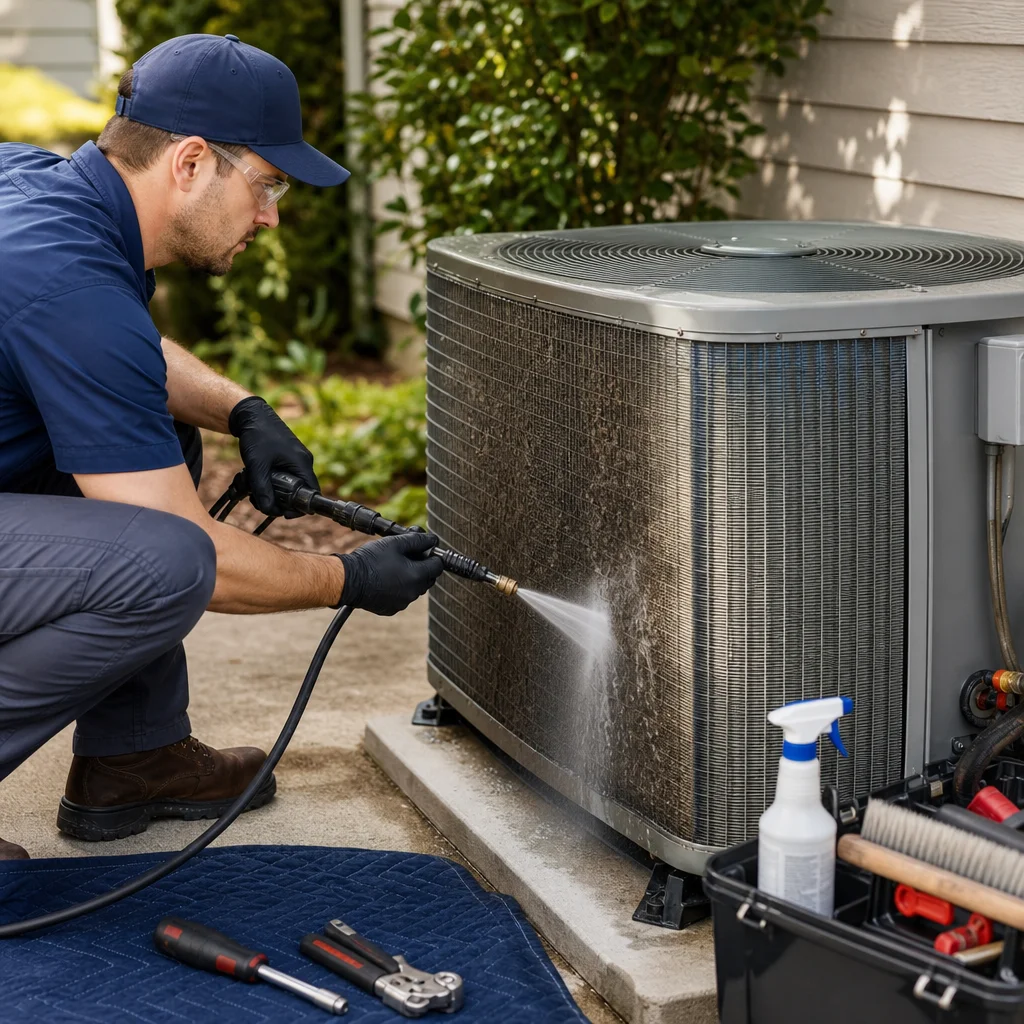
We use specialized coil cleaning solutions designed for aluminum fins that won’t cause corrosion or damage. Unlike hardware store coil cleaners, our industrial-strength solutions dissolve mineral deposits, pollen buildup, and biological growth effectively. We apply the cleaner and allow appropriate dwell time, then rinse thoroughly with low-pressure water, ensuring no cleaning residue remains.
For significant mineral scale or stubborn buildup, we employ soft-brush techniques that dislodge contaminants without bending fins. Bent fins reduce airflow and coil efficiency, so we’re meticulous about preserving fin integrity.
After cleaning, we inspect all connections, check refrigerant levels, and look for signs of leaks. If we discover small leaks at connection points, we can often seal them with specialized fitting sealants. Significant coil cracks typically require coil replacement, which we handle with precision to ensure proper refrigerant circulation.
Finally, we test system operation, measuring airflow, temperature differential, and energy draw to confirm the condenser is performing optimally. You receive a detailed report showing before-and-after coil condition photos and efficiency metrics.
Preventative Maintenance to Extend Your System’s Lifespan
Regular maintenance keeps your condenser coil functioning properly and catches problems early when they’re inexpensive to fix.
We recommend professional condenser coil inspection and cleaning once yearly, ideally in spring before your cooling season peaks. For homes in dusty areas or with nearby sprinklers, we suggest inspections twice yearly. Between professional visits, you can rinse your outdoor unit gently with a garden hose in late morning when outdoor temperature allows safe flushing.
Keep vegetation cleared away from your outdoor unit. Trees, shrubs, and grass clippings obstruct airflow and provide pathways for dust and pollen. We recommend maintaining at least two feet of clearance on all sides of the outdoor unit. Never park vehicles nearby or allow yard waste to accumulate against the unit.
Have your refrigerant system checked during annual maintenance. Low refrigerant levels indicate leaks that must be identified and repaired. Addressing leaks promptly prevents them from developing into major problems.
Consider our professional HVAC coil cleaning services versus DIY methods to understand why professional service delivers better results than attempting this yourself. Our comprehensive HVAC maintenance guide outlines a full seasonal maintenance schedule that protects your entire system.
Why DIY Condenser Coil Care Falls Short
Many Austin homeowners try cleaning their condenser coils themselves using store-bought products and garden hoses. While we appreciate the DIY spirit, this approach creates more problems than it solves.
Consumer coil cleaners often damage aluminum fins or leave chemical residue that impairs heat transfer. Using high-pressure washers to clean coils bends fins, restricting airflow and reducing efficiency. Improper rinsing leaves cleaning solution inside the unit, which corrodes components and attracts dirt.
Most critically, DIY coil cleaning doesn’t address underlying issues. You can’t visually detect small refrigerant leaks, connection problems, or fin damage that requires specialized tools to repair. You’re also working around live electrical components and pressurized refrigerant lines, creating genuine safety hazards.
We’ve responded to emergency calls where homeowners injured themselves attempting condenser work or accidentally damaged their compressor while attempting cleaning. The cost of professional repair after DIY mistakes usually exceeds what professional service would have cost initially.
How We Protect Your Investment Year-Round
Your air conditioning system is one of your home’s major investments. We treat it that way.
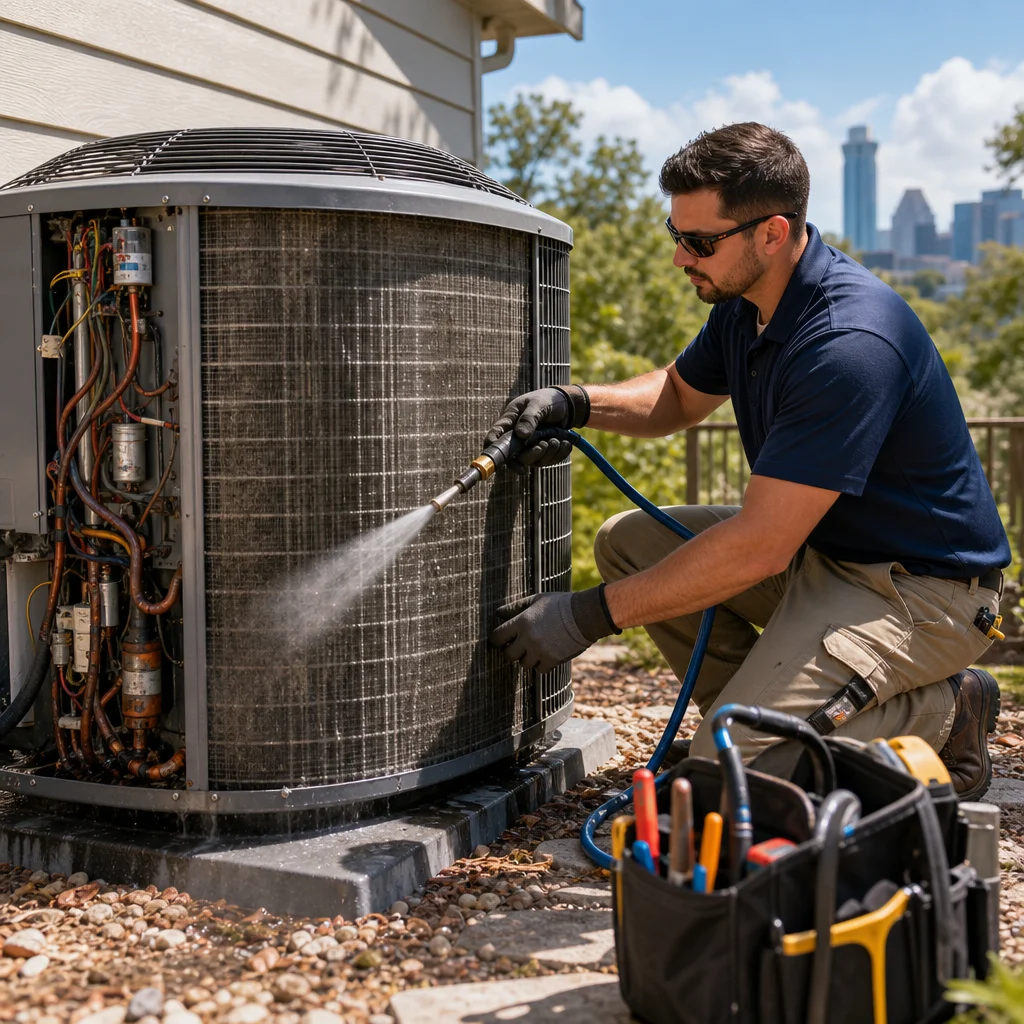
Our service agreements include regular inspection visits where we track your system’s condition over time. We maintain detailed records documenting coil cleanliness, refrigerant levels, component wear, and efficiency metrics. This historical data allows us to predict problems before they occur and recommend repairs at the optimal time.
We offer same-day emergency service during peak cooling season because we understand that AC failures during 100-degree days aren’t inconveniences, they’re serious problems. Our certified technicians are trained on all major AC equipment brands and respond quickly to your service requests in Austin, San Antonio, Dallas, and Houston.
If your system requires significant repair, we provide transparent pricing before beginning work. We never start repairs without your approval, and we explain what’s broken and why you need the service in language you understand, not technical jargon.
We stand behind our work with warranty coverage on both labor and parts, giving you peace of mind that your investment is protected.
Schedule Your Free HVAC System Estimate Today
Your condenser coil condition directly determines your comfort, efficiency, and cooling costs. If you’re experiencing any signs of AC problems or simply want to ensure your system is operating optimally before the heat peaks, we’re ready to help.
We offer free service estimates on all HVAC maintenance and repair work in Austin, San Antonio, Dallas, and Houston. During your estimate, our technicians inspect your outdoor unit, check refrigerant levels, assess coil condition, and provide specific recommendations for keeping your system efficient.
Contact Go Air Ducts today to schedule your free estimate. We’ll identify any condenser coil issues before they become expensive problems and show you exactly what your system needs to deliver reliable cooling all summer long.
If you’re dealing with dust, poor airflow, mold in your ducts, or a clogged dryer vent — don’t wait. These issues can affect your health and safety. Go Air Ducts Group are the local experts in air duct cleaning, mold removal, dryer vent cleaning, and attic insulation. Call now for a free inspection and same-day service in Austin and San Antonio.
Frequently Asked Questions (FAQ)
How often should we have our condenser coil cleaned in Austin?
We recommend scheduling professional condenser coil cleaning at least once per year, ideally before the summer cooling season begins. Austin’s heat and humidity accelerate dirt and debris buildup on your coils, so we often suggest twice-yearly service for properties near high-traffic areas or with significant pollen exposure. Our technicians can assess your specific situation during a free estimate and recommend the best maintenance schedule for your home.
What’s the difference between condenser coil cleaning and repair?
We perform coil cleaning to remove accumulated dirt, dust, and debris that reduces your system’s efficiency and cooling power. Repair involves addressing physical damage like bent fins, refrigerant leaks, or corrosion that compromises the coil’s function. Many times we discover repair needs during routine cleaning, which is why we recommend professional inspection rather than attempting DIY maintenance that might cause additional damage.
Why can’t we just clean our condenser coil ourselves?
We strongly advise against DIY condenser coil work because the outdoor unit contains pressurized refrigerant and delicate components that require specialized tools and certification to handle safely. Improper cleaning can bend the fins permanently, damage the coil surface, or release refrigerant into the atmosphere, which is both illegal and dangerous. Our certified technicians have the equipment and expertise to clean your coils thoroughly while protecting your investment and keeping your system operating at peak efficiency.