
🕑 7 min read
What happens if you ignore dryer vent maintenance?
Ignoring dryer vent maintenance allows lint, a highly combustible material, to restrict airflow, causing excessive heat buildup that frequently triggers residential house fires. Restricted dryer vents also trap carbon monoxide in gas dryer homes, promote mold growth from trapped exhaust moisture, double your drying times, and cause premature appliance heating element failure. Homeowners should inspect and clean their dryer exhaust lines at least once per year.
Table of Contents
- Key Takeaways
- Increased Risk of Residential Dryer Fires
- Carbon Monoxide Poisoning Hazards (Gas Dryers)
- Structural Moisture Accumulation and Mold Growth
- Higher Utility Costs and Appliance Strain
- Pest Infestations
- Warning Signs Your Dryer Vent Is Clogged
- DIY Maintenance vs. Professional Service
- Frequently Asked Questions
- Protect Your Home with Professional Maintenance





A clothes dryer is one of the most heavily used appliances in modern households, but its exhaust system is frequently neglected. Over time, highly flammable lint, dust, and debris accumulate inside the transition duct, wall vents, and exterior termination hood.
Ignoring routine dryer vent maintenance creates serious home safety hazards, increases monthly utility costs, and severely shortens appliance lifespan. Understanding the hidden risks of a clogged exhaust system is essential for protecting your property and family.
Key Takeaways
- Fire Hazard: According to the U.S. Fire Administration, failure to clean dryer vents is the leading cause of home clothes dryer fires.
- Carbon Monoxide Risks: Blocked vents on gas dryers can backdraft lethal, odorless carbon monoxide gas into living areas.
- Property Moisture Damage: Restricted exhaust traps gallons of evaporated water vapor inside duct seams, encouraging mold growth inside walls and attics.
- Higher Utility Expenses: Clogged vents force dryers to run double or triple cycles, drastically increasing monthly electric or gas bills.
Increased Risk of Residential Dryer Fires
The single most dangerous consequence of neglecting dryer exhaust maintenance is a house fire. During every drying cycle, microscopic fibers detach from fabrics. While the lint trap catches a portion, a significant volume escapes into the ductwork.
Lint is an ideal fuel source, it is dry, highly porous, and ignites at low combustion temperatures. When air exhaust is restricted by buildup, internal appliance temperatures spike. If overheating ignites lint near the heating element or gas burner, flames travel rapidly through the exhaust duct into wall cavities and attics.
| Fire Risk Factor | Danger Mechanism | Preventive Measure |
|---|---|---|
| Lint Ignition | Superheated exhaust ignites dry lint packed in duct joints | Annual full-length mechanical vent cleaning |
| Plastic/Foil Ducts | Flexible accordion foil melts, allowing fire to spread into walls | Replace with rigid, semi-rigid metal ducting |
| Exterior Hood Flap Stuck | Flap jammed shut traps all thermal heat inside the home | Clear exterior vent cover from lint and pest nests |
Carbon Monoxide Poisoning Hazards (Gas Dryers)
For homes equipped with gas clothes dryers, a blocked exhaust line poses a dangerous health risk: carbon monoxide (CO) poisoning. Gas dryers burn natural gas or propane, generating carbon monoxide as a byproduct.
Under normal conditions, the exhaust fan pushes CO safely outdoors through the vent pipe. However, if the ductwork is clogged with lint or blocked by bird nests, the toxic gas cannot escape. Instead, negative pressure forces odorless, colorless carbon monoxide back into the laundry room and surrounding living areas.
Installing carbon monoxide detectors near gas laundry appliances and ensuring clear vent exhaust paths prevents dangerous gas accumulation.
Structural Moisture Accumulation and Mold Growth
A single load of wet laundry contains approximately one gallon of water. The dryer’s primary function is to convert that moisture into steam and vent it out of your house.
When vent lines are clogged, humid exhaust air cannot escape efficiently. As the warm, moist air stalls inside cold ductwork running through crawl spaces or attics, it condenses back into liquid water.
- Wall and Ceiling Stains: Water leaks out of unsealed duct joints, damaging drywall and insulation.
- Mold & Mildew Growth: Persistent moisture inside wall cavities fosters toxic mold spores that degrade indoor air quality.
- Wood Rot: Condensation pooling near structural framing weakens wooden joists over time.
Higher Utility Costs and Appliance Strain
When lint buildup restricts airflow, humid air remains trapped inside the dryer drum. As a result, a load of clothes that typically takes 40 minutes may require two or three full cycles to dry completely.
Running consecutive long cycles wastes substantial amounts of electricity or natural gas. Furthermore, forced operation against high static backpressure subjects internal mechanical components to extreme thermal strain:
- Heating Elements: Thermal overload switches trip repeatedly, eventually burning out electric coils.
- Blower Wheels: Heavy backpressure strains the drive motor and stretches drive belts.
- Thermostats: Constant high heat degrades internal sensors, leading to costly appliance repairs.
Scheduling routine dryer vent cleaning and keeping up with dryer vent inspection restores proper airflow, lowering monthly power bills and extending appliance life.
Pest Infestations
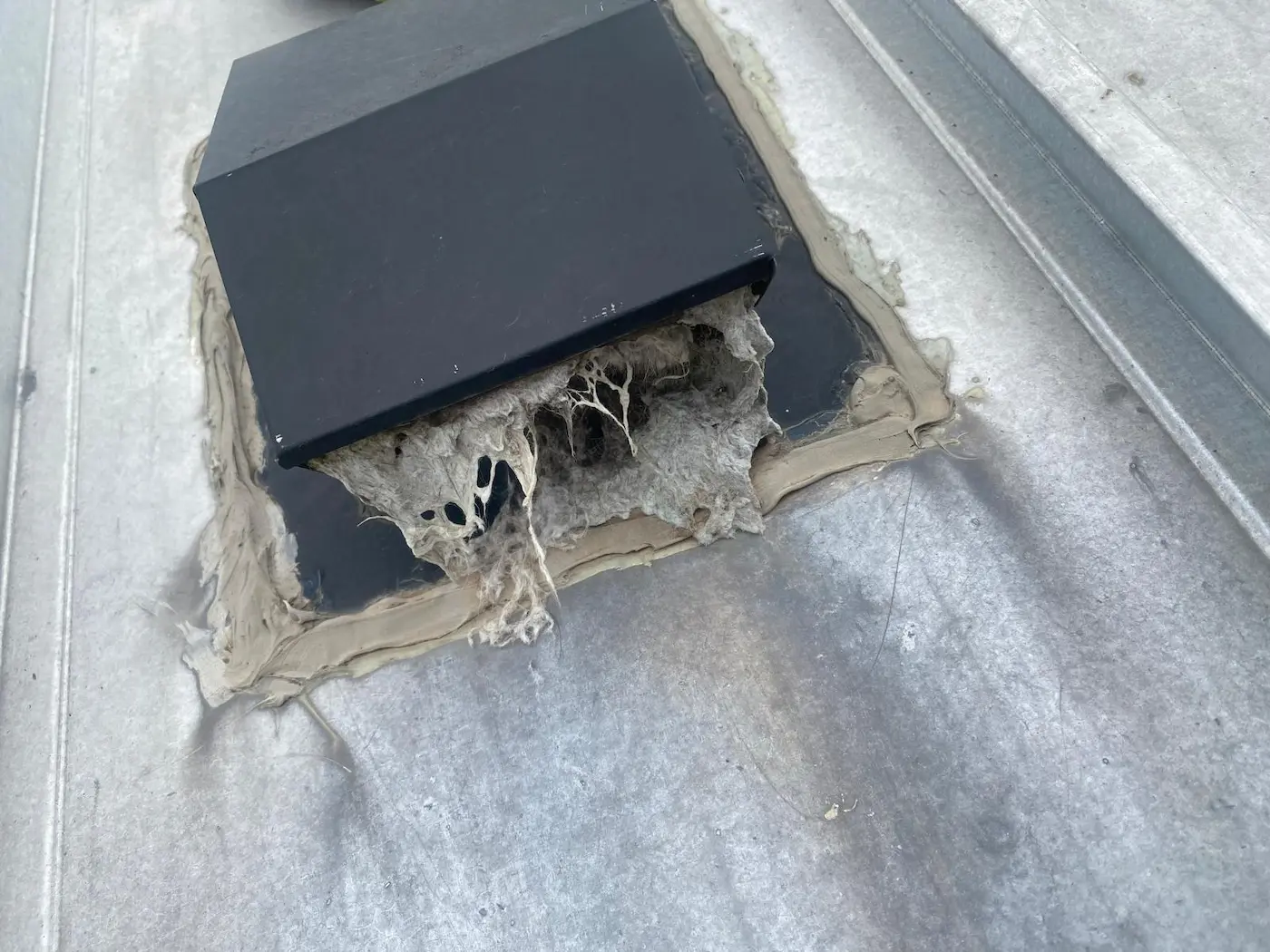
Incomplete or damaged dryer vent systems provide an easy entryway for pests into your home. The exterior termination hood features a damper flap designed to open when exhaust air flows and close when the dryer turns off.
If heavy lint buildup prevents the damper flap from closing tightly, mice, rats, birds, and insects can easily crawl inside. Birds frequently nest inside warm exhaust vents during spring, completely clogging the pipe with twigs and straw, creating a severe double fire hazard. Installing a proper exterior louver or protective mesh hood prevents wildlife intrusion.
Warning Signs Your Dryer Vent Is Clogged
Recognizing the early warning signs of a clogged vent line allows you to take action before serious damage occurs.
| Warning Symptom | What It Indicates | Recommended Action |
|---|---|---|
| Clothes Take >1 Cycle to Dry | Severe airflow restriction trapped in exhaust line | Clean vent line thoroughly from dryer to outside hood |
| Dryer Exterior Is Hot to Touch | Excessive internal heat buildup unable to vent | Stop using appliance immediately and inspect exhaust path |
| Musty Odor on Clothes | Trapped moisture condensing inside drum | Clean vent line and check for localized water damage |
| No Air Flow at Outside Hood | Complete blockage or stuck exterior damper flap | Clear lint blockages and replace jammed exterior hood |
| Lint Accumulating Behind Dryer | Disconnected or ruptured flexible transition duct | Replace transition duct with rigid metal piping and seal |
If your exhaust line requires rerouting or structural repairs due to improper original installation, professional dryer vent pipe repair or dryer vent replacement eliminates recurring safety risks.

DIY Maintenance vs. Professional Service
Homeowners can easily handle basic exterior maintenance, but deep duct cleaning requires specialized pneumatic tools.
| Task Category | Safe Homeowner Maintenance | Professional Technical Service |
|---|---|---|
| Lint Screen Care | Clean mesh screen before and after every load | Deep wash screen to remove invisible fabric softener film |
| Exterior Hood Check | Ensure hood flap moves freely and remove visible lint | Inspect rooftop terminations and clear bird nests |
| Transition Duct | Vacuum behind dryer and check flex pipe for crushes | Install semi-rigid or rigid metal transition lines |
| Full Run Duct Cleaning | Cleaning short, straight runs (< 6 feet) | Rotary brush and high-powered vacuum for long wall/attic runs |
Frequently Asked Questions
How often should dryer vents be cleaned?
Dryer exhaust vents should be thoroughly cleaned at least once per year. Homes with large families, multiple pets, or long exhaust duct runs (>15 feet) should schedule inspections every 6 to 9 months.
Can a clogged dryer vent cause my dryer to stop heating?
Yes. Modern dryers contain safety thermal fuses designed to blow when internal temperatures exceed safe limits. A clogged vent causes thermal overload, tripping the thermal fuse and disabling the heating element.
Is flexible plastic or foil ducting safe for dryer vents?
No. Flexible white plastic and thin foil accordion ducting are highly flammable, easily crushed, and trap lint in their corrugated ridges. Building codes require smooth, rigid, or semi-rigid metal ducting for dryer exhaust lines.
What is the maximum recommended length for a dryer vent line?
According to standard mechanical codes, dryer vent runs should not exceed 35 feet from the dryer location to the exterior wall or roof termination. Every 90-degree elbow reduces the maximum allowed length by 5 feet.
How do I know if my dryer vent is leaking inside my home?
Excessive humidity, a warm laundry room during operation, fine lint settling on surfaces behind the dryer, or a burnt smell are clear indicators that your flexible transition duct is damaged or disconnected.
Protect Your Home with Professional Maintenance
Preventing dryer fires, carbon monoxide risks, and excessive energy bills begins with regular exhaust system care.
The experienced technicians at Go Air Ducts provide expert dryer vent cleaning, dryer vent inspection, dryer vent rerouting, and dryer vent replacement across Austin, San Antonio, and nearby Texas communities.
Contact Go Air Ducts today to schedule a professional dryer vent inspection and keep your home safe.