
Table of Contents
- Why Mold in HVAC Systems Threatens Your Austin Home
- How Mold Spreads Through Air Ducts and Why Standard HVAC Work Misses It
- Our Specialized Mold Detection Process
- Certified Technicians Who Understand Both Mold and HVAC Systems
- Complete Mold Remediation During Installation and Cleaning
- Energy-Efficient Solutions That Prevent Future Mold Growth
- Why Austin Homeowners Choose Go Air Ducts for Mold-Safe HVAC Services
- Your Free Mold Assessment and HVAC Evaluation
- Frequently Asked Questions (FAQ)
Why Mold in HVAC Systems Threatens Your Austin Home
Mold in your HVAC system isn’t just an air quality issue, it’s a health and structural threat that most standard contractors overlook. We’ve spent years working in Austin homes where mold has quietly colonized ductwork, feeding on dust and moisture while spreading spores throughout living spaces. Standard HVAC maintenance often catches this problem too late, after families have already experienced respiratory issues, allergies, or persistent odors they can’t trace.
That’s why we built our mold-specialized approach around detection, remediation, and prevention all in one integrated process. Austin’s climate, with hot summers and occasional humidity spikes, creates the perfect conditions for mold growth inside ductwork. Most HVAC contractors don’t have the training or equipment to identify mold properly, let alone remove it safely during installation or cleaning work.
We do both, which makes all the difference.
Mold colonies inside air ducts spread contaminated air into every room, every day. Unlike surface mold you can see on a bathroom wall, duct mold remains hidden until the problem becomes severe. Once established, mold produces mycotoxins and spores that circulate continuously through your home, aggravating allergies, asthma, and other respiratory conditions.
Austin homeowners often contact us after noticing persistent musty smells, increased allergy symptoms, or visible mold growth around air vents. By that point, the problem has usually been active for months. We’ve seen cases where families replaced air filters monthly because they kept clogging with mold-compromised debris, never realizing the source was inside the ducts themselves.
The structural risk is equally serious. Mold weakens duct seals, reducing airflow efficiency and forcing your HVAC system to work harder. This accelerates component wear, increases energy costs, and can eventually damage insulation and framing in attic spaces or wall cavities where ducts run. Early detection and removal prevents both health problems and costly infrastructure damage.
What to do next: If you’ve noticed musty odors, visible discoloration around vents, or unexplained allergy flare-ups, schedule a free inspection. Waiting typically makes the problem worse and more expensive to fix.
How Mold Spreads Through Air Ducts and Why Standard HVAC Work Misses It
Mold enters your ducts through three primary pathways: contaminated outdoor air pulled through intake vents, moisture from condensation inside ductwork, and dust accumulation that provides organic food for spore growth. Austin’s summer heat creates temperature differentials that cause moisture to condense inside ducts, especially in poorly insulated sections or where air leaks occur.
Standard HVAC contractors focus on airflow, equipment operation, and energy efficiency. They’re not trained to visually identify mold, distinguish it from dust discoloration, or understand how mold interacts with humidity control and duct sealing. Many will clean ducts without addressing underlying moisture problems, meaning mold returns within months. Others install new equipment without inspecting existing ductwork, inadvertently connecting brand-new HVAC systems to contaminated distribution networks.
This is where we operate differently. Our inspection process includes moisture mapping, thermal imaging to identify cold spots where condensation concentrates, and fiber-optic camera evaluation of duct interiors. We can tell the difference between harmless dust buildup and active mold colonization. More importantly, we address the root cause, not just the symptom.
Consider this scenario: A homeowner notices reduced airflow and calls for an air duct cleaning. Standard contractors run a brush through the main line, collect dust, and declare the job complete. We inspect the entire network with cameras, identify moisture accumulation in the return air line, discover mold beginning to establish on fiberglass lining, and recommend both duct sealing and controlled dehumidification adjustments. The second approach costs more upfront but prevents the mold from returning within a season.
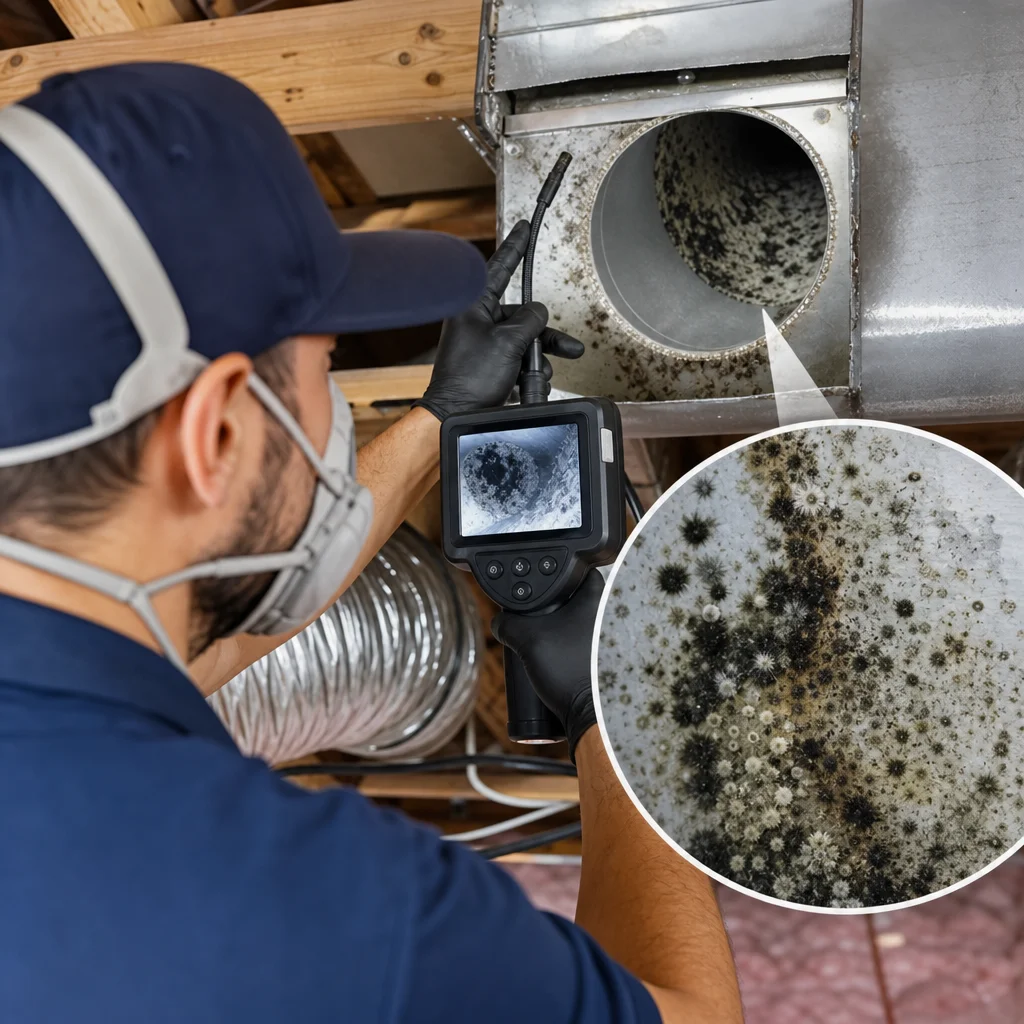
Actionable insight: Request that any HVAC contractor provide camera footage and moisture readings during inspection. If they can’t show you what they’re looking at, they’re not specialized enough for mold concerns.
Our Specialized Mold Detection Process
We deploy three complementary detection methods to ensure nothing is missed. First, we conduct a visual inspection with fiber-optic cameras, photographing the interior of every major duct run. This reveals discoloration, active growth, dust patterns, and debris accumulation that indicates moisture problems.
Second, we measure humidity levels inside the duct system and compare them to outdoor conditions. High interior humidity relative to outside air signals condensation issues that create mold-friendly environments. We use psychrometric calculations to determine whether your current HVAC settings are contributing to the problem.
Third, we analyze dust samples from ductwork using laboratory methods. This tells us whether mold spores are present, what species we’re dealing with, and how aggressive remediation needs to be. Some mold types are more allergenic or toxic than others, and this data guides our treatment approach.
The entire assessment takes two to three hours for a typical Austin home and includes a detailed report showing photos, humidity data, and specific remediation recommendations. We provide this as part of our free evaluation, so you have concrete information before making any decisions about cost or scope.
What this means for you: You’re not paying for guesswork or generic advice. You’re getting laboratory-backed, photographic evidence of exactly what’s happening inside your system.
Certified Technicians Who Understand Both Mold and HVAC Systems
Our team holds dual certifications in HVAC systems and mold remediation. This isn’t common in the industry. Most contractors specialize in one or the other, creating a knowledge gap that leads to incomplete solutions.
We train our technicians to understand how mold biology intersects with HVAC physics. They know how ductwork design influences moisture accumulation, how refrigerant temperature affects condensation rates, and how sealed versus unsealed return air plenums create different mold risk profiles. This depth allows us to design solutions that address root causes rather than just treating symptoms.
Every technician carries certifications from the EPA, NADCA (National Air Duct Cleaners Association), and specialized mold remediation boards. They’ve completed continuing education on emerging mold strains and treatment methods. When you see our team on your property, you’re getting people who understand your specific problem and know exactly how to solve it safely.
Safety is non-negotiable in our work. Mold remediation generates spore disturbance if done incorrectly, temporarily worsening air quality during treatment. Our containment protocols, negative pressure systems, and disposal methods follow industry guidelines precisely to prevent cross-contamination in other parts of your home.
Your takeaway: Ask any HVAC contractor about their mold training credentials and experience. If they haven’t completed specialized remediation certification, they’re not qualified for this work, regardless of their HVAC expertise.
Complete Mold Remediation During Installation and Cleaning
Our remediation process happens in stages. First, we isolate affected ductwork using temporary containment and negative pressure equipment, preventing spore escape into living areas. Next, we remove contaminated insulation or linings if the mold has penetrated fiberglass duct board.
For metal ductwork, we use EPA-approved antimicrobial treatments applied with controlled equipment, ensuring complete penetration into seams and joints where mold hides. We then perform mechanical cleaning with HEPA-filtered equipment to remove dead mold material and debris. Finally, we seal all duct connections, repair leaks, and apply moisture-resistant sealants to prevent future infiltration.
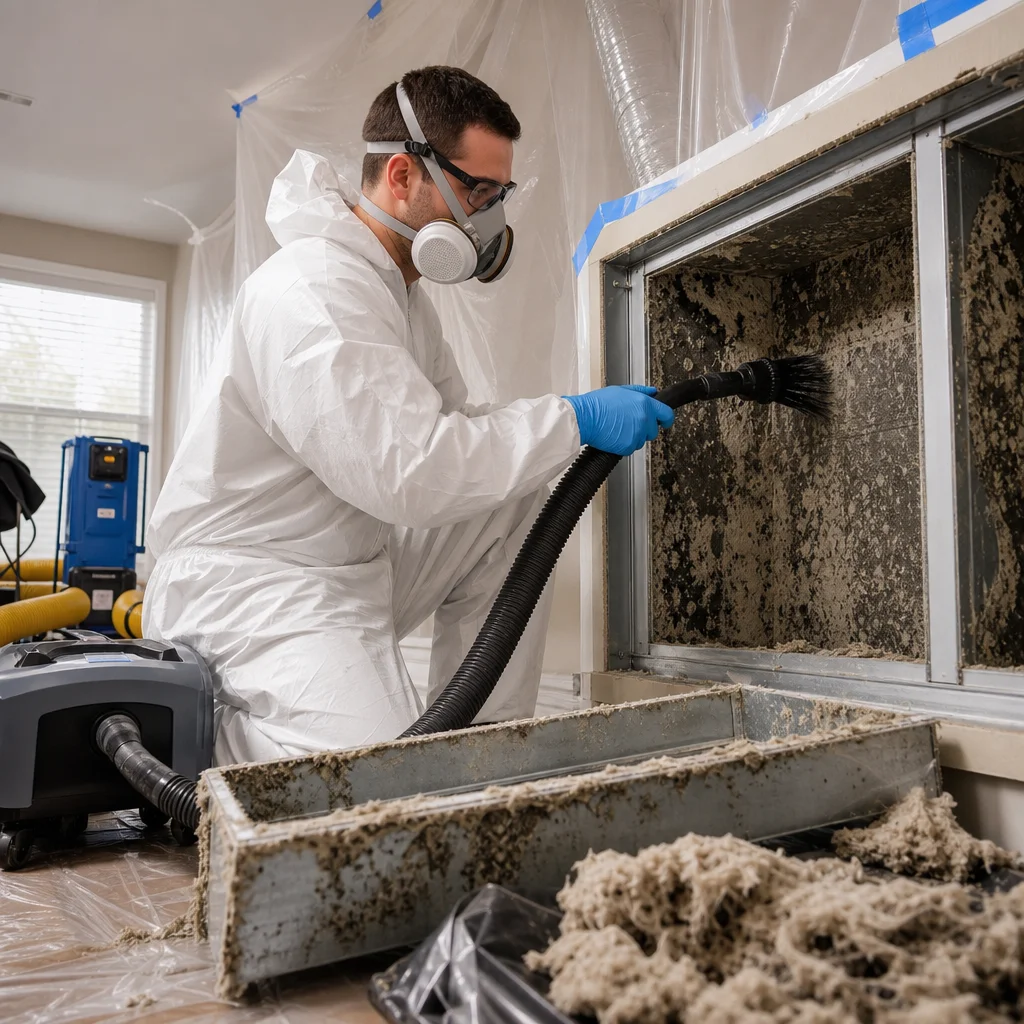
If you’re installing new HVAC equipment, we coordinate the entire process so that new components connect only to remediated, sealed ductwork. This prevents your investment in new equipment from pulling air through contaminated distribution lines, which is unfortunately common when mold remediation isn’t integrated into the installation process.
Our professional air duct mold remediation service includes post-treatment verification testing. We don’t declare a job complete until laboratory analysis confirms mold spore levels have dropped to acceptable indoor air quality standards.
Practical next step: If you’re planning an HVAC replacement or upgrade, schedule your mold assessment before equipment purchase. This ensures your remediation work is complete and your new system installs into a clean, controlled environment.
Energy-Efficient Solutions That Prevent Future Mold Growth
Once mold is removed, preventing recurrence requires addressing the moisture conditions that enabled it. We accomplish this through a combination of duct sealing, HVAC system tuning, and in many cases, attic insulation upgrades.
Sealed ductwork reduces the temperature differentials that cause condensation inside ducts. When return air ducts are properly sealed, warm, humid air from your home doesn’t enter the duct system at the wrong temperature, which would trigger moisture accumulation. Modern sealant materials are rated for 25+ year durability.
We also adjust your HVAC system’s humidity control settings during the remediation process. Modern thermostats can be programmed to maintain interior humidity between 30-50%, the range where mold growth dramatically slows. This requires minimal energy cost but delivers substantial protection.
For Austin homes where attic conditions contribute to duct moisture problems, we recommend attic insulation upgrades that reduce heat transfer and moisture migration. Proper attic insulation keeps ductwork cooler, reducing the condensation risk during hot Texas summers.
The combination of sealed ducts, humidity control, and proper insulation typically reduces future mold risk by 90% or more. This isn’t just about air quality; it’s also about energy efficiency. Sealed, properly insulated ductwork operates at peak efficiency, lowering monthly utility costs by an average of 12-15% in Austin homes we’ve serviced.
Action point: After remediation, commit to an annual HVAC inspection focused on moisture monitoring. Early detection of rising humidity levels allows us to make minor adjustments before mold returns.
Why Austin Homeowners Choose Go Air Ducts for Mold-Safe HVAC Services
We’ve built our practice on one core principle: mold in HVAC systems demands specialized expertise, not generic service. Austin homeowners have learned this lesson the hard way after hiring contractors who treated mold as a secondary concern or didn’t understand how to integrate remediation with equipment installation.
We’re different because we’re local. We understand Austin’s climate, humidity patterns, and common HVAC design challenges in our area. We’re not a national franchise following generic protocols; we’re a team that has spent years solving mold problems specific to Central Texas homes.
Our reputation is built on results. Families contact us because they’ve had bad experiences with mold returning after previous “cleaning” services, or because they’ve noticed air quality problems persist despite new HVAC equipment. We solve these problems comprehensively because we address them at every level: detection, remediation, system integration, and prevention.
We also stand behind our work. Our mold remediation includes a performance guarantee. If mold returns in the treated ductwork within two years, we address it at no charge. This confidence comes from understanding the problem deeply and solving it correctly the first time.
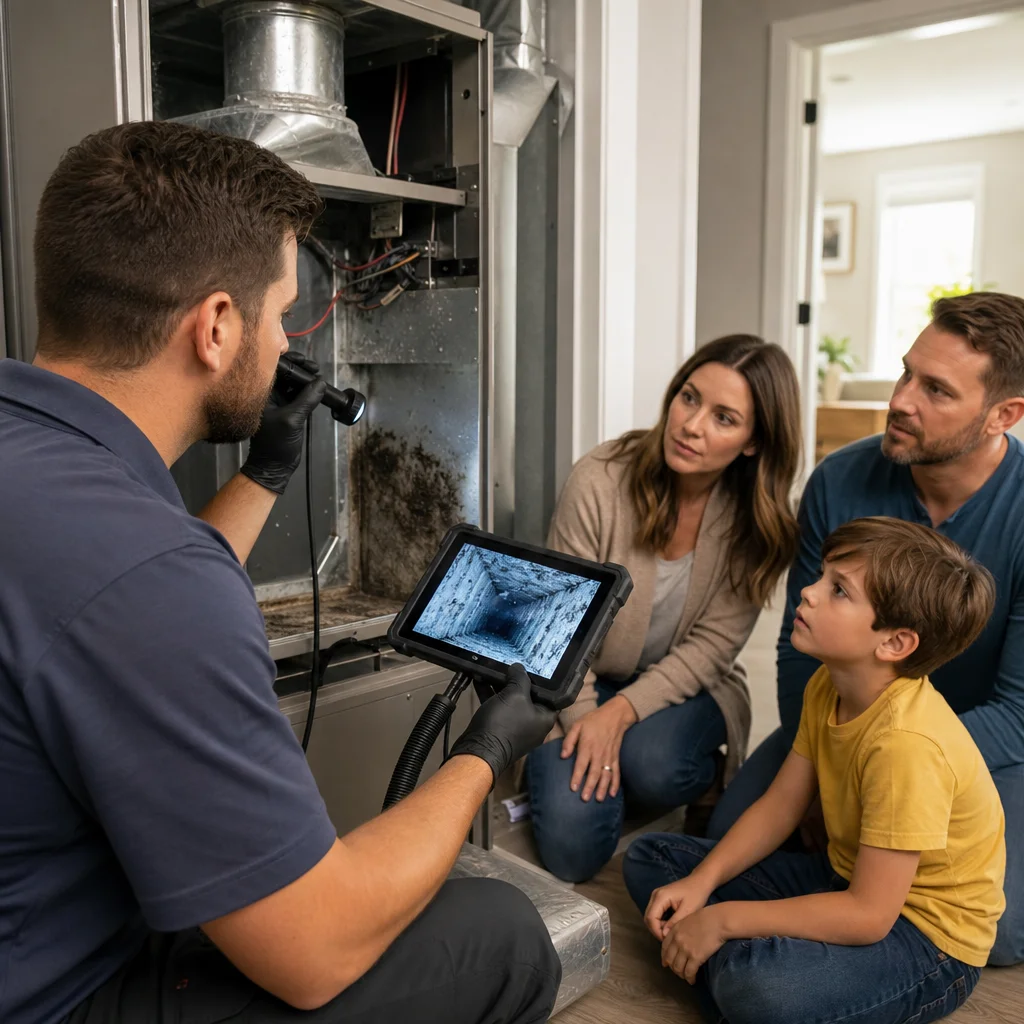
Your confidence factor: When evaluating contractors, ask whether they guarantee their mold remediation work and what testing methods they use to verify success. If they won’t put their work in writing, that’s your signal they’re not specialized enough.
Your Free Mold Assessment and HVAC Evaluation
Getting started is straightforward. Contact us today for a free, no-obligation evaluation. We’ll schedule a convenient time to inspect your entire HVAC system, run moisture and humidity diagnostics, and provide a detailed report with recommendations and pricing.
During the assessment, we photograph interior ductwork, measure system efficiency, and collect dust samples for laboratory analysis if needed. You’ll receive a written proposal outlining exactly what we found, why remediation is recommended, and how we’ll prevent future problems.
We serve Austin, San Antonio, Dallas, and Houston, and we offer same-day consultation appointments for homeowners who’ve identified active mold concerns. Our free estimates include a timeline for the work and clear explanation of what each phase accomplishes.
Call us or visit our website to schedule your assessment. You can expect to have answers about your mold situation and a clear path forward within 48 hours of your appointment.
Your indoor air quality matters. Let us help you protect your home and family with solutions built by specialists who understand mold and HVAC systems equally well.
For further reading: Certified mold technicians in Austin.
If you’re dealing with dust, poor airflow, mold in your ducts, or a clogged dryer vent — don’t wait. These issues can affect your health and safety. Go Air Ducts Group are the local experts in air duct cleaning, mold removal, dryer vent cleaning, and attic insulation. Call now for a free inspection and same-day service in Austin and San Antonio.
Frequently Asked Questions (FAQ)
How do we detect mold in air ducts during our HVAC inspections?
We use specialized equipment including thermal imaging cameras and moisture meters to identify mold growth that isn’t visible to the naked eye. Our certified technicians also perform visual inspections of accessible ductwork and take air quality samples to confirm mold presence and type. This comprehensive approach ensures we catch mold problems before they spread throughout your home’s HVAC system.
What makes our mold remediation different from standard air duct cleaning?
We combine professional air duct cleaning with targeted mold treatment using EPA-approved products specifically designed for HVAC systems. Our process includes sealing and insulating weak points in your ductwork that allow moisture to accumulate, which is where mold thrives. Standard cleaners typically only remove surface debris, but we address the root cause so mold doesn’t return.
Will upgrading my insulation actually prevent mold in my HVAC system?
Yes, proper attic and duct insulation directly reduces condensation buildup, which is mold’s primary food source in HVAC systems. We install energy-efficient insulation that maintains consistent temperatures and reduces moisture accumulation in your ducts and crawl spaces. This preventive step is especially important in Austin’s humid climate and saves you money on energy bills while protecting your air quality.