
Home » Our Services » Chimney Services » Chimney Crown Rebuild
Chimney Crown Rebuild
Chimney Crown Repair vs. Full Rebuild: Knowing the Difference
Homeowners often ask whether their existing crown can be patched or if a complete structural replacement is required. Assessing the depth of damage determines the appropriate engineering response.
Factor | Minor Crown Repair / Resealing | Full Chimney Crown Rebuild |
Damage Level | Hairline cracks under 1/8 inch wide | Wide structural fissures, missing chunks, or crumbling concrete |
Original Material | Sound Portland concrete base | Inferior builder-grade mortar mix or structural erosion |
Structural Integrity | Crown is firmly attached to masonry | Crown is loose, hollow, or allowing direct water entry |
Long-Term Solution | Flexible elastomeric coating sealant | Complete removal down to brick line and high-strength concrete re-pour |
Attempting to patch a severely compromised or mortar-based crown with temporary caulk only traps moisture inside, accelerating brick deterioration during seasonal freeze-thaw cycles.
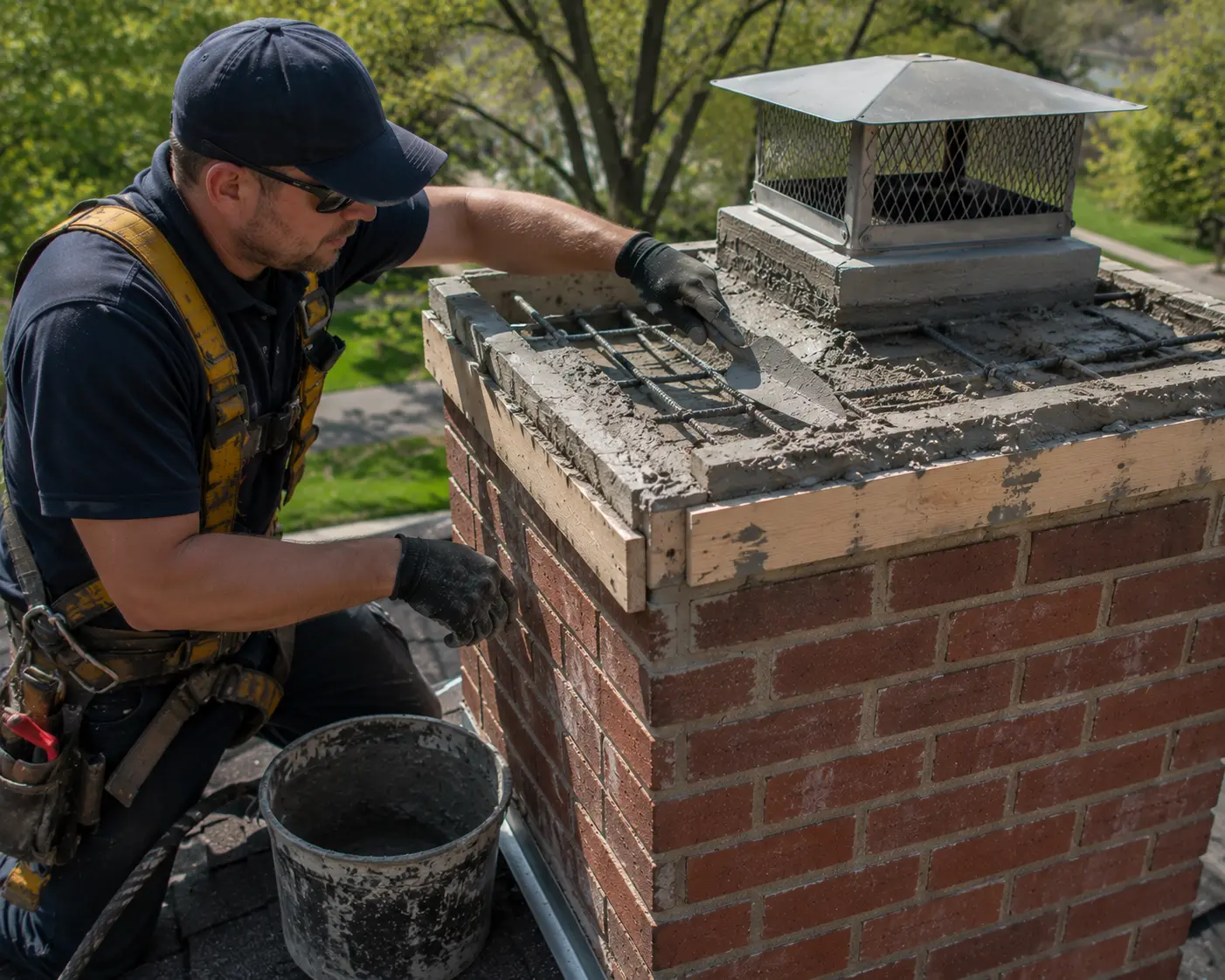
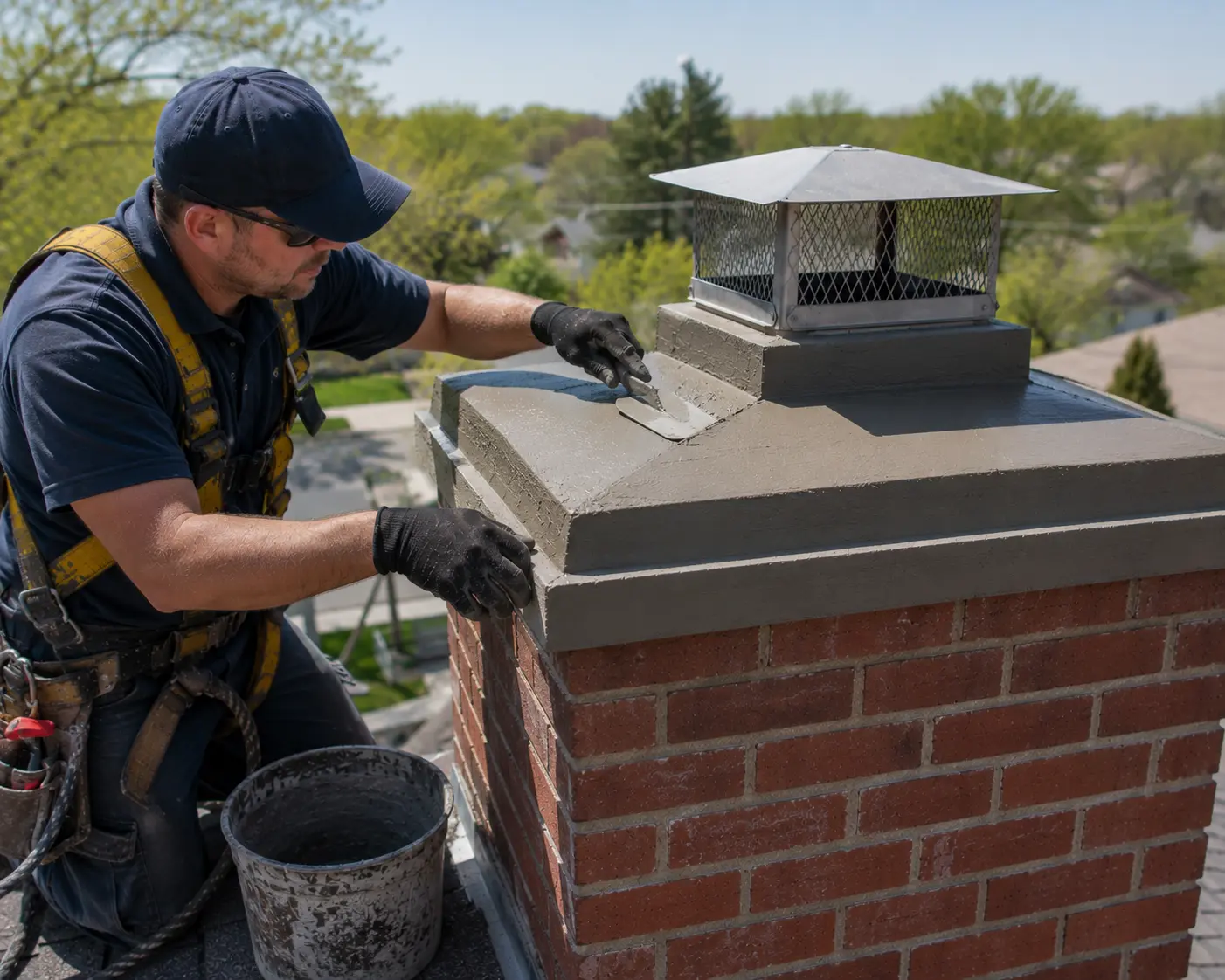
Major Risks of a Severely Damaged Chimney Crown
Ignoring a ruined chimney crown triggers a destructive domino effect throughout your entire roofing and masonry structure.
1. Brick Spalling and Mortar Joint Erosion
Bricks are porous like sponges. When a cracked crown allows rainwater to flow directly behind the outer brick face, water fills the internal clay pores. During winter freeze-thaw cycles, trapped water expands by roughly 9%, bursting the brick faces off (spalling) and turning structural mortar joints into soft powder.
2. Interior Ceiling and Attic Water Damage
Water entering through a broken crown doesn’t stay on the roof. It travels down internal chimney cavities, seeping into attic insulation, rotting wooden rafters, staining living room ceilings, and ruining fireplace fireboxes.
3. Compromised Flue Liners and Fire Safety
Excess moisture entering internal walls degrades clay tile flue liners, creating cracks that allow toxic carbon monoxide or dangerous heat to escape into surrounding house framing. Guidelines from the U.S. Consumer Product Safety Commission (CPSC) emphasize maintaining sound external chimney venting structures to prevent toxic combustion gas leaks and residential fire hazards.
For comprehensive ventilation and system care, pair external roof protection with internal home airflow maintenance, such as our professional return vent cleaning services to keep your air pathways clean and balanced.
Engineered Standards for a Custom Concrete Crown Rebuild
A properly rebuilt chimney crown is engineered to withstand decades of harsh weather. Builder-grade installations often fail because they rely on thin mortar coats. A true professional rebuild adheres to strict masonry specifications:
- Portland Concrete Mix: Constructed exclusively with high-strength, fiber-reinforced concrete, never standard mortar mix.
- Minimum 2-Inch Thickness: Built at least 2 inches thick at the thinnest outer edge and sloping upward toward the flue for optimal drainage.
- Overhanging Drip Edge: Extends at least 2 inches past the outer chimney walls with a cast-in drip groove to force water to fall directly onto the roof rather than running down the brick face.
- Flue Expansion Joints: Built with thermal bond-breaker material surrounding the clay flue liner, allowing the flue pipe to expand when heated without cracking the new concrete slab.
Long-Term Benefits of a Rebuilt Chimney Crown
Investing in a complete, professionally poured chimney crown rebuild offers substantial long-term value for your property:
- Eliminates Structural Leak Risks: Forms an impenetrable top seal, keeping attic space, ceilings, and fireplaces completely dry.
- Extends Total Chimney Lifespan: Protects expensive brickwork, flashing, and flue liners from moisture decay, avoiding total chimney tear-downs.
- Boosts Property Value and Buyer Confidence: Home inspectors flag cracked crowns immediately; a brand-new certified concrete crown passes home buyer inspections with ease.
- Optimizes Combustion Performance: Keeping moisture out of internal flues prevents drafting issues and rust damage on iron dampers.
Environmental guidance from the U.S. Environmental Protection Agency (EPA) highlights that maintaining dry, structurally sound chimney flues directly contributes to cleaner, safer fuel combustion and reduced smoke output.
To ensure your home’s total ventilation ecosystem performs at peak efficiency, explore our expert HVAC blower cleaning services or read our practical article on Austin coil blower cleaning benefits to learn how synchronized system care protects your home.
Protect your brick masonry from water damage, halt costly attic leaks, and secure your home’s structural safety. Contact us today to schedule your roof-level chimney crown inspection and custom rebuild estimate!
Our Before & After Work
Your chimney plays a crucial role in maintaining a safe and efficient heating system in your home.


Cities We service Around Austin
Cities We service Around San Antonio
Cities We service Around Houston
Cities We service Around Dallas
How We Work
At Go Air Duct, we prioritize the health and comfort of our customers by providing comprehensive air duct cleaning services. Our three-step process ensures thorough cleaning, improved air quality, and enhanced HVAC system efficiency.
1
Request A Free Estimate
Start the process by contacting us to request a complimentary estimate tailored to your specific needs and budget.
2
Get Recommendations And Estimate
Receive personalized recommendations and detailed estimates based on your requirements and preferences.
3
We Deliver and Install
Sit back and relax as we efficiently deliver and expertly install your chosen HVAC solutions for optimal performance and comfort.
Schedule Your Service Today
Got a question or need assistance? Drop us a line below, and we’ll get back to you promptly
Reviews
Frequently Asked Questions
Why should I install a chimney cap?
A chimney cap helps keep rain, leaves, debris, and animals from entering the chimney while also protecting the fireplace and chimney system.
What are signs I need a new chimney cap?
Signs include rust, visible damage, missing parts, water leaks, animal activity, or a chimney opening that is not properly covered.
How long does a chimney cap installation take?
Most chimney cap installations can be completed within a few hours, depending on the chimney size, roof access, and type of cap being installed.
What type of chimney cap is best for my home?
The right chimney cap depends on the chimney design, weather conditions, ventilation needs, and material preferences. A professional can recommend the best option for your system.
Can a chimney cap help prevent water damage?
Yes. A properly installed chimney cap helps reduce water entry through the chimney opening, protecting the flue, masonry, and interior areas of the home.