Home » Our Services » Chimney Services » Chimney Crown Repair
Chimney Crown Repair
The Role of a Healthy Chimney Crown vs. Chimney Cap
Homeowners often confuse chimney crowns with chimney caps, but both work together as a dual barrier against external elements.
Structural Component | Primary Material | Main Function | Consequence of Failure |
Chimney Crown | Reinforced concrete or specialized mortar mix | Covers top masonry footprint; sheds water outward away from bricks | Water seeps into chimney walls, causing spalling and interior leaks |
Chimney Cap | Stainless steel, copper, or galvanized metal mesh | Covers the open flue opening directly | Rain enters flue pipe; birds, pests, and debris block airflow |
When a chimney crown deteriorates, water runs down the sides of the chimney rather than dripping safely onto the roof overhang. This continuous moisture exposure accelerates brick deterioration from the top down.

Breathe Easier With Professional HVAC Care
Our certified technicians deliver reliable duct cleaning, dryer vent service, and HVAC solutions to keep your home comfortable and your air clean.
Common Causes and Consequences of Chimney Crown Damage
Understanding why chimney crowns fail helps homeowners catch minor surface damage before it turns into a total structural breakdown.
1. Natural Expansion and Moisture Freeze-Thaw Cycles
During autumn and winter, rain settles into microscopic pores across the concrete surface. When temperatures drop below freezing, that trapped water expands by roughly 9%, widening small pores into deep structural fissures. Repeated freezing and thawing create severe surface crumbling and deep vertical cracks that bypass the protective slab entirely.
2. Inferior Construction Materials
In many builder-grade installations, contractors mistakenly construct chimney crowns using standard brick mortar (masonry mix) rather than reinforced concrete. Standard mortar lacks the structural density required to withstand constant outdoor weather exposure. It shrinks as it cures, cracks within a few seasons, and lacks the necessary flexibility to handle thermal expansion.
3. Structural Settlement and Flue Shifting
As houses settle naturally, internal clay flue liners expand and contract from fireplace heat. If the chimney crown was poured directly flush against the flue liner without an expansion joint, the outward pressure of the heated flue pipe will crack the surrounding concrete crown.
Safety recommendations from the U.S. Consumer Product Safety Commission (CPSC) emphasize maintaining sound external venting structures to prevent moisture accumulation and preserve safe combustion exhaust pathways.
Repair Strategies: Elastomeric Coating vs. Full Re-Pouring
The appropriate repair method depends heavily on the extent of structural damage discovered during our initial roof-level assessment.
Elastomeric Waterproof Sealants for Minor Cracks
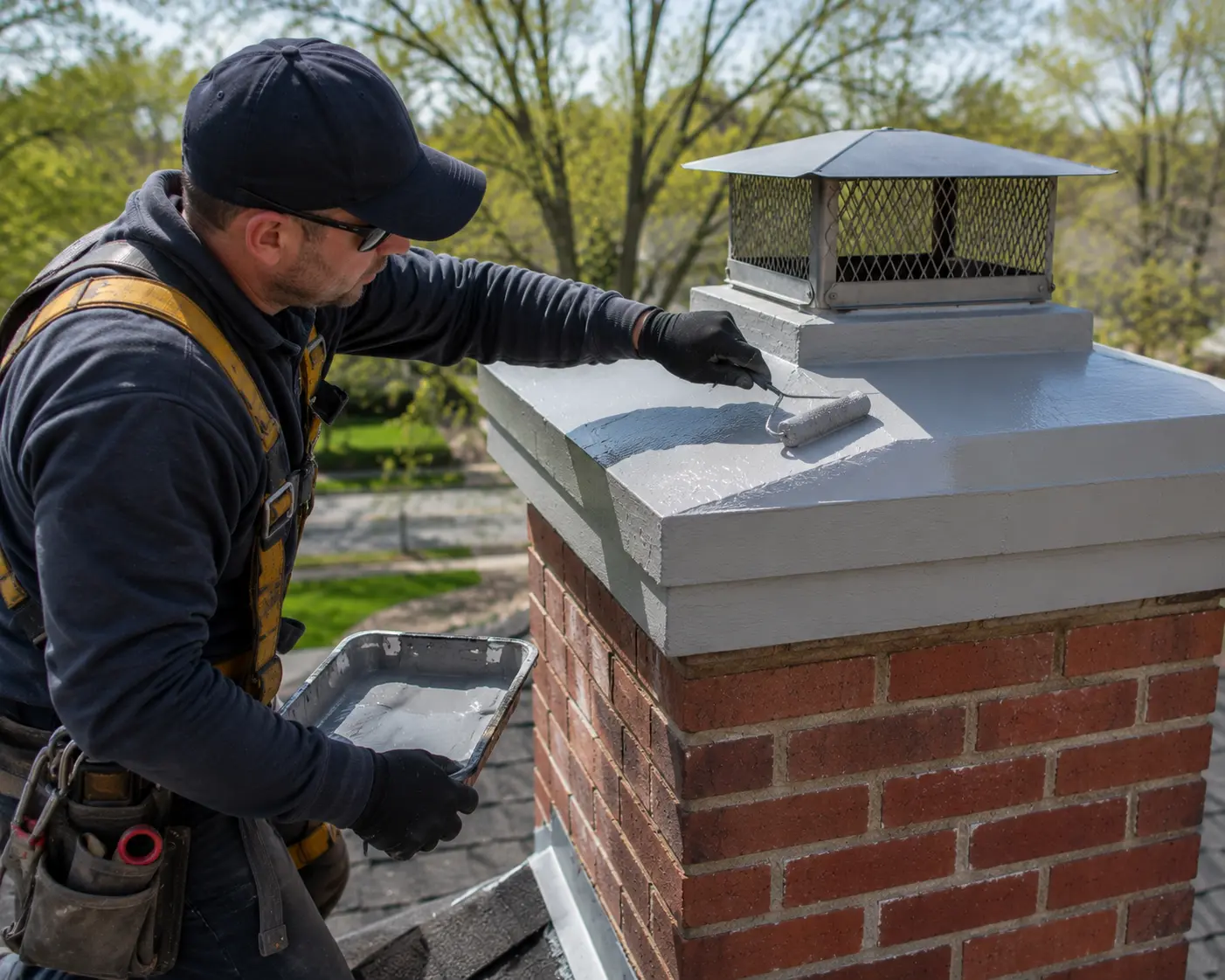
When a crown exhibits hairline fractures but remains structurally attached to the masonry base, applying a high-performance elastomeric chimney crown sealant is the most cost-effective fix. These specialized flexible coatings bridge active cracks, cure into a rubberized waterproof membrane, and flex alongside seasonal temperature shifts without cracking.
Full Crown Replacement and Custom Concrete Re-Pouring
If the existing crown is crumbling, missing large chunks, or constructed without an overhang, sealing is no longer effective. Our team removes the compromised concrete down to the top brick course, installs bond-breaker tape around the flue liner, builds custom formwork, and pours a high-strength, steel-reinforced concrete slab featuring a continuous overhang and drip edge to shed water cleanly away from the chimney face.
To keep your home’s environmental channels performing at their best, explore our practical guide on return vent cleaning services to ensure efficient indoor airflow throughout every season.
Comprehensive Benefits of Professional Chimney Crown Repair
Investing in timely chimney crown maintenance yields long-term financial and safety advantages for your property.
- Prevents Costly Structural Masonry Repairs: Stopping top-down water intrusion protects bricks and mortar joints from crumbling, avoiding expensive tuckpointing or chimney rebuilds.
- Protects Interior Living Spaces: Sealing top moisture entry points prevents water from dripping into ceiling drywall, attic insulation, and fireplace fireboxes.
- Inhibits Toxic Mold and Mildew Growth: Damp chimney interiors create ideal environments for mold spore cultivation; waterproof crowns keep internal channels dry.
- Extends Total Chimney System Lifespan: A sound, well-maintained crown protects surrounding components, including flashing, clay flue liners, and damper assemblies.
According to guidance from the U.S. Environmental Protection Agency (EPA), protecting residential chimney infrastructure from moisture damage directly ensures cleaner, safer combustion performance for wood and fuel-burning heating appliances.
For complete ventilation and system care, review our comprehensive HVAC blower cleaning services to maintain balanced air movement across your central comfort systems. To dive deeper into maintenance timing, check out our practical article on Austin coil blower cleaning benefits for expert home system insights.
Protect your chimney masonry from water damage, prevent expensive interior ceiling leaks, and secure your home’s structural health. Contact us today to schedule your comprehensive chimney crown inspection and custom repair estimate!
Our Before & After Work
Your chimney plays a crucial role in maintaining a safe and efficient heating system in your home.


Cities We service Around Austin
Cities We service Around San Antonio
Cities We service Around Houston
Cities We service Around Dallas
How We Work
At Go Air Duct, we prioritize the health and comfort of our customers by providing comprehensive air duct cleaning services. Our three-step process ensures thorough cleaning, improved air quality, and enhanced HVAC system efficiency.
1
Request A Free Estimate
Start the process by contacting us to request a complimentary estimate tailored to your specific needs and budget.
2
Get Recommendations And Estimate
Receive personalized recommendations and detailed estimates based on your requirements and preferences.
3
We Deliver and Install
Sit back and relax as we efficiently deliver and expertly install your chosen HVAC solutions for optimal performance and comfort.
Schedule Your Service Today
Got a question or need assistance? Drop us a line below, and we’ll get back to you promptly
Reviews
Frequently Asked Questions
Why should I install a chimney cap?
A chimney cap helps keep rain, leaves, debris, and animals from entering the chimney while also protecting the fireplace and chimney system.
What are signs I need a new chimney cap?
Signs include rust, visible damage, missing parts, water leaks, animal activity, or a chimney opening that is not properly covered.
How long does a chimney cap installation take?
Most chimney cap installations can be completed within a few hours, depending on the chimney size, roof access, and type of cap being installed.
What type of chimney cap is best for my home?
The right chimney cap depends on the chimney design, weather conditions, ventilation needs, and material preferences. A professional can recommend the best option for your system.
Can a chimney cap help prevent water damage?
Yes. A properly installed chimney cap helps reduce water entry through the chimney opening, protecting the flue, masonry, and interior areas of the home.