
🕑 7 min read
An air conditioner that runs nearly nonstop on a triple-digit Texas afternoon is normal. One that runs nonstop and still cannot cool the house is telling you something. Many of the causes sit in the airflow path, meaning filters, coils, registers, and ductwork, and some of them are easy to check. This guide helps you sort out the signs, the likely culprits, and when to call for a different kind of help.
Quick Answer
An HVAC system is working too hard when it runs much longer than it used to, cannot reach the thermostat setting, cools some rooms far less than others, or costs more to run without a change in how you use it. Common airflow-side causes include dirty filters, dirty coils, leaking or damaged ducts, and blocked returns. Refrigerant and electrical issues need a licensed HVAC contractor.
Key Takeaways
- Long run times, uneven rooms, weak airflow, and rising bills are the most common signs of strain.
- A dirty filter is the easiest cause to check, and a dirty filter makes the system work harder, according to ENERGY STAR.
- Leaky or damaged ductwork wastes conditioned air before it reaches the room.
- Airflow problems and equipment problems look alike, so separate them before spending money.
The Signs That Say Your System Is Struggling
| What You Notice | Possible Airflow-Side Cause | Sensible Next Step |
|---|---|---|
| Runs for very long cycles and barely reaches the set temperature | Dirty filter or coils, leaking ducts, restricted airflow | Check the filter, then arrange an inspection |
| Some rooms are much hotter than others | Leaks, crushed or disconnected ducts, closed or blocked registers | Duct inspection or leak testing |
| Weak airflow from vents | Dirty filter, blower or coil buildup, duct restriction | Check filter, then inspect blower and ducts |
| Energy bills climb with no change in habits | Duct leakage, dirty coils, aging equipment | Compare to prior months and book an evaluation |
| Frost or ice on the indoor coil or refrigerant line | Severe airflow restriction or a refrigerant issue | Turn the system off and call a licensed HVAC contractor |
| Moisture or stains around ducts or vents | Condensation, leaks, or insulation problems | Inspect; see sweating air ducts |
Start With the Easiest Suspect: Filter and Registers
A dirty air filter is the cheapest problem to fix and the first one to rule out. ENERGY STAR advises checking the filter monthly during heavy-use months and changing it at least every three months, and it notes that a dirty filter slows airflow and makes the system work harder to keep your home comfortable. You can read the full guidance in the ENERGY STAR maintenance checklist.
Also walk through the house and confirm that return grilles and supply registers are open and not blocked by furniture, curtains, or rugs. Closed or covered vents change how air moves and can make the system run longer.
When Dirt Builds Up Where You Cannot See It
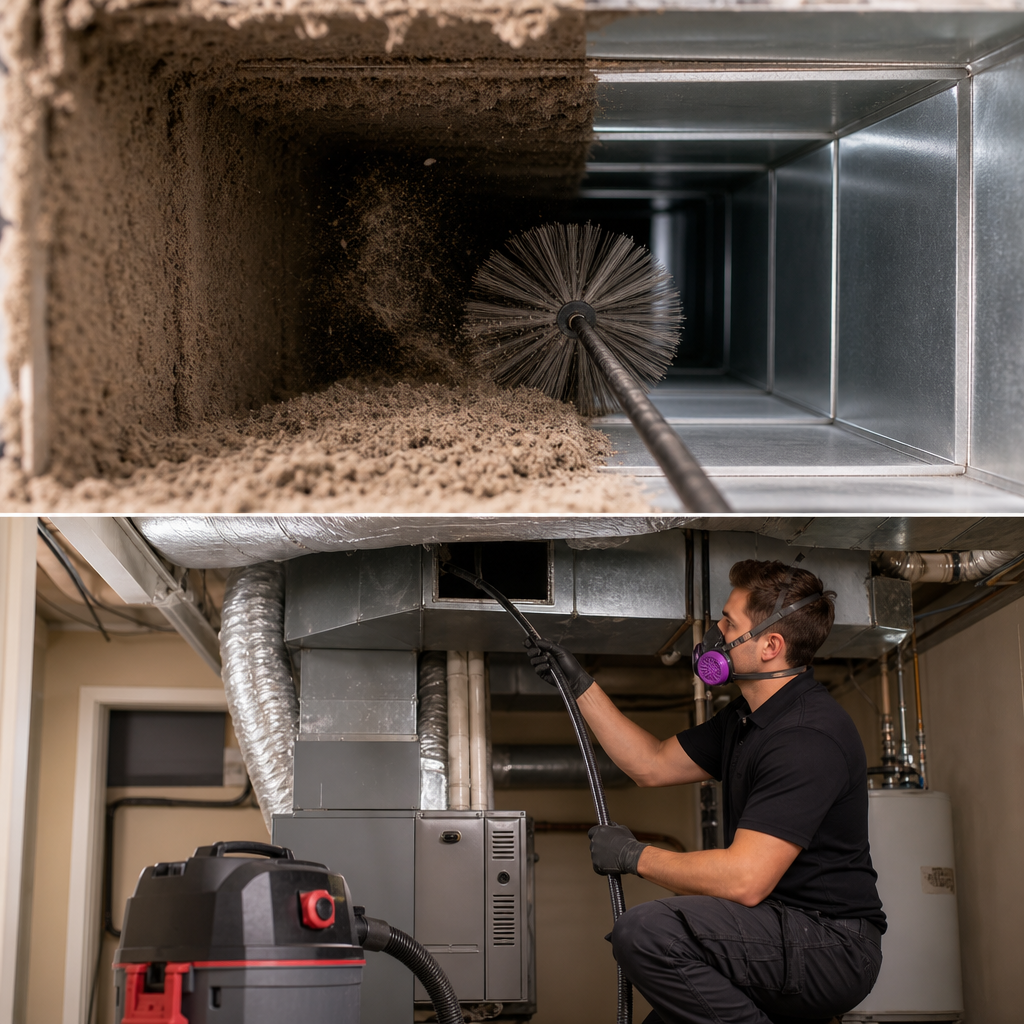
Filters catch some debris, but dust and lint also settle on the blower, the evaporator coil, and inside the ducts. The same ENERGY STAR checklist notes that dirty coils reduce the system’s ability to cool the home and cause it to run longer, and that airflow problems can reduce efficiency by up to 15 percent. Those are general estimates and your home may differ, but the direction is the same: restricted airflow costs you run time.
Our articles on how dirty coils impact HVAC efficiency and signs your evaporator coil needs cleaning explain what to look for. For a case study, see the project on restoring cooling efficiency through deep evaporator coil cleaning.
The Duct Problems That Quietly Add Run Time
Ducts can lose a surprising share of the air they carry. ENERGY STAR notes that leaky ducts can reduce heating and cooling system efficiency by as much as 20 percent, which is why duct leakage is a favorite suspect when a system struggles. Texas attics make it worse, since ducts there are surrounded by extreme heat and often run long distances.
- Leaks and disconnections let cooled air escape into the attic. Our guide on how to tell if you have air leaks in your ductwork covers the signs.
- Crushed, kinked, or sagging ducts restrict airflow to a room.
- Dirty or damaged ducts can restrict flow and carry debris. Read whether dirty air ducts affect HVAC efficiency for the cleaning side of the question.
- Poor insulation or condensation can waste energy and cause moisture problems.
The ENERGY STAR duct sealing page explains why sealing and insulating ducts matters.
Airflow Problem or Equipment Problem?
| Symptom Pattern | Lean Toward | Who to Call |
|---|---|---|
| Weak airflow from many vents, dirty filter | Filter, blower, coil, or duct restriction | Start with the filter, then a duct and airflow evaluation |
| One or two rooms stay hot | Duct leak, disconnection, or restriction | Duct inspection or leak testing |
| Strong airflow but warm air, frost on lines | Refrigerant or mechanical issue | Licensed HVAC contractor |
| Loud banging, burning smell, repeated breaker trips | Electrical or mechanical failure | Turn the system off and call an HVAC contractor |
Go Air Ducts’ services center on the airflow side: ducts, coils, blowers, dryer vents, and chimneys. Refrigerant, compressor, and electrical problems are best handled by a licensed HVAC contractor. Knowing which side the problem is on helps you hire the right person the first time.
Not Sure If It Is the Ducts, the Coil, or the Equipment?
Testing is better than guessing. Duct leak testing and pressure testing measure how much air your system is losing, and an inspection shows whether buildup or damage is restricting flow. Go Air Ducts serves Austin, San Antonio, and Round Rock and explains its findings so you can decide what to do next.
Cleaning, Repair, or Replacement?
Match the fix to the finding. Cleaning helps when buildup is restricting airflow, repair helps when leaks or damage are the problem, and replacement is worth considering when the duct system has deteriorated beyond a practical fix.
- Air duct inspection shows what condition the system is in before you decide.
- Duct sealing and air duct repair address leaks and damaged sections.
- Coil cleaning and HVAC blower cleaning address buildup on those components.
- When a system is far gone, our article on signs your Austin home needs ductwork replacement helps you recognize it.
Why Texas Homes Feel This First
Long cooling seasons mean the system runs more hours than in most of the country, and attic temperatures put extra stress on ducts. Dust, construction activity, and pollen add to filter and coil loading. A small restriction that would barely matter in a mild climate can show up as hours of extra run time here.
Frequently Asked Questions
How do I know if my HVAC system is overworking?
Typical signs include long cycles that barely reach the set temperature, rooms that stay much hotter or colder than others, weak airflow, rising bills without a change in habits, and frost on the indoor coil. These signs have several possible causes, so they point to a problem rather than naming it.
Can dirty ducts make my AC work harder?
They can contribute when buildup restricts airflow, but leaks, damage, and poor insulation often matter more. Cleaning is appropriate when debris is physically restricting the system. If the ducts are leaking or damaged, repair or sealing is a better fit. An inspection shows which applies.
How often should I change my air filter?
ENERGY STAR advises checking monthly in heavy-use months and changing at least every three months. Homes with pets, high dust, or recent construction may need changes sooner. Always follow the filter and system manufacturer’s recommendations, and replace a filter that looks dirty regardless of the calendar.
When should I call a licensed HVAC contractor instead?
Call an HVAC contractor for frost on refrigerant lines, warm air with strong airflow, loud mechanical noises, burning smells, repeated breaker trips, or anything involving refrigerant, compressors, or electrical parts. Duct and airflow specialists help when the problem is restriction, leakage, or buildup in the air path.
Does Go Air Ducts test and clean ducts, coils, and blowers in Austin, San Antonio, and Round Rock?
Yes. Go Air Ducts offers duct inspection, leak testing, pressure testing, sealing, repair, coil cleaning, and blower cleaning in Austin, San Antonio, and Round Rock, with pricing explained before work begins. See the current service locations or call to ask about availability.
Take the Strain Off Your System
If your HVAC system is running harder than it should, start with the airflow path. Go Air Ducts can inspect and test the ducts, evaluate coil and blower buildup, and tell you what is restricting performance. You will see the findings and the pricing before any work begins.
Schedule an Airflow Inspection in Austin, San Antonio, or Round Rock