
🕑 10 min read
Table of Contents
- Why Seasonal Allergies Are Worse Indoors in Austin Homes
- How Air Ducts Trap and Circulate Allergens
- Signs Your Ducts Are Contributing to Allergy Symptoms
- Criteria for Choosing the Right Allergy Relief Solution
- Our Professional Air Duct Cleaning and Replacement Services
- How Our Certified Technicians Address Mold and Allergen Buildup
- Energy-Efficient Insulation Benefits for Indoor Air Quality
- Comparing Duct Cleaning, Replacement, and DIY Approaches
- Why Go Air Ducts Is the Definitive Choice for Austin Homeowners
- Scheduling Your Free Estimate for Fast Response
- Frequently Asked Questions (FAQ)





Why Seasonal Allergies Are Worse Indoors in Austin Homes
Austin’s allergy season is one of the longest in the country. Cedar, oak, juniper, and ragweed pollen can start in late January and continue well into fall, and the high winds that sweep across Central Texas carry those particles into every neighborhood. Many homeowners assume that closing the windows solves the problem, but indoor air often contains higher concentrations of allergens than the air outside.
Several local conditions make this worse. Our hot, humid summers push homeowners to run their systems constantly, and when filters go unchanged, pollen, pet dander, and dust build up quickly. Tight, well-sealed homes trap those particles inside rather than letting them escape. Add the region’s clay-heavy soil and frequent dust storms, and it’s easy to see why allergy sufferers often feel worse at home than they do outdoors.
What to do next: Track your symptoms for two weeks and note whether they ease when you leave the house. If they persist indoors, your HVAC system is likely part of the cause.
How Air Ducts Trap and Circulate Allergens
Your ductwork is the distribution network for every breath your household takes. Each time the blower runs, it pulls air through returns, pushes it across the coil, and sends it through supply ducts into your rooms. Anything already sitting in those ducts gets recirculated with every cycle.
In our inspections across Austin and San Antonio, we commonly find:
- Settled dust and debris along the bottoms of supply trunks, which lift and redistribute with each startup
- Pet hair and dander clinging to dampened surfaces near returns
- Pollen and spores drawn in through leaky return connections in attics or crawl spaces
- Biological growth in areas that stay damp after condensation or water leaks
Leaks matter as much as buildup. When return ducts sit in an unconditioned attic, they can pull in hot, dusty air from the attic itself. Gaps at joints and seams mean your system is conditioning air you never intended to breathe.
Practical tip: Look at a supply register with a flashlight. If you see a gray film or debris deeper than the grille, the buildup extends further into the system.
Signs Your Ducts Are Contributing to Allergy Symptoms
Allergy symptoms that flare at home rather than outside often point to the HVAC system. Pay attention to these patterns:
- Symptoms are worse in the morning or right after the system turns on
- Dust reappears on furniture within a day or two of cleaning
- Only certain rooms feel stuffy or have noticeably more dust
- A musty or stale odor appears when the air handler starts
- Airflow from vents is weak, or some rooms never quite cool or warm
- Your energy bills rise even though your thermostat settings haven’t changed
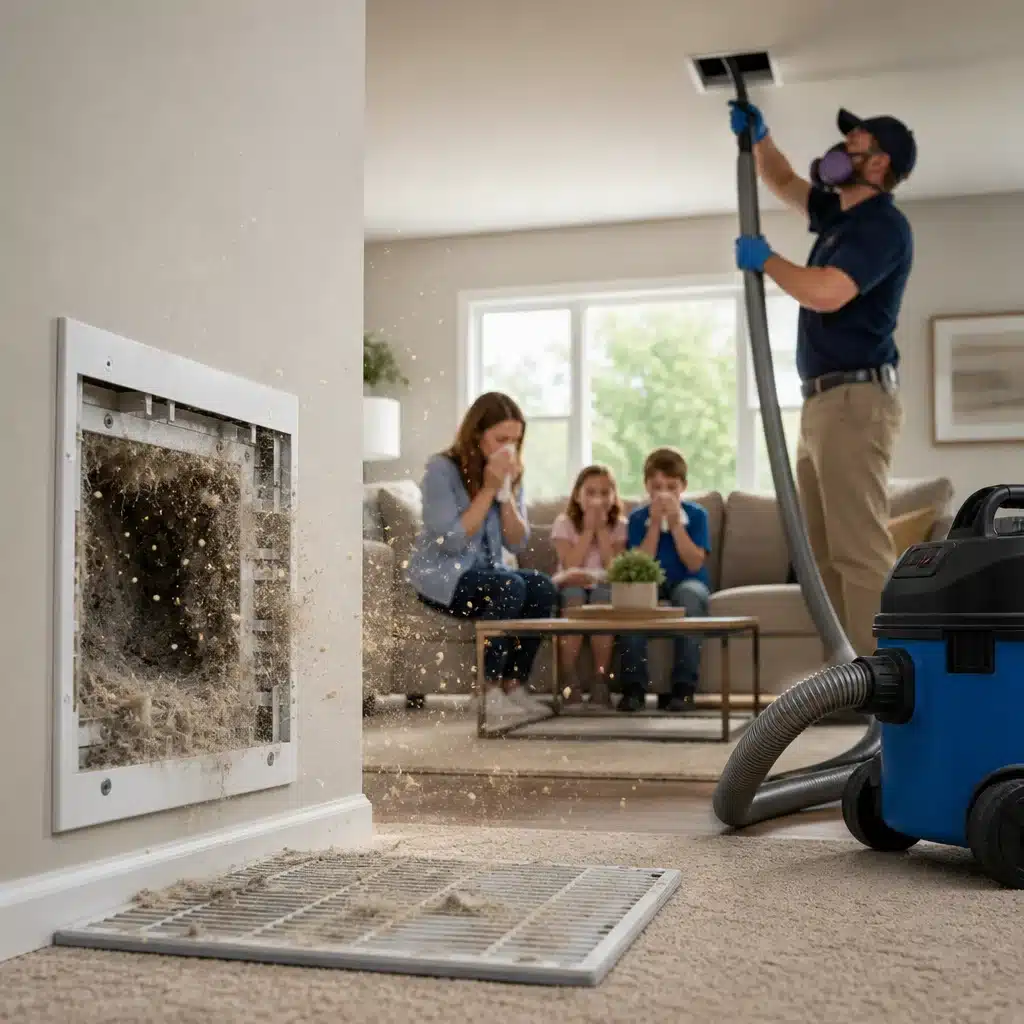
Any musty smell or visible dark staining inside a register or on the duct interior warrants a professional look. Mold growth in ductwork can release spores directly into living spaces, which is especially concerning for children, older adults, and anyone with asthma.
What to do next: If you notice two or more of these signs, schedule an inspection before the next peak allergy month.
Criteria for Choosing the Right Allergy Relief Solution
Not every fix addresses the root cause. When evaluating options, focus on these criteria:
- Diagnosis first. A solution should start with an inspection that documents what’s inside your ducts, including buildup, moisture, and leaks.
- Technician certification. Look for NADCA-certified or similarly trained technicians who follow recognized cleaning standards.
- Scope of work. Cleaning removes contaminants, but sealing and insulation prevent new ones from entering. Both matter.
- Containment and safety. Proper cleaning uses negative air pressure and HEPA-filtered equipment so debris doesn’t spread through the home.
- Transparent pricing. A written estimate should explain exactly what’s included before any work begins.
- Response time. Allergy and mold concerns shouldn’t wait weeks for a visit.
What to do next: Ask any provider how they verify the cleaning was effective and what they do if they find mold. Vague answers are a warning sign.
Our Professional Air Duct Cleaning and Replacement Services
At Go Air Ducts, we start every allergy-focused job with a full system inspection using cameras and airflow measurements. From there, we match the solution to what we find rather than selling a one-size-fits-all package.
Our services include:
- Air duct cleaning for supply and return lines, registers, and the air handler, using truck-mounted vacuum systems with HEPA filtration
- Duct sealing to close leaks that pull in attic dust and pollen
- Duct replacement when ductwork is crushed, corroded, undersized, or too damaged to clean effectively
- Dryer vent cleaning, since lint and moisture in exhaust lines can also add airborne particles and create fire risk
- Chimney inspection and repair for homes where fireplace debris and moisture affect indoor air
When replacement is the right call, we design new runs to reduce pressure imbalances and keep returns inside the conditioned envelope. Our estimates are free, and we explain every recommendation before we begin.
What to do next: Request an inspection so we can tell you whether cleaning, sealing, or replacement will give you the most relief for your budget.
How Our Certified Technicians Address Mold and Allergen Buildup
Mold in ductwork is a common and serious problem, particularly in Austin homes where condensation forms on cold surfaces during humid months. Our technicians follow a structured process designed to remove contamination without spreading it.
Here is how we approach it on site:
- Assessment: We identify moisture sources, check insulation for dampness, and document any visible growth.
- Containment: We seal registers and access points and set negative air pressure so spores don’t migrate into living spaces.
- Removal: We clean surfaces with HEPA vacuums and approved antimicrobial treatments where appropriate.
- Source correction: We fix the leak, condensation issue, or drainage problem that allowed mold to grow in the first place.
- Verification: We review the work and recommend follow-up steps, such as filter upgrades or humidity control.
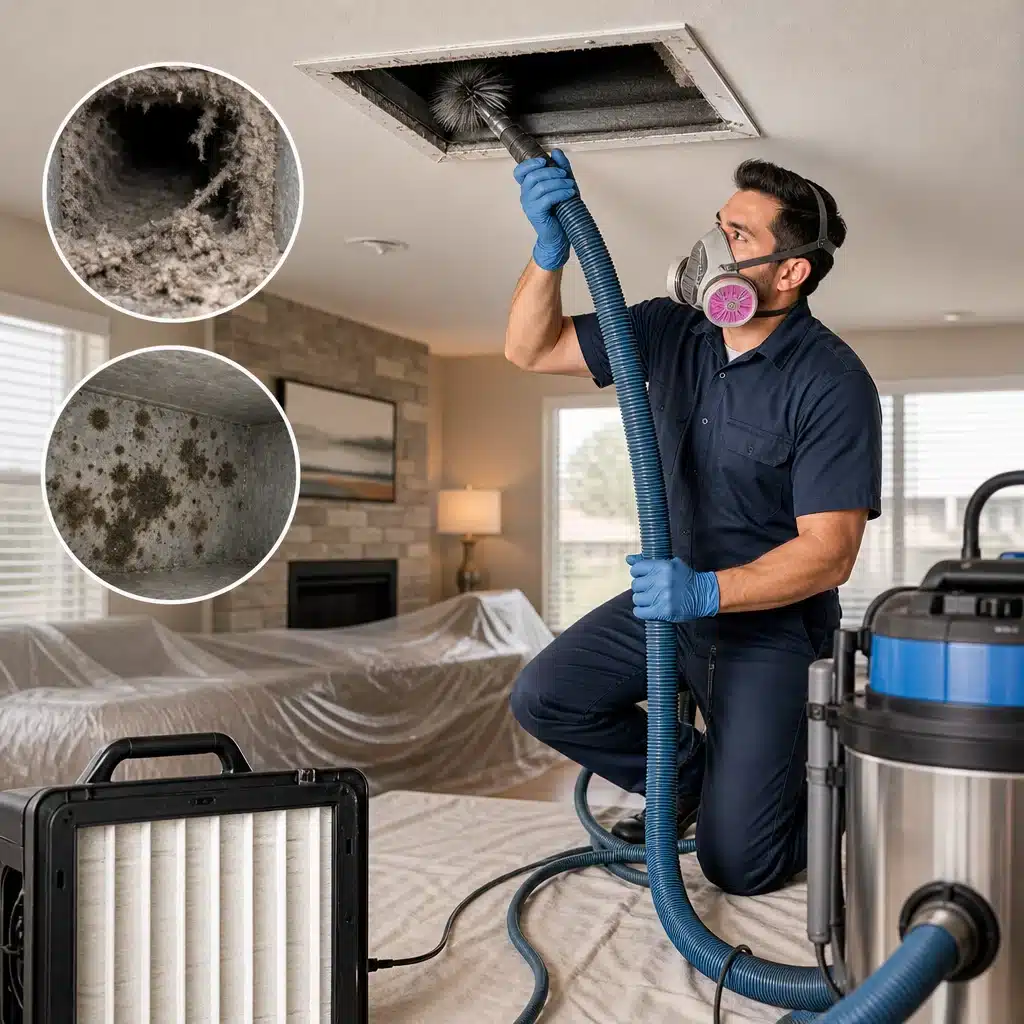
Cleaning without correcting moisture is a temporary fix. We always address the cause so the problem doesn’t return within a season.
What to do next: If you see dark spots or smell mustiness, keep the system running only as needed and call us for a mold-focused inspection.
Energy-Efficient Insulation Benefits for Indoor Air Quality
Insulation and air quality are closely linked. Poorly insulated ducts in hot attics lose cooling efficiency and draw in unconditioned air, while inadequate attic insulation lets heat and moisture build up. Both conditions encourage dust, humidity, and mold.
Upgrading insulation delivers several benefits:
- Stable temperatures that reduce the condensation cycles that feed mold growth
- Lower energy use, since your system doesn’t work as hard to compensate for heat gain
- Fewer infiltration points, which keeps pollen and dust from entering through the attic
- Better humidity control, which makes the home less hospitable to dust mites and mold
Blow-in insulation and duct insulation work especially well in Texas homes because they fill gaps that batts often miss. Combined with sealing, they create a tighter envelope that keeps your filtered air where it belongs.
What to do next: Check your attic during the afternoon. If it feels much hotter than outside, insulation or ventilation improvements could help your indoor air and your utility bills.
Comparing Duct Cleaning, Replacement, and DIY Approaches
Homeowners often weigh three options. Here is how they compare:
| Approach | Best For | Limitations | |—|—|—| | Professional cleaning | Dust, debris, and light biological buildup | Doesn’t fix leaks or damaged ducts | | Cleaning plus sealing | Homes with leaks, dust returning quickly, or attic-based returns | Requires an accurate inspection to locate leaks | | Replacement | Crushed, corroded, or mold-damaged ducts | Higher upfront cost, longer project | | DIY cleaning | Surface dusting of registers and grilles | Can’t reach the full system or contain contaminants |
DIY efforts are useful for routine maintenance, like vacuuming registers and changing filters monthly. However, most homeowners cannot safely reach return trunks, clean the air handler, or identify hidden moisture problems. Pushing dust deeper into the system can also make symptoms worse.
What to do next: Use DIY steps for maintenance between professional visits, and let a certified team handle the deeper work.
Why Go Air Ducts Is the Definitive Choice for Austin Homeowners
We have built our business around the specific challenges Austin homes face, from long pollen seasons to humid summers and attics that can exceed 150 degrees. Our technicians are certified, our methods are documented, and our goal is lasting relief rather than a quick visit.
What sets us apart:

- Full-system approach: We address cleaning, sealing, insulation, and mold correction together so the results last.
- Certified expertise: Our NADCA-certified team uses recognized standards and modern equipment on every job.
- Local experience: We know how Austin weather, construction styles, and attic conditions affect air quality.
- Clear communication: You receive a written estimate and a plain-language explanation of what we found.
- Fast response: We prioritize allergy and mold concerns so you aren’t left waiting through another season.
When you choose Go Air Ducts, you are choosing a local team that treats your indoor air as seriously as you do.
What to do next: Learn more about our certified team and how we have helped other homeowners breathe easier.
Scheduling Your Free Estimate for Fast Response
Getting relief starts with a conversation. Our free estimate process is simple:
- Call or request online. Tell us about your symptoms, home age, and any visible problems.
- On-site inspection. We check ducts, returns, the air handler, and attic conditions with camera and airflow tools.
- Clear recommendations. We explain what we found and whether cleaning, sealing, insulation, or replacement makes the most sense.
- Scheduled service. Once you approve, we set a time that fits your household, with same-day options available when possible.
For homeowners dealing with active allergy flares, mold concerns, or dryer vent fire risks, we prioritize urgent calls. You can also read about how duct cleaning can reduce allergy symptoms and why we combine cleaning with insulation and sealing before you call.
What to do next: Book your free estimate with Go Air Ducts today and take the first step toward cleaner, healthier air in your Austin home.
If you’re dealing with dust, poor airflow, mold in your ducts, or a clogged dryer vent — don’t wait. These issues can affect your health and safety. Go Air Ducts Group are the local experts in air duct cleaning, mold removal, dryer vent cleaning, and attic insulation. Call now for a free inspection and same-day service in Austin and San Antonio.
Frequently Asked Questions (FAQ)
Can air duct cleaning actually reduce seasonal allergy symptoms in Austin homes?
Yes, when dust, pollen, pet dander, and mold spores have built up inside the ductwork, they get pulled into the living space every time the system runs. We inspect the ducts first to confirm buildup, then remove it so your system is no longer recirculating those particles. Results vary by home, so we also recommend replacing filters on schedule and checking for moisture sources that feed mold growth.
How do we know whether our ducts are the cause of our allergy flare-ups?
We look for clues such as visible dust blowing from supply registers, musty odors when the system starts, dark staining around vents, or allergy symptoms that improve when you leave the house. Our technicians also inspect the interior of the ducts with a camera and check for mold or debris. If the inspection shows little buildup, we will tell you so and suggest other steps, like improving filtration or addressing humidity.
When should we choose duct replacement instead of cleaning?
Cleaning is usually the right choice when the ducts are sound but dirty. Replacement makes more sense when ducts are crushed, leaking, pierced, or lined with material that cannot be fully cleaned or sealed. Our free estimate includes a condition assessment, so you receive a clear recommendation based on what we find rather than a default service.