
🕑 11 min read
How do you clean up mold in a San Antonio HVAC system?
HVAC mold cleanup requires inspecting the coils, ducts, and air handler, removing contamination, and disinfecting to prevent regrowth. Left untreated, it spreads spores throughout the home. Go Air Ducts performs complete HVAC mold cleanup for San Antonio homes, restoring your system's health and protecting your family's indoor air quality.
Table of Contents
- Why Mold in Your HVAC System is a Health Concern
- How Mold Enters and Spreads Through Your Ductwork
- Signs Your San Antonio Home Has HVAC Mold Contamination
- The Problems With DIY Mold Cleanup Approaches
- Our Complete Professional Mold Cleanup Process
- Why Go Air Ducts is Your San Antonio HVAC Mold Solution
- How Mold Remediation Improves Your Indoor Air Quality
- Preventing Future Mold Growth in Your Ducts
- The Investment in Your Home’s Health and Safety
- Schedule Your Free HVAC Inspection Today
- Frequently Asked Questions (FAQ)
Why Mold in Your HVAC System is a Health Concern
Mold thriving inside your HVAC system isn’t just an unpleasant discovery—it’s actively affecting your family’s health every single day. When spores circulate through your home via heated or cooled air, they trigger allergies, respiratory issues, and can worsen existing asthma. San Antonio’s warm, humid climate creates ideal conditions for mold growth inside air ducts, and many homeowners don’t realize the problem exists until symptoms become severe.
We’ve spent years helping San Antonio families reclaim clean indoor air through professional mold remediation. This guide covers what causes HVAC mold, how to spot it, why DIY approaches fall short, and how our proven process restores your system’s health.
Mold inside your ducts represents a silent threat because the contamination travels invisibly through every room in your home. When your system runs, it disperses millions of spores directly into the air you breathe. Children, elderly family members, and anyone with compromised immunity face heightened risk, but even healthy adults can develop symptoms from prolonged exposure.
Common health effects include persistent coughing, nasal congestion, itchy eyes, and unexplained fatigue. Some homeowners notice their allergies worsen dramatically indoors but improve when they leave the house—a clear signal that your HVAC system itself has become the problem source. In San Antonio’s humid environment, mold colonization happens faster than in drier climates, which means your risk window is tighter.
Beyond immediate health impacts, untreated mold can damage your system’s components. Mold buildup reduces airflow efficiency, forces your unit to work harder, and accelerates wear on motors and coils. This compounds your energy costs while shortening the lifespan of expensive equipment.
Your next step: If you suspect mold in your ducts, avoid turning on your system unnecessarily until professional assessment confirms the scope.
How Mold Enters and Spreads Through Your Ductwork
Mold needs three things to flourish: moisture, organic material, and warmth. Your ductwork provides all three. San Antonio’s humidity levels (often exceeding 60% indoors during summer) create condensation inside ducts, particularly where temperature differentials are greatest. Cold return air meeting warm ductwork surfaces condenses moisture that mold spores colonize within days.
Common entry points include:
- Damaged or disconnected duct seals allowing humid outdoor air infiltration
- Roof leaks or water intrusion near attic ductwork
- Clogged condensate drain lines backing up moisture into the system
- Leaky windows or doors in the attic space housing your air handler
- Poor insulation on ducts, allowing cold surfaces where condensation pools
Once mold establishes itself in one section—usually the return air plenum or around the evaporator coil—it spreads rapidly. Mold feeds on dust, pet dander, and organic debris that naturally accumulates in ducts. Without intervention, colonies expand through the entire network, contaminating every outlet in your home.
We often find that one water intrusion event during heavy Texas rains can trigger mold colonies that persist for months if the moisture source isn’t properly sealed and the contamination isn’t professionally removed.
Signs Your San Antonio Home Has HVAC Mold Contamination
You might spot visible mold (dark patches inside vents or on ductwork), but most mold grows where you can’t see it—deep inside the system where air naturally stagnates. Learn to recognize less obvious warning signs.

Musty odors from vents are the most common indicator homeowners notice first. That distinct earthy smell intensifies when the system starts up and dissipates after a few minutes. Pay attention to whether the smell occurs in specific rooms or throughout your home, as this helps pinpoint where the contamination is heaviest.
Other telltale signs include:
- Increase in allergy symptoms or respiratory issues, especially indoors
- Visible dust buildup around vents despite recent cleaning
- Water stains on ceiling tiles or ductwork near the attic
- Mold spots appearing on walls near supply vents
- System producing weaker airflow than it previously did
- Condensation or moisture visible inside return air grilles
If you’ve had recent water damage, roof leaks, or noticed high humidity levels inside your home, schedule an inspection immediately. Early detection prevents mold from establishing deep colonies that require extensive remediation.
The Problems With DIY Mold Cleanup Approaches
The temptation to spray bleach down vents or run cleaning tablets through your system is understandable—and unfortunately, it rarely solves the problem. Surface treatments mask the smell temporarily but don’t eliminate the root colonies living in hard-to-reach sections of your ductwork.
[Comparing DIY versus professional mold remediation] reveals several critical shortcomings with amateur approaches:
Surface sprays don’t penetrate the biofilm that protects mold colonies. Mold produces protective slime layers that resist household cleaners and allow regrowth within days. Without addressing the moisture source driving contamination, any cleaning is temporary.
Improper duct access can damage insulation or create air leaks that worsen efficiency. Many homeowners unknowingly disconnect ducts or puncture sealed sections while trying to access problem areas, creating new problems that cost more to repair than professional remediation would have cost initially.
You also risk spreading mold spores throughout your home if you disrupt colonies without proper containment and negative pressure equipment. This can actually worsen indoor air quality during the cleaning attempt.
Safety concerns matter too. Climbing into attics to access ductwork poses fall risks, and disturbing established mold colonies without respiratory protection puts you at greater health risk than if you’d left it untouched.
Our professional approach includes proper assessment, identification of moisture sources, systematic decontamination, and verification that mold has been eliminated—not just hidden.
Our Complete Professional Mold Cleanup Process
We begin with a thorough ductwork inspection using camera equipment to locate mold colonies, assess contamination severity, and identify moisture sources. This diagnostic step is non-invasive and shows you exactly what we’re dealing with.
Next, we seal off the contaminated areas and establish negative pressure containment to prevent spore dispersal during cleaning. This protects your family and prevents cross-contamination to unaffected areas of your home.
Our technicians then perform systematic duct cleaning using specialized equipment designed for mold remediation. Unlike standard duct cleaning, our process includes antimicrobial treatments that kill mold at the colony level and prevent regrowth. We address the evaporator coil, supply ducts, return air plenum, and any accessible ductwork throughout your system.
Critically, we locate and repair the underlying moisture problem. This might involve sealing duct leaks, clearing condensate drain lines, improving attic ventilation, or patching roof penetrations. Without fixing the moisture source, mold returns within weeks.
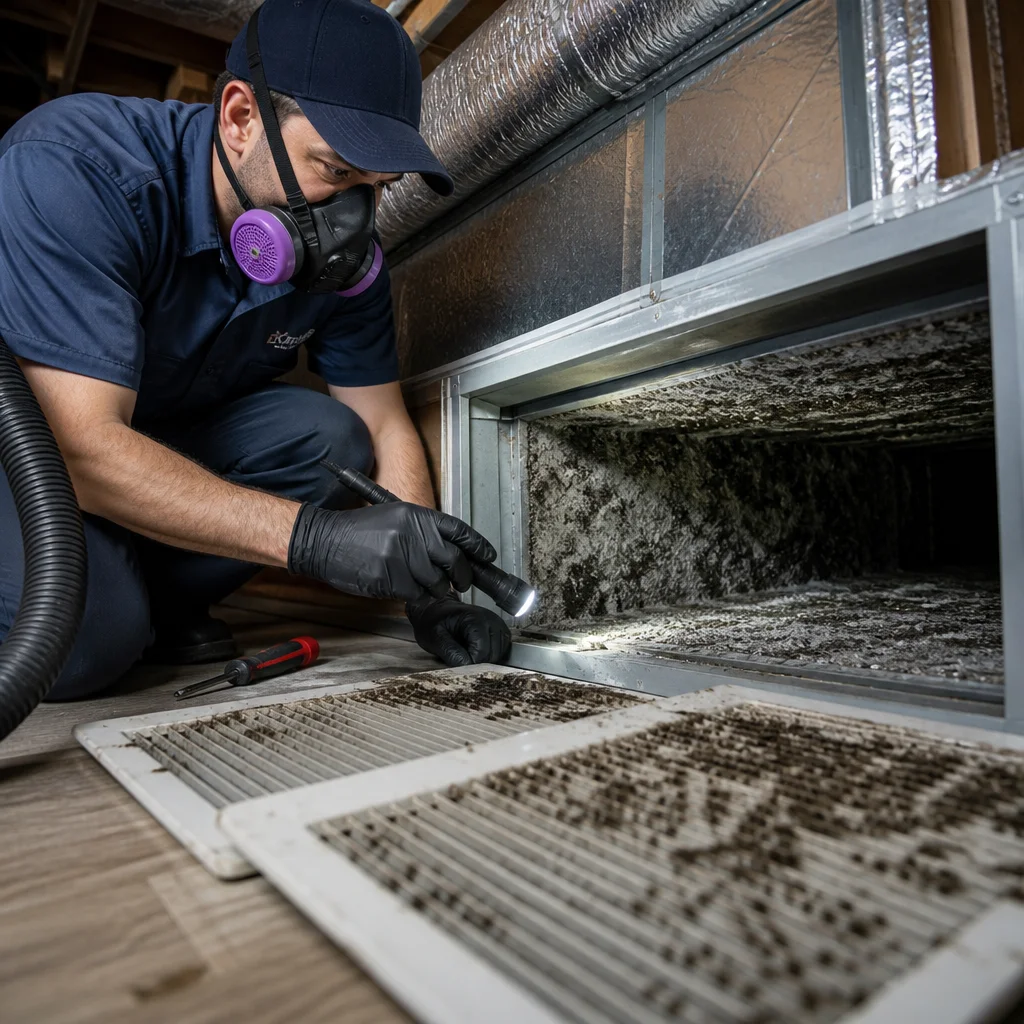
Final verification involves re-inspection with cameras and sometimes air quality testing to confirm contamination has been eliminated. We document the entire process so you have proof of remediation for insurance and resale purposes.
The entire process typically takes one day for residential systems, though scope varies depending on contamination severity and system complexity.
Why Go Air Ducts is Your San Antonio HVAC Mold Solution
We’re not duct cleaners who occasionally handle mold. Mold remediation is a core specialty of ours, and we’ve trained specifically in the protocols required to eliminate it permanently. Our technicians hold HVAC certifications and understand system mechanics deeply, which means we can identify moisture sources and system inefficiencies that generalist cleaners miss.
We serve San Antonio year-round in the exact climate conditions that breed HVAC mold. We understand your humidity levels, typical seasonal moisture patterns, and the specific vulnerabilities of homes built in your area. This local expertise translates to more effective solutions tailored to your region’s challenges.
Our free service estimates give you clarity on scope and cost before we begin. We don’t pressure you into unnecessary work, and we explain findings honestly so you understand what’s happening in your system and why intervention is needed.
We stand behind our work with follow-up inspections and responsive service if issues emerge. Your satisfaction is our priority, and your home’s continued health matters to us beyond the initial service call.
How Mold Remediation Improves Your Indoor Air Quality
Once we eliminate mold contamination, the improvements are immediate and noticeable. The musty odors disappear, airflow strengthens, and many homeowners report dramatic improvements in allergy symptoms and respiratory comfort within days.
Your system becomes a neutral conveyance for heated or cooled air instead of a mold spore distribution network. Family members with asthma or sensitivity to indoor air quality often see symptom reduction within the first week after professional remediation.
Beyond health, remediated systems operate more efficiently. Clean coils and ducts reduce strain on your compressor and blower motor, lowering energy costs and extending equipment lifespan. Many homeowners see utility bill reductions of 10-15% once mold-related efficiency losses are reversed.
[Professional indoor air quality solutions] address not just mold but also dust, allergen levels, and humidity control—creating a comprehensive healthy indoor environment. Remediation is often the first step toward broader air quality improvements.
Preventing Future Mold Growth in Your Ducts
Once we’ve eliminated mold, preventing recurrence requires maintaining low moisture levels inside your ductwork. This starts with proper condensate drain maintenance—clogged or stagnant drain lines are mold factories.
Have your system inspected annually before summer humidity peaks. This allows us to identify developing moisture problems before they become full contamination. Early intervention costs far less than major remediation later.
Maintain consistent indoor humidity levels between 30-50%. Humidity above this threshold creates ideal mold conditions, while excessively low humidity causes other air quality issues. A properly functioning air conditioning system naturally dehumidifies, but if you notice persistently high indoor humidity, have an HVAC professional assess your cooling system’s effectiveness.
Ensure attic vents are clear and functioning properly. Many San Antonio homes have attic ventilation issues that allow outdoor humidity to accumulate where ductwork passes through. Proper ventilation reduces condensation formation on duct surfaces.
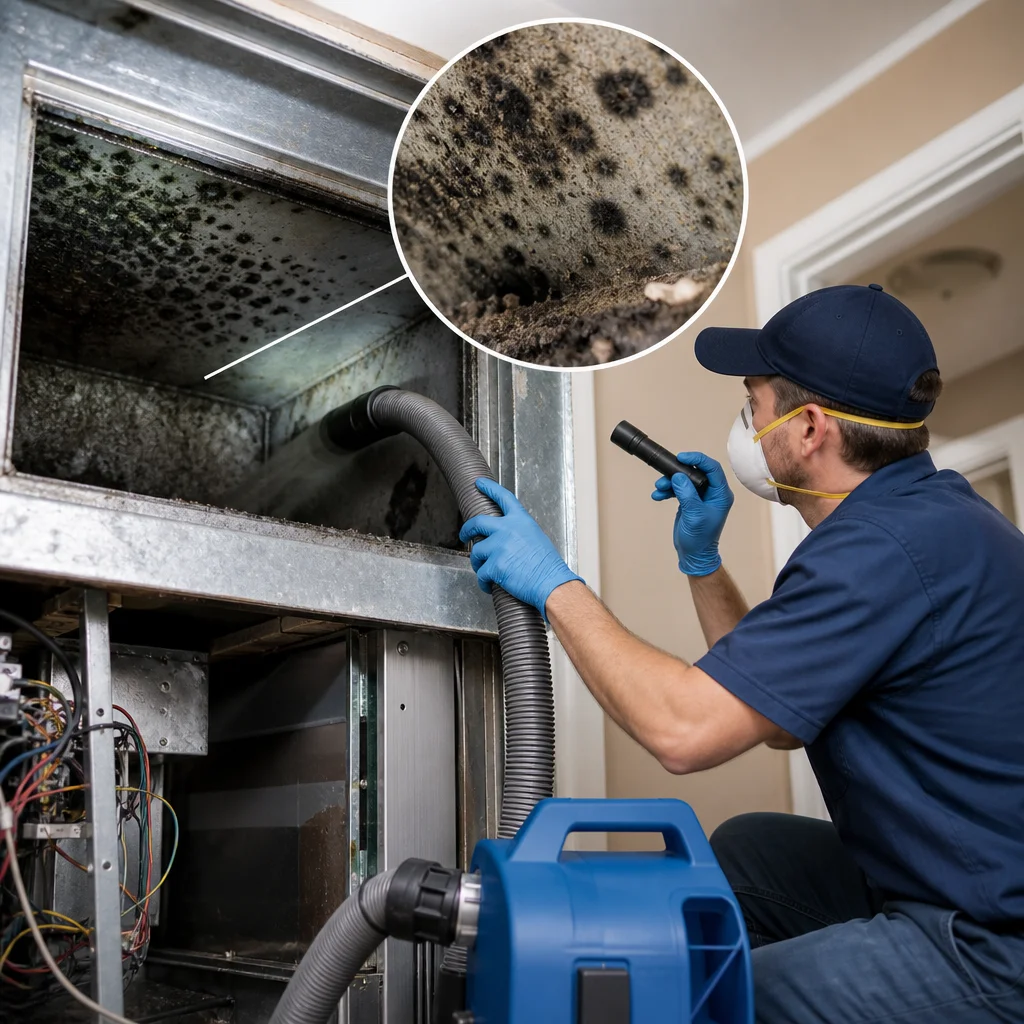
Schedule regular [professional HVAC and air duct cleaning services] annually or biannually depending on your system’s age and location. Preventive cleaning removes dust and organic debris that mold would otherwise feed on, creating an environment hostile to future colonization.
The Investment in Your Home’s Health and Safety
Professional mold remediation represents an investment in your family’s health, your home’s structural integrity, and your HVAC system’s longevity. The cost of remediation is typically 40-60% less expensive than addressing serious respiratory health issues, water damage, or complete system replacement caused by untreated mold.
Many homeowners view this investment as essential to home value. When selling your property, documented mold remediation and professional air quality improvements are significant selling points that justify premium pricing. Buyers in San Antonio increasingly prioritize indoor air quality, especially after years of heightened health awareness.
From a maintenance perspective, fixing moisture problems and eliminating mold prevents cascading damage. Your HVAC system lasts longer, operates more efficiently, and requires fewer emergency repairs. The cost of remediation spreads across years of improved system performance and lower energy bills.
Schedule Your Free HVAC Inspection Today
If you’re noticing musty odors, increased allergies, or have experienced water intrusion near your ductwork, we’re ready to help. Our free inspection includes thorough ductwork assessment, mold detection, and a clear explanation of findings with transparent pricing.
Contact us today for same-day service availability or to schedule a convenient inspection time. We serve San Antonio and surrounding areas with certified HVAC technicians experienced in mold remediation and system restoration. Your family’s indoor air quality is too important to leave to guesswork—let’s get your system healthy again.
For further reading: San Antonio HVAC mold guide, San Antonio IAQ solutions, DIY vs professional mold remediation.
If you’re dealing with dust, poor airflow, mold in your ducts, or a clogged dryer vent — don’t wait. These issues can affect your health and safety. Go Air Ducts Group are the local experts in air duct cleaning, mold removal, dryer vent cleaning, and attic insulation. Call now for a free inspection and same-day service in Austin and San Antonio.
Frequently Asked Questions (FAQ)
How long does professional HVAC mold cleanup typically take?
Our mold remediation process usually takes one to three days, depending on the extent of contamination throughout your ductwork and HVAC system. We handle everything from initial inspection and mold removal to system cleaning and preventative treatments, so you won’t need multiple contractors. We’ll provide you with a timeline during your free inspection so you know exactly what to expect.
What’s the difference between professional mold removal and cleaning the ducts myself?
DIY approaches often miss mold colonies hidden deep within your ductwork where moisture accumulates, which means the problem returns quickly. We use specialized equipment, antimicrobial treatments, and industry-certified processes that eliminate mold at the source and prevent regrowth. Our technicians also identify why mold formed in the first place, so we can address moisture issues that cause it to return.
Will mold remediation improve my family’s allergies and respiratory issues?
Removing mold from your HVAC system significantly reduces airborne mold spores circulating through your home, which often provides noticeable relief for allergy and asthma sufferers. However, results vary based on other indoor air quality factors in your San Antonio home. We recommend scheduling a free inspection so we can assess your specific situation and discuss how our services can help your household’s health.