
🕑 7 min read
Scratching in the attic, a musty smell from one vent, or a room that never cools properly can all have the same unwelcome explanation: something has moved into your ducts. Rodents do more than leave droppings. They chew, nest, and tear open the parts of a duct system that keep conditioned air where it belongs. This guide covers how the damage happens, how to spot it, and how to fix it without making it worse.
Quick Answer
Rodents damage ductwork by chewing through flexible duct and insulation, nesting inside ducts and plenums, and contaminating the airflow path with droppings and urine. The result can be air leaks, odors, and uneven cooling. Cleaning alone does not stop it. The entry points have to be found and closed, damaged sections repaired or replaced, and the system cleaned only after the animals are gone.
Key Takeaways
- Flexible duct, duct insulation, and loose connections are the easiest targets for chewing and nesting.
- Odors, scratching, droppings near registers, and rooms with weak airflow are common clues, but each can have other causes.
- Do not sweep or vacuum rodent droppings. Dry cleaning can send contaminated dust into the air.
- Lasting results come from exclusion first, repair second, and cleaning last.
How Rodents Get Into the Duct System
Ducts are warm, sheltered, and connected to the rest of the house, which makes them attractive. Mice and rats can squeeze through small gaps, so entry points often include openings around duct boots, unsealed penetrations through walls and floors, damaged attic or crawlspace access, and torn or disconnected duct sections. Once inside, the duct becomes a hallway to every room it serves.
Homes with attic ducts, crawlspace ducts, or older flexible runs tend to have more exposed surfaces. Texas homes are no exception. Long cooling seasons keep ducts cool and humid in summer and sheltered from the cold in winter, and the attic and crawlspace areas around them are rarely checked.
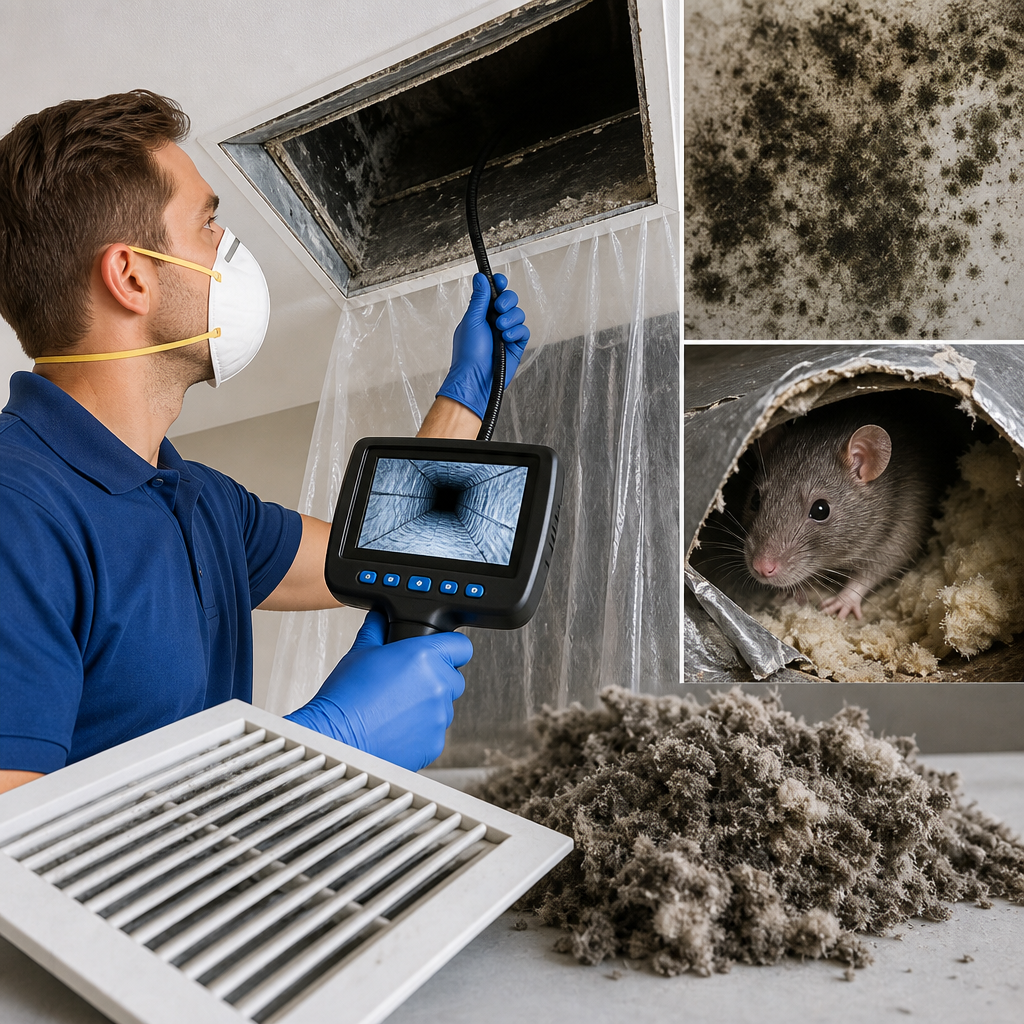
What the Damage Actually Looks Like
Rodent damage is rarely dramatic from the living room. It builds in places you cannot see, then shows up as symptoms.
| Type of Damage | What It Does to the System | Sign You Might Notice |
|---|---|---|
| Chewed flexible duct or outer jacket | Creates holes that leak cooled or heated air into the attic or crawlspace | Weak airflow, rooms that struggle to reach temperature |
| Torn or displaced insulation | Exposes the duct to attic heat and can lead to condensation | Warm duct surfaces, damp spots, stained ceilings |
| Nesting material inside ducts or plenums | Restricts airflow and adds debris to the air path | Reduced airflow from one or more registers, musty smell |
| Droppings and urine in or around ductwork | Contaminates surfaces and creates odors | Droppings near registers or access points, persistent smell |
| Disconnected joints and loosened connections | Lets air escape and opens new entry points | Whistling, uneven temperatures, higher run times |
Why the Smell and the Droppings Are Only Half the Story
The airflow damage often costs more than the mess. A chewed section of flexible duct can leak a large share of the air meant for a room, and the leaking air is conditioned air your system worked to produce. The ENERGY STAR duct sealing guidance notes that leaky ducts can reduce heating and cooling system efficiency by as much as 20 percent, and rodent-damaged ducts are leaky ducts. Our article on how leaky ducts waste energy explains the same problem from a bill-paying angle.
Protect Yourself Before You Look
If you suspect rodents, the cleanup method matters. The Centers for Disease Control and Prevention explains that stirring up fresh droppings, urine, or nesting material can put virus particles into the air, and that safe cleanup uses specific steps instead of sweeping or vacuuming. Their guidance also notes that rodent control is the primary way to prevent exposure.
The EPA’s duct-cleaning guidance lists a vermin infestation among the situations where professional cleaning may be warranted. That does not mean cleaning comes first. It means a cleaned system only makes sense after the source of the infestation is dealt with.
Think You Might Have Rodents in the Ducts?
An inspection can show whether you are dealing with gaps, chewed duct, nesting material, or a different airflow problem altogether. Go Air Ducts inspects ductwork, explains what it finds, and recommends repair, replacement, or cleaning only as needed. The team works in Austin, San Antonio, and Round Rock.
The Right Order of Operations
Skipping steps is how rodents come back. The sequence below keeps the work effective.
- Confirm the activity. Droppings, noises, gnaw marks, and nesting material are all signs. A professional inspection with access to attic or crawlspace ducts gives the clearest picture.
- Remove the animals. Pest control or wildlife professionals handle trapping or exclusion. Duct work does not replace this step.
- Seal the entry points. Rodent exclusion closes openings so the animals cannot return. Go Air Ducts offers rodent proofing for ductwork for this part of the process.
- Repair or replace damaged ducts. Chewed flexible duct, torn insulation, and loose connections should be corrected, not taped over. See the air duct repair and duct sealing pages for what each involves.
- Clean what remains. Once the source is controlled, cleaning removes contaminated debris from the accessible duct surfaces.
Cleaning, Repair, or Replacement?
| Condition | Likely Service to Discuss | Why |
|---|---|---|
| Debris or droppings inside otherwise intact ducts | Cleaning, after entry points are closed | Removes accessible buildup once the source is controlled |
| A few chewed spots or loose connections | Repair and sealing | Restores the duct and stops air loss |
| Widespread chewing, soaked or contaminated insulation, or collapsed sections | Section or system replacement | Repair may no longer be practical |
Flexible ductwork is easier for rodents to damage than rigid metal, which is one reason material matters when you replace. Our comparison of flexible and sheet metal ductwork goes into the trade-offs. For a real example of a failed duct system being replaced, see the project on replacing a deteriorated metal duct system. If the problem looks bigger than one section, the ductwork replacement page explains when a larger project makes sense.
Frequently Asked Questions
Can mice and rats really get into air ducts?
Yes. Small animals can enter through gaps around duct boots, wall and floor penetrations, damaged access panels, and torn or disconnected duct sections. Flexible ducts and attic or crawlspace runs are the easiest to damage. If you hear scratching or smell something unusual, an inspection can confirm whether ducts are involved.
How do I know if rodents are in my ductwork?
Possible signs include scratching or scurrying sounds, droppings near registers, a persistent musty or urine-like odor, and weak airflow from specific vents. These signs can also come from other problems, so treat them as a reason to inspect, not as proof. Looking at attic and crawlspace ducts is often the fastest way to know.
Will duct cleaning get rid of rodents?
No. Cleaning removes debris from accessible duct surfaces but does not stop animals from returning. The animals need to be removed, the entry points sealed, and any damaged ducts repaired first. Cleaning makes sense afterward to remove contaminated material left behind.
Is it safe to clean up rodent droppings myself?
Be careful. Health agencies advise against sweeping or vacuuming droppings because that can stir particles into the air. Follow current CDC cleanup guidance, wear protective gear, and consider professional help for heavy contamination or any droppings inside ductwork where you cannot see or reach the full extent.
Does Go Air Ducts handle rodent-damaged ductwork in Austin, San Antonio, and Round Rock?
Go Air Ducts offers duct inspection, rodent proofing for ductwork, duct repair, sealing, replacement, and cleaning in Austin, San Antonio, and Round Rock. An inspection comes first so the recommendation matches what is actually wrong, and pricing is explained before work starts. See the current service locations.
Close the Door on Rodents and Fix What They Damaged
Ducts that have been chewed, nested in, or contaminated need more than a quick cleaning. Go Air Ducts can inspect the system, help close the entry points, and repair or replace the damaged sections so air goes where it should. You will see the findings and the pricing before any work begins.
Request a Duct Inspection in Austin, San Antonio, or Round Rock