
🕑 9 min read
How do I choose an air duct replacement company in Texas?
Choose licensed, insured companies with duct design experience, clear pricing, and strong reviews, not just the lowest bid. Proper sizing and sealing matter most. Go Air Ducts is a top Texas duct replacement provider, installing efficient, properly sealed ductwork that improves airflow and lowers energy bills.
Table of Contents
- 1. Verify Proper Licensing and HVAC Certifications
- 2. Check Insurance Coverage and Bonding Requirements
- 3. Review Customer Testimonials and Local Ratings
- 4. Compare Pricing and Request Detailed Estimates
- 5. Assess Equipment Quality and Technology Standards
- 6. Evaluate Response Time and Service Availability
- 7. Confirm Warranty Coverage and Guarantees
- Frequently Asked Questions (FAQ)
1. Verify Proper Licensing and HVAC Certifications
Replacing your ductwork is one of the biggest HVAC investments a Texas homeowner will make. We see it all the time: families spending thousands on new equipment only to realize their ducts are leaking, undersized, or contaminated with mold and dust. A poor choice of contractor can mean uneven cooling, sky-high energy bills, and chronic indoor air quality problems that linger for years.
The difference between a competent contractor and an exceptional one shows up in the details. Proper licensing, transparent pricing, certified technicians, and solid warranties separate the professionals from the rest. In Texas’s competitive HVAC market, knowing what to evaluate before signing a contract is your best defense against costly mistakes.
We’ve built our reputation here in Austin and San Antonio by handling thousands of duct replacements with meticulous attention to building codes, energy efficiency, and customer satisfaction. Below are the seven critical criteria we recommend evaluating when comparing air duct replacement companies in your area.
Your first step is confirming that any contractor you’re considering holds the required Texas HVAC licenses and current certifications. This isn’t optional. An unlicensed technician working on your ductwork exposes you to liability, substandard workmanship, and zero recourse if something goes wrong.
Look for the Texas State Board of Plumbing Examiners HVAC license or equivalent state certification displayed on the company website and in their physical office. Ask directly: “What are your technicians’ credentials?” A reputable firm will proudly share this information and often list EPA 608 certification (required for handling refrigerants), NATE (North American Technician Excellence) certification, or manufacturer-specific training.
We ensure every technician on our team carries current licensing and specialized training in ductwork design and installation. This matters because code-compliant duct sizing, sealing, and routing directly impact your system’s efficiency and longevity. When a technician understands aerodynamics and pressure balance, you get ducts that actually perform.
Action Step: Request a copy of the contractor’s current license and ask how often their technicians receive ongoing certification training. Red flag if they hesitate or give vague answers.
2. Check Insurance Coverage and Bonding Requirements
Insurance and bonding protect you financially if something goes wrong during the project. A company carrying general liability insurance and workers’ compensation is demonstrating responsibility and financial stability. Bonding ensures that if the job isn’t completed or meets code, you have recourse.
Call your state’s licensing board or visit the Texas Secretary of State website to verify that the company carries active bonding. Ask the contractor directly for proof of current liability insurance and request to be named as an additional insured during the project. This is standard practice and any professional will provide it without hesitation.
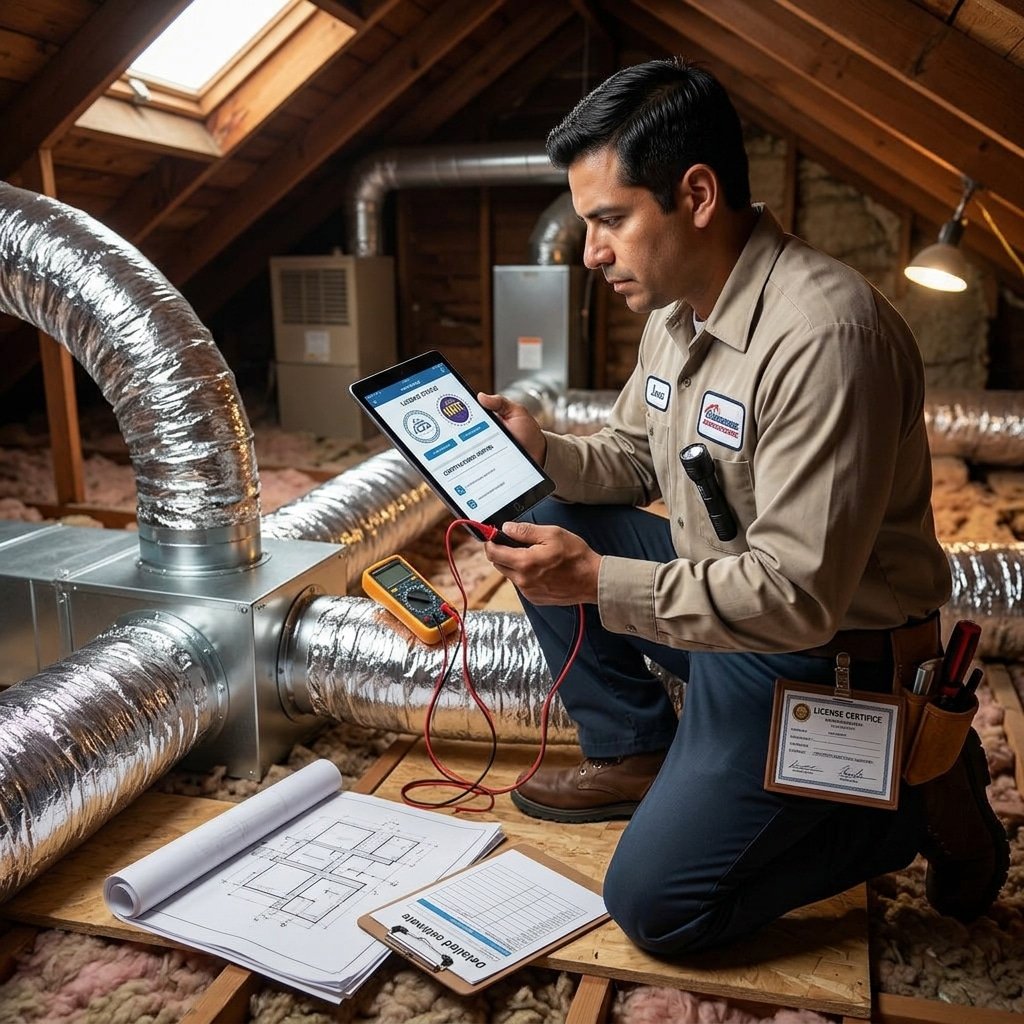
We carry comprehensive coverage specifically for air duct replacement work, which is why homeowners in Austin and San Antonio trust us. Small companies cutting corners often skip bonding to save money, leaving you vulnerable if installation defects damage your home’s electrical systems, framing, or HVAC equipment later on.
Action Step: Before getting an estimate, verify insurance status by asking for a certificate of insurance naming you as an additional insured. If a contractor won’t provide this, move on.
3. Review Customer Testimonials and Local Ratings
Real homeowner feedback reveals how a contractor actually performs after the sale. Check Google Reviews, the Better Business Bureau, Yelp, and Trustpilot for recent reviews from customers in your city. Look for patterns: Do people consistently mention professionalism? Did the crew show up on time? Was the job completed as quoted?
Pay closer attention to detailed reviews than five-star blanket praise. A review mentioning “crew cleaned up thoroughly and explained what they found” tells you more than “great service!” Also look for how the company responds to critical feedback. Do they address concerns professionally or get defensive?
Our Texas customer testimonials reflect consistently positive experiences, particularly from families dealing with dust, mold, and allergies. Homeowners appreciate transparent communication and technicians who explain what they’re doing and why. That’s the standard we hold ourselves to every day.
Action Step: Read at least five recent reviews from customers in your specific city. If you see recurring complaints about hidden charges or poor communication, that’s a signal to keep looking.
4. Compare Pricing and Request Detailed Estimates
Never make a decision based on the lowest price alone. Ductwork replacement involves labor, materials, permits, and testing. A suspiciously low bid often means corners are being cut: undersized ducts, poor sealing, skipped code inspections, or cheap materials.
Request written estimates from at least three contractors. Each estimate should include:
- Duct size and layout specifications
- Material type and gauge
- Labor hours and crew size
- Permits and inspections
- Testing and balancing procedures
- Cleanup and disposal
Comparing line-by-line details reveals significant differences in scope and quality. A $3,500 estimate with basic labor differs greatly from a $4,800 estimate that includes duct sealing, pressure testing, and certified balancing. We provide detailed estimates so homeowners understand exactly what they’re paying for, with no surprises.
Action Step: Ask each contractor to explain the biggest price difference you see between quotes. If they can’t justify it with specific work scope, that’s a concern.
5. Assess Equipment Quality and Technology Standards
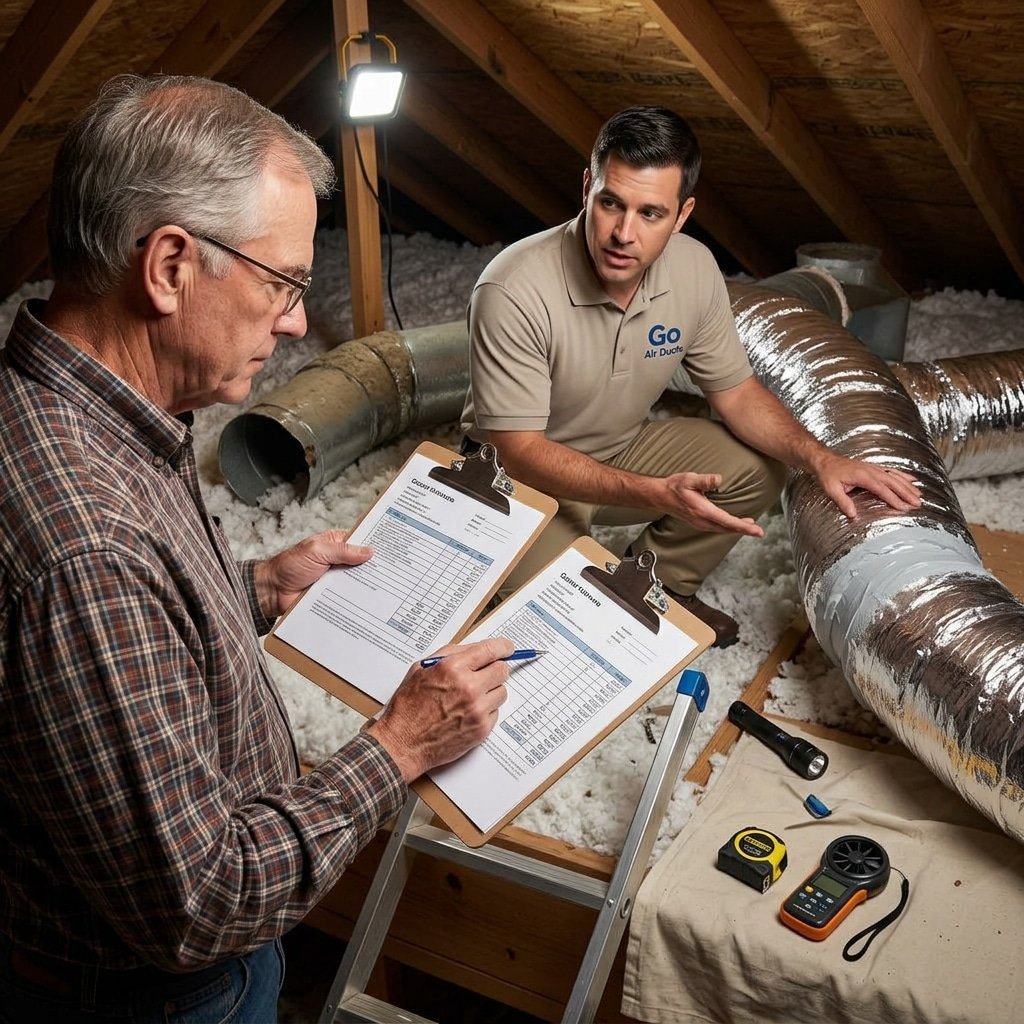
The ductwork itself matters enormously. Fiberglass-lined flex ducts, bare sheet metal, sealed rigid ducts, and insulated hard-pipe systems each have different performance characteristics, longevity, and energy efficiency profiles.
Professional contractors use modern diagnostic tools like blower door tests, duct leakage measurements, and airflow balancing to verify that newly installed ductwork performs as designed. We use computerized duct design software to calculate proper sizing based on your home’s square footage, room layout, and HVAC equipment capacity. This prevents the common mistake of oversized ducts that create dead spots and undersized runs that choke airflow.
Ask potential contractors whether they perform post-installation duct testing and can show you the results. This separates serious professionals from those doing rote installations without verification. Modern ductwork should achieve tight sealing (typically under 5% leakage) and balanced airflow across all registers.
Action Step: Ask if the contractor uses duct design software and performs post-installation testing. Request to see example test results from a previous job.
6. Evaluate Response Time and Service Availability
When your ductwork fails during summer heat or winter cold, response time matters urgely. Compare how quickly each company can schedule an estimate and begin work. Some offer same-day assessments for emergency situations.
Also confirm whether the company has local teams in your area versus sending crews from distant hubs. Locally based technicians understand regional building codes, humidity challenges (critical in Texas), and can respond faster to callback requests. We maintain teams across Austin and San Antonio specifically so we can provide quick assessment and scheduling for homeowners dealing with air quality issues or system failures.
Availability extends beyond response time to hours of operation. Does the company offer weekend appointments? Evening scheduling? This matters if you work standard hours and can’t take time off for contractor visits.
Action Step: Call or email three companies and track how fast they respond. The company that gets back to you within two hours during business hours demonstrates better service orientation.
7. Confirm Warranty Coverage and Guarantees
Workmanship warranties and equipment guarantees protect your investment long-term. Most reputable contractors offer 2-5 year labor warranties on duct installation. Ductwork manufacturers typically guarantee their materials for 10-25 years depending on the type.
Request both warranties in writing before signing a contract. Understand what’s covered: Does the warranty include sealing failures? Leaks? Labor for repairs? Are there conditions that void coverage, like improper maintenance?
We back our ductwork replacement with comprehensive warranties because we stand behind our installation quality. When we install new ducts using proper sealing, sizing, and balancing techniques, failures should be rare. A company confident in their work will offer clear, substantial warranty terms.
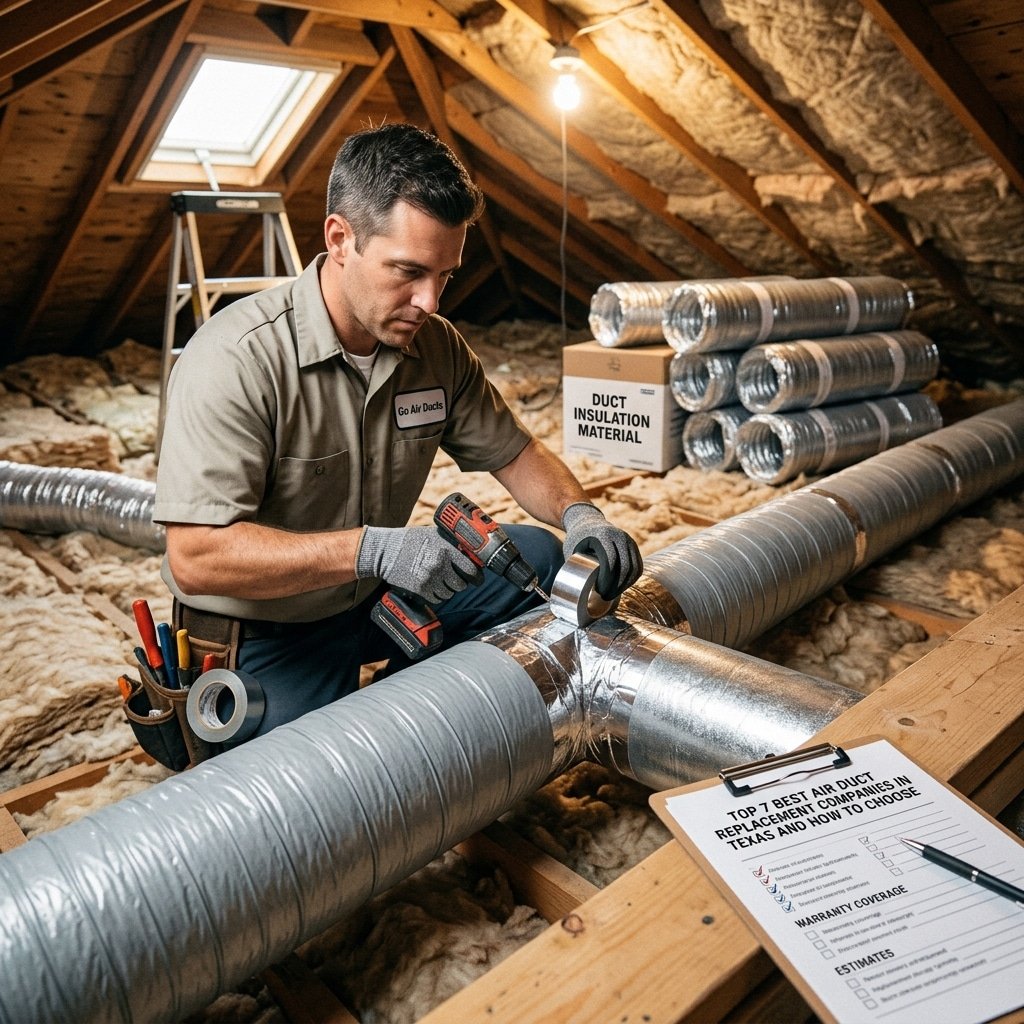
Action Step: Ask for a written warranty document before agreeing to the job. If the contractor says “warranty is standard industry practice” without providing specifics, ask them to put it in writing anyway.
Finding the Right Air Duct Replacement Partner
Evaluating ductwork contractors takes time, but the investment in due diligence pays off through better system performance, lower energy bills, and improved indoor air quality for years to come. We’ve helped thousands of Texas homeowners make this decision by clearly demonstrating our licensing, insurance, certifications, and track record of quality work.
If you’re in Austin or San Antonio and ready to explore your ductwork replacement options, we’re here to help. We provide free detailed estimates, transparent pricing, and technicians trained to assess your specific situation thoroughly. You’ll know exactly what you’re getting, why it matters, and how it solves your HVAC challenges.
Ready to get started? Contact us today for a no-obligation assessment and discover why Texas homeowners trust Go Air Ducts with their most critical HVAC projects.
For further reading: HVAC diagnostic checklist, When to call professionals.
If you’re dealing with dust, poor airflow, mold in your ducts, or a clogged dryer vent — don’t wait. These issues can affect your health and safety. Go Air Ducts Group are the local experts in air duct cleaning, mold removal, dryer vent cleaning, and attic insulation. Call now for a free inspection and same-day service in Austin and San Antonio.
Frequently Asked Questions (FAQ)
How do we ensure our ductwork replacement meets industry standards?
We employ certified HVAC technicians who verify proper licensing and maintain current certifications throughout their employment with us. Our team uses quality equipment and follows established industry standards for every ductwork replacement project we undertake. We provide detailed estimates upfront so you understand exactly what we’re installing and why.
What warranty coverage do we offer on our ductwork replacement services?
We stand behind our work with comprehensive warranty coverage on both materials and labor for all our ductwork replacement projects. When you work with us, we’ll clearly outline our specific warranty terms during your free estimate consultation. Our goal is ensuring your investment in new ductwork delivers long-term performance and reliability.
How quickly can we schedule your air duct replacement service?
We prioritize fast response times across all our Texas locations, including Dallas, Houston, Austin, and San Antonio. Our availability varies by area and current demand, but we work to accommodate your schedule as efficiently as possible. Contact us today for a free estimate and to check our current service availability in your area.