
🕑 7 min read
The damper is the small metal door inside your chimney, and most people only think about it when smoke fills the room. A damper that is stuck, rusted, warped, or never fully seals can cause more trouble than a dirty flue, and the symptoms often get blamed on something else. This guide covers the damper problems that show up most often and what to do about them.
Quick Answer
A fireplace damper should open fully when you burn and close snugly when you do not. Common problems include rust and warping, a stuck handle or broken linkage, soot and debris sitting on the damper, and a damper that leaks conditioned air even when closed. Open and close it in good light, look for debris, and have the chimney inspected if it sticks, shifts, or does not seal.
Key Takeaways
- Never burn a fire with the damper closed or only partly open. Smoke and combustion gases need a clear path out.
- Rust, warping, and a damper that will not move are signs the part may need repair or replacement.
- A damper that does not seal can let cooled or heated air escape up the chimney when the fireplace is not in use.
- Gas log sets often have specific damper requirements, so follow the manufacturer’s instructions and have a professional confirm the setup.
What the Damper Does and Where It Sits
A traditional throat damper sits just above the firebox, at the bottom of the smoke chamber. It opens to let smoke up the flue and closes to keep air, rain, and debris from coming down. Another style, the top-sealing damper, mounts at the top of the chimney and closes with a gasketed seal, like a storm window for the flue. Go Air Ducts mentions top-sealing dampers on its chimney installation page as an option that seals more tightly than a typical throat damper.
The Chimney Safety Institute of America’s homeowner resources include guidance on operating a damper, along with fire prevention and carbon monoxide safety. It is worth a look if you are unsure how yours works.
The Damper Problems That Fly Under the Radar
| What You Notice | Possible Damper Issue | Sensible Next Step |
|---|---|---|
| Handle or lever is stiff, stuck, or loose | Rust, debris, or broken linkage | Do not force it; have the damper inspected |
| Smoke enters the room when the fire starts | Damper partly closed, blocked, or not opening fully, among other possible causes | Stop burning and inspect; see fireplace smoke coming into the room |
| Rust flakes or orange stains on the firebox floor | Moisture reaching the damper or flue | Inspect the cap, crown, and damper together |
| Draft or outdoor odors even when the damper is closed | Damper not sealing, or warped | Inspect and discuss repair or a top-sealing option |
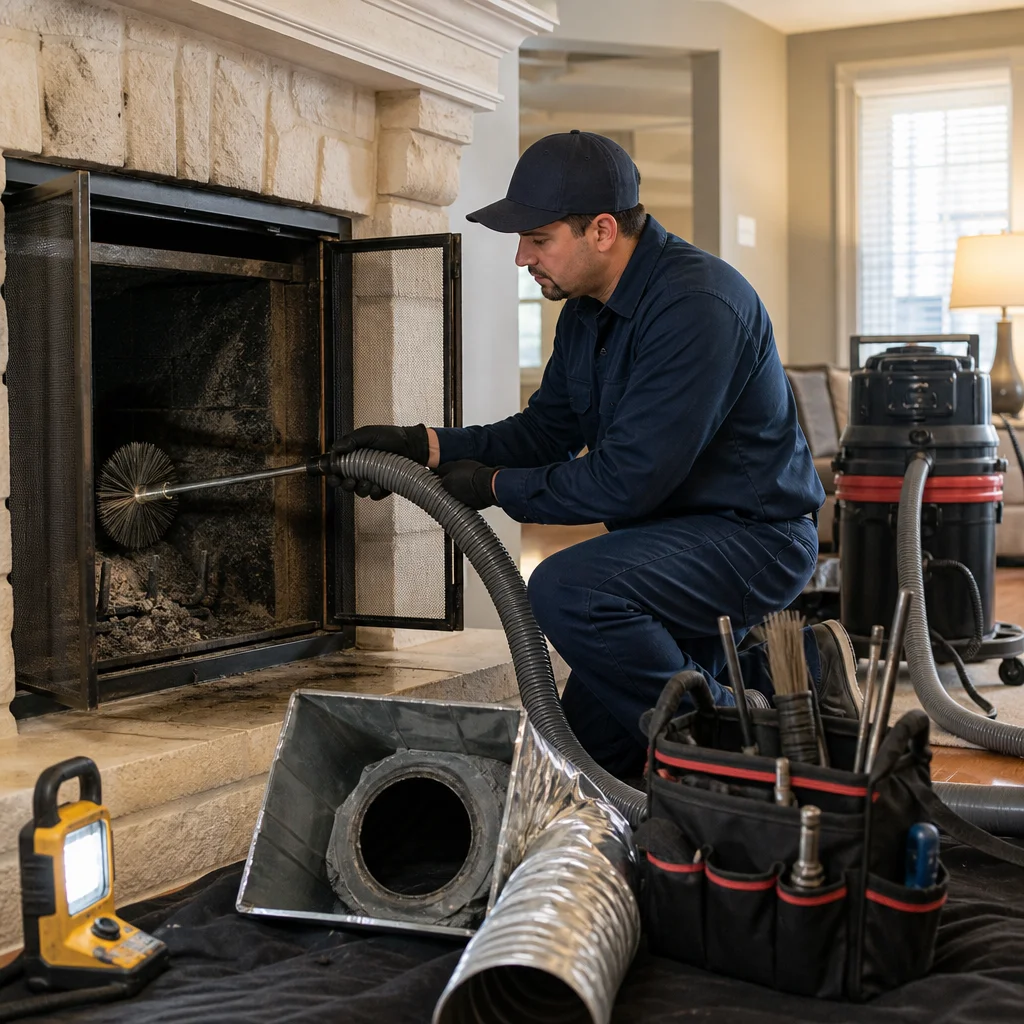
| Heavy soot or debris sitting on the damper shelf | Buildup restricting movement or the flue opening | Professional sweep and inspection |
| Damper handle won’t stay where you put it | Worn or broken hardware | Repair or replace before using the fireplace |
Why a Leaky Damper Matters in a Texas Summer
Most homeowners think of dampers as a winter issue. In Central Texas the damper can matter just as much during the long cooling season. A damper that does not seal lets conditioned air drift up the chimney, and warm outdoor air can come back down. That is not a precise number you can measure at home, but a draft you can feel at the fireplace is a clue worth chasing. Because the whole system works together, the damper, the chimney cap, and the flue should be looked at as a group.
Throat Damper or Top-Sealing Damper?
| Feature | Throat Damper | Top-Sealing Damper |
|---|---|---|
| Location | Just above the firebox | At the top of the chimney |
| Sealing | Metal on metal, which can warp or rust over time | Gasketed seal at the top of the flue |
| Operation | Handle or lever at the fireplace | Cable or chain operated from the firebox |
| Also acts as a cap | No | Can help keep rain, debris, and animals out when closed |
Neither style is right for every home. The choice depends on the chimney, how the fireplace is used, and whether you burn wood or gas. A professional inspection can tell you whether repairing the existing damper or upgrading is more sensible.
Is Your Damper Hiding a Bigger Chimney Problem?
A damper that does not move, a firebox that smells, or smoke that backs up are symptoms, and the actual cause could be the damper, the flue, the smoke chamber, or a blockage. An inspection looks at all of them rather than guessing. Go Air Ducts inspects chimneys in Austin, San Antonio, and Round Rock and explains the findings before any work is approved.
Gas Logs and the Damper Question
Gas logs do not remove the need to think about the damper. Many gas log manufacturers require the damper to be fixed open or removed during use so exhaust cannot be trapped in the home. Requirements differ by product, so read the instructions that came with your set and ask the installer to confirm the setup. If you inherited a gas log installation, an inspection is a good way to check that the damper is configured the way the manufacturer intended.
What to Do Before Lighting the Next Fire
- Open the damper fully. Use a flashlight to look up into the throat and check that the plate moves freely and sits fully open.
- Look for debris. Leaves, nesting material, or heavy soot on the damper shelf can restrict the opening.
- Check for rust and warping. Flaking metal, orange stains, or a plate that does not align are warning signs.
- Close it and feel for a draft. A strong draft with the damper closed points to a poor seal.
- Do not force a stuck damper. You can break the linkage and make the repair more complicated.
Cleaning, Repair, or Replacement?
- Cleaning: When debris and soot are the problem, a professional chimney sweep pays close attention to the smoke shelf and damper area, where heavy deposits often collect. Our article on creosote buildup levels explains when cleaning is not optional.
- Repair: A damper that is bent, rusted, or broken may be repaired, and the chimney repair service covers the surrounding components.
- Replacement or upgrade: A top-sealing damper or a chimney cap addresses leaks and animal entry, as covered in our post on why a chimney cap prevents leaks, odors, and animals.
If you want to see how an older chimney problem was approached, the project on repairing a smoke chamber and cleaning a chimney walks through back-drafting and the fix.
Frequently Asked Questions
Should the damper be open or closed when the fireplace is not in use?
Closed is the usual choice, since a closed damper limits drafts and keeps debris out. It must be fully open before and during any fire, and it should stay open until the embers are completely out. If your damper does not close snugly, ask about repair or a top-sealing option.
Why won’t my fireplace damper open or close?
Common causes include rust, soot or debris on the damper shelf, a broken handle or linkage, and warping from heat and age. Do not force it. Forcing can break the mechanism and make the repair harder. An inspection can confirm whether cleaning, repair, or replacement fits.
Can a bad damper cause smoke in the house?
Yes, a damper that is closed, partly closed, or obstructed can block the path for smoke. Smoke in the room can also come from a blocked flue, draft problems, a damaged smoke chamber, or negative pressure in the house. Stop burning and have the chimney inspected rather than guessing.
Do I need the damper open with gas logs?
Many gas log manufacturers require the damper to be fixed open or removed during use, but requirements vary by product. Follow the manufacturer’s instructions and ask the installer or an inspector to confirm that your setup is correct before you light the logs.
Does Go Air Ducts inspect and repair fireplace dampers in Austin, San Antonio, and Round Rock?
Go Air Ducts inspects chimneys, including the firebox and damper, and offers sweeping, repair, installation, and cap services in Austin, San Antonio, and Round Rock. Pricing is explained before work begins. You can review the service locations for details, or call to ask about availability for your address.
Give the Damper a Proper Look Before the Season
The damper is small, but it affects how the whole fireplace behaves. Go Air Ducts can inspect the damper, sweep the surrounding areas, and tell you whether repair or an upgrade makes sense. You will see the findings and the pricing before anything is approved.
Book a Chimney Inspection in Austin, San Antonio, or Round Rock