
🕑 7 min read
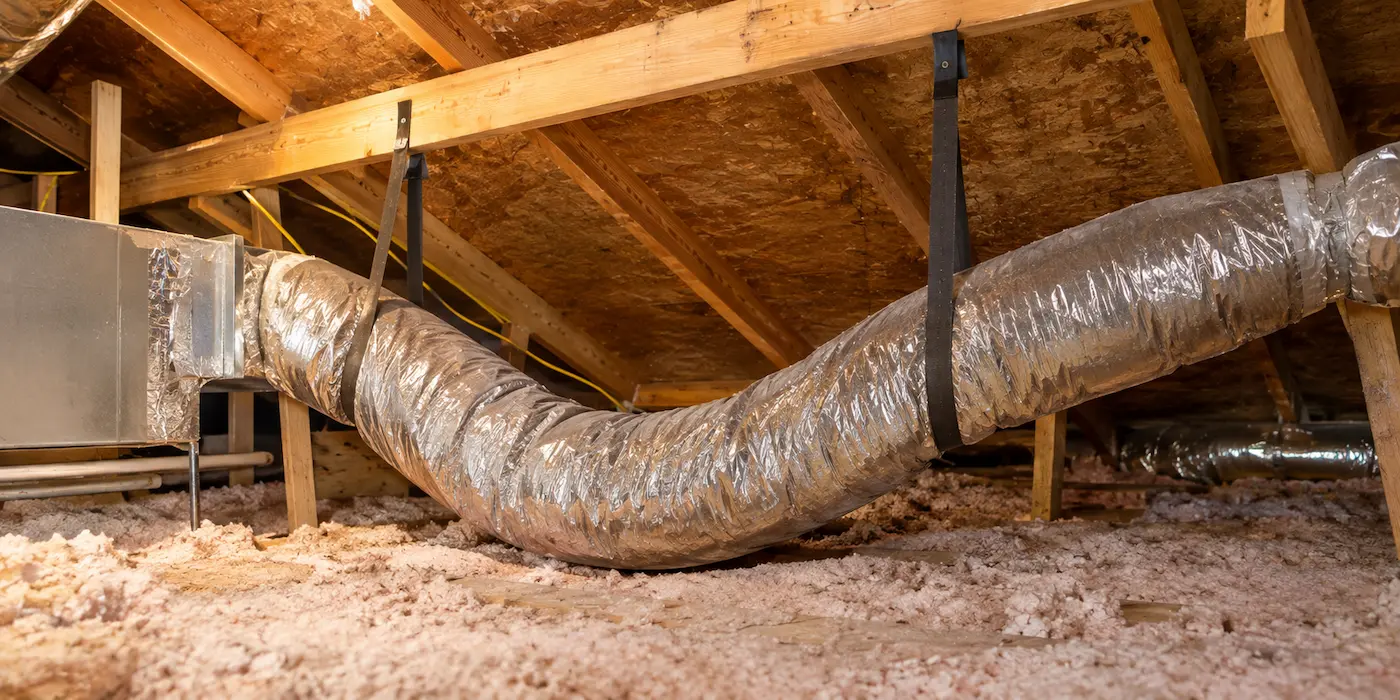
Flexible ducts in a Texas attic spend their lives surrounded by extreme heat, and over time many of them start to droop, bend, or hang loose. A sagging duct looks like a minor cosmetic issue from the attic hatch, but it can quietly restrict airflow, leave rooms uncomfortable, and cause moisture problems. This guide explains why ducts sag, what it does to your system, and how the problem is usually fixed.
Quick Answer
Sagging ductwork is usually caused by inadequate or failed supports, long unsupported spans, heat-aged straps, or damaged duct that can no longer hold its shape. A sag can pinch the duct, restrict airflow, and put stress on connections. The usual fixes are re-supporting, straightening or shortening runs, repairing connections, and replacing sections that are too damaged to keep. An inspection shows which applies.
Key Takeaways
- Attic heat, aging straps, and long spans between supports are common reasons flexible ducts sag.
- Sags and kinks restrict airflow, which can leave rooms uncomfortable and make the system work harder.
- Sagging also strains connections and can lead to leaks, disconnections, and condensation where the duct touches other surfaces.
- Do not crawl around a hot attic in summer. An inspection with proper safety precautions is safer than a DIY check.
Why Flexible Ducts Sag in the First Place
Flexible duct is lightweight and easy to install, but it is not self-supporting over long distances. It needs to be supported at regular intervals and kept in a smooth path. When supports are too far apart, too thin, or cut into the duct, the line droops between them. Over years in a hot attic, straps can become brittle or loosen, insulation jackets can tear, and the duct itself can lose its shape.
Other common contributors include:
- Excess duct length that was never trimmed, which bunches up and folds.
- Ducts that were laid across framing or other ducts instead of suspended.
- Damage from foot traffic, other trades working in the attic, or stored items.
- Rodent chewing that weakens the outer jacket and insulation.
- Moisture from condensation adding weight to the line.
What a Sag Does to Airflow and Comfort
| Problem | What It Can Do | Sign You Might Notice |
|---|---|---|
| Kink or pinched section | Restricts airflow to a room | One room stays hot or has weak airflow |
| Long droop between supports | Adds resistance and can strain connections | Longer run times and uneven cooling |
| Duct resting on framing or the ceiling | Can cause condensation and stains | Damp or discolored ceiling spots |
| Pulled-apart connection or boot | Leaks conditioned air into the attic | High bills, hot rooms, whistling at joints |
| Torn jacket or compressed insulation | Reduces insulation value and exposes the duct to attic heat | Warm duct surface or sweating |
Why Texas Attics Are Hard on Ducts
Texas attic temperatures put ducts under stress for months. Summer attic heat can be far higher than outdoor temperatures, and ducts carrying cold air sit in the middle of it. That constant heat cycling ages straps, jackets, and insulation, and the temperature difference between the cold duct and warm attic air encourages condensation. Our article on sweating air ducts explains how moisture develops.
Leaky or sagging ducts also cost energy. The ENERGY STAR duct sealing guidance explains why well-sealed, properly installed ducts matter for comfort and efficiency.
Check From the Hatch, Not From the Joists
Attic heat can be dangerous, and stepping off the framing can put a foot through the ceiling. If you want to look, do it in the cooler part of the day, stay near the hatch, use a flashlight, and look without touching or walking across insulation. Signs from the living space are often more useful than anything you can see from the opening:
- Compare rooms. Rooms that are always hotter than others may be served by a pinched or leaking duct.
- Check registers. Weak airflow from one register is a clue.
- Look at ceilings. Stains or damp spots near registers can point to condensation or leaks.
- Look at the system. Long run times and rising bills fit with air loss.
- Look at the attic from the hatch. Visible droops, loose straps, disconnected boots, or bunched duct are all worth reporting.
Not Sure How Bad the Sag Is?
A professional can inspect the full run, check connections, and explain whether the problem is supports, damage, or something else. Go Air Ducts inspects ductwork in Austin, San Antonio, and Round Rock and explains what it finds before any work is approved.
Re-Support, Repair, Reroute, or Replace?
The fix depends on how much of the duct is still in good shape. Industry installation standards limit how far flexible duct can be spaced between supports and how much sag is allowed, so ask any contractor which standard they follow instead of accepting vague promises.
| Condition | Likely Service to Discuss | Why |
|---|---|---|
| Sound duct with failed or missing supports | Re-support and straighten | Restores shape and airflow without replacing the duct |
| Loose connection, torn jacket, or small leaks | Repair and sealing | Stops air loss and restores insulation value |
| Duct that runs a poor path with tight bends or excess length | Modification or rerouting | A better path improves airflow |
| Widespread damage, brittle jackets, or contaminated insulation | Section or full replacement | Repair may no longer be practical |
- The air duct repair and duct sealing pages explain what repairing leaks and damaged connections involves.
- Ductwork modification and ductwork rerouting address poor paths and excess length.
- Duct insulation matters when the jacket is torn or the duct is sweating. Our article on types of duct insulation explains the options.
- When the system is too far gone, the ductwork replacement page explains when a larger project makes sense.
For an example of a failed duct system being replaced, see the project on replacing a deteriorated metal duct system to restore airflow, where ducts were leaking conditioned air into the attic.
Flexible or Metal When You Replace
If sections need replacing, the material choice matters. Flexible duct is quick to install and good for tight spots, but it needs proper support and is easier to damage. Rigid metal holds its shape better but takes more work to route. Our comparison of flexible and sheet metal ductwork for San Antonio homes goes through the trade-offs in detail.
Frequently Asked Questions
Why is my attic ductwork sagging?
Common causes include supports that are too far apart or too thin, straps that have aged or failed in attic heat, excess duct length that bunched up, and damage from foot traffic or rodents. Moisture from condensation can add weight. An inspection can show which cause applies to your system.
Does sagging ductwork affect airflow?
It can. Sags and kinks restrict airflow, so a room may get less conditioned air than it should. Sagging also strains connections, which can lead to leaks. The effect depends on how severe the sag is and how many places along the run are affected.
Can sagging ducts be fixed without replacing them?
Often, yes. If the duct itself is in good shape, re-supporting, straightening, shortening, and sealing connections may restore airflow. If the jacket is torn, insulation is compromised, or the duct is brittle, sections or the full system may need replacement. An inspection helps decide.
Is it safe to check attic ducts myself?
Be careful. Summer attic temperatures can be dangerous, and stepping off the framing can damage the ceiling. Look from the hatch with a flashlight in the cooler part of the day, and rely on clues from the living space, such as hot rooms and ceiling stains, rather than climbing around.
Does Go Air Ducts inspect and repair attic ductwork in Austin, San Antonio, and Round Rock?
Go Air Ducts offers duct inspection, repair, sealing, modification, rerouting, insulation, and replacement in Austin, San Antonio, and Round Rock. An inspection comes first, and pricing is explained before work begins. See the current service locations or call to check availability.
Get the Droop Out of Your Attic Ducts
Sagging ducts rarely fix themselves, and the longer a pinch or leak stays, the more your system works to make up for it. Go Air Ducts can inspect the run, explain what is happening, and recommend repair, rerouting, or replacement only where it is needed. You will see the findings and pricing before any work begins.
Book a Duct Inspection in Austin, San Antonio, or Round Rock