
🕑 8 min read
A dryer that runs hot, shuts off mid-cycle, or leaves clothes damp after two rounds is often telling you that the air has nowhere to go. In many homes the problem is not the dryer itself but the vent that carries hot, humid air outside. This guide walks through the vent-related causes of overheating, what you can safely check yourself, and when the problem points back to the appliance.
Quick Answer
The most common reason a dryer overheats is restricted exhaust airflow. Lint packed into the vent, a crushed or kinked transition hose, a long or twisty vent run, or a blocked outdoor hood all trap heat inside the machine. Check the lint screen, the hose behind the dryer, and the outdoor flap first. If airflow is strong and the dryer still overheats, the dryer itself needs service from a qualified repair technician.
Key Takeaways
- Overheating and long drying times usually share one cause: air that cannot leave through the vent.
- Check the outdoor flap while the dryer runs. Weak or no airflow points to a restriction somewhere in the line.
- A burning smell, a very hot laundry room, or a dryer that shuts off on its own should not be ignored or worked around.
- Vent cleaning fixes buildup, but a crushed hose, bad routing, or a damaged hood needs repair or replacement.
Why a Blocked Vent Makes the Dryer Run Hot
A dryer works by heating air, passing it through wet clothes, and pushing the moist air outdoors. When the exhaust path is restricted, the hot air lingers inside the drum and cabinet instead of leaving. Clothes dry slower, the machine runs longer, and internal temperatures climb. Many dryers have a safety thermostat or thermal fuse that cuts the heat when things get too hot, which is why an overheating dryer may seem to stop heating altogether.
That safety feature is a warning, not a fix. Repeatedly tripping it, or replacing the part without checking the vent, leaves the underlying airflow problem in place.
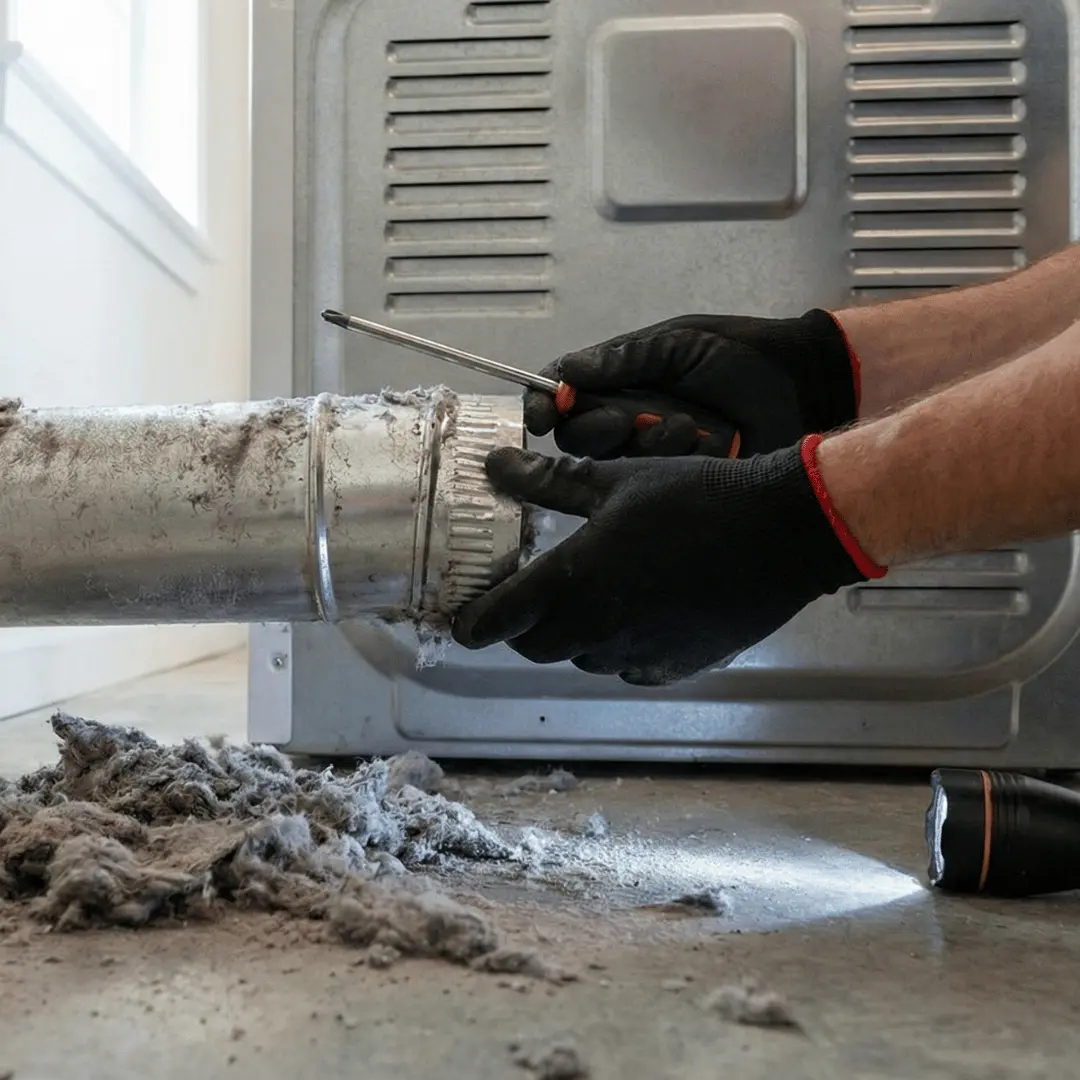
The Vent Problems Behind Most Overheating
| Vent Problem | What You Might Notice | Likely Next Step |
|---|---|---|
| Lint buildup inside the vent pipe | Long drying times, hot dryer top, lint around the dryer | Professional vent cleaning |
| Crushed or kinked transition hose | Dryer pushed too close to the wall, weak airflow outside | Pull the dryer out and inspect the hose; replace if damaged |
| Blocked outdoor hood or stuck flap | Flap barely moves, or nesting material and lint at the opening | Clear the opening and inspect; see our post on bird nests in dryer vents |
| Vent run too long or too many bends | Chronic slow drying that began with a new dryer or remodel | Inspection and possible rerouting |
| Wrong or damaged venting material | Dents, sags, torn foil, or plastic-style flexible duct | Replace with appropriate metal venting |
What You Can Safely Check in Ten Minutes
You do not need tools to get useful information. Start with these steps, and stop if you notice a burning smell or see damage near the dryer.
- Clean the lint screen and look inside the lint slot for packed material. Our guide on cleaning the dryer lint trap covers the right way to do it.
- Run the dryer empty on air or low heat and go outside to the vent hood. The flap should open firmly and stay open with a steady stream of air.
- Look at the outdoor hood for lint, nesting material, or a flap that is stuck, bent, or missing.
- Turn the dryer off and unplug it, then pull it gently away from the wall and check that the hose behind it is not crushed, torn, or disconnected. If the dryer is gas, do not move it without shutting off the gas supply first.
- Note how long a normal load takes. If drying time has crept up over months, the vent is a prime suspect.
Why Long and Twisty Vent Runs Cause Chronic Heat
Every extra foot of pipe and every elbow adds resistance. A dryer with a short, straight run may breeze through a load, while the same dryer connected to a long run with several turns can struggle on every cycle. Remodels, new appliances, and laundry rooms moved to interior spaces are common triggers. If the problem started after any of those changes, read our explanation of how to tell if a dryer vent line is too long and the related post on dryer vent routing mistakes.
Dryer Problem or Vent Problem?
Because the symptoms overlap, it helps to sort them. The table below is a starting point, not a diagnosis.
| If This Happens | Look First At | Why |
|---|---|---|
| Clothes are hot but damp, and cycles keep getting longer | The vent | Warm, humid air is not leaving the system |
| Dryer runs but produces no heat at all | Safety thermostat, fuse, or heating parts | Could be tripped by past overheating or a failed part, so check the vent as well |
| Strong airflow at the outdoor hood, but still overheating | The dryer itself | The vent may be fine and an internal component may be failing |
| Burning smell or visible lint near the heating area | Stop using the dryer | Have both dryer and vent inspected before the next load |
Not Sure Whether It Is the Vent or the Dryer?
An inspection of the exhaust path can rule the vent in or out before you spend money on appliance parts. Go Air Ducts inspects the full run from the dryer to the outdoor termination and explains what it finds, including whether the issue looks like buildup, routing, or damage. The service covers homes in Austin, San Antonio, and Round Rock.
Schedule a Dryer Vent Inspection
Cleaning, Repair, or Replacement?
Cleaning only helps when the vent is the right size, intact, and clogged. If the pipe is crushed, disconnected, or built from the wrong material, removing lint will not solve the airflow problem for long.
- Dryer vent cleaning removes accumulated lint from the vent line. Go Air Ducts lists a promotional starting price of $99.99 for dryer vent cleaning, and the final price depends on the property and what the inspection finds.
- Dryer vent repair addresses damaged hoods, dampers, and sections of pipe.
- Dryer vent replacement is worth discussing when the existing run is damaged, unsuitable, or poorly routed.
- If the dryer is the likely culprit, the dryer repair service page explains that side of the work.
Gas dryers add a second concern, because a blocked vent can interfere with how combustion gases leave the home. Our gas dryer vent safety tips explain what to watch for. The National Fire Protection Association’s clothes dryer and washing machine safety tips (hosted by the U.S. Department of Energy) recommend metal venting and cleaning the vent when drying takes longer than normal.
What Texas Heat Adds to the Problem
Many Texas laundry rooms sit in garages, closets, or utility spaces that are already warm for most of the year. A dryer that vents poorly adds more heat to that space, and a hot laundry room is a useful clue that exhaust air is escaping somewhere it should not. Long vent runs through attics are also common in Central Texas homes, and they tend to collect lint in places that are hard to reach without proper equipment.
Frequently Asked Questions
Why does my dryer get so hot but not dry clothes?
Hot clothes that stay damp usually mean humid air is not leaving the dryer fast enough. A clogged vent, crushed hose, or blocked outdoor hood traps moisture and heat inside the drum. Check airflow at the outdoor flap while the dryer runs, and have the vent inspected if airflow is weak.
Can a clogged dryer vent make a dryer stop heating?
Yes, indirectly. Restricted airflow raises internal temperatures, and many dryers use a thermostat or thermal fuse to shut off heat when things get too hot. If the heat cuts out, inspect the vent before replacing parts, or the same overheating can happen again and trip the safety device a second time.
How do I know if my dryer vent is clogged?
Common signs include longer drying times, a dryer top that feels very hot, lint around the dryer, a musty smell in the laundry room, and weak airflow at the outdoor hood. Seeing little or no air from the flap while the dryer runs is one of the clearest signs.
How often should a dryer vent be cleaned?
There is no single schedule that fits every home, because vent length, household size, and laundry habits vary. Many homeowners schedule professional cleaning about once a year, and sooner when drying times increase, or the dryer feels unusually hot. Long or complicated vent runs may need attention more often.
Does Go Air Ducts inspect and clean dryer vents in Austin, San Antonio, and Round Rock?
Yes. Go Air Ducts offers dryer vent inspection, cleaning, repair, replacement, and rerouting in Austin, San Antonio, and Round Rock. Same-day and next-day appointments are often available depending on the schedule and your service area, and pricing is explained before any work begins.
Get the Heat Out of the Laundry Room
If your dryer keeps overheating, start with the part of the system most likely to be at fault: the vent. Go Air Ducts can inspect the line, clean what can be cleaned, and recommend repair or rerouting if the problem is bigger than lint. You will know what was found and what it will cost before anything starts.
Book Dryer Vent Service in Austin, San Antonio, or Round Rock