
🕑 7 min read
When smoke drifts into the room, most people blame the damper or the chimney cap. The smoke chamber, the part of the chimney most homeowners have never heard of, is a less obvious suspect. It sits just above the damper and shapes how smoke moves from the firebox into the flue. Damage there can show up as back-drafting, odors, and stains, and it is easy to miss without a close look.
Quick Answer
The smoke chamber is the sloped, narrowing section above the damper that funnels smoke into the flue. Warning signs of damage include smoke or odor entering the room, soot or staining above or beside the fireplace, crumbling mortar or flaking material in the firebox, and a rough or cracked interior surface. These signs have other possible causes, so a professional inspection is the way to confirm what is happening.
Key Takeaways
- The smoke chamber sits between the damper and the flue, and its job is to guide smoke upward smoothly.
- Older masonry chimneys often have rough, stepped brickwork in this area that can be smoothed and sealed with a parging coat.
- Smoke in the room, stains, odors, and falling debris are all reasons to stop using the fireplace and schedule an inspection.
- Repair is usually considered after a cleaning and a camera or Level 2 look so the actual damage is visible.
Where the Smoke Chamber Is and What It Does
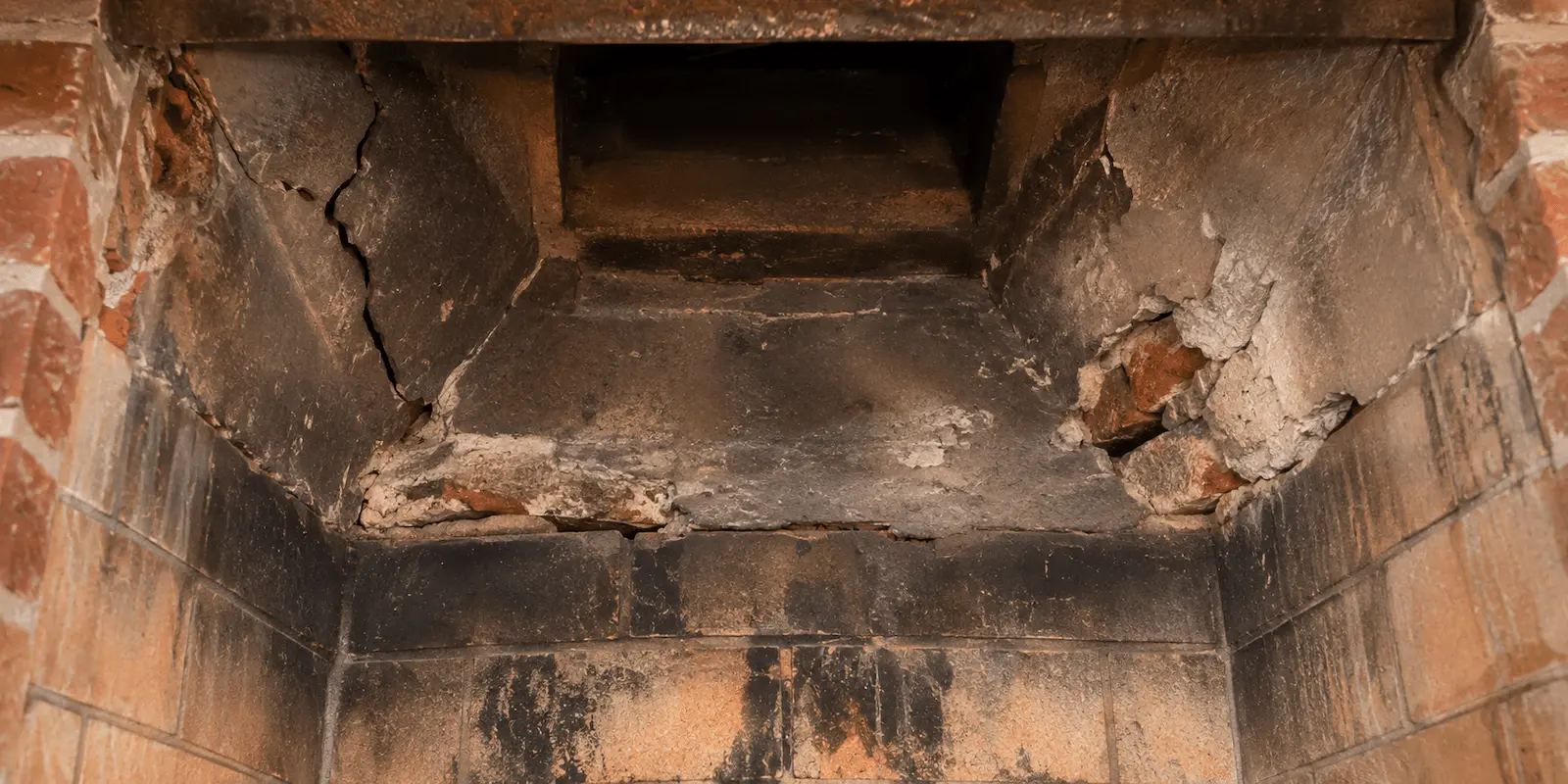
Think of the smoke chamber as a funnel. It begins above the damper and smoke shelf and narrows as it rises toward the flue. In many masonry fireplaces the bricks are laid in stepped courses to form the slope, and the surface is often smoothed with a coating of parging so smoke can move up without catching on rough edges.
When that coating cracks, falls away, or was never applied, the surface becomes rough and the mortar behind it is exposed to heat and acidic residue. Gaps can also allow smoke or gases to escape into places they should not go. The Chimney Safety Institute of America offers homeowner resources on chimney fire prevention and carbon monoxide hazards that give useful background.
Warning Signs Worth Taking Seriously
| What You Notice | Possible Smoke Chamber Link | Next Step |
|---|---|---|
| Smoke or odor enters the room when the fireplace is in use | Back-drafting from a rough, cracked, or restricted chamber, among other possible causes | Stop using the fireplace and inspect |
| Soot or discoloration on the wall above or beside the firebox | Smoke or gases escaping through gaps | Inspection with camera or Level 2 view |
| Crumbling mortar or flaking pieces in the firebox | Deteriorating parging or masonry above the damper | Inspect before any further use |
| Visible cracks or a rough, stepped surface when you look up past the damper | Uneven chamber surface or failed parging | Have it evaluated for smoothing or sealing |
| Persistent burnt or musty smell, especially in humid weather | Buildup or moisture in the chamber area | Professional cleaning and inspection |
| Heavy creosote or soot deposits above the damper | Buildup the chamber cannot shed easily | Professional sweep; read about creosote buildup levels |
Why Smoke Sometimes Comes Back Instead of Going Up
Back-drafting is a symptom, and the smoke chamber is only one of its causes. A closed or partly closed damper, a blocked or cracked flue, a missing cap, or negative pressure in the house can all send smoke back into the room. Our guide on fireplace smoke coming into the room walks through the most common causes in order.
That is the reason an inspection matters. Guessing and replacing parts is how homeowners end up with a repaired damper and a smoke problem that never goes away.
Smoke Chamber, Damper, or Flue?
| Component | Where It Is | Typical Problems |
|---|---|---|
| Damper | Just above the firebox | Rust, warping, stuck handle, poor seal |
| Smoke chamber | Above the damper and smoke shelf, narrowing upward | Rough surface, cracked parging, deteriorated mortar |
| Flue and liner | The passage from the chamber to the top of the chimney | Cracked tiles, creosote, blockages, liner gaps |
| Cap and crown | The top of the chimney | Missing cap, cracked crown, animals and moisture entering |
Our article on the chimney flue and why it is vital covers the part of the system above the smoke chamber.
Suspect a Problem Above the Damper?
You cannot see most of the smoke chamber from the living room, and a flashlight only shows part of it. A professional inspection can look at the area directly and tell you whether you are dealing with cleaning, parging, or a different part of the chimney altogether. Go Air Ducts inspects chimneys in Austin, San Antonio, and Round Rock and explains what it finds before work is approved.
What a Smoke Chamber Repair Can Involve
The right fix depends on what the inspection shows. Typical steps include cleaning the chimney so the surfaces are visible, evaluating the extent of the cracking or deterioration, and, when appropriate, smoothing and sealing the chamber with a parging coat. Larger problems may involve repairing masonry or addressing the flue.
Go Air Ducts completed a project on a San Antonio home where the homeowner reported smoke billowing back into the living room. The crew cleaned the chimney and then applied a smoke chamber parging seal, as described in the case study on repairing a smoke chamber and cleaning a chimney. Every home is different, so treat it as an example of the process rather than a promise of the result.
- Start with a chimney cleaning, which includes the flue and smoke chamber, so inspectors can see the surfaces.
- Use the chimney repair service for masonry and sealing work once damage is confirmed.
- Consider a cap if moisture is part of the picture. Our post on chimney flashing leaks explains how water can reach the interior.
Older Homes Deserve an Earlier Look
Mid-century and older masonry chimneys are more likely to have rough interior surfaces or aging parging in the smoke chamber. In San Antonio and Austin, where many neighborhoods mix older homes with newer construction, a pre-season inspection is a sensible habit rather than an emergency response. For historic properties, our guide on historic home chimney inspection requirements adds local context.
Frequently Asked Questions
What is a smoke chamber in a fireplace?
The smoke chamber is the sloped section of the chimney above the damper and smoke shelf. It narrows as it rises, guiding smoke from the wide firebox into the smaller flue. In masonry fireplaces the surface is often smoothed with a parging coating so smoke can pass without catching on rough brick.
What are the signs of smoke chamber damage?
Possible signs include smoke or odor in the room, soot staining above the fireplace, crumbling mortar or flaking pieces in the firebox, and a rough or cracked surface visible above the damper. These signs overlap with other chimney problems, so an inspection is the reliable way to find the actual cause.
Is it safe to use the fireplace with a damaged smoke chamber?
If smoke enters the room, you see cracking or falling material, or you suspect damage, it is safer to stop using the fireplace until it has been inspected. Damage can allow smoke and gases to escape into places they should not go, and the problem is not always visible from the firebox.
Can a smoke chamber be repaired without rebuilding the chimney?
In many cases localized damage can be addressed by cleaning, smoothing, and sealing the chamber instead of rebuilding the chimney. Whether that is enough depends on the extent of the damage and the condition of the flue and surrounding masonry, which an inspection can show.
Does Go Air Ducts inspect and repair smoke chambers in Austin, San Antonio, and Round Rock?
Go Air Ducts offers chimney inspection, cleaning, sweeping, and repair across Austin, San Antonio, and Round Rock, and has completed a smoke chamber parging project in San Antonio. An inspection comes first, and pricing is explained before work begins. See the service locations for details.
Find Out What Is Happening Above the Damper
If your fireplace smokes, smells, or leaves stains, the smoke chamber is one of several places worth checking. Go Air Ducts can clean, inspect, and explain what the chimney needs, and you will see the findings and pricing before anything is approved.
Request a Chimney Inspection in Austin, San Antonio, or Round Rock